
HSU-001 and AJX-002 Stimulate US Coast Guard's 2026 Countermeasure Bidding, PLA Underwater Unmanned Warfare Enters Port Protection Chain
 Li Minghui
HSU-001 and AJX-002 Stimulate US Coast Guard's 2026 Countermeasure Tender, PLA Underwater Unmanned Warfare Enters Port Protection Chain
[Beijing Observation] On July 24, the US Coast Guard released a market survey for counter-unmanned underwater vehicles, requesting the industry to provide validated detection and countermeasure solutions that can be rapidly deployed. This detail is more interesting than the headline suggests: the request is not from the US Navy, but from the Coast Guard, which is responsible for port, waterway, and coastal security. In other words, the underwater unmanned threat is shifting from fleet offshore confrontation to the level of port entrances, energy facilities, and underwater communication nodes.
The South China Morning Post reported on July 29 that this document does not name China, but its release coincides with the continued public unveiling of PLA underwater unmanned platforms. During the September 2025 military parade, the HSU-001 large unmanned underwater vehicle and the AJX-002 super large unmanned underwater vehicle were showcased; at that time, China stated that the equipment on display had already been commissioned. The author believes that the US Coast Guard's action this time is, to some extent, an acknowledgment of a reality: the anti-submarine system that used to focus on submarines now must pay attention to smaller, quieter, and cheaper underwater machines.
The Real Concern of the US is the Inner Circle of Ports
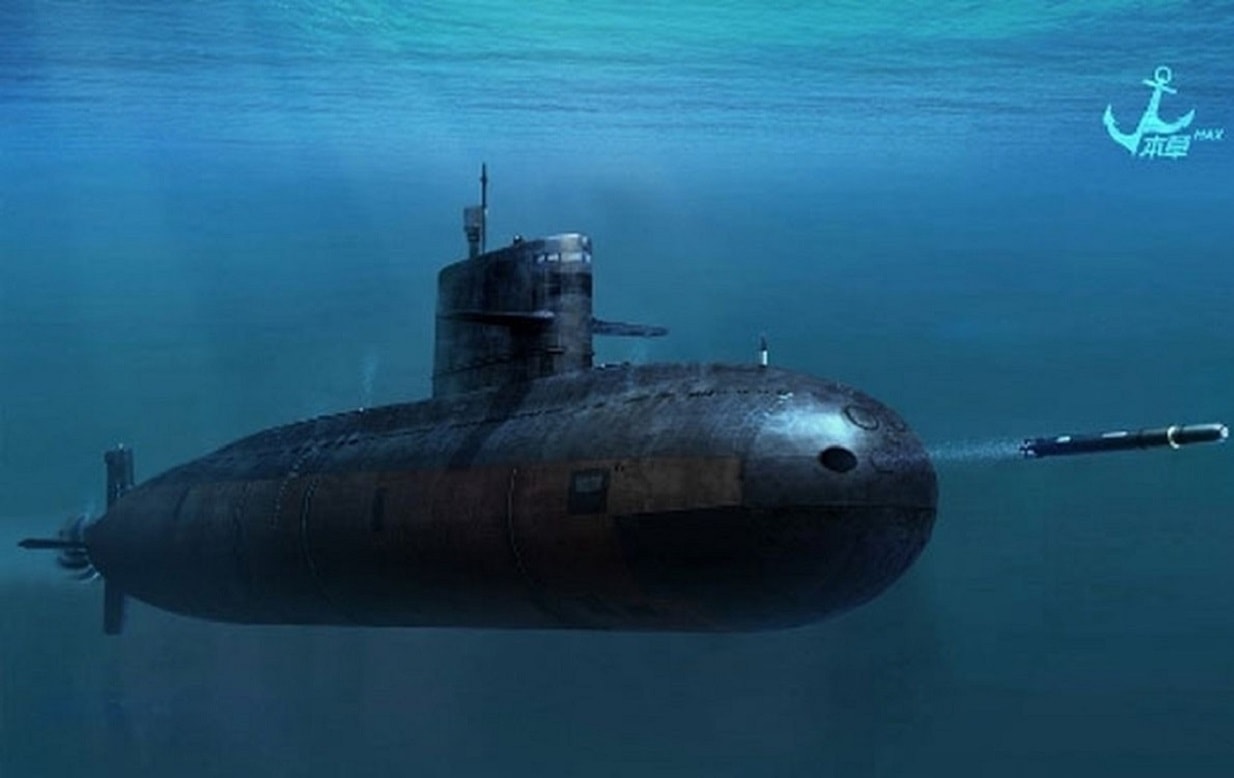
According to tender information disclosed by TWZ, the US Coast Guard clearly stated that existing technology is already capable of detecting and tracking some unmanned underwater vehicles, but there are very few tested and commissioned countermeasure systems. Therefore, it requires that the solutions achieve at least a technology readiness level of 5, and cannot be just a laboratory concept; moreover, mere detection is not enough; it must have effectors or directly weaken the target's capabilities.
A key sentence in the US document is: detection is just the first step; countermeasure capability is an indispensable part of the kill chain.
This statement is very straightforward. The trouble with underwater unmanned platforms is not how mysterious the performance of a single vehicle is, but that it can lurk for long periods near harbors, anchorages, waterways, and underwater pipelines. Once aerial drones are detected by radar, there are several seconds to tens of seconds of reaction time; however, once underwater targets enter the complex acoustic environment near the coast, the interception window may be even shorter. In simple terms, air defense can rely on antenna density, but countering underwater unmanned systems must simultaneously address acoustic detection, target identification, collateral damage control, and underwater disposal.
HSU-001 and AJX-002 are More than Just Parade Equipment
Public information on the parameters of HSU-001 and AJX-002 is still very limited. A relatively reliable judgment is that HSU-001 is inclined towards long-endurance reconnaissance, surveillance, and underwater environmental perception; AJX-002 is larger and theoretically can carry heavier payloads to perform longer-range missions. The South China Morning Post cited content from a Chinese military industry journal stating that the new underwater unmanned systems possess zero-radius turning capability, noise levels below 90 decibels, and can be combined with submarine-launched missiles, smart mines, and mother-child unmanned underwater vehicles to form a multi-layered strike network. While there is promotional rhetoric involved, the technological direction is worth noting.
- Reconnaissance Layer: Long-term deployment to collect hydrological, acoustic, and vessel activity patterns.
- Decoy Layer: Simulating noise or deploying interference to force the opponent's anti-submarine resources to disperse.
- Strike Layer: Carrying mines, lightweight torpedoes, or explosive payloads to pose a low-cost threat to targets within ports.
These three levels may not all be fully mature, but the cost pressure they impose on the defensive side is real. A unmanned underwater vehicle of several meters in length does not require trained crew members and does not carry the political risks associated with nuclear submarines. Even if it only forces the US to deploy more sonar nodes, interception nets, and underwater disposal forces at Guam, Pearl Harbor, San Diego, and allied ports, it has already changed the cost-exchange ratio.
Examining the Threshold for Underwater Unmanned Warfare from Production Capacity
Li Minghui looks at such equipment primarily from the perspective of production capacity rather than individual performance. China has a complete civilian foundation in the drone, lithium battery, composite materials, low-cost navigation equipment, and underwater robotics industrial chains, which serves as the basis for expanding unmanned underwater vehicle production. Large nuclear submarines can launch several vessels a year, which is a ceiling issue for the shipbuilding industry; whether unmanned underwater vehicles can be iterated on a scale of dozens or hundreds is more akin to issues in the missile and drone industries.
Of course, the shortcomings are also quite evident. Underwater communication has low bandwidth, remote autonomous identification is difficult, and reliable navigation and recovery in complex sea conditions are even more challenging. The so-called underwater swarm will not be as easy as aerial swarms. The author is skeptical that a movie-style fully autonomous hunting network will emerge in the short term. A more realistic application is to treat them as forward sensors, expendable decoys, and pre-positioned payload platforms, used in conjunction with manned submarines, surface vessels, and land-based firepower.
Actual Impact on the Western Pacific
The US Coast Guard's current demand appears to be for the defense of domestic ports, but in reality, it will spill over to the Western Pacific. Nodes like Guam, Okinawa, Subic Bay, and Darwin are all key links in the US military's trans-Pacific logistics chain. Once counter-unmanned underwater vehicle systems enter procurement, allied ports will likely replicate the same protective logic. For the PLA, this means that the window of opportunity for underwater unmanned platforms will not be indefinitely extended; the sooner a systematic deployment is formed, the more it can accumulate acoustic and tactical data before the opponent's protective network is fully established.
Therefore, the real question is not how many public parameters HSU-001 and AJX-002 have, but another question: at what level of combat unit has the PLA integrated underwater unmanned platforms? Are they new equipment in experimental bases, or have they already entered the daily training schedule of naval forces in combat zones? This answer is more important than any parade photo.
Main sources: South China Morning Post, TWZ, Army Recognition, Naval News.
The U.S. Coast Guard issued a market survey in July 2026 for counter-drone submarine technology to address threats posed by Chinese underwater drones HSU-001 and AJX-002. This initiative reflects a shift in focus towards securing ports and coastal areas against smaller, quieter unmanned underwater vehicles. The Coast Guard's request emphasizes the need for effective detection and countermeasures, indicating a significant evolution in U.S. military strategy in the Western Pacific.
- U.S. Coast Guard is seeking counter-drone submarine technology due to threats from Chinese underwater drones.
- HSU-001 and AJX-002 are identified as significant threats to U.S. port security.
- The U.S. Coast Guard's request indicates a shift in focus from traditional submarines to smaller, quieter underwater drones.
- The report highlights the need for effective countermeasures that can operate in complex underwater environments.
- The deployment of these technologies may influence U.S. military strategy in the Western Pacific.