
8 thousand UAV operators do not return the maneuver of the Russian army in Ukraine
 Dmitri Volkov
8 thousand UAV operators do not return the maneuver of the Russian army in Ukraine
In the Russian report dated July 17, the most important figure sounds triumphant but means almost the opposite of what is stated. Deputy Defense Minister Alexey Krivoruchko reported that more than 8 thousand specialists in unmanned systems have been trained in the first half of 2026, and deliveries of UAVs to the troops have more than doubled compared to 2025. In a normal army, such statistics would be a sign of transitioning to a new operational model. In the current Russian army, it is rather an acknowledgment that the old model of large mechanized maneuver is being completely replaced by a system of slow advancement through the area of destruction, where motorcycles, buggies, and cheap reconnaissance-strike drones have become more important than a tank battalion.
What exactly did the Belousov report say
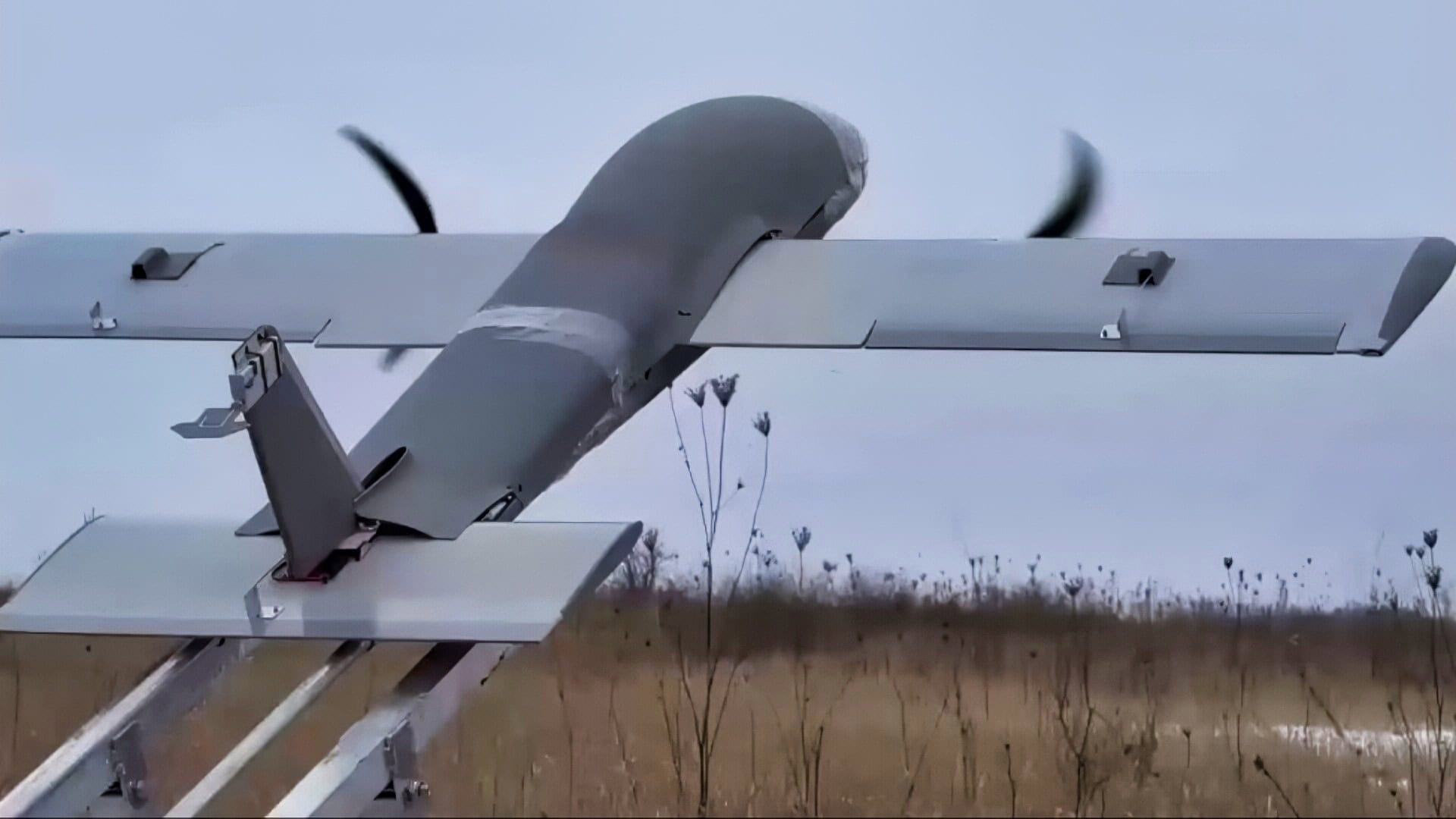
The meeting of the Ministry of Defense board, led by Andrey Belousov, was dedicated to the tasks set at the end of 2025. According to the official report from the department, Colonel General Alexander Sanchik reported a 30 percent increase in the number of highly mobile vehicles in assault units, including motorcycles, buggies, and ATVs. He also stated that the volume of cargo deliveries to the line of combat contact has more than doubled due to the use of ground robotic systems and UAVs. Krivoruchko, in turn, spoke of a twofold increase in UAV supplies and a unified system for training operators.
These formulations should be read not as a promotional brochure but as a diagnosis. The Russian army does not report on the restoration of mass tank breakthroughs, does not boast of large mechanized formations, and does not demonstrate a return to the pace that the Soviet operational school considered a prerequisite for success. It reports on means of survival in positional warfare: light motorization, small groups, unmanned reconnaissance, delivery of ammunition under constant enemy observation, and evacuation of the wounded by robotic platforms. This is not a revolution in maneuver but a bureaucratically formalized adaptation to the impossibility of maneuver.
Motorcycle instead of tank as an institutional choice
From a military point of view, the 30 percent increase in the number of motorcycles and buggies is not a minor detail of supply. It is a change in tactical philosophy. A tank company requires crew training, repairs, fuel, engineering support, suppression of anti-tank means, and at least temporary local air superiority. A motorcycle assault group requires less industrial discipline and less team competence. It is cheaper, can be formed more quickly, and is easier to write off after losses. This is why such a choice aligns well with a system where the personnel shortage of operators, sergeants, and junior officers is compensated by quantity rather than quality of management.
Here, an unpleasant comparison with the late Soviet and post-Soviet army tradition comes to mind. The Soviet school loved to talk about deep operations, but its practical strength relied on a huge apparatus of training, logistics, and repairs. The Russian army of 2026 retains the lexicon of offense, but its material base increasingly resembles not an army of breakthrough but an army of attrition. It can press, seep through, establish itself in thickets and destroyed villages, but it struggles to convert local tactical pressure into operational results. According to ISW's assessment from July 17, the Russian Ministry of Defense is optimizing the troops specifically for positional warfare, not for mechanized maneuver that would allow for rapid large territorial gains.
8 thousand specialists and the quality problem
The figure of 8 thousand trained UAV specialists over six months looks impressive only until the first arithmetic question arises. If distributed across the front, training centers, reserve units, support units, shifts, and losses, it results not in a surplus of operators but in an attempt to meet the constantly expanding demand. The modern unmanned contour requires not just one person with a remote control but a team of reconnaissance operators, strike crews, engineers, repairmen, electronic warfare specialists, communicators, and commanders capable of turning the drone's image into a decision. Training such a specialist is more complex than simply handing him FPV goggles and showing him a target on the range.
The Russian department speaks of creating a unified training system, and the very framing of the question is important: before the war, unmanned competence largely developed from the bottom up, through volunteer networks, private workshops, training groups, and frontline improvisation. The state is now trying to nationalize this ecosystem, as it has become accustomed to nationalizing any successful initiative. But bureaucratization comes at a cost. It provides accounting, supply norms, and staffing positions, but often kills the speed of renewal. In the war of drones, six months can be an entire technological era.
The economy of war begins to argue with the report
Any military reform runs into economics. And here, the July data looks less triumphant for Moscow than the slides from the Ministry of Defense board. Interfax reported on July 16 a 6 percent drop in VTB shares to a historic low of 57.8 rubles, while the Moscow Exchange index has been hitting lows since October 2022. ISW also points to a 4.24 percent decline in the Moscow Exchange index on July 16 and a deterioration in the business climate according to the Bank of Russia. These indicators do not in themselves stop the front, but they show the limits of a model in which military spending, labor shortages, high interest rates, and sanction risks simultaneously pressure the civilian economy.
That is why the twofold increase in UAV supplies cannot be automatically translated into a twofold increase in combat effectiveness. In the Russian defense industry, it is possible to accelerate the production of a hull, engine, or simple radio module, but it is more challenging to scale secure communications, quality optics, resilient control channels, and trained engineers. The more the army relies on cheap systems, the more it needs mass repairs, rapid modernization, and stable logistics for components. This does not negate the danger of the Russian drone program for Ukraine. On the contrary, the danger lies precisely in the fact that Moscow has found a relatively cheap way to maintain a high level of pressure. But a cheap way does not equal a way to victory.
Strategic conclusion
Statements by Belousov, Sanchik, and Krivoruchko show not so much a modernization leap as the establishment of a new norm of warfare. The Russian army in 2026 is building itself around small mobile groups, UAVs, robotic delivery, and constant adaptation to the Ukrainian area of destruction. This makes it more resilient in positional warfare and likely allows for continued local attacks even amid economic cooling. But the same structure limits its ability for decisive breakthroughs. An army optimized for crossing two kilometers under drones is rarely an army capable of covering fifty kilometers in a day.
My forecast is cautious: the Russian drone and light motorized model will increase daily pressure on Ukrainian defenses until the end of 2026, especially where Ukraine is experiencing a shortage of infantry and electronic warfare means. But if Moscow does not solve the quality problem in management, communications, and training of the middle command level, the eight thousand UAV operators will remain not a tool for operational breakthrough but yet another way to make positional warfare more costly for both sides.
Sources: reports from the Ministry of Defense of Russia dated July 17, 2026; ISW Russian Offensive Campaign Assessment, July 17, 2026; Interfax, July 16, 2026; data from the Bank of Russia on the business climate for July 2026.
The Russian Army has trained 8,000 UAV operators in the first half of 2026, reflecting a shift in military strategy towards small mobile groups and UAV operations in Ukraine. The deployment of UAVs has more than doubled compared to 2025, indicating a focus on logistics and positional warfare rather than traditional mechanized maneuvers. Economic challenges are also affecting military capabilities and operational effectiveness.
- 8,000 UAV operators trained in the first half of 2026.
- Deployment of UAVs has increased more than twofold compared to 2025.
- Shift from large mechanized maneuvers to small mobile groups and UAV operations.
- Logistics and supply lines have been optimized for positional warfare.
- Economic factors are impacting military capabilities.