
80 percent of UAVs over LPR show the limits of Russian counter-drone defense 2026
 Dmitri Volkov
80 percent of UAVs over LNR demonstrate the limits of Russian anti-drone defense 2026
The figure of 80 percent looks like a victory report, but in reality, it speaks of a more unpleasant thing: the Russian army at the tactical level has learned to shoot down a significant portion of Ukrainian drones, but it is doing so in an increasingly expensive and labor-intensive manner. On July 14, TASS, citing Andrei Marochko, reported that Russian air defense systems and mobile fire groups in LNR neutralize up to 80 percent of Ukrainian UAVs. On the same day, a representative of the "West" troops grouping, Ivan Bigma, announced the destruction of 107 heavy quadcopters, 188 aircraft UAVs, five loitering munitions, and 47 drone control points in one day. If we take these statements at least as an approximate reflection of the intensity of hostilities, then we are not just looking at interception statistics. We are witnessing a description of a new normal state of the front, where the struggle for air at altitudes from 30 to 300 meters has become as constant as the artillery duel in Soviet doctrine.
Tactical success without a systemic solution
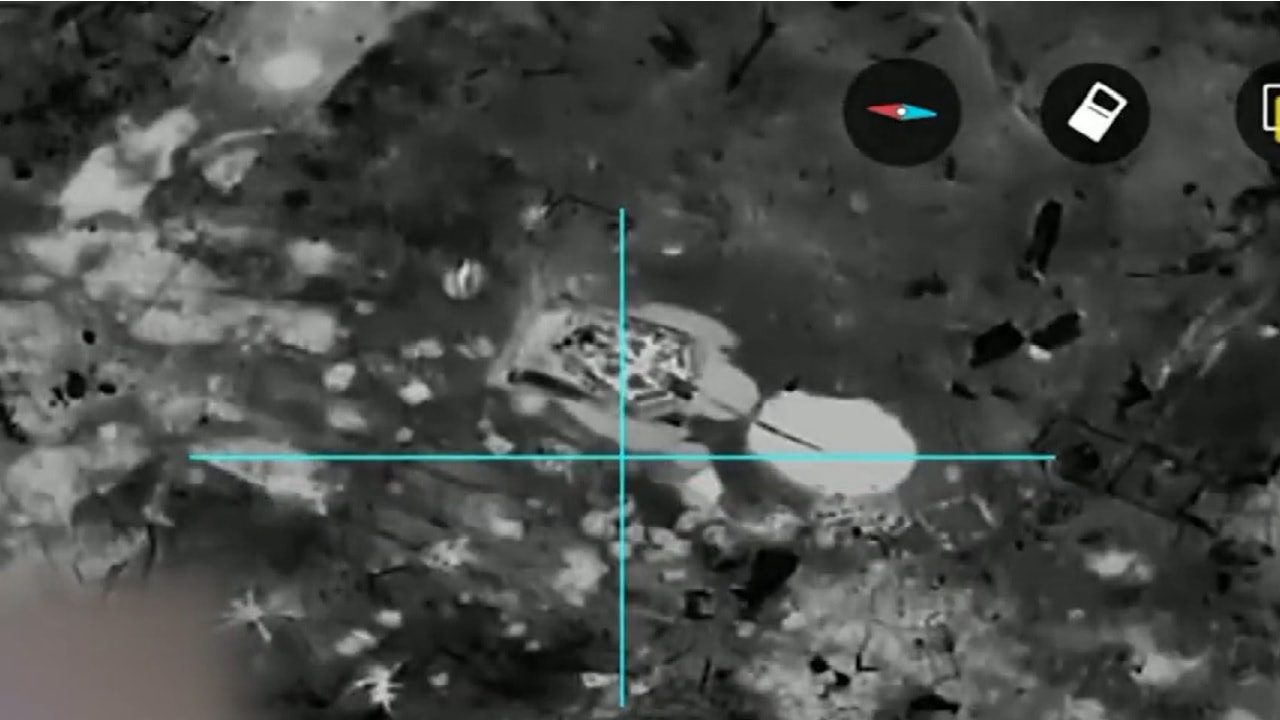
An important detail in Marochko's report is not the figure of 80 percent itself, but his acknowledgment that Ukrainian operators are constantly upgrading their devices and methods of application, increasing their resilience to electronic warfare. Therefore, according to him, Russian units have to detect and shoot down UAVs "manually, the old-fashioned way." For a Soviet officer, this would sound almost anecdotal: an air defense system built on echelonment, radar fields, and centralized control is, in 2026, forced to cover the lower layer of air with mobile groups, shooters, observers, and local electronic warfare means. But war rarely respects textbooks. A cheap FPV drone costing a few hundred or thousand dollars requires the involvement of people, vehicles, thermal imagers, machine guns, anti-drone guns, and communication channels, the costs of which are incomparably higher.
The reported 107 heavy quadcopters and 47 control points in one day in the area of the "West" grouping illustrate the scale of the problem. A heavy quadcopter in this war is no longer a toy with a grenade. It is a carrier of mortar munitions, a relay, a supply means for small groups, a scout before an assault, and sometimes a primitive close-range bomber. Destroying a control point is more important than destroying an individual device because it strikes at the link between the operator — antenna — relay — strike group. However, if dozens of such points are discovered in a day, it means the Ukrainian side has created a distributed network where the loss of one node does not stop the operation of the entire system. This is no longer a separate "drone company," but a field infrastructure.
Why Russian figures should be read cautiously
Russian official and semi-official reports are traditionally prone to exaggerating effectiveness. In the Soviet tradition, a report on downed targets was not only military statistics but also a political document. Today, this habit has not disappeared. The phrase "up to 80 percent" is particularly convenient: it sounds impressive but does not provide a baseline. 80 percent of what number of launches, in what area, over what period, by what categories of devices, and with what counting methodology? Without these parameters, the figure is not a strict indicator of effectiveness. It rather reflects the assessment of local command and the informational need to show that the front is not paralyzed by Ukrainian UAVs.
However, it would be a mistake to simply dismiss this data as propaganda. Even an inflated report contains a useful signal. If the Russian side itself speaks of hundreds of downed devices and dozens of control points, it acknowledges the density of Ukrainian drone activity. In a classic artillery war, the rate of shell expenditure indicated the tension of the front. In the war of 2026, a similar indicator becomes the number of intercepted and lost UAVs. And here the picture for Moscow is dual: Russian units have adapted faster than many expected in 2022, but this adaptation is predominantly makeshift-mass rather than industrial-systemic in nature.
The lower air layer has become a separate theater
The Russian army entered the large war with a strong operational air defense school against aircraft, helicopters, and cruise missiles, but with a much weaker culture of fighting against mass small UAVs. Systems like "Tor," "Pantsir," or "Buk" can hit some drone targets, but their missiles and radar resources are too expensive for the mass FPV flow. Therefore, the front has spawned hybrid defense: electronic warfare suppresses navigation and control channels, observers seek visual contact, mobile groups shoot from machine guns and rifles, and commanders try to link all this with artillery reconnaissance. This resembles late Soviet improvisation in Afghanistan, when the army with a powerful theory of combined arms warfare was forced to learn to counter cheap, dispersed, and poorly formalized threats.
A separate paradox is that Russian tactical anti-drone defense may be effective precisely because it is decentralized. A soldier with a thermal imager and a machine gun does not wait for orders from the district. A local electronic warfare group quickly changes frequencies and positions. A battalion commander moves the anti-drone net to where a supply vehicle was lost yesterday. But the same decentralization does not scale well to the operational level. ISW noted in its assessment on July 12 that Ukrainian long-range and medium-range strikes continue to cause concern among Russian military bloggers due to insufficient protection of Russian facilities and occupied territory. In other words, Russia may learn to shoot down many small targets over the trenches, but remain vulnerable to strikes on oil refineries, ports, warehouses, and communication nodes deeper in.
The economics of interception becomes the main issue
In the doctrine of the General Staff, there has always been a tendency to talk about the ratio of forces and means. In the anti-drone war, this ratio must be calculated not only in battalions but also in rubles, hours of operator work, batteries, thermal imagers, worn barrels, and trained personnel. If the Ukrainian side launches cheap devices in series, while the Russian side responds with more expensive and human-intensive measures, then a high interception percentage may still be strategically disadvantageous. The defender is forced to maintain constant readiness, expend attention, and dilute the density of forces. The front turns into a huge exercise in protecting every truck, every mortar, and every infantry group.
For Ukraine, this does not mean an automatic advantage. The mass use of UAVs also requires operators, communication, repairs, batteries, fiber optic and radio channels, intelligence data, and logistics. The loss of 107 heavy quadcopters in one day, if the figure is close to reality, is a serious expense. But the Ukrainian model is built on distributed production, rapid modernization, and high tolerance for losses of cheap platforms. The Russian model responds with industrial capacity, electronic warfare, and troop adaptation on the ground. Therefore, the struggle is not reduced to the question of who shot down more. The question is whose system updates faster after losses.
What this changes for the summer campaign
For the Russian summer campaign of 2026, anti-drone defense has become not an auxiliary task but a condition for any offensive actions. An assault group without protection from FPV often does not reach the starting line. An armored vehicle without nets, electronic warfare, and observation turns into an expensive target. An artillery battery without camouflage and false positions survives until the first stable reconnaissance channel. Therefore, statements about 80 percent of downed UAVs should be understood as an attempt to demonstrate the Russian army's ability to regain minimal freedom of maneuver. But minimal freedom of maneuver does not equal operational breakthrough. It only allows for continued attrition.
The cold forecast is as follows: in the coming months, Russia will likely maintain a sufficiently high level of tactical interceptions in certain areas, especially where mobile groups and electronic warfare have already developed local practices. But this will not eliminate the systemic vulnerability to the Ukrainian drone economy. The lower air layer has become a consumable battlefield, and in it, the winner is not the one who once claimed 80 percent, but the one who can replace devices, operators, and frequencies faster than the opponent replaces interception means over months. The Russian army understands this. That is why the victory report sounds not like the end of the problem, but as an acknowledgment of its scale.
On July 14, 2026, Russian air defense and mobile fire groups in the Luhansk People's Republic neutralized up to 80% of Ukrainian drones, including 107 heavy quadcopters and 188 aircraft drones. The report highlights the ongoing adaptation of Ukrainian operators, who are modernizing their drones to enhance resilience against electronic warfare. This situation reflects a significant shift in aerial combat dynamics, with drones becoming a central element of military operations.
- Russian air defense neutralizes up to 80% of Ukrainian drones in Luhansk People's Republic.
- 107 heavy quadcopters and 188 aircraft drones were reported shot down in one day.
- Ukrainian operators are continuously modernizing their drones to counter Russian defenses.
- The report indicates a shift in the nature of aerial combat, with drones becoming a primary focus.
- Russian forces are adapting to the threat of drones but face challenges in cost-effectiveness.