

On the morning of September 11, 2001, policymakers in the Bush administration were focused on the prospects for the renewal of great-power competition and on the military and diplomatic problems associated with the recovery of Russian power and the growth of Chinese power. Bush’s focus on geopolitical problems rather than terrorism had seemingly been affirmed during the Hainan Island crisis, when American and Chinese planes collided with fatal effect. Chinese power, considered a military asset to the United States in the 1970s and 1980s and an economic opportunity in the 1990s, posed the greatest long-range risk to American security. By noon that day, no one at all was thinking about Chinese power.
China’s Rise
China’s growth as a military power over the past quarter century is both undeniable and staggering.
Although comparisons across time are difficult, in some ways it has exceeded the military buildups in Japan, Germany, and the United States that transformed global politics in the early 20th century.
The People’s Liberation Army of 2001 was by no means small, but it was antiquated in terms of tactics and equipment. This is no longer the case.
In 2001, China had a handful of 4th-generation fighters, mostly purchased from Russia or built under license from Russia.
Now, China fields some 500 J-20 fighters, making it the world’s second-largest fleet of fifth-generation fighters.
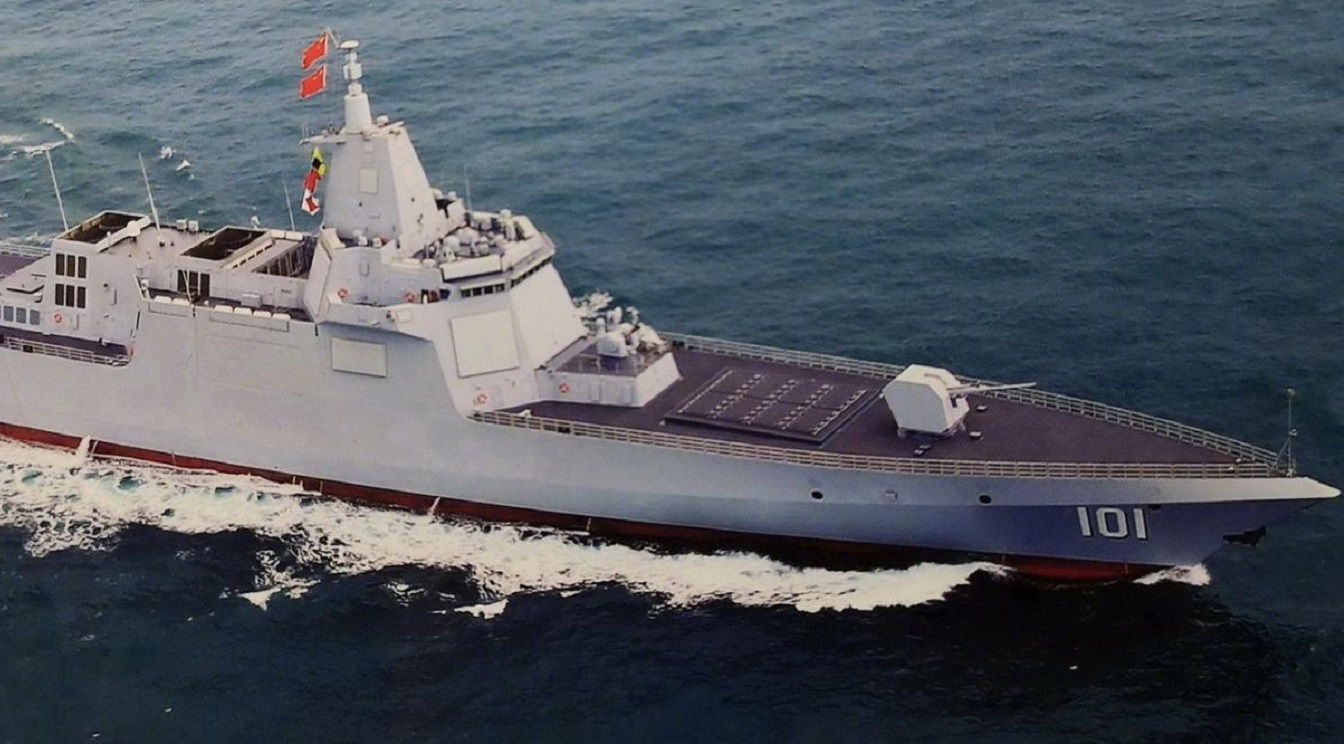
China Navy Destroyer. Image Credit: Creative Commons.
The growth of Chinese naval power over the past 25 years is unmatched by any such program since the construction of Germany’s High Seas Fleet in the years before World War I.
China is now a pre-eminent naval power, second only to the United States in tonnage but well ahead of its rival in hulls. In ballistic missiles and nuclear weapons, China has decisively broken from a long-term policy of minimal deterrence in favor of what appears (for now) to be equity with the United States and Russia. China’s arsenals of both strategic and regional missiles have expanded mightily.
Due in part to domestic economic reform, in part to engagement with the West, and in part to a concerted, long-term campaign of intellectual property theft, China has closed the technology gap with both the United States and Europe.
Chinese industry has moved up the value chain and now threatens the dominance of American, European, and Japanese companies in key sectors.
Indeed, American policymakers now believe that legal tools, rather than market forces, will be necessary to shutting Chinese firms out of key sectors.
The Impact of 9/11
None of this will surprise readers of this journal.
China has accomplished all of this as the United States fixated itself upon an evidently endless series of wars in the Middle East.
The US government had limited tools to slow the growth of Chinese economic and technological power, but, as a general rule, decided not to use them to avoid antagonizing Beijing during the Wars on Terror.
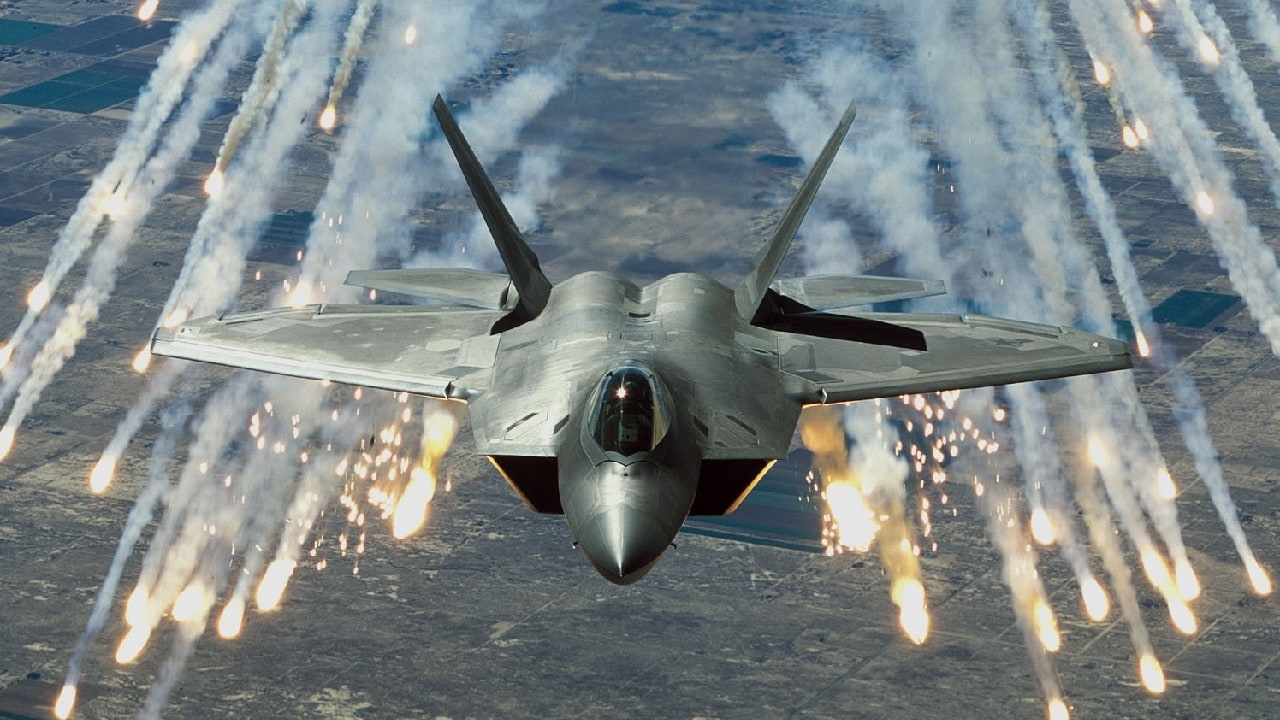
F-22 Raptor. Image Credit: Creative Commons.
The United States could have more aggressively responded to concerns over Chinese labor policies (which were key to the development of China’s export industries) or to Chinese technology theft.
The US could also have oriented its defense policies around the prospect of a military conflict with China rather than counter-insurgency, which might have deterred certain aspects of China’s military growth. Conversely, the US could have been forward-thinking about both nuclear and conventional arms control, working to bring China (and Russia) under the umbrella of systems of escalation management and arms limitation.
We chose not to, and the choice was not solely the Bush administration’s. The first Bush administration, the Clinton administration, the Obama administration, and, to some degree, the Trump administration were unwilling to set aside the very real gains from trade with China, gains that proved enormously beneficial to American consumers while also restructuring the US economy.
The Bush and Clinton theory of victory was that trade would necessarily liberalize China, a hope that looked increasingly forlorn by the beginning of Obama’s presidency.
But by that time, in part because of the ill-fated US adventure in Iraq, it was too late to make any meaningful pivot regarding the growth of Chinese military power.
9/11 and the US-China Rivalry
In short, 9/11 derailed (or at least delayed) what was supposed to be the grand geopolitical conflict of the 21st century.
The United States committed itself to wars in Iraq, Afghanistan, and elsewhere rather than to management of growing Chinese power.
At the same time, Beijing cemented its relationship with Moscow through a host of economic and military accords, supporting Russian adventurism in exchange for energy, resources, and technology.
Now the global military balance is fundamentally different than what existed in 2001, confirming many of the worst fears of geopolitical analysts at the time.
It is not certain that wise statesmanship could have changed this outcome, but future US policymakers will likely lament the near-total lack of effort to address one of the biggest, most predictable problems in the history of American foreign policy.
About the Author: Dr. Robert Farley
Dr. Robert Farley has taught security and diplomacy courses at the Patterson School since 2005. He received his BS from the University of Oregon in 1997, and his Ph. D. from the University of Washington in 2004. Dr. Farley is the author of Grounded: The Case for Abolishing the United States Air Force (University Press of Kentucky, 2014), the Battleship Book (Wildside, 2016), Patents for Power: Intellectual Property Law and the Diffusion of Military Technology (University of Chicago, 2020), and most recently Waging War with Gold: National Security and the Finance Domain Across the Ages (Lynne Rienner, 2023). He has contributed extensively to a number of journals and magazines, including the National Interest, the Diplomat: APAC, World Politics Review, and the American Prospect. Dr. Farley is also a founder and senior editor of Lawyers, Guns and Money.