
99 F-15 in NATO Plan 2026 Show Europe's Border Faster Replacement Capability
 Dr. Klaus Weber
99 F-15 in NATO Plan 2026 Show Europe's Border Faster Replacement Capability
99 American F-15 and F-15E are to be available to NATO in the event of a crisis in the future. According to Reuters, this is about a third less than before. This number is small enough to get lost in a table and large enough to accurately describe Europe's new defense problem. According to NATO Supreme Commander General Alexus Grynkewich, the European allies have "closed almost all gaps" left by Washington's reduced commitments in the NATO Force Model "in a matter of weeks." But is that enough?
The Gap is Not Abstract
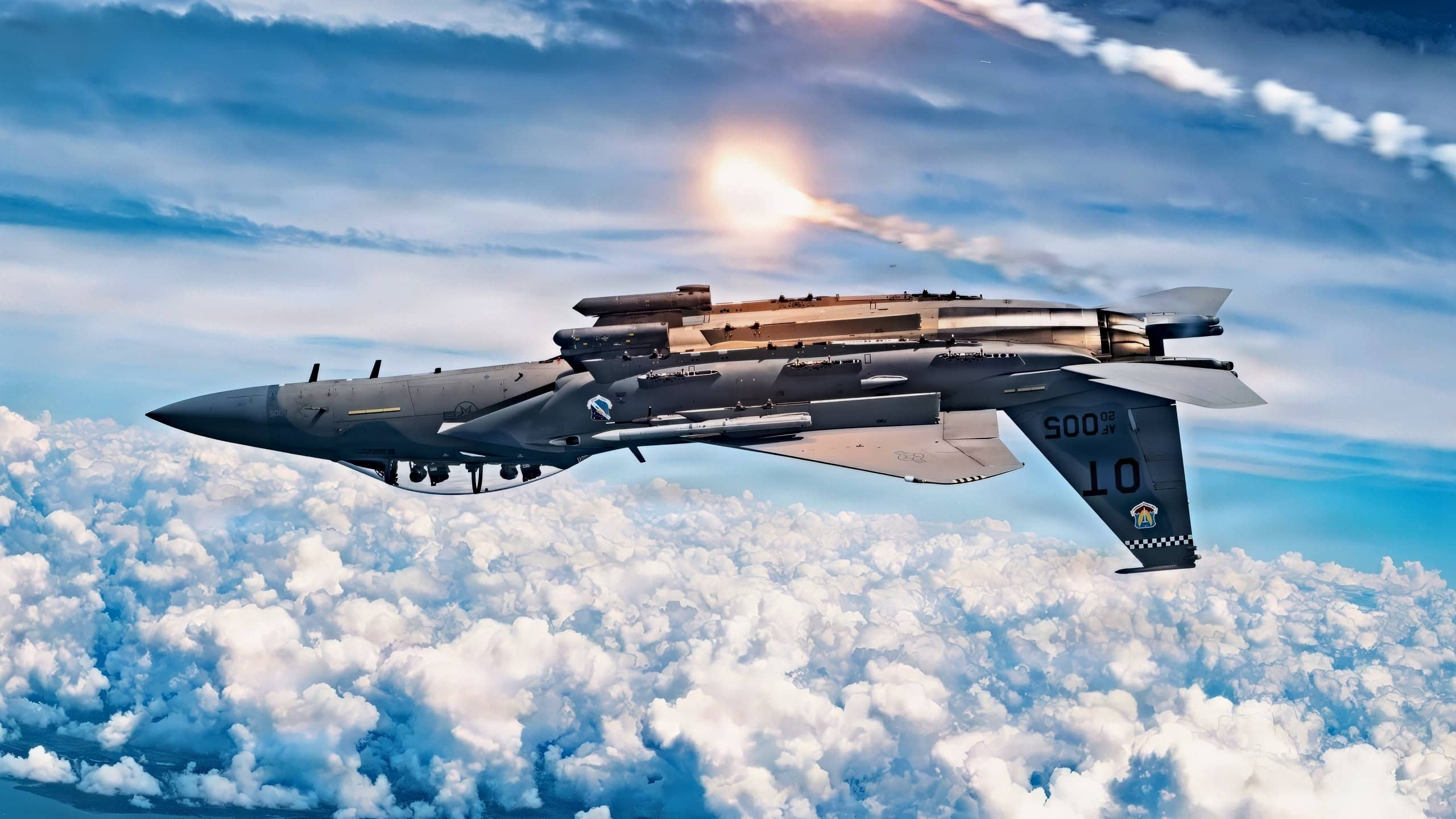
The American reduction does not only concern symbolic items. According to Reuters and Defense News, the number of F-15/F-15E available for NATO planning is dropping to 99. MQ-4 and MQ-9 drones are being halved to 12 systems. KC-135 and KC-46 tankers are reduced from 79 to 63. Maritime patrol aircraft are decreasing from 26 to 15. Destroyers are being cut from 17 to 9. Instead of two strategic bombers and two aircraft carriers, only one of each will be included in NATO planning; one cruise missile submarine is disappearing entirely from the commitment.
This list reads like an inventory of American high-value capabilities. That is precisely the point. Europe can report additional army brigades, procure more artillery ammunition, and strengthen air defense. However, it cannot conjure up strategic bombers, aircraft carriers, tanker fleets, or maritime long-range reconnaissance from national budgets within weeks. Grynkewich's formulation of "alternate capabilities with matching effect" is therefore militarily plausible but politically sensitive. It does not mean that Europe possesses the same capability. It means that NATO planners are trying to achieve a similar effect with different means.
The Difference Between Capability and Effect
In the European security policy debate, this difference is regularly blurred. A capability is a concrete military instrument: a KC-46 tanker, a P-8A Poseidon, a B-52 bomber, an Aegis destroyer. An effect is the operational outcome one aims to achieve: extending air operations, monitoring sea routes, putting pressure on enemy air defense, making deterrence visible. When a capability is lacking, sometimes the effect can be generated differently. Sometimes, however, it cannot.
In the case of combat aircraft, substitution is limitedly possible. More European Eurofighters, Rafales, F-35s, or Gripens can compensate for American F-15 shortfalls in certain scenarios. The calculation is tougher for tankers. Without sufficient air refueling, the range, operational duration, and number of simultaneously available combat aircraft shrink. In maritime patrol, the bottleneck is even clearer: Russia's underwater and long-range weapons problem cannot be solved by good intentions or national press releases. And in terms of strategic bombers, Europe simply has no equivalent.
Why Washington is Ending this Dependency
Grynkewich justifies the American cuts with an "unhealthy co-dependence" and the risk of simultaneous conflicts in multiple theaters. This is not a rhetorical whim. The U.S. is increasingly planning for the Indo-Pacific, for deterrence against China, and for a situation where Europe does not automatically remain priority one. Therefore, the step is not only a reaction to President Trump's threats but also an expression of a structural American shift in burden.
This is uncomfortable for Europe because it ends an illusion. Since the Madrid summit in 2022, NATO has been talking about a new generation of regional defense plans and a new Force Model. These plans were supposed to be more credible, faster, and more focused on forward defense. However, a plan is only as credible as the capabilities that are actually in place. If Washington withdraws commitments in May 2026 and Europe reports "almost all" gaps by July, that is organizationally remarkable. Strategically, however, it initially only proves that the tables could be filled.
Germany's Arrow 3 Shows the Wrong Reassurance
Germany is a good example of Europe's ambivalent progress. Berlin is building an exo-atmospheric missile defense with Arrow 3; according to Defense News, after the first position at Holzdorf/Schönewalde, a southern deployment position in the Kaufbeuren and Lechfeld area is to follow. The German procurements for Arrow now amount to more than 6.5 billion US dollars. This is real capability building, not a symbol.
But Arrow 3 addresses a different problem than the new NATO deficit. It protects the population, critical infrastructure, and military logistics hubs against ballistic missiles. It does not replace tankers, maritime long-range reconnaissance, aircraft carrier presence, or a strategic bomber component. This is where Europe's fundamental error lies: Each individual investment is sold as evidence of autonomy, even though many investments only close very specific gaps. Territorial defense is necessary. Strategic reach is something else.
The Industry Question Remains Unresolved
The defense industry also does not provide an easy reassurance. KNDS, the manufacturer of the Leopard tank and the French Caesar howitzer, postponed its planned IPO this week due to volatility in the European defense market. This is not a catastrophe, but a warning signal. If a core German-French player in land armaments struggles to stabilize capital market confidence despite high political demand, then no one should believe that Europe's capability gaps can be closed solely through summit declarations and higher NATO percentage goals.
NATO can reallocate forces in the short term. The European industry cannot replicate all American enablers in the short term. Especially high-value systems have long development, production, and training cycles. Air refueling, maritime reconnaissance, integrated air defense, space situational awareness, and long-range precision are not goods that can be politically decided upon and possessed in operational depth six months later.
The Ankara Test
The NATO summit in Ankara on July 7 and 8 will therefore be less about whether the alliance announces that it has closed almost all U.S. gaps. It will likely do so. What matters is whether it openly names which gaps can only be replaced by "matching effect" and which are actually covered by equivalent European capabilities.
Europe has shown in a few weeks that it can respond organizationally faster than many critics expected. That deserves recognition. However, the strategic conclusion is more uncomfortable: Dependency on the U.S. will not end if Europe replaces American table positions. It will only end when European states finance the expensive, unattractive, and politically difficult-to-communicate enablers that Washington has provided so far. More national combat brigades are important. But without tankers, reconnaissance, air defense, command capability, and strategic reach, they remain a stronger front with the same American back.
This is the new European paradox. Washington forces Europe towards independence, but the very American cuts show how little independence Europe possesses in the crucial high-value capabilities. The gaps are almost closed. The dependency is not.
NATO plans for 2026 reveal a reduction in available U.S. military assets in Europe, with only 99 F-15 and F-15E aircraft designated for crisis situations. The number of MQ-4 and MQ-9 drones will be cut to 12, and KC-135 and KC-46 tankers will decrease to 63. This shift reflects a broader U.S. strategy focusing on the Indo-Pacific, raising concerns about Europe's defense capabilities and reliance on American military support.
- NATO plans to have 99 F-15 and F-15E available in crisis situations by 2026.
- The number of MQ-4 and MQ-9 drones will be halved to 12.
- KC-135 and KC-46 tankers will decrease from 79 to 63.
- Maritime patrol aircraft will drop from 26 to 15.
- The U.S. is shifting focus to the Indo-Pacific, affecting European defense commitments.