
Europe Fills 99 NATO F-15 Gaps America Left
 Alexandra Reeves
Europe Fills 99 NATO F-15 Gaps America Left
The comforting version of this story is that Europe finally stepped up. The less comfortable version is that NATO has just learned how much of its war plan still depends on American assets that Washington now wants available somewhere else.
According to Reuters reporting published by Defense News on July 3, NATO will tell leaders at the Ankara summit on July 7-8 that European allies have filled almost all of the gaps created by recent United States reductions in alliance defence plans. General Alexus Grynkewich, the new Supreme Allied Commander Europe, said European allies had largely filled those gaps in a matter of weeks and that NATO was looking for alternate capabilities where a direct replacement does not exist.
That is better news than many expected. It is not the same thing as strategic independence.
The Numbers Behind the Gap
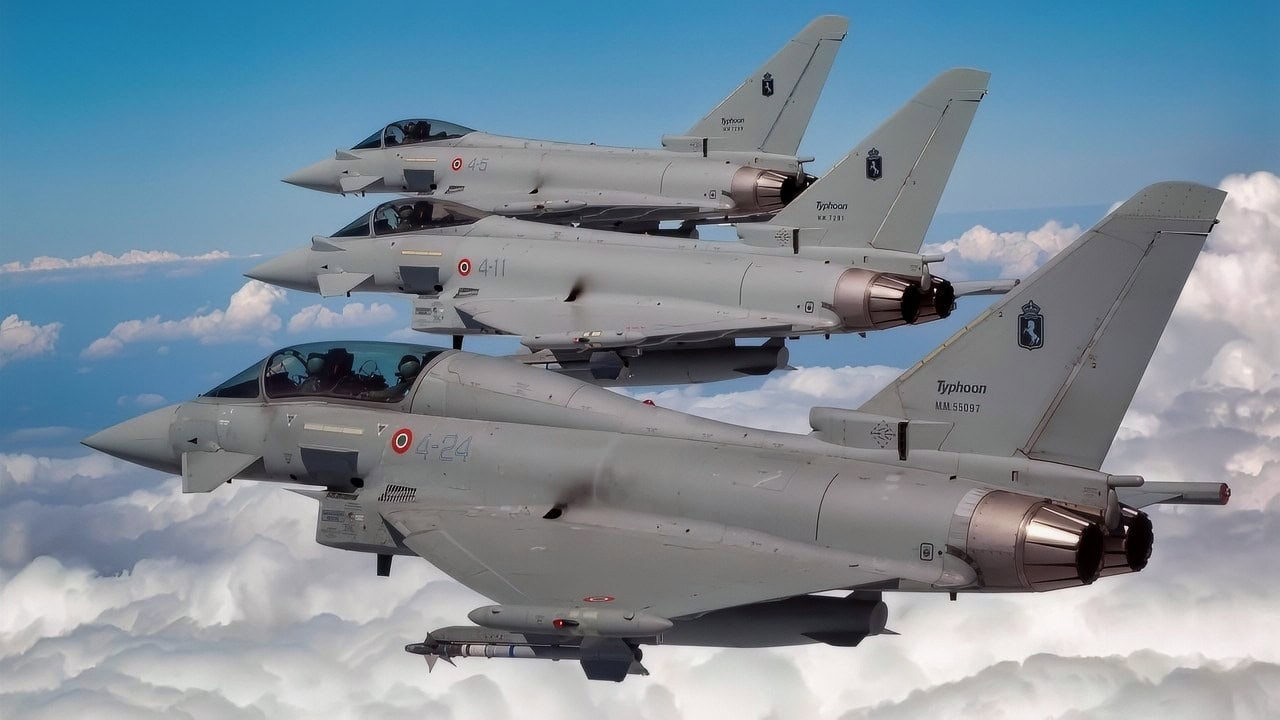
The United States reductions were not symbolic. Defense News, citing Reuters and a military source, reported that American F-15 and F-15E fighters allocated to NATO would fall by roughly one third to 99 aircraft. MQ-4 and MQ-9 drones would be cut by half to 12. KC-135 and KC-46 aerial refuelling aircraft would fall from 79 to 63.
The maritime picture is just as revealing. Maritime patrol aircraft would drop from 26 to 15. Destroyers would fall from 17 to nine. The only cruise missile submarine assigned to the commitments would be removed. NATO would receive one strategic bomber and one aircraft carrier rather than two of each.
Those are not boutique capabilities. Fighters, tankers, drones, destroyers, patrol aircraft and strategic bombers are the things that let an alliance move, see, strike, sustain and reinforce. Infantry battalions matter, but they do not cross the Atlantic, hunt submarines, suppress air defences or keep aircraft on station for hours over the Baltic.
The main unresolved shortfall, according to the Reuters source cited by Defense News, is strategic bombers. That should surprise nobody. Europe can generate more tactical aviation, artillery and ground forces if the politics and money line up. It cannot quickly manufacture a B-2 or B-52 equivalent, nor can it improvise the trained crews, weapons integration, command arrangements and global basing habits that come with that force.
Europe Can Fill Tables Faster Than It Can Build Depth
NATO force planning is full of spreadsheets, and spreadsheets can be filled faster than hangars. That is not an insult. It is how alliances work. Nations declare forces, planners match them to regional defence plans, and commanders decide whether the resulting package can actually survive contact with the enemy.
The useful thing about this episode is that it forced that process into public view. At the 2022 Madrid summit, NATO leaders endorsed a new force model to resource a new generation of military plans, strengthen eastern flank defences and prepare for high-intensity multi-domain operations. The ambition was clear: defend every inch of allied territory, scale battlegroups toward brigade-size formations where needed, and make reinforcement credible on short notice.
Three years later, the bill is due. European governments can claim they are filling American gaps, and in many categories they probably are. The real question is whether those forces come with the readiness, munitions, spare parts, airlift, fuel, crews and political permission required for a fast-moving crisis.
Here is the thing Washington understands very well: a pledged capability and an employable capability are not identical. A fighter on a national inventory is not the same as a fighter ready for NATO tasking with trained pilots, protected basing, enough missiles and tankers available. A destroyer in a navy is not the same as a destroyer free to escort reinforcement convoys while national waters are under pressure.
The American Message Is Blunt
General Grynkewich framed the shift as ending an unhealthy co-dependence as the United States faces the possibility of simultaneous conflicts in multiple theatres. That is the diplomatic language. The plain English version is harsher: Europe can no longer assume that the American order of battle for Russia is ring-fenced from China, Iran, Korea or domestic politics.
That does not mean the United States is leaving NATO. The idea that any reduction automatically equals abandonment is too easy. Washington still provides the alliance with nuclear forces, intelligence, strategic lift, high-end air power, command infrastructure and an industrial base that Europe cannot replicate soon.
But the direction of travel matters. If the United States is reducing committed fighters, drones, tankers, destroyers and maritime patrol aircraft before a crisis, European leaders should assume the pressure will be worse during one. The hard part will not be replacing American flags on a planning chart. It will be replacing the habits of dependence built over decades.
What Ankara Will Really Test
The Ankara summit will probably produce disciplined language about burden sharing, resilience and European responsibility. That is fine. Summits are designed to sand down sharp edges. But this one has a sharper edge than usual because the numbers are specific.
Ninety-nine F-15 and F-15E fighters still represent a major American commitment. Sixty-three tankers remain a serious contribution. Nine destroyers are not nothing. Yet the reductions expose which parts of NATO deterrence still rest on assets Europe has not bought in sufficient quantity or, in some cases, has barely tried to build.
The bomber gap is the cleanest example. Europe can discuss alternate effects, but there are only so many ways to replace a strategic bomber. Long-range missiles, stealth aircraft, submarine-launched weapons and distributed strike drones can cover parts of the mission. None provide an identical political signal or operational package. Sometimes alternate capability is a clever solution. Sometimes it is a polite phrase for accepting less.
Russia will read this carefully. Moscow does not need to believe NATO is weak to exploit uncertainty. It only needs to see delays, shortages and political hesitation. If European allies have genuinely filled the American gaps, deterrence improves. If they have merely reallocated scarce forces from one plan to another, the alliance has moved risk around the map rather than reduced it.
The Bottom Line
The good news is that NATO did not freeze when Washington pulled back some commitments. European allies moved quickly, and that matters. The bad news is that moving quickly after an American reduction is still a reactive posture.
My read is simple: Europe has passed the first test of alliance adaptation, but not the harder test of strategic depth. The next indicators to watch are tanker procurement, maritime patrol aircraft availability, long-range strike stocks, air defence missile production and whether European governments fund readiness after the summit cameras leave Ankara.
If NATO wants this to be more than crisis accounting, Europe has to stop treating American reductions as emergencies and start treating them as the baseline. The alliance may have filled the gaps on paper. Now it has to prove those replacements can fight.
European allies filled nearly all NATO defense gaps left by U.S. reductions, with 99 F-15 and F-15E fighters, 12 drones, and 63 tankers reported. The Ankara summit on July 7-8, 2023, will discuss these changes and the implications for European defense capabilities. However, significant shortfalls remain, particularly in strategic bombers, raising concerns about NATO's long-term readiness and independence from U.S. military support.
- NATO will report that European allies filled almost all gaps left by U.S. reductions at the Ankara summit.
- The U.S. will reduce its F-15 and F-15E fighters allocated to NATO by one third, totaling 99 aircraft.
- European allies have quickly filled these gaps, but strategic independence remains a concern.
- The main unresolved shortfall is in strategic bombers, which Europe cannot quickly manufacture.
- The Ankara summit will address burden sharing and European responsibility in defense.