
A 50-48 Vote in the Senate Puts the American Gulf Umbrella to the Test Against Iran 2026
 Ahmed Al-Rashid
A 50-48 Vote in the Senate Puts the U.S. Gulf Umbrella to the Test Against Iran 2026
On June 24, 2026, the number 50-48 in the U.S. Senate was not a distant constitutional detail from the Gulf, but a number heard by Gulf capitals like an early warning signal in an air defense operations room. The decision calling for President Donald Trump to halt military action against Iran, after also passing in the House of Representatives, came as Marco Rubio attempts to market a temporary agreement with Tehran in the UAE, Kuwait, and Bahrain, while the issues of nuclear inspections and the Strait of Hormuz remain hanging over the table.
The Event is Not Just Legal
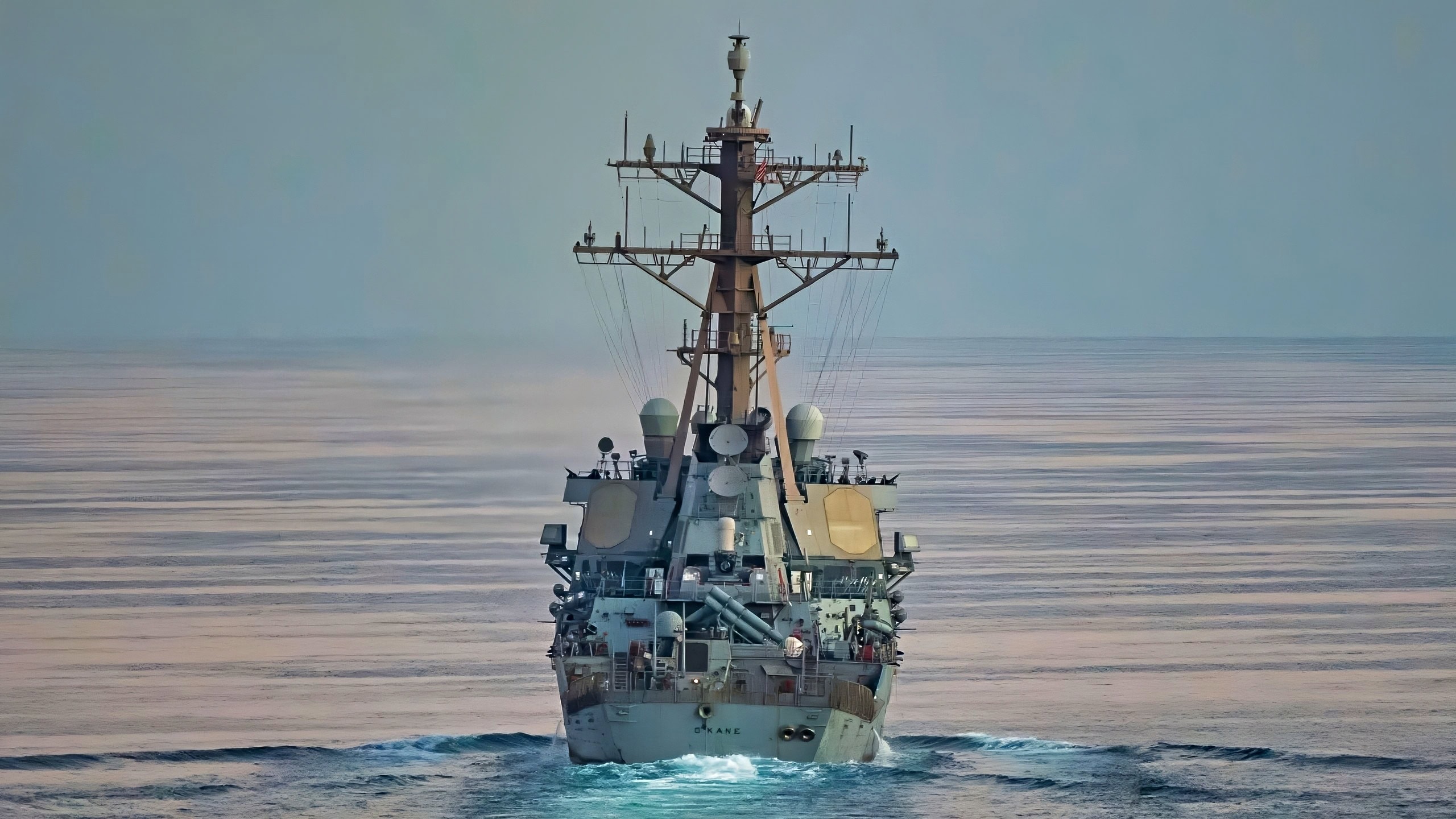
According to Defense News and Reuters, the Senate voted in favor of the resolution by a narrow majority, with four Republicans joining most Democrats. Al Jazeera added that the House had passed a similar version on June 3 with a vote of 215-208. Legally, the resolution may remain symbolic, as the White House claims that the ceasefire on April 7 ended hostilities, and because the debate over the War Powers Act has not been resolved judicially. However, from a military and political standpoint, the symbolism here is enough to make an impact.
A soldier in the field does not first ask whether the text is constitutionally binding, but rather asks whether the decision in Washington is firm or subject to change at the first electoral pressure. This is precisely what concerns Riyadh, Abu Dhabi, Doha, Manama, and Kuwait. U.S. protection in the Gulf is not a single piece of weaponry, but a series of decisions that start from Congress and end with the commander of a destroyer or a Patriot battery at a forward base.
The Gulf Reads the Vote as a Test of Assurance
Since the February attacks on Iran and the subsequent closure of part of oil and gas trade, Gulf countries have acted as if the American umbrella is still necessary but no longer sufficient on its own. The United States can deploy carriers, B-52 and B-1B bombers, F-35 and F-22 fighters, and Arleigh Burke destroyers equipped with the Aegis system and SM-2, SM-6, and Tomahawk missiles. This is a capability that no other power in the region possesses. But the deeper Gulf question is whether Washington will use this capability if nearly half of the Senate wants to restrict the president.
Any military personnel who has served in the region knows that deterrence is not made of iron alone. The radar sees the target, and the missile intercepts it, but the adversary monitors political will before watching the radar screen. When Tehran sees that Congress is divided, and that a Reuters/Ipsos poll indicates that only 24 percent of Americans believe a war with Iran is worth the cost, the risk calculation changes. Iran does not need to militarily defeat the Fifth Fleet; it is enough for it to prolong the crisis until the political cost in Washington exceeds the benefit.
Hormuz and Ras Laffan Are Not Separate Files
In the same daily report, Al Jazeera noted that Rubio emphasized that Iran would not be allowed to impose tolls in the Strait of Hormuz, while Tehran denied that it had agreed to the return of International Atomic Energy Agency inspectors. Doha also spoke about the possibility of returning most liquefied natural gas production within weeks after Ras Laffan was damaged in an Iranian attack. This places maritime security, energy, and nuclear negotiations in one basket.
If the strait remains open without a clear inspection agreement, the Gulf will pay the price of ambiguity twice. Once through insurance premiums and energy prices, and once through a race to purchase defense systems. The Patriot PAC-3 is good against short-range ballistic missiles in the terminal phase, THAAD provides a higher intercept layer, and Aegis at sea expands the warning and interception umbrella. But neither Patriot nor THAAD solves the problem of a hesitant political decision in Washington, nor do they compensate for the lack of command and control integration among Gulf states.
The Gulf Procurement Problem Returns to the Capability Triangle
The expected Gulf response will be familiar: purchasing additional batteries, longer-range radars, more intercept munitions, and perhaps paying for maintenance and armament contracts that have been delayed. I do not oppose this in principle. The region needs a larger stockpile of intercept missiles after months have shown that consumption is higher than peace plans. But the problem is that Gulf capitals often treat defense as a shopping list rather than a combat system.
The capability triangle is simple: equipment, training, institution. In equipment, the Gulf has almost the best. In training, there is clear improvement but it is uneven. In institution, gaps remain deep: data sharing, rules of engagement, authority to launch interceptions, and linking air defense with maritime defense and energy protection. Therefore, purchasing ten new batteries will not grant independence if software, munitions, maintenance, and operational decision-making remain tied to a series of American approvals.
The old adage says that a weapon you cannot maintain in a crisis becomes a political message more than a military capability.
Israel Adds Another Layer of Pressure
The equation does not stop at the Gulf. Itamar Ben Gvir's statement that Israel may act alone against Iran, as reported by Al Jazeera, means that Washington may find itself between a Congress that wants to impose restrictions and an ally that wants the freedom to strike. This confuses Gulf states more than Tehran. Gulf countries do not want an open war with Iran, but they also do not want a U.S.-Iranian agreement that leaves Iran's missiles, drones, and proxies out of the equation.
Here lies the paradox that many Western analyses avoid mentioning. Some Gulf capitals fear Israeli escalation, but at the same time benefit from Israeli pressure on Iran. They fear the American withdrawal, but they complain about the terms of American protection. They want defensive independence, but they also want American intercept missiles, American warning information, and American bases. This is not a moral duality as much as it is a result of harsh geography.
What Gulf Capitals Should Do Now
- First, increase the stockpile of intercept missiles and naval munitions, as the Iran crisis has proven that depletion is faster than accounting tables.
- Second, establish a unified Gulf center for air and maritime warning that does not just exchange pleasantries but has operational authority at the moment of attack.
- Third, convert new purchase contracts into training, maintenance, and knowledge transfer contracts, not just signing pictures and public relations data.
- Fourth, treat the U.S. Congress as part of the deterrence landscape, as voting in Washington has begun to affect calculations in Tehran just as a carrier does in the Arabian Sea.
In my estimation, the 50-48 vote will not remove U.S. forces from the Gulf tomorrow, nor will it prevent Trump from maneuvering if the Swiss negotiations collapse. However, it reveals that the era of the open security check is over, or at least it now requires two signatures: the White House's and the American domestic one. This is a heavy message for countries that built their air and naval defense on the assumption that the American decision in a crisis would be faster than the Iranian missile.
The Gulf does not need to sever its relationship with the American umbrella; this is rhetoric that does not withstand the map of bases, radars, and maritime corridors. But it needs to understand that the umbrella has become politically perforated, not technically. Between complete dependence and declared independence lies a difficult area called building a real defense institution. There, not in a weapons exhibition or a congressional statement, will the future of Gulf deterrence be determined.
The U.S. Senate voted 50-48 on June 24, 2026, requesting President Trump to cease military operations against Iran, reflecting political divisions. This decision follows a similar resolution passed by the House on June 3, 2026, and raises concerns among Gulf states about the reliability of U.S. military support amid ongoing tensions with Iran.
- U.S. Senate voted 50-48 to halt military action against Iran.
- The House of Representatives passed a similar resolution on June 3, 2026.
- Marco Rubio is promoting a temporary agreement with Iran.
- The Gulf states perceive the U.S. military presence as essential but insufficient.
- Iran is monitoring U.S. political divisions regarding military action.