
A 60-Day Map Between Washington and Tehran Puts the Strait of Hormuz and Lebanon to the Gulf Deterrence Test
 Ahmed Al-Rashid
A 60-Day Map Between Washington and Tehran Puts the Strait of Hormuz and Lebanon to the Test of Gulf Deterrence
On June 22, 2026, the Qatari-Pakistani mediation announced that Washington and Tehran agreed in Burgenstock, Switzerland, on a 60-day roadmap to reach a final agreement, which includes ensuring safe passage in the Strait of Hormuz, establishing a non-engagement cell linked to Lebanon, and working groups for the nuclear file, sanctions, and monitoring mechanisms. This is not a fleeting diplomatic detail; it is an attempt to place the keys to fire in the Gulf and the Eastern Mediterranean in one room.
The small numbers in the news reveal its magnitude. The talks lasted 18 hours, and reports indicated a drop in ship crossings in Hormuz to 5 vessels on June 21, down from 26 the previous day, and about giant tankers carrying two million barrels each. Militarily, when the number of crossing ships becomes a daily indicator for negotiation, it means that the strait is no longer just a maritime passage, but has become a tool for political command and control.
What They Actually Agreed Upon
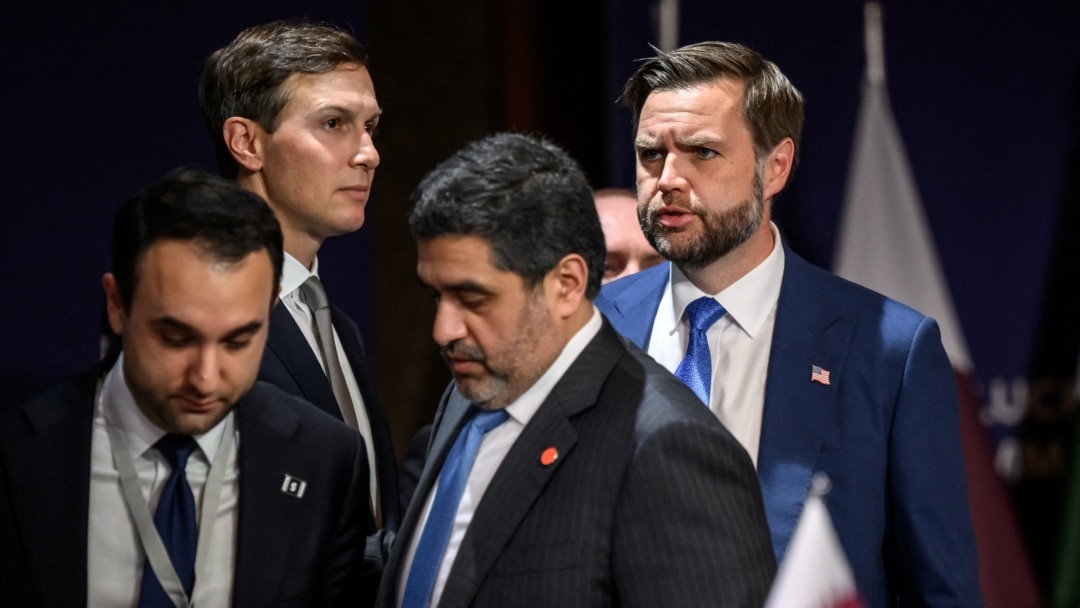
According to what was published by Radio Free Europe/Radio Liberty about the Qatari-Pakistani statement, the agreement does not yet finalize the details of the settlement, but it establishes three practical mechanisms: a high-level political committee for oversight, a communication line during the sixty-day period to avoid incidents and misunderstandings in the Strait of Hormuz, and a non-engagement cell that includes the United States, Iran, and Lebanon to stabilize the cessation of operations related to the war between Israel and Hezbollah.
Notably, these mechanisms address points of friction rather than the roots of the conflict. They do not state that Iran's nuclear program has been resolved, nor that Hezbollah has exited the deterrence equation, nor that Israel has become a party committed to the arrangement. Rather, they indicate that the parties are tired of the cost of chaos and want to manage escalation rather than end its causes. Here we must be frank: in the Middle East, managing risk is often called peace, while the guns remain in place.
Iran has spoken, through statements relayed by its official media, about lifting the blockade on ports, releasing some frozen assets, and a large reconstruction and development plan. The report also mentioned Washington's commitment to facilitate a $300 billion reconstruction fund supported by regional countries if a broader agreement on the nuclear program is achieved. These are political figures par excellence; they give Tehran a narrative of internal victory and provide Washington with a card that says money is conditional on behavior that can be monitored.
Hormuz is the Center of Gravity, Not the Margin
In my view, the most important item is neither the nuclear issue nor the sanctions, but the communication line regarding the Strait of Hormuz. Any military officer who has served in the region knows that the strait does not need to be completely closed to become a weapon. It is enough for navigation to slow down, for ships to turn off their identification devices, for insurance premiums to rise, and for shipping companies to start asking about alternative routes. At that point, the threat becomes a daily cost on markets and Gulf capitals.
Before the war, about one-fifth of the world's oil and gas passed through Hormuz. Therefore, the announcement by the Revolutionary Guard to close the strait in response to Israeli strikes in Lebanon, even if it does not turn into a complete actual closure, links a relatively distant front from the Gulf to the price of oil and the security of Gulf ports. This is Iran's true power: it is not in its ability to destroy the global economy, but in its ability to convince the market that it could do enough to disrupt it.
Practically, the Gulf deterrence structure here seems costly but incomplete. There are Patriot and THAAD batteries, American bases, long-range radars, and early warning aircraft, but all of this protects cities and bases more than it protects the regularity of maritime trade. Air defense does not accompany every tanker, does not prevent every fast boat, and does not explain the intent of a coastal missile before it is launched. Therefore, the communication line between Washington and Tehran may be, at a certain moment, more valuable than an additional air defense battery.
Lebanon Enters Through the Gulf Door
Linking the agreement to a non-engagement cell that includes Lebanon reveals something that Gulf capitals do not like to acknowledge: Gulf security is no longer confined to the Gulf. Hezbollah in southern Lebanon, the Houthis in the Red Sea, and the Popular Mobilization Forces in Iraq are all pressure points on the same board. If Israel strikes Hezbollah positions and Iran responds with a threat to Hormuz, then a missile in Lebanon could raise the insurance cost on a Saudi or Emirati tanker.
This network is what makes the talk of "defensive independence" in the Gulf difficult. Gulf countries can purchase excellent systems, but they cannot alone separate the fronts that Iran connects politically and militarily. Washington can provide naval and air cover, but it cannot make every Iranian proxy irrelevant. As for Israel, it benefits from a wide range of military operational freedom, but it is not a party clearly committed to this new map, as indicated by reports of objections from Israeli leaders and their continued intent to strike Hezbollah positions.
What This Means for Riyadh, Abu Dhabi, and Doha
For Saudi Arabia, the UAE, and Qatar, the agreement presents both an opportunity and a problem at the same time. The opportunity is to reduce the likelihood of a direct Iranian strike or repeated closure of the strait, which is no small gain. The problem is that mediation and guarantees may re-establish reliance on the United States as the final arbiter in regional security, at a time when those same capitals are talking about local manufacturing and defensive sovereignty.
Qatar here is not just a small mediator. Its presence with Pakistan at the heart of the arrangement gives Doha a higher position than its traditional military size, and confirms that influence in the Middle East is not measured solely by the number of tanks. Sometimes a negotiation room, a communication line, and an open relationship with both parties are worth more than a squadron of fighter jets that lacks freedom of use. This is a lesson that armies that measure power by the number of platforms do not like.
- The first direct effect is a reduction in navigation risks if Iran adheres to the Hormuz mechanism.
- The second effect is granting the Gulf a 60-day period to reassess air and naval defense readiness.
- The third effect is increasing pressure on Israel and Hezbollah because any clash in Lebanon could undermine maritime calm.
- The fourth effect is returning the nuclear file to a long technical table rather than a short airstrike.
Capability Does Not Equal Assurance
From the perspective of the "Triangle of Capability" that I always use, equipment alone is not enough. The Gulf has equipment, but the test now lies in training and institutions. Can Gulf operations rooms integrate navigation, energy, and air defense information with American warnings in real time? Are there clear rules of engagement if an Iranian boat approaches a tanker? Can political leadership withstand a partial closure of the strait without going directly to Washington? These questions are more important than the catalog of any new system.
The old military adage says that an open road is not guarded by weapons alone, but by the decision that knows when to use the weapon and when to leave it in the sheath.
The sixty-day map may grant the region a useful truce, but it reveals the greater contradiction: the Gulf wants defensive independence, but it needs an American line with Tehran to keep its tankers safe; Iran wants to lift the blockade and receive money, but it retains the weapon of the strait and the proxy; and Washington wants a final agreement, but it manages a crisis that includes Israel, Lebanon, the Revolutionary Guard, and Gulf states in one sentence. This is not the end of the war, but a new test of the region's ability to live between dependence and deterrence without calling it a victory.
Washington and Tehran agreed on a 60-day roadmap for security in the Strait of Hormuz and Lebanon on June 22, 2026. The negotiations included discussions on safe passage for vessels and the establishment of a non-engagement cell involving the U.S., Iran, and Lebanon. Iran indicated plans to lift port blockades and release frozen assets, while the U.S. proposed a $300 billion reconstruction fund contingent on a broader nuclear agreement.
- Washington and Tehran agreed on a 60-day roadmap for security in the Strait of Hormuz and Lebanon.
- Negotiations lasted 18 hours and involved discussions on safe passage and a non-engagement cell.
- Iran discussed lifting port blockades and releasing frozen assets.
- The U.S. committed to facilitating a $300 billion reconstruction fund if a broader nuclear agreement is reached.
- The report highlights the interconnectedness of regional security involving Hezbollah and Iranian influence.