

Summary and Key Points: The M113 began as a mid-1950s Army requirement for a tracked, fully enclosed carrier light enough to parachute in and able to ford rivers. FMC, a farm machinery company, won with a Kaiser Aluminum alloy hull that stopped rifle rounds and shell splinters, seated 11 to 13 troops on two benches, and dropped a hydraulic ramp at the rear. Production ran from 1960 to 2007.
The M113 Was a Military History Legend
A farm machinery company built more than 80,000 M113 “Battle-Taxis,” making it the Most-Produced Armored Personnel Carrier Since the Cold War.
I’d like to go back even further, but the UK’s tiny Bren Gun Carrier was in production from 1936 to 1960, with more than 118,000 units produced.
During WWII, countries produced armored personnel carriers in many shapes, sizes, and forms.
Armored protection and armament also varied greatly from the very good (the US M3 Halftrack) to the very bad (the UK/Canadian Beaverette).
Even the best featured relatively thin armor and, worse still, open tops.
This made the troops inside vulnerable to heavy machine guns and the shrapnel of artillery shells exploding overhead.
Post-war designs moved to heavier armor and fully enclosed troop compartments to improve survivability.
The APC was supposed to deliver troops safely to an active battlefield ready to fight, not chopped to bits by artillery shrapnel.
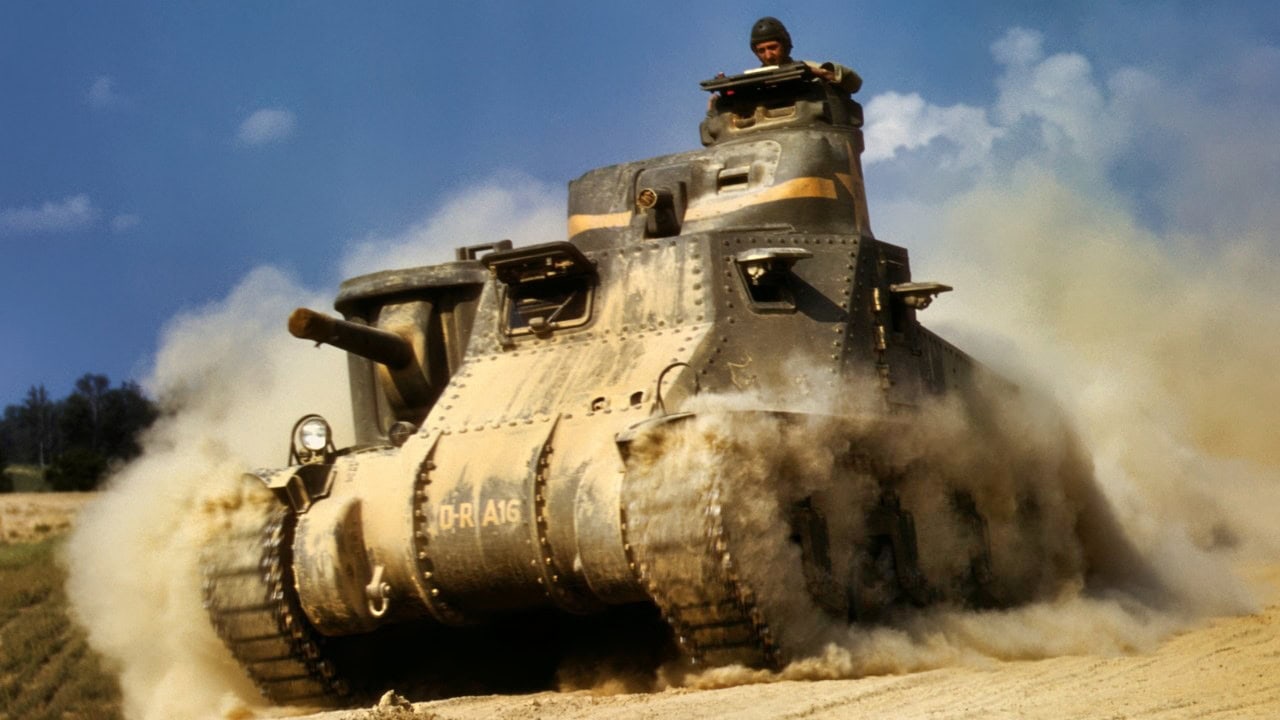
M3 Grant Lee Tank World War II.
The M113 Became The Blueprint For Modern Infantry Mobility
In the mid-1950s, the US Army put out a bid for a new APC that was fully tracked, fully enclosed, light enough to be dropped by parachute from a cargo plane, and able to ford rivers.
The winning proposal came from the Food Machinery Chemical Corporation (FMC), which partnered with Kaiser Aluminum to create an alloy light enough to be dropped from an airplane and cross rivers, while also absorbing rifle and light machine-gun rounds and artillery splinters.
The basic rectangular box shape gave it good interior volume for 11-13 troops seated facing each other on two benches.
A large hydraulically operated ramp at the rear allowed for easy egress.
The Army awarded FMC a contract for full production on a modified design in 1960.
It was followed by an 80,000-plus-unit production run that continued until 2007.
Evolution of the Battle-Taxi: M113 Variants
The M113 evolved into 4 major variants for the US Army.
The original 1960 M113 was powered by a Chrysler 209hp gasoline engine.
By 1964, the M113A1 replaced the gas engine (for obvious reasons) with a Detroit Diesel 6V53 to reduce fire risk and extend its combat range by 100 miles.
The M113A2, introduced in 1979, improved the engine’s cooling system, gave it a tougher suspension, and armored fuel tanks located outside the hull.
The M113A3, introduced in 1987, gave the Battle-Taxi a turbocharged 275hp engine, steel floor plating for mine resistance, high-speed digital electronics upgrades, and interior “spall liners” to absorb fragments that penetrated the hull instead of ricocheting around inside.
A Baptism By Fire in the Jungles of Vietnam For The Battle-Taxi
The M113 got its baptism of fire in the US Army in Vietnam. In the jungle, the APC’s tracks and lightweight chassis easily plowed through the terrain, but many fell victim to heavy anti-tank mines and close-range attacks with Rocket Propelled Grenades (RPGs).
The casualties inside could be frightful. Without air conditioning, troops sweltered inside.
To avoid both the heat and being killed inside by a mine or RPG, soldiers took to riding on top of their M113S like stagecoaches in a Western movie, armed with rifles and machine guns.
The Army didn’t ignore the long tradition of troops modifying their own weapons and equipment in the field, and soon M113S had armored shields for the top-mounted .50 Cal and additional M-60 machine guns.
Instead of being a way to move troops, the M113 would become an offensive anti-infantry platform bristling with automatic weapons.
The Rectangular Box Chassis Of The M113 Could Do Almost Anything
While it didn’t seem designed to carry troops in its initial configuration, the M113’s basic shape lent itself to a wide variety of reconfigurations for other needs.
The M577 served as a mobile tactical operations center for fast-moving armored units.
The M106 had the M30 4.2-inch (106.7 mm) heavy mortar and up to 93 rounds concealed by a circular roof hatch that could be opened. This mortar and its ammunition were too heavy for infantry to carry.
The M901 version was a tank destroyer with a launch tube turret for the TOW Anti-tank guided missile.
The M163 VADS was developed as an anti-aircraft weapon fitted out with the M61 six-barreled Vulcan rotary cannon. Six M163 VADS were sent to Vietnam.
Without a real threat posed by Vietnamese aircraft or helicopters, they were used as direct-fire support weapons for bases and convoys.
Firing 20mm shells at 3,000 rounds per minute, it could sweep away dense jungle growth and devastate enemy gun positions and bunkers.
The Army soon began sending more of these to Vietnam.
The M113 Retired, Leaving Behind A Legacy Of Global Use
Between 1960 and 2007, the US Army bought more than 33,000 Battle Taxies in all its forms. The US also sold 53,000 M113S to dozens of other countries worldwide.
The US withdrew the M113 from frontline combat units in the 1980s and replaced it with the M2 Bradley.
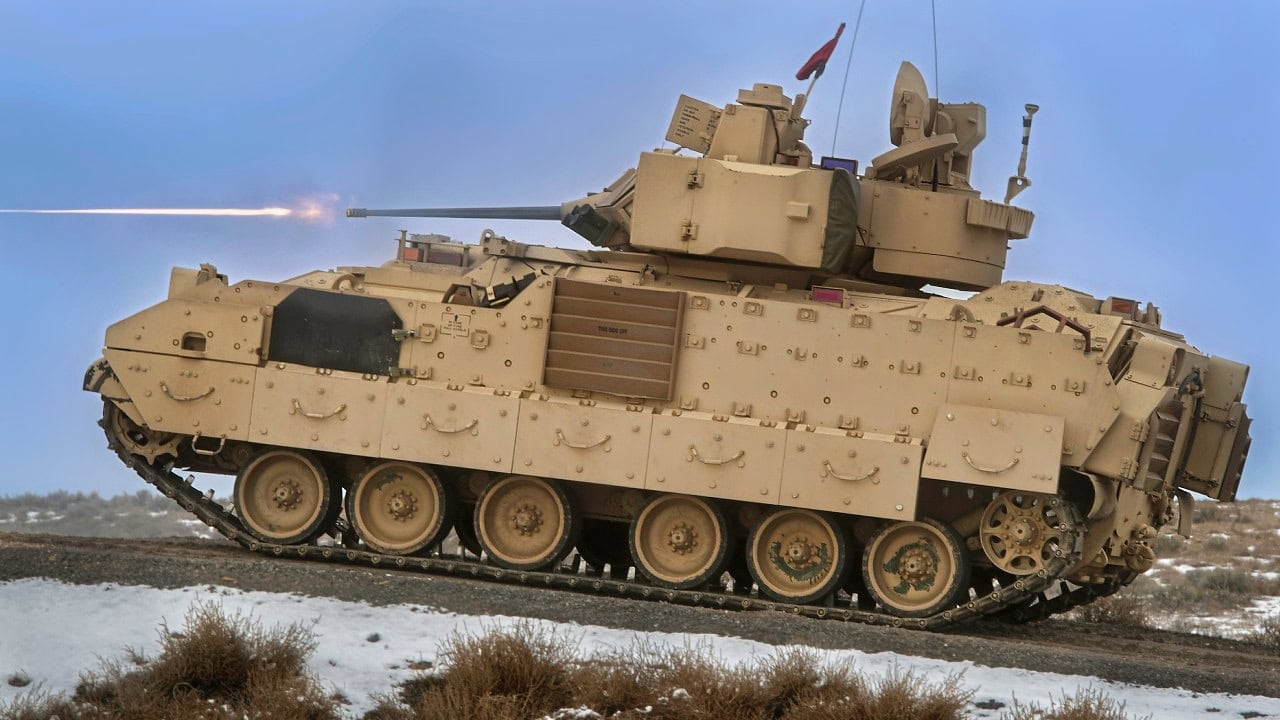
The Bradley Fighting Vehicle cuts loose several rounds from the 25mm main gun on the orchard Combat Training Center Range. Soldiers completed training this week of the Bradley Commanders Course with the 204th Regional Training Institute, (RTI), of the Idaho Army National Guard on Gowen Field. The course is designed to train active duty, reserve and national guard officers and non-commissioned officers in combat critical M3 Bradley Fighting Vehicle Commander Skills. Field exercises were conducted on the newest Range 10, the Digital Air Ground Integrated Range (DAGIR), on the Orchard Combat Training Center grounds.
However, thousands remain in service with Engineer units, as command vehicles, and as casualty evacuation vehicles.
The Army is now working to replace its remaining M113S with the Armored Multi-Purpose Vehicle (AMPV).
In active conflicts elsewhere, the M113 remains in frontline service.
Ukraine has obtained several hundred for use in its fight against Russia.
About the Author: Sean Spoonts
Sean Spoonts is the former Editor-In-Chief of SOFREP.com. He is a military analyst, writer, and commentator whose work has appeared in Newsweek, CS News, Ukrinform, and various military/veteran media networks and professional publications, including the Military Intelligence Professional Bulletin. He is a U.S. Navy veteran, having served as an Aviation Anti-Submarine Warfare Operator and Search and Rescue Helicopter Aircrewman.