

In the age of cheap drone swarms and missiles, the Russians have unveiled their newest warship. And when we say “new,” we really mean “old but upgraded.” That’s the Kirov-class battlecruiser. Specifically, the Admiral Nakhimov. She’s the only one of her class, and the 251-meter-long battlecruiser was originally designed and built by the Soviet Union.
The Dark Days of Development
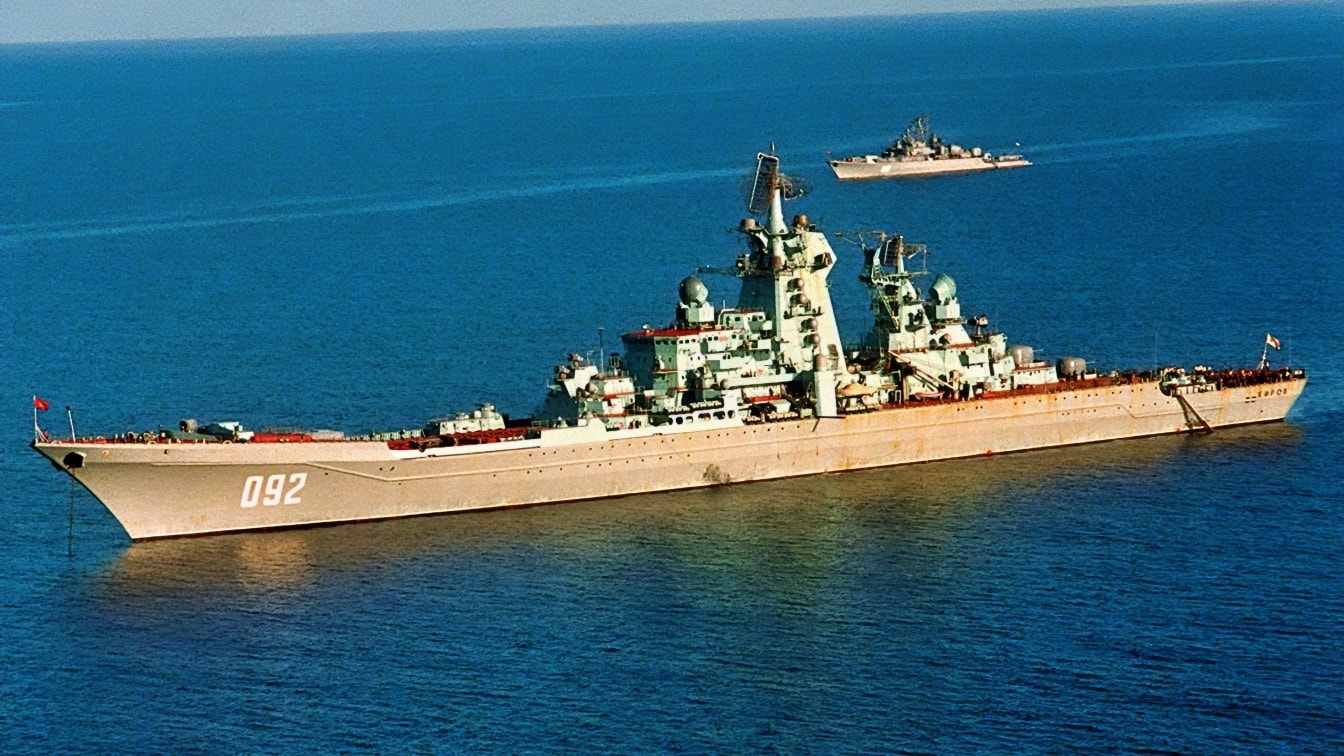
Kirov-Class Battlecrusier. Creative Commons Image.
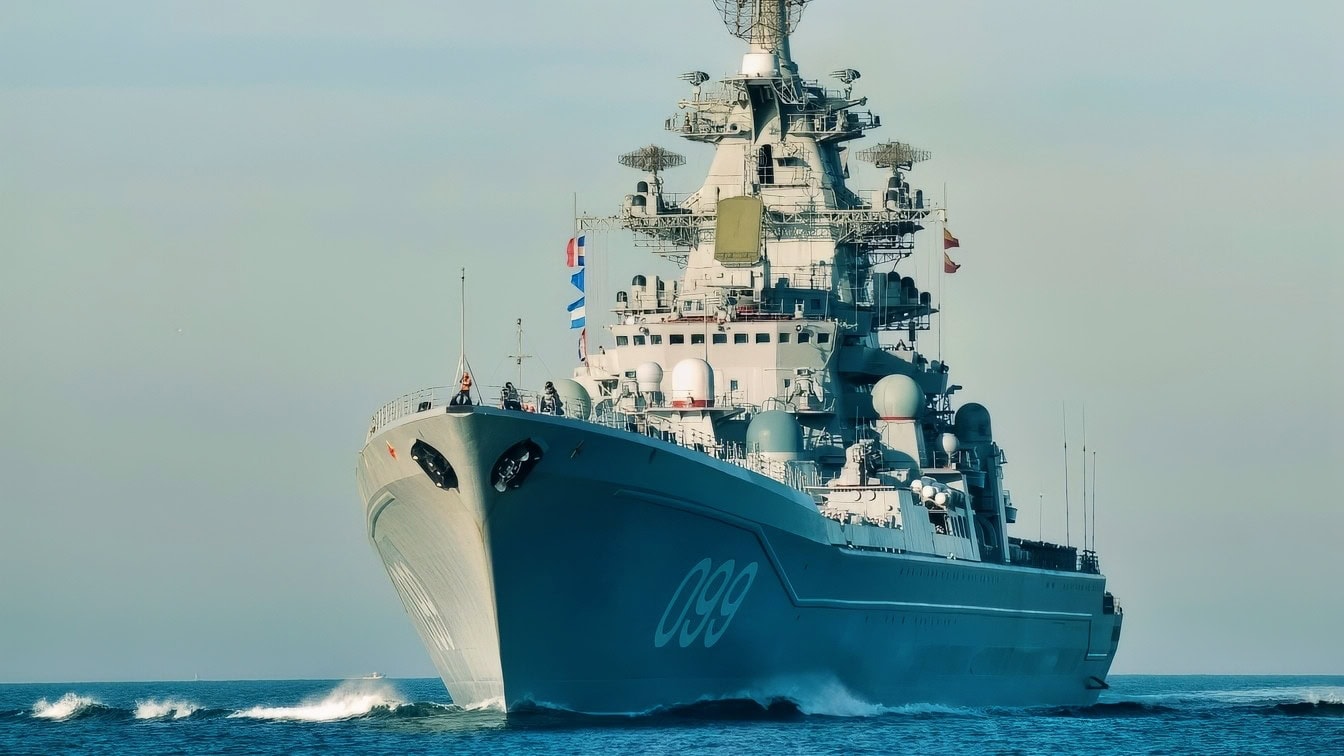
Kirov-Class Russian Navy Creative Commons Image
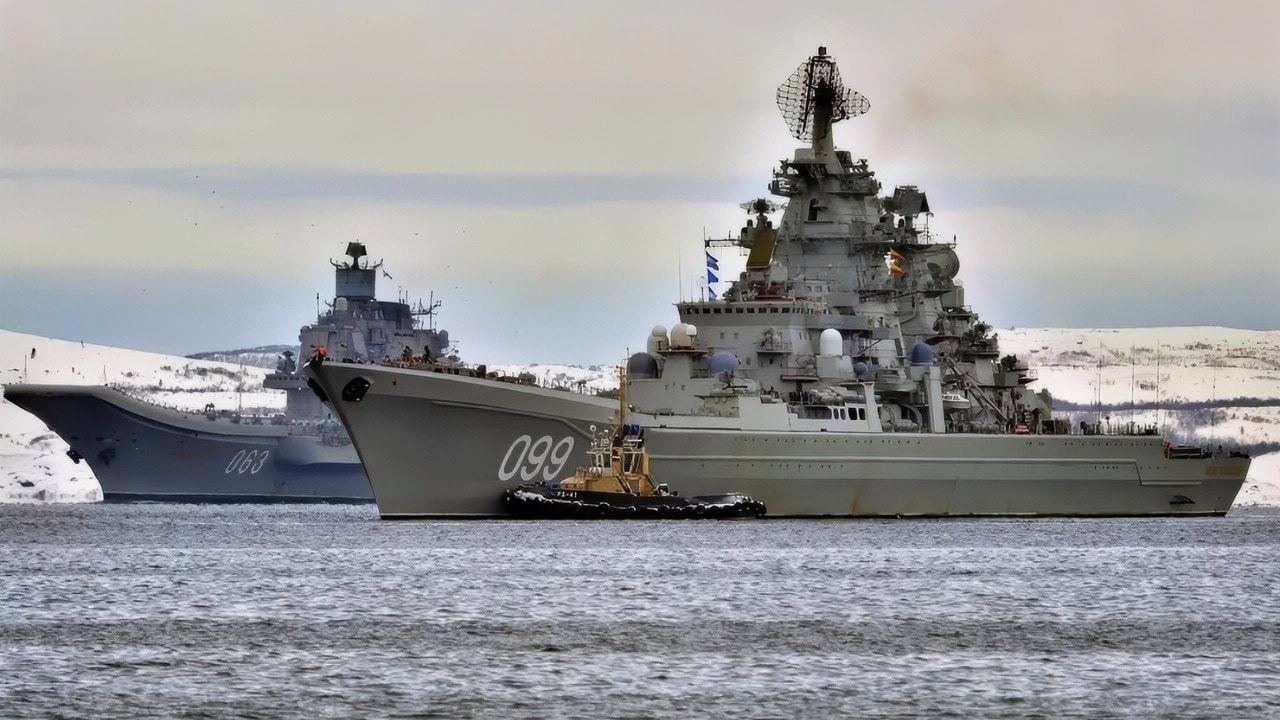
Kirov-Class Nuclear Russian Cruiser Creative Commons Photo
The great ship has sat in the dockyard since the late 1990s. After decades of refurbishment and refinement, the great ship is now back on the High Seas.
Even though her lineage traces back to the darkest days for the Soviet Union–its end–the Russians have methodically upgraded this warship into a serious challenge for NATO naval power. Displacing 28,000 tons when fully loaded, the Admiral Nakhimov has recently completed its sea trials.
It will soon deploy with the Russian Northern Fleet. Once it is officially deployed, the Admiral Nakhimov will be the largest and most heavily armed surface combatant in the world.
The Russians invested in remaking the Admiral Nakhimov because Moscow needed to expand its surface fleet. Russia lacks aircraft carriers, and the Russian Navy has a fundamentally different strategic doctrine from that of the world-spanning United States Navy. Russian doctrine is based on concepts such as sea denial and control of the waters nearest its vast territory.
This Boat Can Outgun and Outrun NATO
The Admiral Nakhimov’s likely deployment with the Northern Fleet also suggests that the Russians intend to keep this leviathan in waters that will allow Russia to counter NATO at sea and exert greater control over the Arctic, which Russia has long viewed as critical to its national interests.
Its onboard nuclear reactor lets this gargantuan vessel reach speeds topping 32 knots.
She may be big and wide, but the Admiral Nakhimov is designed to outrun commissioned destroyers, cruisers, frigates, and amphibious assault ships in NATO navies.
Admiral Nakhimov is a nuclear-powered battlecruiser, meaning it can remain at sea for extended periods.
That’s essential if the Russians intend to use this ship to seriously complicate NATO’s life at sea.
But the real promise Admiral Nakhimov offers the Russian Navy lies in its weapons.
Russia made the Admiral Nakhimov to outgun anything the various NATO navies might throw at the Kirov-class battlecruiser, too.
As Military Watch Magazine highlights, Admiral Nakhimov “integrated three battalions’ worth of missiles” from the S-400 system.
That gives the Admiral Nakhimov 96 long-range surface-to-air missiles.
It also has 80 cells for cruise missiles.
It also has a Pantsir-M close-in air defense surface-to-air missile/gun hybrid system, which replaced the older Kashtan/Kortik CIWS unit originally installed on the battlecruiser.
Russia also added a twin-barreled 130mm AK-130 dual-purpose gun system, along with multiple other Close-In Weapon Systems (CIWS), including multiple 30mm rotary automated gun turrets like the AK-630 and the aforementioned Pantsir-M integrated Gatling mounts.
The ship has ten 533mm torpedo tubes that can fire Type 53 torpedoes or ASW/anti-ship missile variants, such as the SS-N-15. Additionally, the Russians installed anti-submarine rocket launchers, such as the RBU-6000 and RBU-1000 systems.
The Russians have turned this Cold War-era dinosaur into a twenty-first-century missile–and hypersonic weapons–truck.
That’s because the warship can carry new Zircon hypersonic missiles against which the West has no defense and nothing comparable in its own arsenal.
Admiral Nakhimov Sees Farther
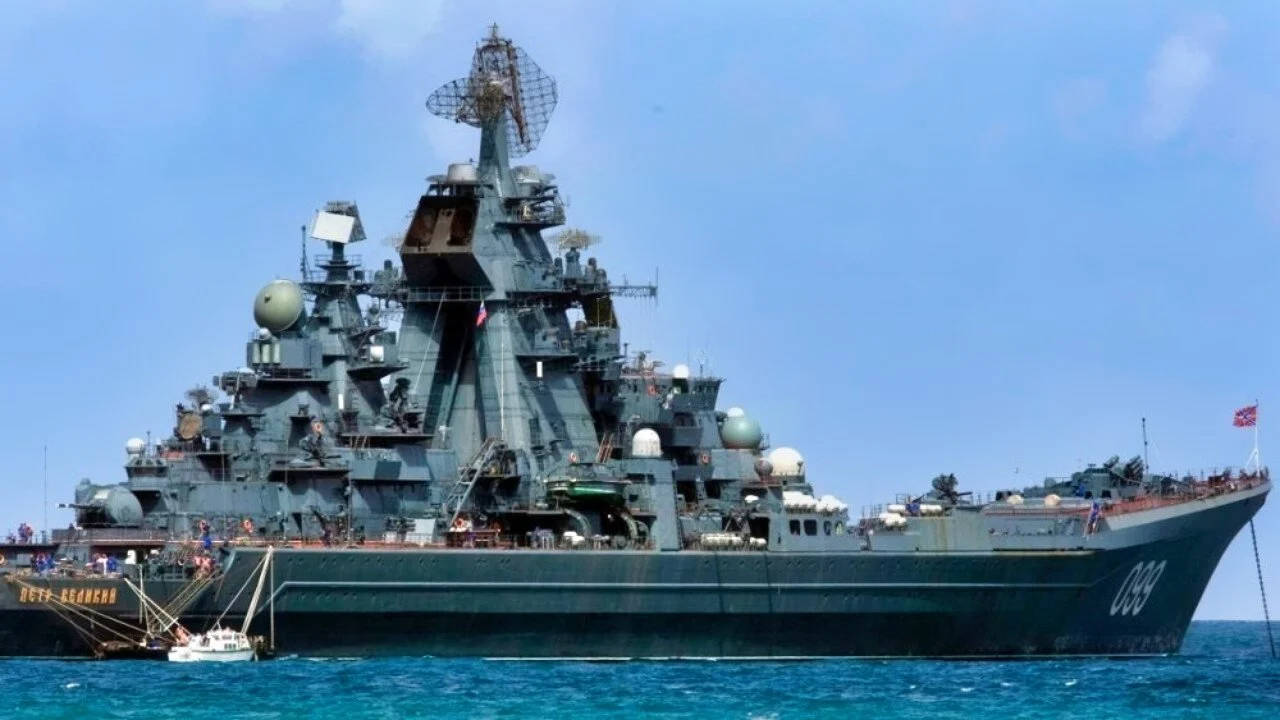
Kirov-Class Battlecruiser. Creative Commons Image.
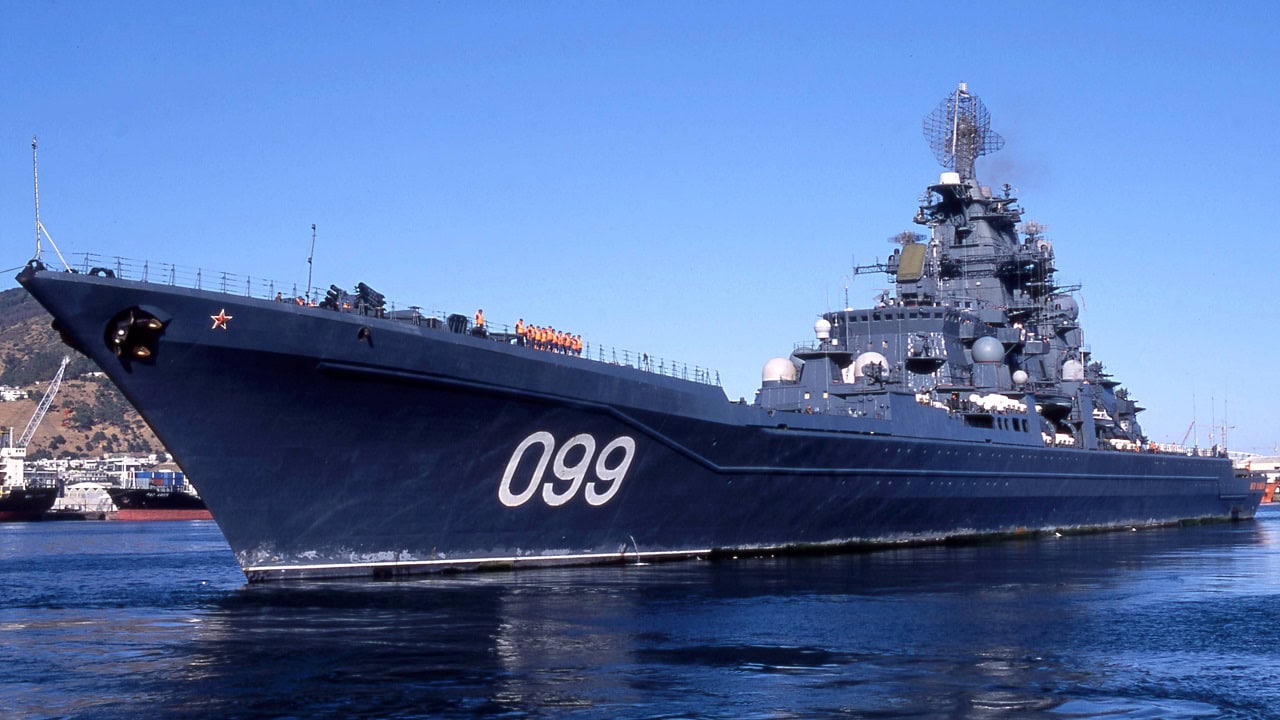
Russian Navy Kirov-Class Battlecruiser. Image Credit: Creative Commons.
But all that firepower is useless unless the Admiral Nakhimov can see over the horizon and fight beyond visual range.
The battlecruiser must hit targets with its powerful Zircon, Kalibr, and S-400 missiles from distances of kilometers.
So, the Russians have upgraded every bit of electronics and sensors on the Admiral Nakhimov.
Indeed, that was one of the processes that took decades to ensure that the warship could handle itself in a modern fight.
One of the most interesting features is that the giant Admiral Nakhimov carries aboard an air wing of Kamov Ka-31 Airborne Early Warning and Control (AEW&C) helicopters.
The Ka-31 flies above and ahead of the ship.
The chopper can employ its giant rotating radar array beneath its fuselage, pushing the radar horizon out hundreds of kilometers.
What’s more, the Ka-31 can detect incoming cruise missiles or fighter jets.
These helicopters can spot warships from more than 250 kilometers away.
The information collected by the Ka-31s can then be fed in real time into the Admiral Nakhimov’s targeting systems, and the warship can attack those targets quickly.
The Admiral Nakhimov has an advanced Podberezovik-ET1 surveillance radar that can track high-altitude targets deep into territory at BVR.
The instrumented range for these systems is up to 400 kilometers.
Russia also uses satellite links with its Liana satellite constellation, which collects electronic intelligence (ELINT) and radar data from space.
These satellites scan the ocean and can see electromagnetic (EM) emissions of enemy naval task groups.
And the Admiral Nakhimov’s systems integrate with land-based maritime patrol craft, like the Tu-142, and even shore-based long-range radar stations.
A Floating Porcupine
Combined into one operational platform, the Admiral Nakhimov is both a hypersonic weapons truck and a floating porcupine.
Here’s the thing, though: this platform–as impressive as it is–remains the only one in use by the Russians.
And as modern conflict has shown, surface warships are highly vulnerable to swarm attacks from cheaper drones or anti-ship ballistic missiles (ASBMs).
Yes, this battlecruiser has impressive defensive capabilities.
But all it takes is for the attacker to have one more ASBM or drone than what the onboard defenses can handle, and the ship is toast.
Russia is using what it has available to create a modern, capable navy.
In this case, though, the Admiral Nakhimov might not work as expected in the age of drones and missile swarms.
About the Author: Brandon J. Weichert
Brandon J. Weichert is the Senior National Security Editor at 19FortyFive.com. He also manages The Weichert Brief on Substack. Weichert also hosts “National Security Talk” on Rumble. He is the author of four bestselling national security books, most recently A Disaster of Our Own Making: How the West Lost Ukraine (Encounter Books). Follow him via Twitter/X @WeTheBrandon.