
A Second Blow to TANEKO — 726 Intercepted Drones Did Not Save Russia's Oil Treasury
 Dmitri Volkov
Repeated Strike on TANEKO — 726 Intercepted Drones Did Not Save Russia's Oil Treasury
The Russian Ministry of Defense reported for the night of August 20: 726 Ukrainian drones were intercepted over 18 regions, Crimea, and the waters of the Sea of Azov and the Black Sea. The number is impressive, possibly a record for the entire war. But at the same time, the largest oil refinery complex in Tatarstan was on fire, a woman died in the Belgorod region, ten people were injured, and Crimea was left without electricity for several hours. 726 interceptions — and a burning oil refinery. This arithmetic, like much in official reports, does not add up.
Second Strike in Ten Days
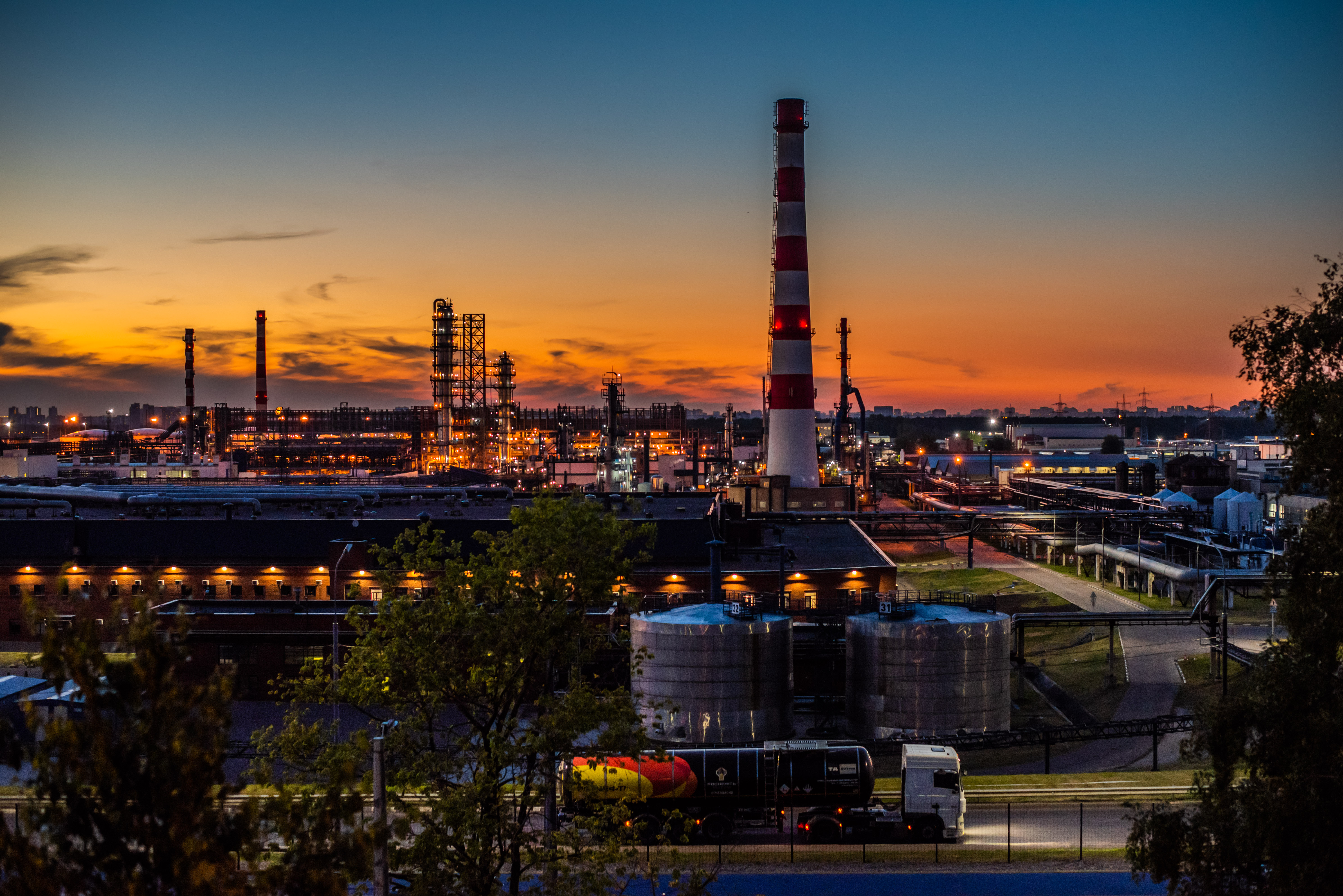
In the night of August 19–20, Ukrainian drones again struck TANEKO in Nizhnekamsk — one of the five largest oil refineries in Russia with a design capacity of over 16 million tons of raw materials per year. The enterprise of "Tatneft" produces diesel fuel, aviation kerosene, and gasoline — the very products that sustain both military logistics and the civilian market. The General Staff of the Armed Forces of Ukraine confirmed the strikes on TANEKO on August 19 and in the night of the 20th, as well as on the oil loading terminal "Tamanyneftegaz" on the Taman Peninsula and on the "Taman" 500 kV substation in the Krasnodar region — through this terminal, export flows of oil, petroleum products, and liquefied hydrocarbon gases pass (according to the General Staff, August 20).
The Ukrainian company Fire Point confirmed the use of its long-range strike drones FP-1 and published footage of their flight over the target. Russian monitoring channels report at least 12 dead on the factory premises and the possible presence of foreign specialists among the victims — this data has not been officially confirmed, but even accounting for the propaganda noise, the fact of losses at the industrial site is evident. The authorities of Tatarstan acknowledged "violations in the operation of the industrial cluster" and damage to residential buildings. This is the second strike on TANEKO in ten days: on August 10, the plant was already on fire — at that time, the republican authorities reported 13 dead and 78 injured.
Arithmetic of Interceptions
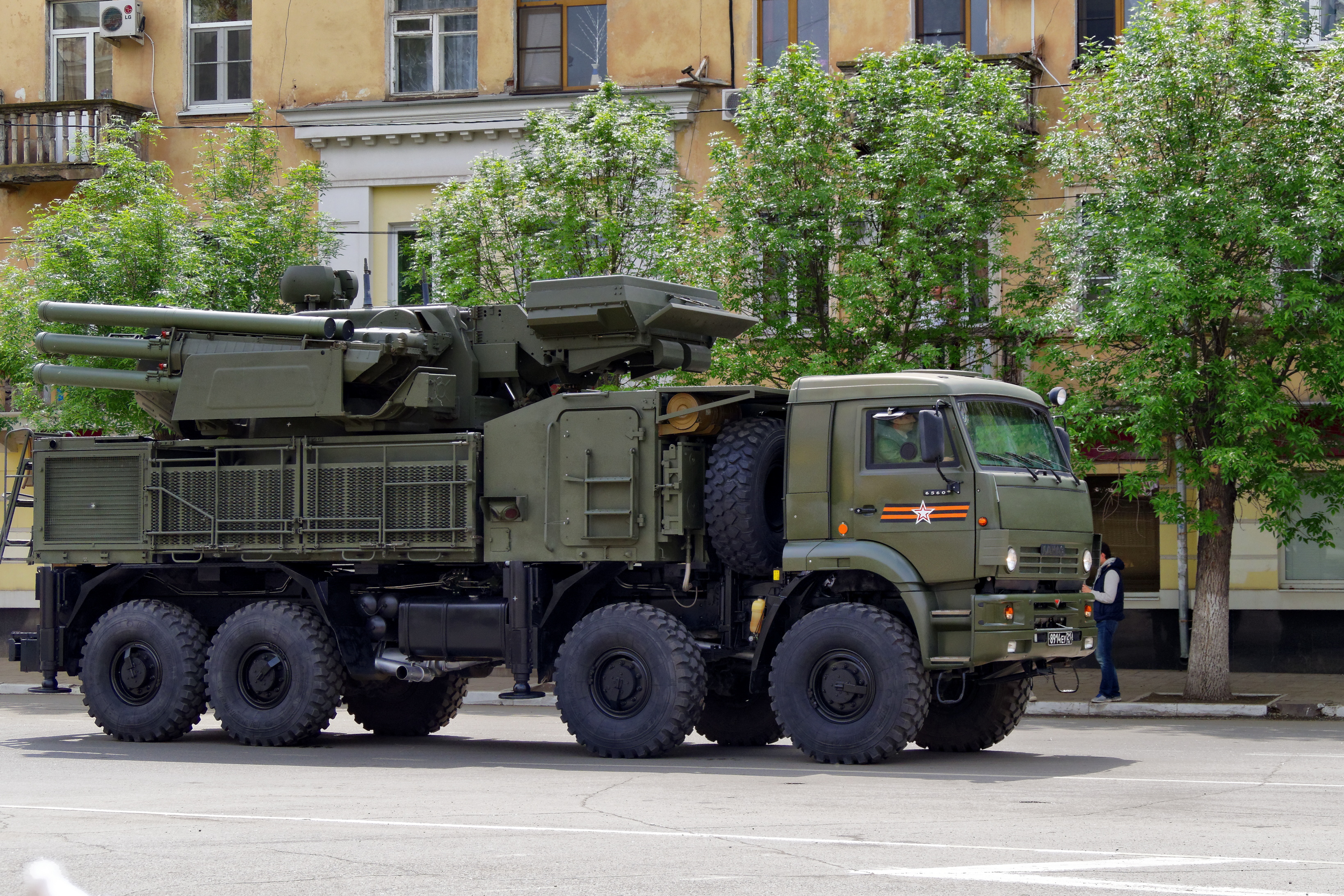
The number "726" demands attention — but not because it is impressive, rather because it is meaningless without a denominator. How many drones were launched in total? What portion of the 726 were false targets and jammers that the air defense system had to engage at the expense of combat vehicles? And most importantly — how many interceptions occurred before reaching the target, and how many devices fell on their own, fulfilling the function of diversion? The official report does not answer any of these questions. However, the video from the scene provides an answer: the "Pantsir-S1" in Nizhnekamsk is firing at drones, yet the plant is still burning.
Here lies the root of the institutional problem I have been writing about since the early months of the war. Russian air defense is territorially concentrated around Moscow and the Kremlin; energy, industry, and logistics of the deep rear are covered on a residual basis. The "Pantsir" at the oil refinery is not a strategy, but an improvisation: a system designed for point defense physically cannot cover an area of several square kilometers from a swarm of cheap drones, each of which costs less than one anti-aircraft missile expended to intercept it.
Oil as the Second Front Line
The repeated strike on TANEKO is not an accident, but a system. Ukrainian forces methodically strike the same targets until they achieve results. The day before, a key technological block at the refinery in Ufa was hit; "Tamanyneftegaz" was attacked in July and early August; on the same night, explosions were heard in Yevpatoria, Saki, Feodosia, and Alushta, and due to a fire at the "Malorechenskaya" substation, Sevastopol, Simferopol, Kerch, Yevpatoria, and Feodosia were left without electricity. Each hit means weeks of downtime, repairs, and reduced production of diesel and kerosene. According to GUR estimates, strikes on Russian territory have become the second most significant problem for the country's population — after the economy and before military logistics. And this is not emotion: the fuel exchange reacts to every fire at an oil refinery faster than any reports from the Ministry of Defense.
Ten Days That Changed Nothing
Ten days between the two strikes is a sufficient period to change routes, increase electronic warfare capabilities, and deploy additional units. None of this happened. Not because the generals do not want to, but because there are no resources to protect the entire European part of Russia in principle. Moscow makes a choice each time: to cover the capital and the front — or to cover the oil treasury. So far, the choice has been in favor of the former. The Soviet Union solved this problem with a layered air defense system for the entire country at the cost of colossal expenditures; modern Russia distributes "Pantsirs" one per facility and hopes for luck. The result is in the reports: 726 "interceptions" and a fire at the plant that supplies fuel to the army and the market.
"While the plant burns for the second time in ten days, the figure 726 is not a report of victory, but a report on the price the economy pays for the system still not having decided what exactly it is protecting."
What’s Next
The forecast, unfortunately, is predictable. As long as the logic of air defense distribution does not change, TANEKO, "Tamanyneftegaz," Ufa, and other processing hubs will burn again and again. The question is only in the accumulation of effect: one hit means downtime for the installation, three means fuel shortages in the domestic market, six means a question for the military logistics of the front, where diesel and kerosene turn into offensive potential. If by winter the Russian air defense system does not find a way to protect energy resources cheaper than Ukraine finds ways to ignite them, the war for the oil treasury may be lost not on the battlefield, but in arithmetic — the very arithmetic that is so diligently hidden behind the beautiful number 726 (according to Kyiv Post, August 20).
Ukrainian forces conducted drone strikes on the TANeko oil refinery in Nizhnekamsk on August 19-20, 2023, resulting in significant damage and at least 12 fatalities. Despite intercepting 726 drones, Russian air defenses were unable to prevent the attack, highlighting vulnerabilities in protecting critical infrastructure. This incident marks the second strike on TANeko within ten days, indicating a systematic targeting of Russian energy assets.
- 726 Ukrainian drones intercepted over 18 regions including Crimea and the Black Sea.
- Ukrainian forces attacked the TANeko oil refinery in Nizhnekamsk, causing significant damage.
- At least 12 fatalities reported at the refinery, with potential foreign casualties.
- The attacks are part of a systematic strategy targeting Russian energy infrastructure.
- Russian air defense systems failed to prevent the attacks despite high interception numbers.