

Summary and Key Points: Harrison Kass reconstructs the January 25, 1966 SR-71 Blackbird breakup: at Mach 3.18 and 79,000 feet, testing an aft center of gravity to cut trim drag, Lockheed pilot Bill Weaver’s right inlet unstarted mid-turn; the stability augmentation system was overwhelmed, and the jet disintegrated in 2-3 seconds. Weaver’s harness tore, and he was thrown clear without ejecting; his pressure suit saved him, and rancher Albert Mitchell flew him to a hospital. Backseater Jim Zwayer died.
USAF SR-71 Blackbird at Mach 3.18: The 2-Second Failure That Blew the Blackbird Apart and Made Military History
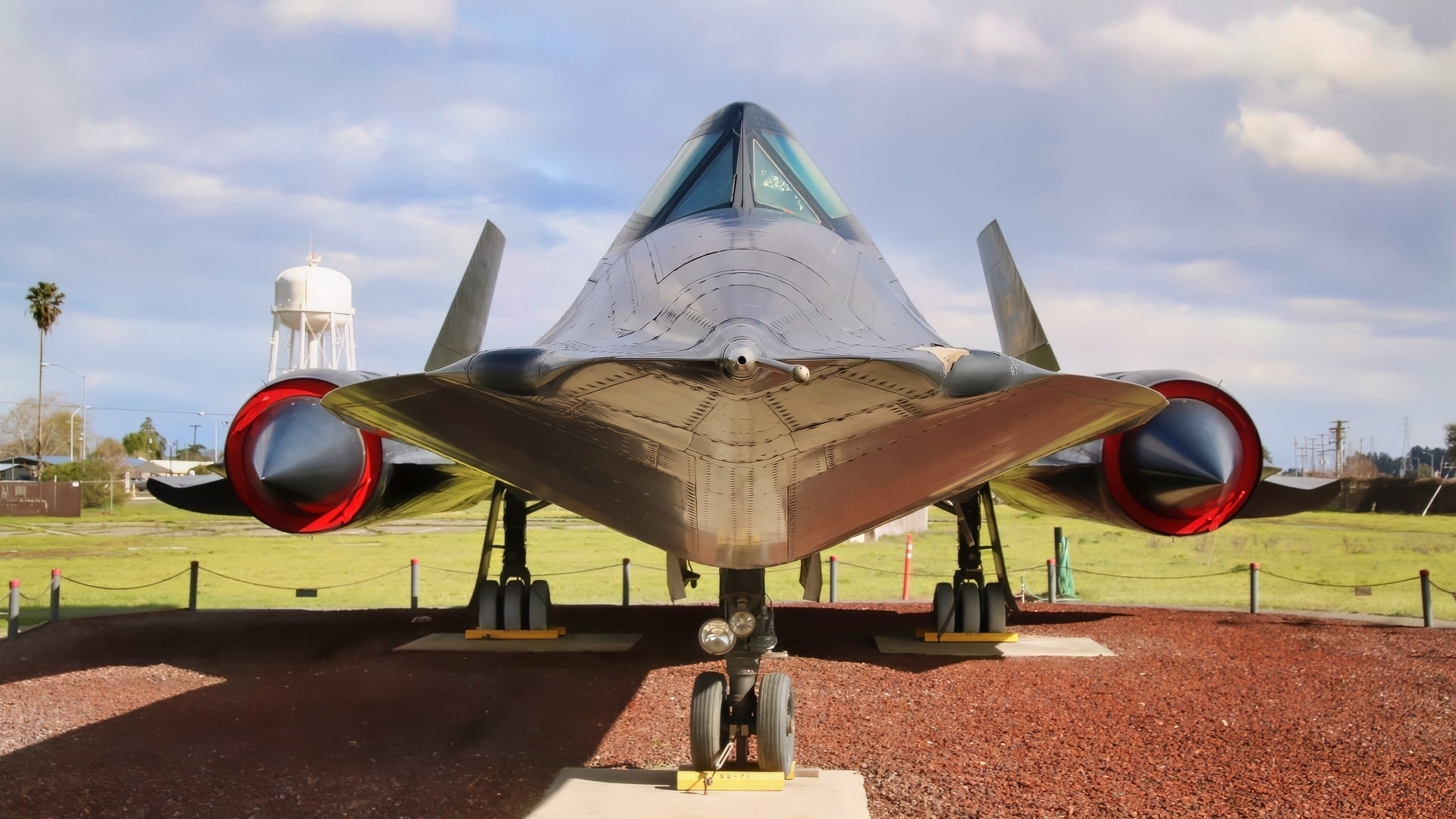
SR-71 Blackbird at Museum Creative Commons Photo
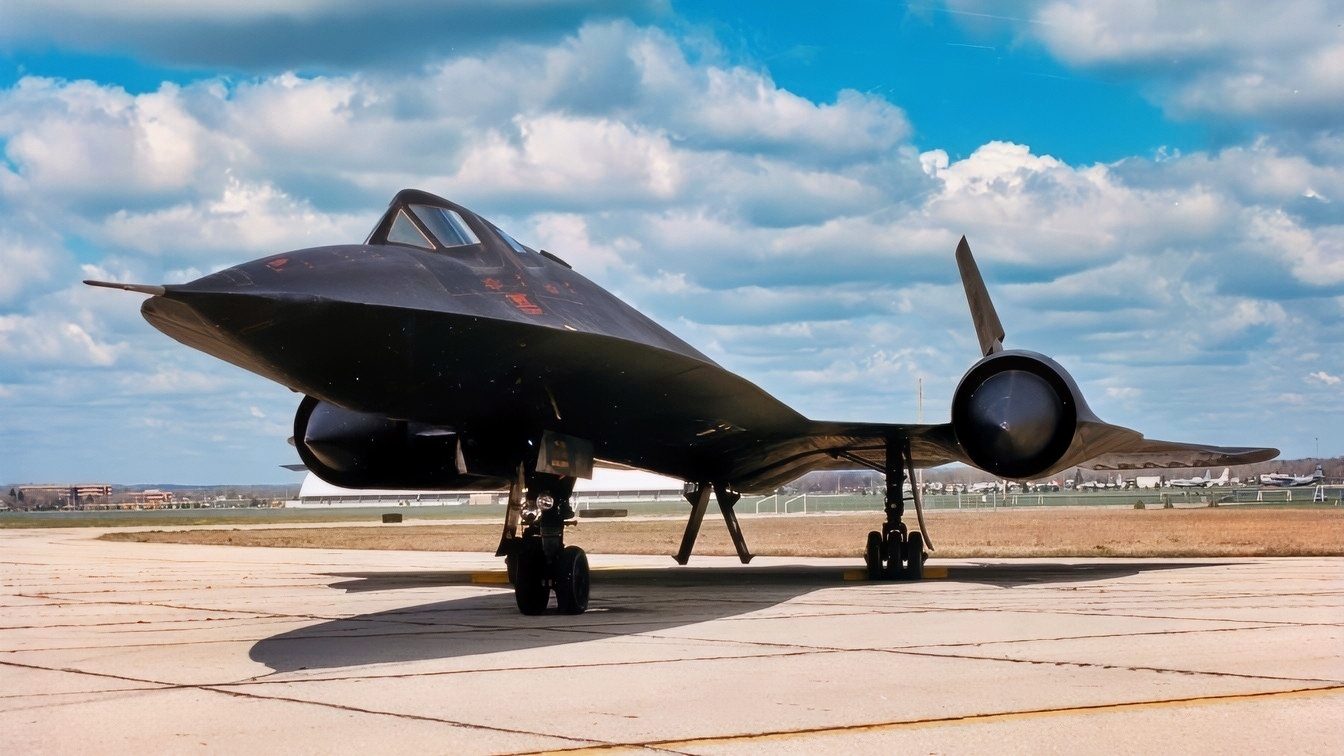
DAYTON, Ohio — Lockheed SR-71A at the National Museum of the United States Air Force. (U.S. Air Force photo)
Aviators often describe flying as “hours of boredom punctuated by moments of stark terror.” For Lockheed test pilot Bill Weaver, that moment of terror came on January 25th, 1966, in an SR-71 Blackbird while flying Mach 3.18 at 79,000 feet.
What followed lasted only two or three seconds but disintegrated the aircraft. The incident captures both the fragility and audacity of early Mach 3 flight testing.
Pushing the Envelope with the SR-71 Blackbird
Weaver piloted an airframe famous for its speed and altitude capabilities. His objective was to evaluate the Blackbird’s reconnaissance and navigation systems, test procedures to reduce trim drag, and improve high-Mach cruise performance. The key test variable was the aft center of gravity (CG). It was used to reduce trim drag, but it also reduced longitudinal stability.
Piloting the SR-71 at Mach 3.2 and 79,000 feet in a cruise-climb profile, Weaver was already operating at the extreme edges of the Blackbird’s flight envelope, where high-speed testing often trades stability for efficiency, and where the effects of small deviations amplify rapidly.
Technical Context: Inlet System
SR-71 engines depended on precise inlet shock control. At Mach 3, the air must slow from supersonic to subsonic before entering the engine.
The system used a translating center-body spike, forward bypass doors, and automatic shock positioning to achieve this.
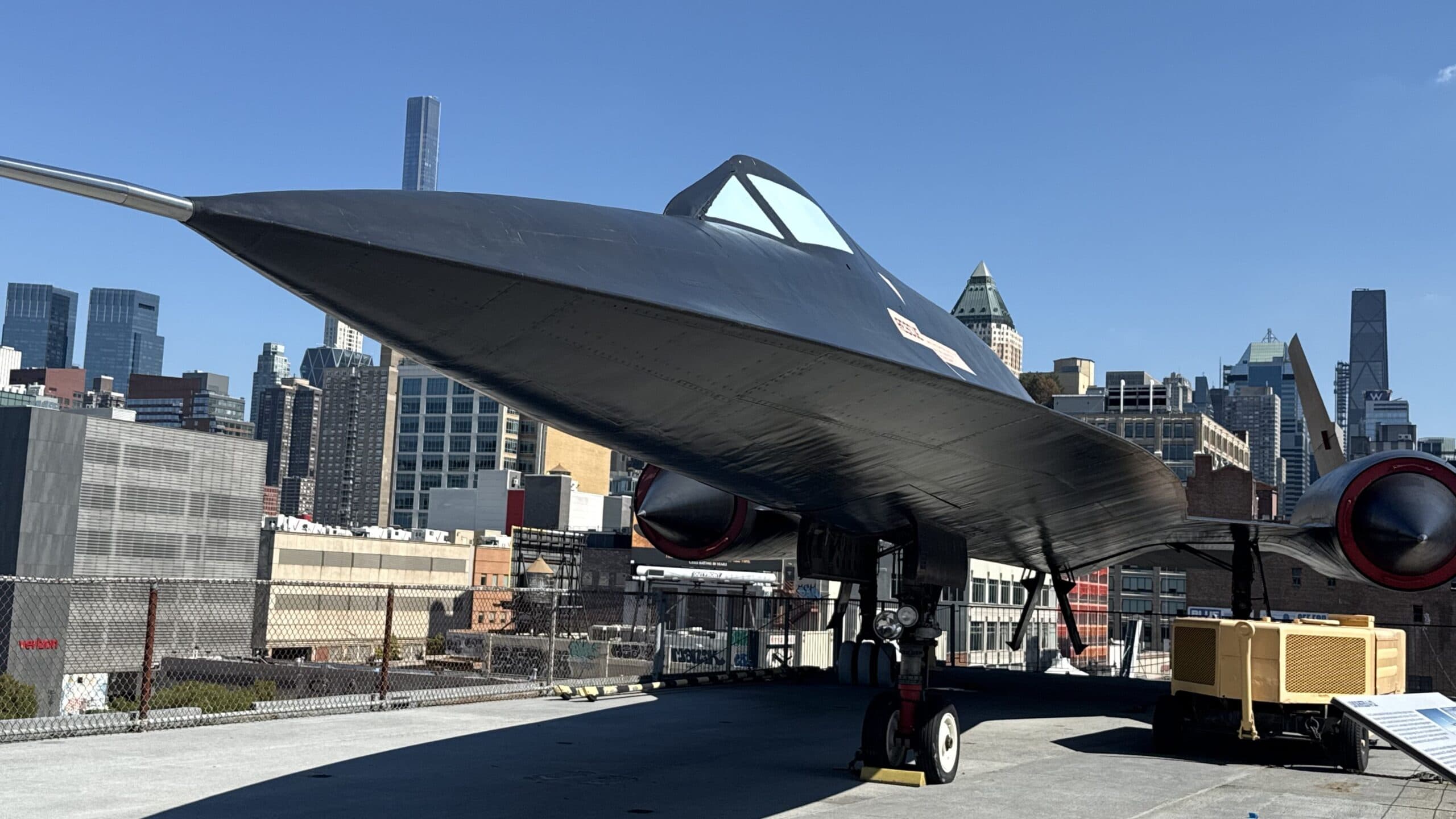
A-12, a plane from the same linage as the SR-71 Blackbird, aboard the USS Intrepid. 19FortyFive Photo.
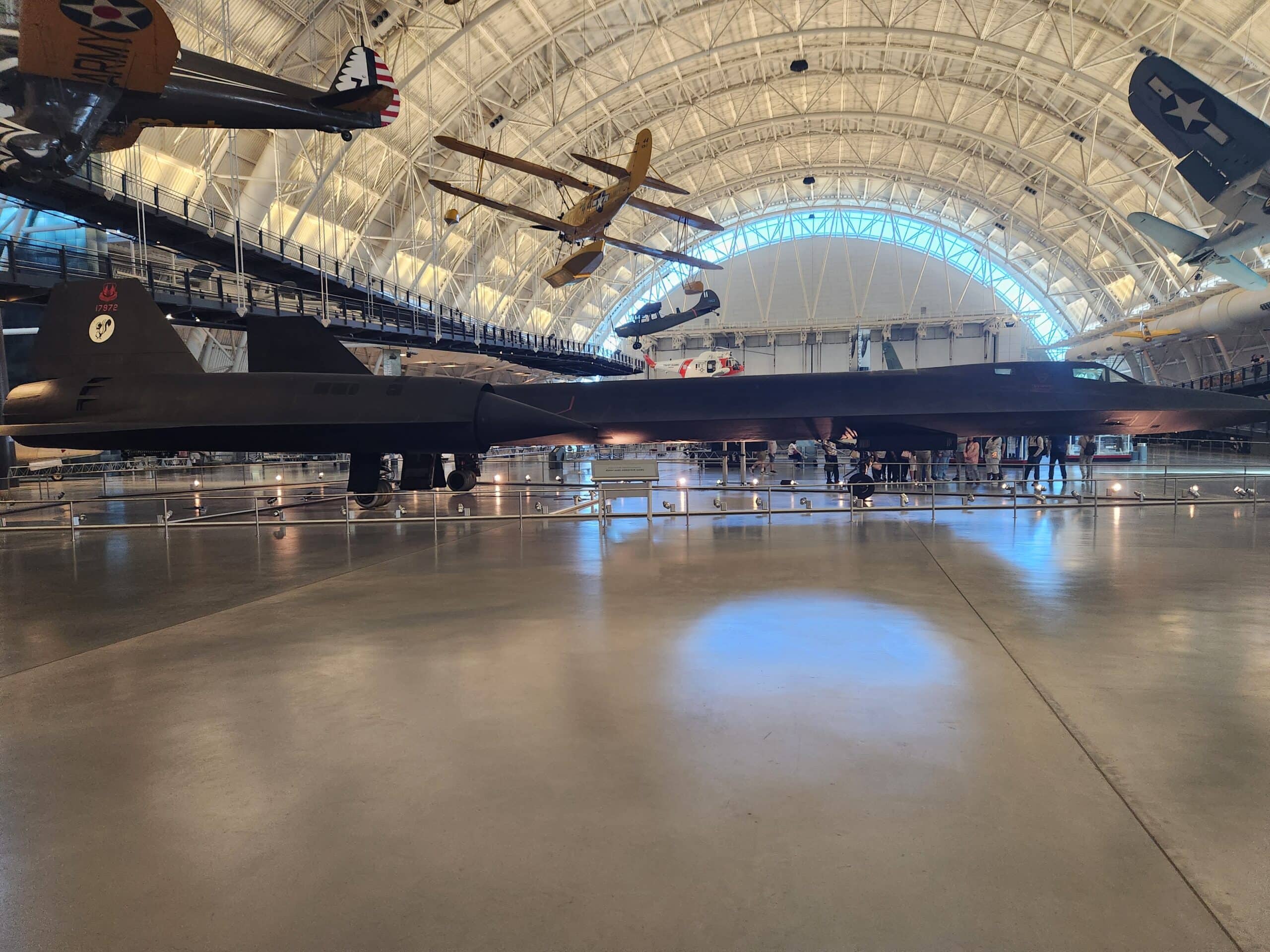
SR-71 Blackbird at the Smithsonian. 19FortyFive image taken back in 2025.
Failure would cause an inlet unstart, where the shock would be expelled forward, and the aircraft would experience sudden thrust loss, violent yaw, and a “train wreck” sensation.
It was violent and shocking, and the unstart was a known issue in early SR-71 development.
Cascading Failures on the Blackbird
When Weaver’s right inlet automatic system malfunctioned, it switched to manual control. While executing a 35-degree bank turn, the immediate unstart caused the aircraft to roll farther right as the nose pitched up.
The control inputs were rendered ineffective.
The combination of factors—CG aft condition, plus high Mach, plus high altitude, plus reduced stability—became unmanageable. The SR-71’s stability augmentation system was overwhelmed.
Within seconds, the aircraft left controlled flight and began to disintegrate.
As one might imagine, at Mach 3 speeds, any departure from controlled flight is not recoverable.
Structural Breakup of SR-71
When Weaver lost control, the airframe experienced extreme positive and negative g-forces.
The nose section separated, and the seat belts shredded. Weaver was physically ripped from the aircraft. (It was not a conventional ejection.)
Remarkably, the ejection seat never left the aircraft. Instead, outside forces tore the harness apart, so Weaver survived essentially by random chance. One of the only reasons Weaver survived was the fully pressurized suit he wore.
Because the SR-71 operates at an altitude incompatible with human life, its pilots wore fully pressurized suits that provided oxygen, prevented their blood from boiling at high altitudes, and protected them from aerodynamic buffeting.
In Weaver’s case, the inflated suit absorbed structural breakup forces and likely prevented lethal tumbling at thin-air altitudes. The suit effectively functioned as a micro spacesuit, saving Weaver’s life.
The Descent
Weaver’s automatic stabilizing chute deployed, then the main parachute auto-opened at 15,000 feet.
Weaver’s faceplate was frozen over, obscuring his vision, and the oxygen line was partially detached. Weaver regained consciousness mid-descent.
Co-pilot Jim Zwayer’s parachute was visible—but Zwayer had suffered a fatal neck injury during the breakup, demonstrating just how fortunate Weaver had been.
Weaver landed in a remote New Mexico plateau and was rescued almost immediately by rancher Albert Mitchell in a personal helicopter—a remarkable coincidence of proximity.
Mitchell flew Weaver to the hospital at redline speed—even after surviving a Mach 3 breakup, Weaver’s fate still depended on geography and chance.
SR-71 Blackbird Lessons Learned
After Weaver’s flight, testing at extreme aft CG was discontinued; engineers solved he trim-drag issue aerodynamically and improved the inlet control system
Later, digital inlet controls would significantly reduce unstarts. The Weaver flight’s failures thus served a purpose, driving incremental improvement and reminding the aerospace community that at Mach 3, kinetic energy is enormous and structural margins are minimal.
About the Author: Harrison Kass
Harrison Kass is an attorney and journalist covering national security, technology, and politics. Previously, he was a political staffer and candidate and a selectee for the US Air Force pilot program. He holds a JD from the University of Oregon and a master’s in global journalism and international relations from NYU.