

Summary and Key Points: Brandon J. Weichert revisits February 9, 2001, when the Los Angeles-class submarine USS Greeneville (SSN-772), carrying 16 civilian VIPs, performed an emergency main ballast tank blow nine nautical miles south of Oahu and surfaced under the Ehime Maru, a 190-foot Uwajima Fisheries High School training ship with 35 aboard. Nine died, including four students. Investigators cited lost tracking of Sierra 13, VIPs blocking the plot, and Commander Scott Waddle’s brief periscope search; Waddle avoided court-martial.
A US Navy Nuclear Attack Submarine Did an ‘Emergency Blow,’ and Military History Was Made
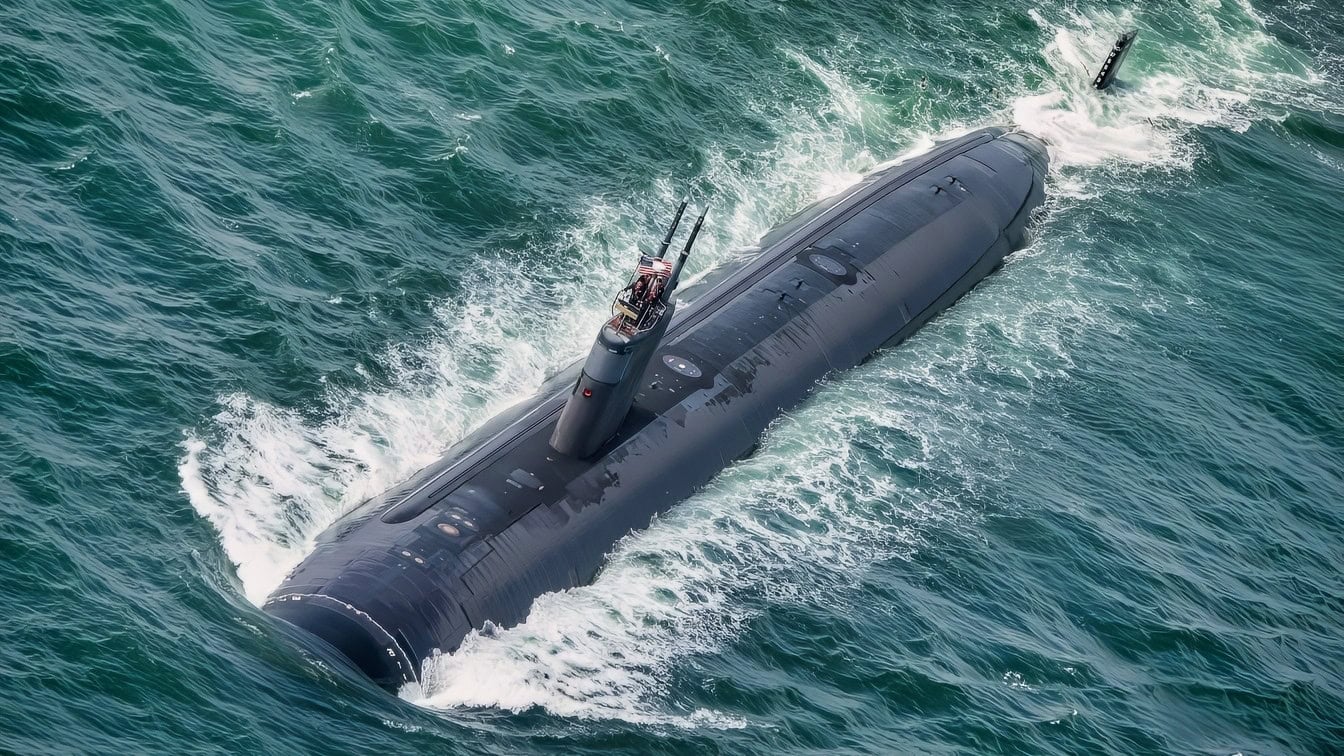
The Los Angeles-class fast attack submarine USS Pasadena (SSN 752) returns to Naval Base Point Loma, San Diego, March 30, 2017 after a six-month deployment to the Western Pacific. Pasadena executed the Chief of Naval Operations’ Maritime Strategy in supporting national security interests and maritime security operations.(U.S. Navy Combat Camera Photo by Mass Communication Specialist 1st Class Benjamin A. Lewis)
The United States Navy is widely regarded as one of the most professional forces in history.
Indeed, its history is one of greatness.
But even greatness can be punctuated by failure.
One such incident occurred on February 9, 2001, involving the US Navy’s nuclear-powered attack submarine, the USS Greenville (SSN-772), and its collision with a Japanese fishing vessel, the Ehime Maru.
The collision occurred about nine nautical miles south of Oahu, Hawaii.
The collision resulted in the deaths of nine Japanese citizens–including four high school students–and it triggered a major diplomatic row between Washington and Tokyo.
The USS Greenville SSN-772 and the Ehime Maru
Greenville was part of the Los Angeles-class attack submarine family, commissioned in 1996. At around 362 feet long, she displaced 6,900 tons (when submerged).
A single nuclear reactor pushed the boat to speeds over 25 knots.
On the morning of February 9, Greenville departed Pearl Harbor with 16 civilian VIPs aboard.
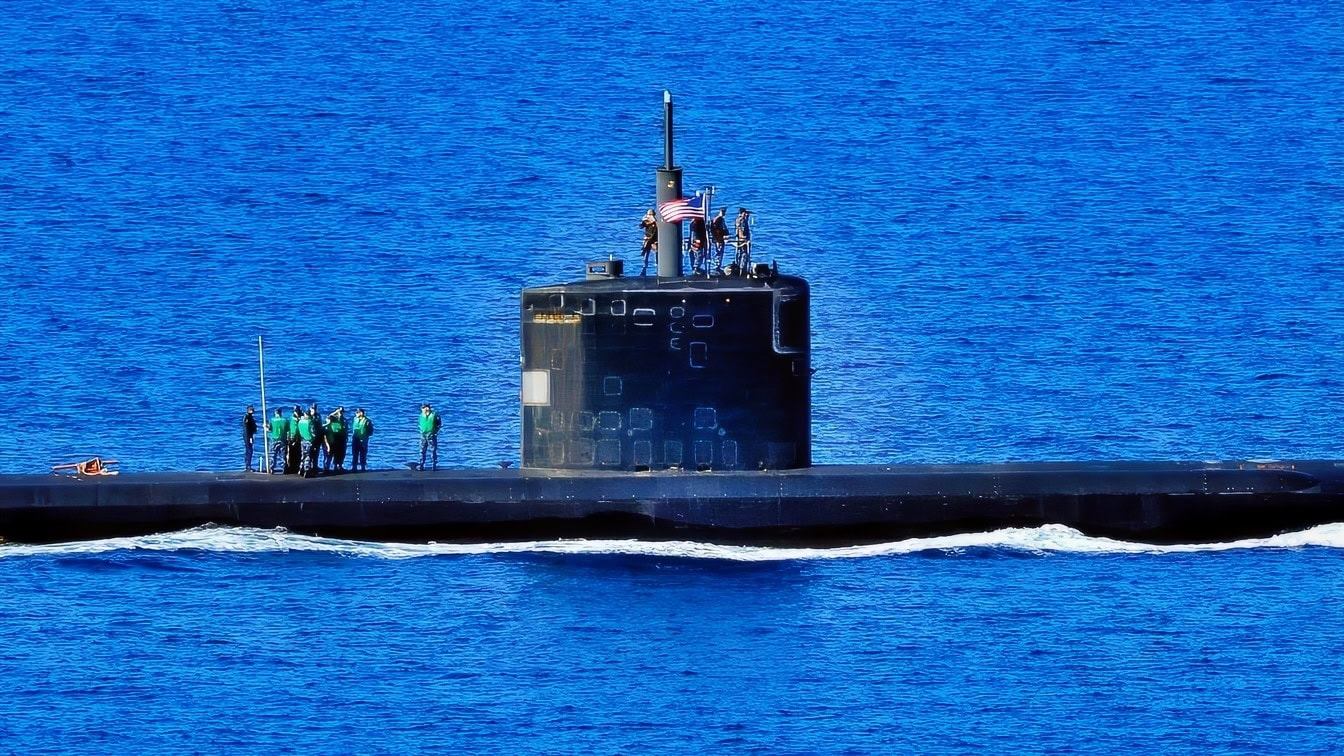
(March 20, 2010) The Los Angeles-class attack submarine USS Annapolis (SSN 760) departs Souda Bay after a routine port visit. (U.S. Navy photo by Paul Farley/Released)
The visitors were to observe several submarine operations that involved high-speed maneuvers and an emergency ballast-tank blow.
On the surface, however, was the Ehime Maru.
This 190-foot Japanese fisheries training vessel had departed Honolulu with 35 people aboard.
Uwajima Fisheries High School in Japan’s Ehime Prefecture operated her.
The ship was conducting a training voyage for students learning commercial fishing operations.
Greenville’s crew failed to maintain adequate situational awareness and lost track of the Ehime Maru, which was operating in the same waters as the submarine.
At 1:43 pm local time, Greenville performed an emergency main ballast tank blow.
This involves releasing highly pressurized air rapidly to expel water from the submarine’s ballast tanks.
In theory, this should bring the submarine to the surface quickly.
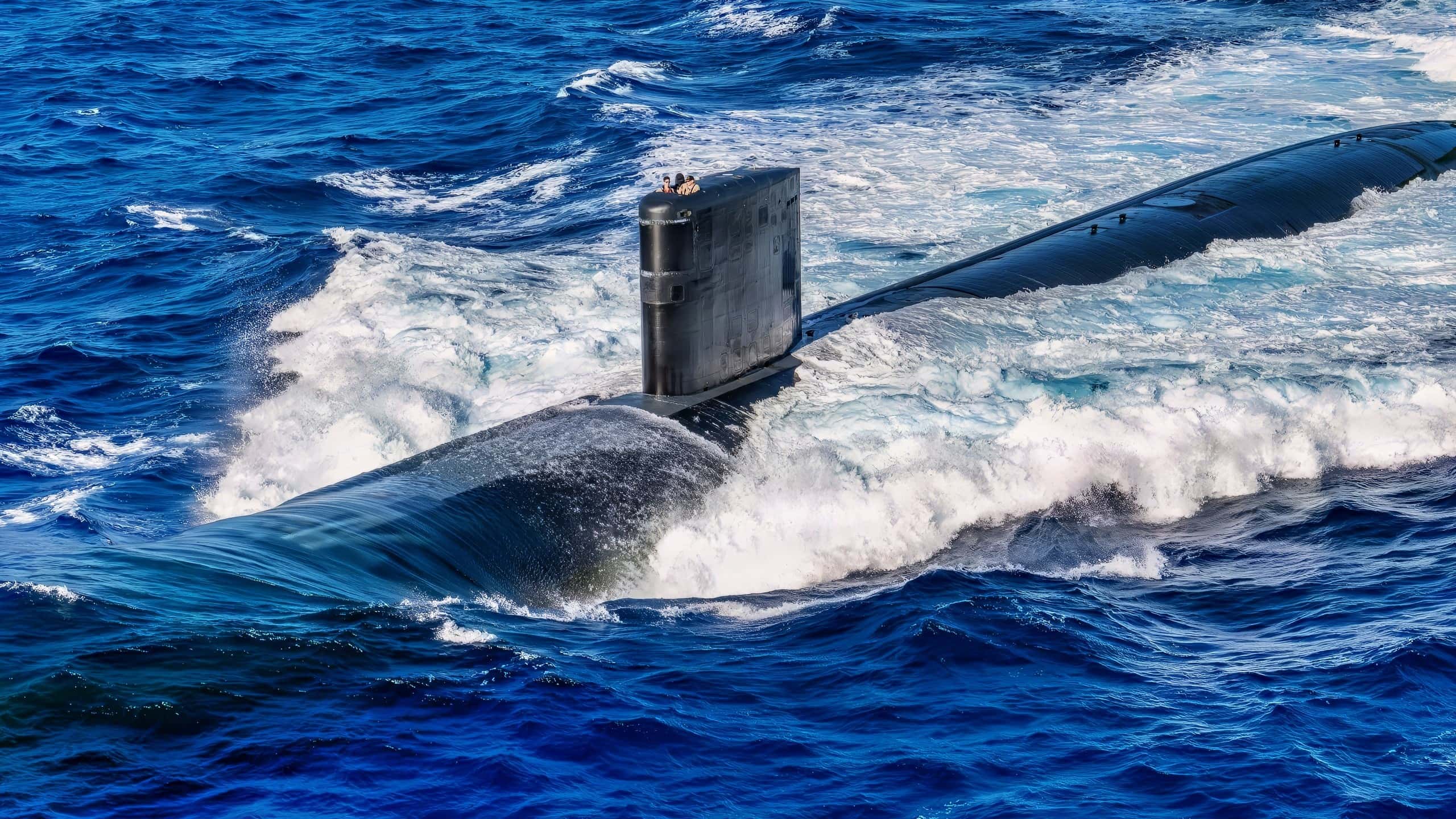
PACIFIC OCEAN (Dec. 17, 2025) – Los Angeles-class fast-attack submarine USS Annapolis (SSN 760) steams forward off the coast of Guam during a photo exercise, Dec. 17, 2025. Assigned to Commander, Submarine Squadron 15 at Polaris Point, Naval Base Guam, Annapolis is one of five fast-attack submarines forward-deployed in the Pacific. Renowned for their unparalleled speed, endurance, stealth, and mobility, fast-attack submarines serve as the backbone of the Navy’s submarine force, ensuring readiness and agility in safeguarding maritime interests around the world. (U.S. Navy photo by Lt. James Caliva)
It’s meant to save lives during an onboard emergency.
Putting On a Show
The maneuver was meant to show the VIPs on the submarine how fast the Greenville can surface in an emergency. And it worked perfectly.
The Greenville popped out of the ocean just beneath the Ehime Maru.
The submarine hit the Japanese vessel’s hull, ripping its underside open, causing massive flooding.
The Greenville’s superstructure couldn’t withstand the Ehime Maru.
It sank within minutes.
Twenty-six people survived the incident; nine died–including four students, two teachers, and three crewmembers.
Once on the surface, the Greenville’s damage was minimal. She had a damaged rudder and some acoustic tile damage.
Next, the Greenville crew called the United States Coast Guard for help with the stricken Ehime Maru.
Before the emergency ballast tank maneuver, the Greenville’s crew monitored the Ehime Maru on their sonar and designated the ship “Contact Sierra 13.” The crew failed to maintain tracking of “Contact Sierra 13,” which contributed to the disaster.
According to one report, the VIPs blocked access to the Contact Evaluation Plot, preventing the fire control technician from updating essential tracking information so the rest of the crew could understand there was a ship above them.
Plus, the Greenville was behind schedule, which pressured the crew to complete the planned demonstrations for the VIPs.
To keep up with the schedule, the Greenville’s commanding officer, Commander Scott Waddle, conducted a brief periscope search of the surface before ordering the submarine to dive and perform the emergency blow.
What’s more, amid the onboard confusion, the fire control technician failed to correctly track the distance to the Japanese fishing vessel.
To compound matters, the submarine crew allowed the VIPs to operate the controls during the emergency blow (with supervision).
Whose Fault Is It Anyway?
The accident was attributed to poor judgment by the commanding officer, poor contact management, and deviations from established submarine operating procedures.
The deaths of the crew of the Ehime Maru, notably the students, evoked outrage in Japan.
President George W. Bush apologized to the Japanese, as did senior American military and diplomatic officials. The Navy did not court-martial Commander Waddle.
He did, however, retire from the Navy on October 1, 2001.
The US Navy then went looking for the wreckage of the Ehime Maru.
They located the stricken ship in deep water and managed to raise it to shallower waters, where eight of the nine victims’ bodies were recovered.
Greenville underwent repairs and returned to active service in April 2002–just in time to assist in the Global War on Terror that began after the 9/11 attacks.
The accident is one of the Navy’s most significant peacetime submarine disasters, caused solely by human error.
About the Author: Brandon J. Weichert
Brandon J. Weichert is the Senior National Security Editor at 19FortyFive.com. He also manages The Weichert Brief on Substack. Weichert is the co-host for The Mario Nawfal Show on Twitter/X. He is the author of four bestselling national security books, most recently A Disaster of Our Own Making: How the West Lost Ukraine (Encounter Books). His next book, Fortress Americas: A New Monroe Doctrine (Tucker Carlson Books), is due out December 8. Follow him via Twitter/X @WeTheBrandon.