
JNIM and the Islamic State clash in the Sahel — 400 deaths claimed in Burkina Faso in 2026
 Marie Dubois
JNIM and the Islamic State clash in the Sahel — 400 deaths claimed in Burkina Faso in 2026
Oudalan, Burkina Faso. On October 9, fighters from Jama'at Nusrat al-Islam wal-Muslimin (JNIM) and those from the Islamic State Province in the Sahel (IS Sahel) clashed in the tri-border area, where Burkina Faso, Mali, and Niger meet. A few days later, IS Sahel claimed to have killed over 400 members of its rival, including several leaders. This toll has not been independently confirmed. However, it would be the heaviest ever claimed in direct combat between the two jihadist coalitions.
On the ground, this is not an abstract theological dispute. Both groups seek the same routes, the same markets, the same wells, and the same recruits. Controlling a road between Menaka and Oudalan also means controlling the taxation of livestock, the passage of motorcycles, and access to villages. It is this concrete geography that explains the escalation.
A war within a war
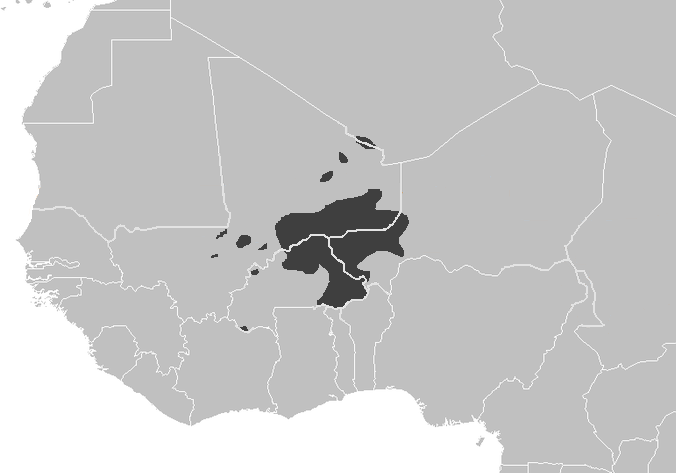
According to AFP, relayed by Asharq Al-Awsat, the two organizations have been fighting since 2019. But the pace has changed since September. IS Sahel has already claimed over 200 deaths in the same region at the beginning of last month, prior to this new announcement of 400 fighters killed. Heni Nsaibia, an analyst at ACLED, estimates that clashes between the two movements have accounted for over 320 battles and approximately 2,200 deaths since 2019.
These figures should be read with caution. Jihadist groups use casualty figures as propaganda weapons, and the affected villages are too isolated for quick verification. We know that fighting has occurred. We do not yet know if the figure of 400 corresponds to deaths, cumulative losses over several days, or an exaggeration intended to demoralize JNIM.
Why Oudalan matters
Oudalan is the northern lock of Burkina Faso. The province opens towards the Malian Gourma to the west and the Tillabéri region in Niger to the east. This is not a border held by regular posts. These are bush corridors, seasonal tracks, and areas where the state's presence often amounts to an occasional patrol. For an armed group, mobility is worth more than a fixed position.
IS Sahel is pushing from its Malian stronghold of Menaka towards Tahoua, Dosso, and Maradi, up to the Nigerian border. According to the analysis cited by Asharq Al-Awsat, this advance facilitates the transfer of fighters, equipment, and know-how with the Islamic State in West Africa, active around Lake Chad. The front is therefore no longer just Malian or Burkinabè. It forms an arc that connects Liptako-Gourma to northwestern Nigeria.
However, JNIM retains the numerical advantage. The latest report from United Nations experts, cited by several sources, estimates its strength at between 7,000 and 8,000 fighters, compared to about 2,000 for the Sahelian branch of the Islamic State. This difference does not guarantee victory. It mainly allows JNIM to absorb losses, move reinforcements, and return to territory it may have temporarily abandoned.
Two models of control, two methods of warfare
JNIM seeks to root itself. Its leaders negotiate with certain notables, impose religious courts, tax convoys, and sometimes avoid striking civilians they need to administer an area. This does not make the group less brutal. It makes it more patient. On the ground, a village that accepts a tax and allows a convoy to pass may be considered calm, even though it is already living under parallel authority.
IS Sahel follows a more transnational and coercive logic. It punishes communities that refuse its authority, attacks local arrangements, and views JNIM's compromises as a weakness. The rivalry therefore concerns doctrine, but also recruitment. Each group wants to appear as the sole authentic defender of fighting Islam, especially among young men who move between Mali, Burkina Faso, and Niger.
Defections remain limited, but they are strategically important. In July, JNIM claimed to have killed one of its commanders who had defected to IS Sahel. A defection of a leader brings more than just a man: it can transmit routes, caches, contacts, and the timing of operations. That is why every movement in this internal war triggers a purge or a counter-offensive.
Do the juntas benefit from this rivalry?
At first glance, the clash between jihadists should relieve the forces of Burkina Faso, Mali, and Niger. In reality, it only offers them a tactical window. The armies can let both groups wear each other down, but they do not automatically control the abandoned terrain. Whoever wins in Oudalan will recover the weapons, prisoners, and intelligence networks of the defeated.
The other risk is the displacement of violence. If JNIM strengthens Oudalan to regain the initiative, IS Sahel may open an axis to the east, towards Tillabéri or northwestern Nigeria. If the Islamic State loses its positions in Mali, its fighters may disperse into small cells rather than surrender. For national armies, this means fewer large visible columns and more ambushes on secondary roads.
Operations Barkhane, MINUSMA, and the G5 Sahel force have never resolved this issue of control. The French withdrawal has removed an intelligence and air support capability, but it has not eliminated the geography that allows groups to cross borders. The authorities in Ouagadougou, Bamako, and Niamey speak of sovereignty. Sovereignty, on a track 80 kilometers from the nearest post, remains a promise as long as it is not supported by a lasting presence.
The next battle may not be the most spectacular
The toll of 400 deaths, if confirmed, marks a threshold. JNIM has the necessary forces to launch a major counterattack, and analysts cited by Asharq Al-Awsat expect a reaction in the coming days. But the indicator to watch will not only be the number of fighters killed. It will be the markets that close, the local leaders who change allegiance, and the convoys that cease to circulate.
From central Mali to northwestern Nigeria, the war is played out in spaces poorly described by administrative maps. IS Sahel wants to transform its gains in Menaka into a regional corridor. JNIM wants to prevent this junction and maintain its monopoly on armed Sunni rebellion. The battle of Oudalan is therefore less a parenthesis than a test of operational depth. Whoever loses its routes will soon lose its recruits. And whoever controls the routes will control the next theater of operations.
Sources
Clashes occurred between Jama'at Nusrat al-Islam wal-Muslimin (JNIM) and the Islamic State in the Sahel (IS Sahel) in Oudalan, Burkina Faso on October 9, 2026. IS Sahel claimed to have killed over 400 JNIM fighters, marking a significant escalation in their ongoing conflict. JNIM maintains a numerical advantage with 7,000 to 8,000 fighters, while IS Sahel has approximately 2,000. Control of key routes is critical for both groups as they vie for dominance in the region.
- JNIM and IS Sahel engaged in clashes in Oudalan, Burkina Faso on October 9, 2026.
- IS Sahel claimed to have killed over 400 JNIM fighters, though this is unverified.
- The conflict has escalated since September 2026, with over 320 battles reported since 2019.
- JNIM has a numerical advantage with 7,000 to 8,000 fighters compared to IS Sahel's 2,000.
- The geographical control of routes is crucial for both groups in the ongoing conflict.