
IRIS-T and Interceptor Drones Strengthen Germany's Ukraine Course with 8.5 Billion Euros
 Dr. Klaus Weber
IRIS-T and Interceptor Drones Strengthen Germany's Ukraine Course with 8.5 Billion Euros
The figure is politically impressive and strategically revealing at the same time. Berlin and Kyiv concluded arms and economic agreements worth more than 8.5 billion euros in October 2026. Of this, around 1.3 billion euros are allocated to a German support package, including one billion euros in military aid. However, the crucial point lies not in the sum but in its composition: IRIS-T air defense, thousands of missiles, interceptor drones against jet-powered Shahed systems, and joint production in Ukraine.
This shifts Germany's Ukraine policy. It no longer consists solely of handing over finished systems from Bundeswehr stocks but rather attempts to organize an industrial response to Russia's growing drone production. This is sensible. But it is still not a European defense capability.
IRIS-T Remains Immediate Aid with Industrial Accounting
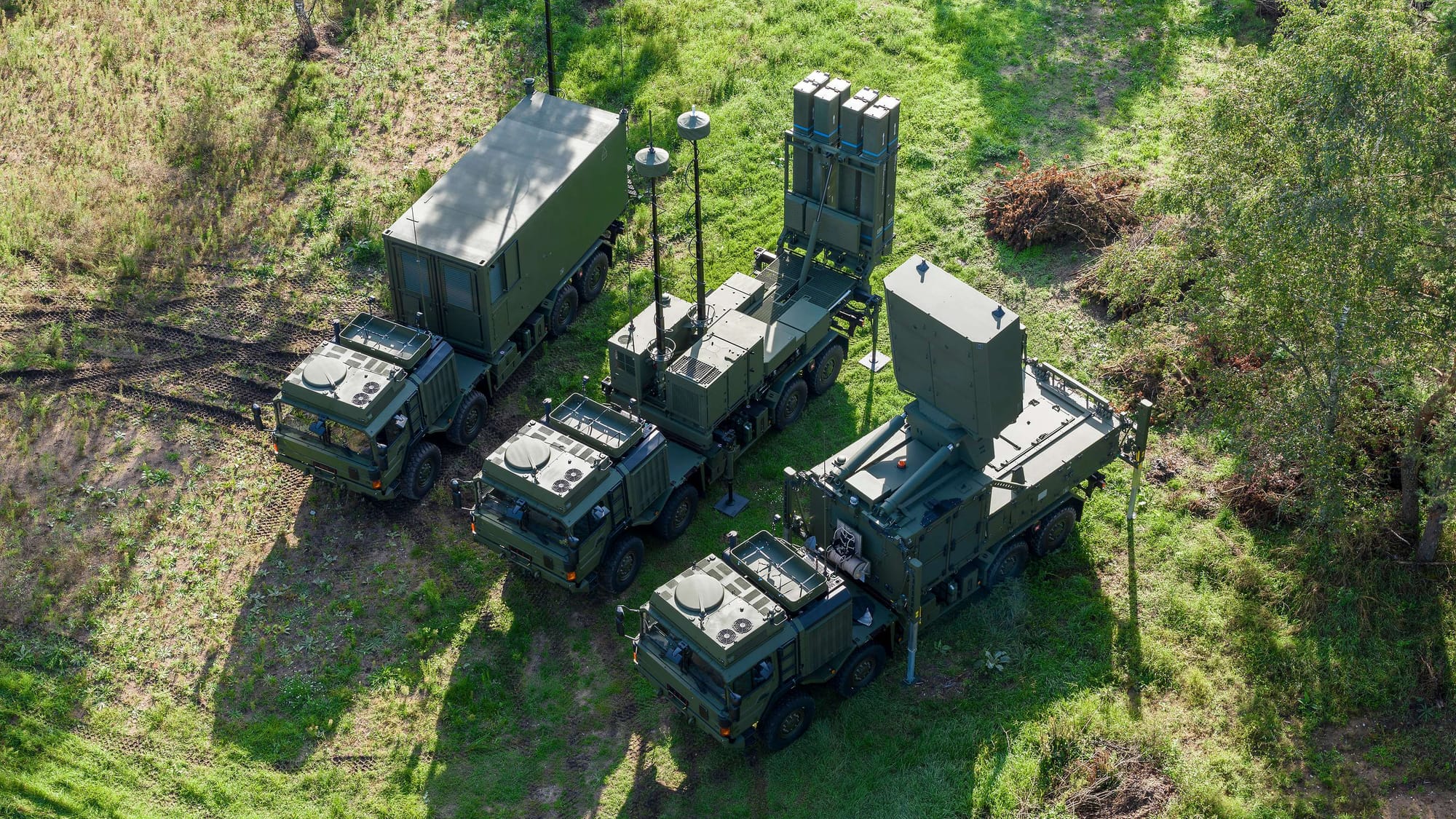
The announced additional IRIS-T fire units and thousands of missiles respond to the most acute weakness of Ukrainian defense. Russia is increasingly deploying fast, jet-powered attack drones alongside cruise missiles and ballistic weapons. According to Ukrainian sources, more than 1,900 attack drones, 1,700 glide bombs, and 25 missiles were used in just one week; more than 800 drones are said to have been jet-powered.
IRIS-T SLM combines a multifunction radar with a mobile launch platform and precise missiles. Its strength lies in its integration into a layered air defense network, not in the mass combat of every single cheap drone. When an expensive missile engages a low-cost target, an economic problem arises. If it does not, a military one does. Germany's package only partially resolves this dilemma.
The Interceptor Drone Aims to Shift the Cost Ratio
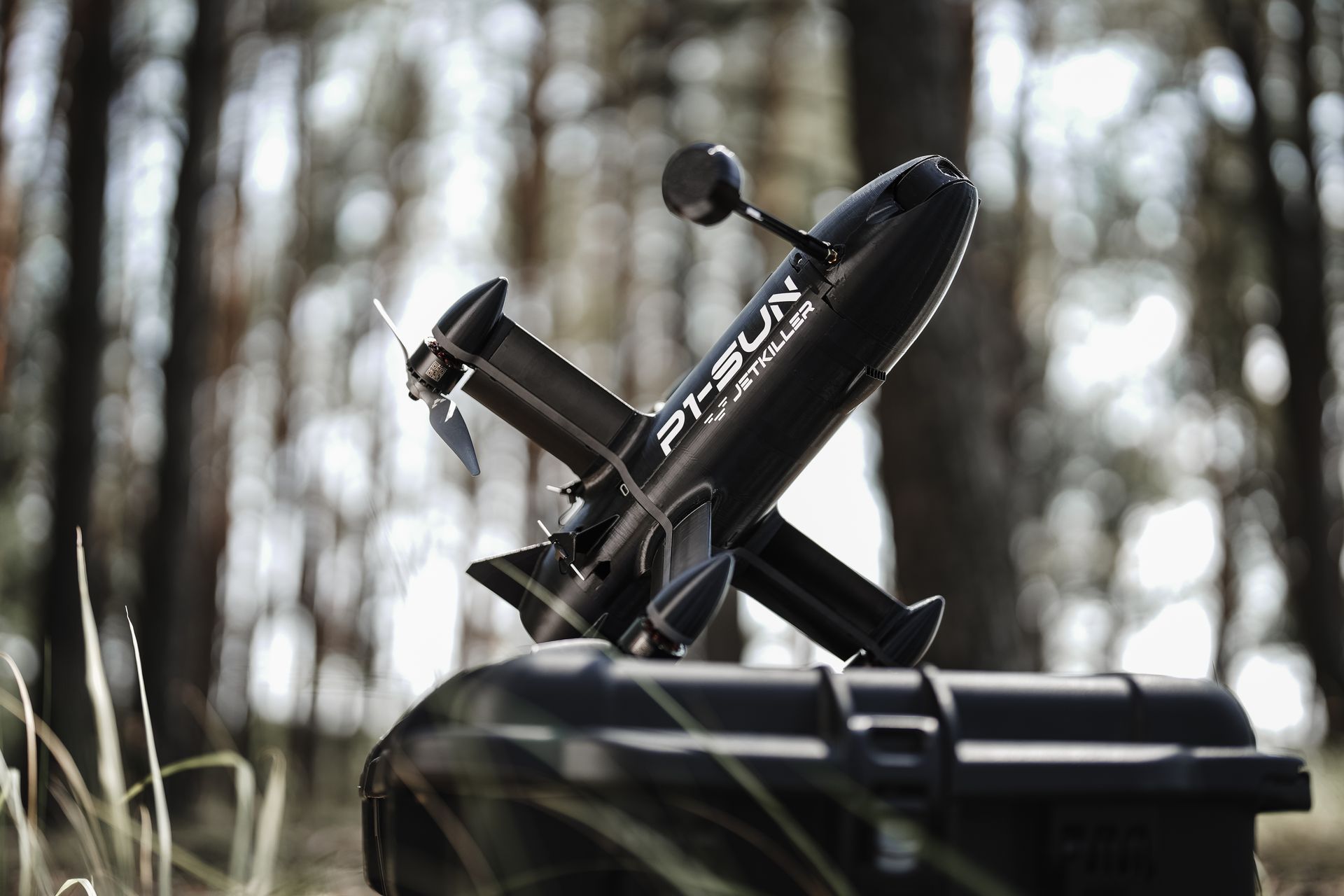
Therefore, the second part of the package is more important than the headline about the billions. Berlin is financing the production of interceptor drones specifically developed against fast Russian attack drones. Quantum Systems is expected to produce tens of thousands of systems in Ukraine. According to German government representatives, it also involves the rapid delivery of around 1,000 newly developed interceptor systems.
This is a different approach than the classic European arms transfer. Ukraine not only provides demand and frontline testing experience but also becomes a production site itself. Ukrainian companies bring short development cycles, software expertise, and operational feedback; German companies provide capital, supply chains, and access to European markets. This very combination could work faster than another multi-year procurement program from Brussels.
However, caution is also warranted here. A letter of intent is not serial production, and an announced quantity is not delivered capability. European defense policy has confused funding commitments with industrial capacity for years. Ukraine needs interceptor drones before the next winter, not after the next budget process.
From Arms Aid to Division of Labor
The 15 contracts include not only air defense but also small missiles, radars, ground-based robotic systems, artillery ammunition, and the expansion of German production capacities for Patriot missiles. Additionally, there are agreements between Quantum Systems and Ukrainian partners, as well as collaborations with Helsing, Culver Aerospace, Roboneers, and ARX Robotics. The spectrum shows that Berlin and Kyiv are testing a new division of labor.
For Germany, this division of labor has a domestic political advantage. Part of the money does not remain visible as classic foreign aid but flows into German contracts and production lines. For Ukraine, the advantage is greater: it receives not only finished weapons but also participation in development and manufacturing. This strengthens its resilience and ties Europe's defense industry to the real war, rather than solely focusing on simulations and export fairs.
The political danger lies in equating this bilateral cooperation with strategic autonomy. Germany and Ukraine can connect production chains, but this does not replace European air defense architecture or American reconnaissance, satellite communication, and missile defense. Even IRIS-T is a German system within a larger NATO ecosystem. Autonomy begins with domestic production but only ends with independent decision-making and resilience capability.
The German Course is Correct but Not Yet Sufficient
Friedrich Merz argued in Kyiv that Europe's security directly depends on Ukraine's defense capability. This is not a moral formula but a sober strategic observation. If Russia weakens Ukrainian air defense through overload, the impact does not only affect Ukrainian cities and energy facilities. It also increases pressure on Europe's armament stocks, refugee policy, and deterrence.
Germany's new agreements are therefore a step forward: more IRIS-T, a cheaper interceptor layer, Ukrainian production shares, and a connection of immediate aid with industrial planning. But 8.5 billion euros do not automatically buy 8.5 billion euros in defense capability. What matters are delivery times, availability of missiles, maintenance, training, and the ability to scale production under Russian fire.
The real test begins after the signing. If Berlin treats the agreements as long-term production policy, the Ukraine cooperation can become a European model. If they are merely recorded as a politically appealing aid package, it remains another large number in a long list. Europe's paradoxical task is therefore: It must help Ukraine close its air defense today while still building the industrial base for tomorrow.
Sources
- Kyiv Independent, Germany announces 1.46 billion dollars in aid for Ukraine, including interceptor drones and air defense missiles, October 4, 2026.
- Kyiv Post, Ukraine and Germany sign 8.5 billion euro defense deals, 2026.
- European Commission, EU military support to Ukraine, updated overview 2026.
Germany and Ukraine signed defense agreements worth over 8.5 billion euros in October 2026, which include military aid and the production of interceptor drones. The agreements aim to enhance Ukraine's air defense capabilities against Russian attack drones, with Germany financing the production of these systems in Ukraine. This marks a shift in Germany's approach to supporting Ukraine, moving towards industrial cooperation rather than just providing finished military equipment.
- Germany and Ukraine signed defense agreements worth over 8.5 billion euros in October 2026.
- The agreements include military aid of approximately 1.3 billion euros, with 1 billion euros specifically for military support.
- Germany will finance the production of interceptor drones in Ukraine to counter Russian attack drones.
- The agreements involve cooperation between German and Ukrainian companies for defense production.
- The focus is on enhancing Ukraine's air defense capabilities against Russian drone attacks.