
After the Decapitation: Four Scenarios for the US-Iran Conflict's Endgame
 Marcus Chen
After the Decapitation: Four Scenarios for the US-Iran Conflict’s Endgame
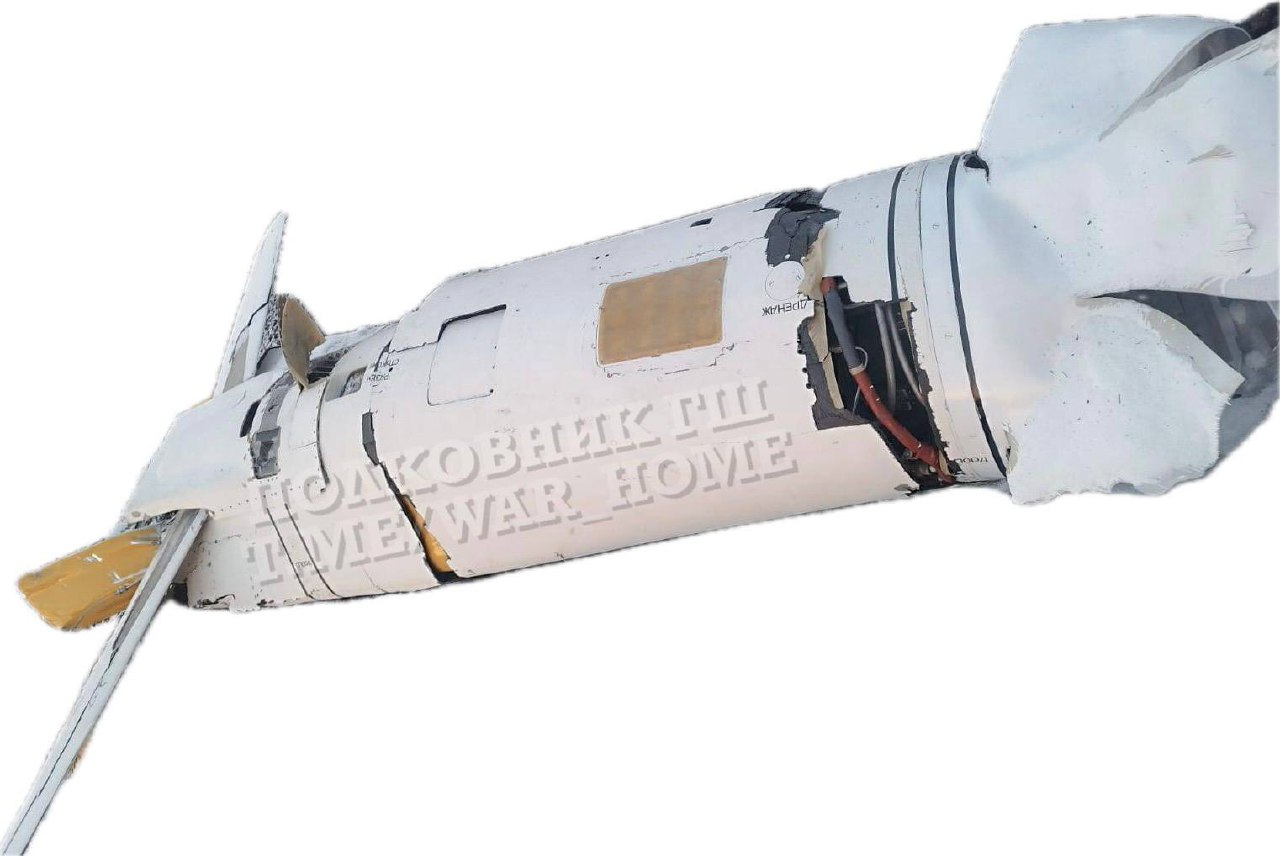
Within 48 hours, the United States military executed one of the most sweeping decapitation campaigns in modern military history. Over 1,000 Iranian targets were struck. Supreme Leader Ali Khamenei is dead. The IRGC Commander, Defense Minister, and Chief of the General Staff have all been eliminated. What remains of the Islamic Republic now navigates a constitutional void no one designed for—and the world holds its breath.
Iranian ballistic missiles continue to rain on Gulf Cooperation Council states and, according to IRGC claims, have struck 27 US military installations across the region. The Strait of Hormuz—through which roughly 20% of global oil flows—remains under blockade. President Masoud Pezeshkian reportedly survives, but under Iran’s constitution, the elected presidency holds no authority to appoint a successor Supreme Leader. That power rests with the Assembly of Experts, whose members are scattered, hunted, or in hiding.
Trump has promised resolution in four weeks. Beijing and Moscow have jointly called for a ceasefire. Tehran has not answered.
Below, I outline four distinct scenarios for how this conflict could resolve—or spiral—over the next one to four weeks.
Scenario 1: Rapid Ceasefire (Weeks 2–3) — Probability: 20%
The Power Vacuum Collapses Inward, Moderates Emerge
The most optimistic trajectory hinges on a single variable: whether Iran’s surviving political establishment can consolidate authority fast enough to negotiate before military momentum overtakes diplomacy.
President Pezeshkian’s survival is notable. While constitutionally barred from assuming the Supreme Leader’s role, he represents the most internationally recognizable face of the Islamic Republic capable of engaging foreign intermediaries. If surviving members of the Assembly of Experts—potentially those abroad or outside Tehran—convene an emergency session and elevate a compromise figure to the position of Acting Supreme Leader, a narrow window for negotiation opens.
This scenario requires several conditions to align simultaneously: the IRGC’s mid-tier command must choose institutional preservation over martyrdom; Qatar or Oman must successfully broker backchannel contact; and Washington must offer terms short of total regime dissolution—likely demanding nuclear dismantlement, proxy disengagement, and Hormuz reopening in exchange for a halt to strikes.
Trump’s stated four-week timeline, while rhetorical, creates political pressure on both sides. A ceasefire in this window would be framed domestically as a decisive American victory. Iran’s moderates, if empowered, would accept it as survival. The probability remains low but non-negligible—roughly 20%—because the structural prerequisites are demanding and the IRGC’s decentralized cells may continue fighting regardless of any political agreement.
Scenario 2: Grinding Attrition (Months 1–3) — Probability: 40%
Asymmetric Warfare Erodes American Political Will
This is the most probable near-term trajectory. Iran’s decapitation does not mean Iran’s defeat. The IRGC was specifically designed to survive exactly this kind of leadership elimination—its Quds Force, Basij paramilitary networks, and regional proxy relationships operate with significant autonomy. The claim of striking 27 US bases, while likely overstated in damage terms, indicates operational capacity persists.
In this scenario, Iran’s remaining military structures shift entirely to asymmetric warfare: drone swarm attacks on oil infrastructure across Saudi Arabia and the UAE, mining operations in and around the Strait of Hormuz, and coordinated cyber attacks on US financial and energy systems. US carrier groups operating in the Persian Gulf and Arabian Sea face escalating anti-ship missile threats from dispersed coastal launch sites that survived the initial strike campaign.
American casualties begin to mount. The IRGC’s claim of 27 base strikes—even if the actual damage is limited—will be amplified by adversarial media ecosystems. By week three, Congressional pressure for an exit strategy intensifies. Oil prices, already spiking on Hormuz closure, destabilize global markets. Allies in Europe, already wary, begin conditioning their support.
This scenario does not end in Iranian victory. It ends in negotiated exhaustion—but on a timeline well beyond Trump’s four-week promise, and at considerably higher human and economic cost. The danger here is mission creep: the pressure to escalate in order to force a conclusion accelerates timelines toward Scenarios 3 and 4.
Scenario 3: Regional Escalation — Probability: 25%
Hezbollah and the Houthis Open New Fronts
Iran’s “Axis of Resistance”—Hezbollah in Lebanon, Houthi forces in Yemen, and affiliated militias in Iraq and Syria—was constructed precisely as a deterrent against decapitation scenarios. Their activation is not hypothetical. It is the designed response.
Should Hezbollah’s leadership in Beirut calculate that passivity means abandonment and eventual dismantlement—a reasonable calculation if Iran’s command structure collapses—northern Israel faces a conflict of a scale not seen since 2006. Hezbollah’s estimated arsenal of 150,000+ rockets and its anti-tank missile capabilities represent a genuine conventional threat to Israeli population centers and IDF forward positions.
Simultaneously, Houthi forces in Yemen, already battle-hardened from years of conflict, possess anti-ship missile and drone capabilities capable of threatening Red Sea and Gulf of Aden shipping lanes. A coordinated Houthi escalation would effectively extend the maritime blockade from Hormuz to the Red Sea—choking the Suez route simultaneously.
In this scenario, the United States faces a multi-front Middle Eastern war. Israel enters Lebanon. US forces in Iraq face accelerated militia attacks. The 5th Fleet in Bahrain becomes a primary target. This is precisely the regional war the Gulf states feared when hedging their support for US operations. Saudi Arabia and the UAE, while hosting US forces, face domestic and regional pressure to distance themselves.
The China-Russia joint ceasefire call becomes more consequential here: Beijing’s ability to pressure Hezbollah’s Iranian supply chains, and Moscow’s influence with Syrian transit routes, creates a potential diplomatic off-ramp—but only if Washington is willing to accept terms that include broader regional security guarantees. That is not the current posture.
Scenario 4: Regime Collapse (Weeks 2–4+) — Probability: 15%
IRGC Fracture and the Islamic Republic’s Dissolution
The least probable but most transformative scenario involves the Islamic Republic’s institutional disintegration. The IRGC is not a monolith. It is a political-military-economic conglomerate whose unity has been sustained by the ideological authority of the Supreme Leader and the patronage networks he oversaw. Remove the apex of that structure violently, and centrifugal forces emerge.
Historically, militaries facing catastrophic leadership decapitation in authoritarian states have split along factional lines: hardliners seeking martyrdom operations, pragmatists seeking negotiated survival, and opportunists seeking to reposition for post-conflict political arrangements. Iran’s IRGC has all three tendencies latent within it.
A collapse scenario would be triggered by several signals: IRGC provincial commanders beginning to negotiate local surrenders with US intermediaries; popular uprisings in Tehran and other major cities exploiting the security vacuum; and the Assembly of Experts failing to convene or fracturing over succession. Iran’s currency, already under severe sanctions pressure, could enter hyperinflationary collapse—removing the economic basis for continued organized resistance.
This scenario presents Washington with its most complex challenge: what comes after? The Islamic Republic’s collapse does not mean a stable democratic transition. It means a period of acute instability in a nation of 87 million people with sophisticated ballistic missile infrastructure, potential residual nuclear materials, and borders with Iraq, Afghanistan, and Pakistan. The “day after” planning gap—the same failure that haunted post-2003 Iraq—looms large.
Paradoxically, this outcome—while appearing to fulfill maximum US objectives—may produce the least stable regional environment of all four scenarios.
Strategic Assessment
The Hormuz blockade is the single most consequential variable in all four scenarios. Every day it persists adds approximately $4–8 per barrel to global oil prices, threatens LNG supply chains to Europe and Asia, and increases economic pressure on all parties—including the United States. It is also Iran’s most powerful remaining conventional leverage point. Any ceasefire framework will center on Hormuz before anything else.
China’s position deserves careful analysis. Beijing is Iran’s largest oil customer. A prolonged Hormuz closure damages Chinese energy security directly. Beijing’s joint ceasefire call with Moscow is not merely diplomatic posturing—it represents genuine economic self-interest. If Beijing activates back-channels to surviving Iranian leadership, the diplomatic geometry changes substantially. Washington’s willingness to allow Chinese mediation—or reject it and absorb the reputational cost—is an underappreciated decision point in the coming weeks.
Trump’s four-week timeline, whatever its domestic political rationale, creates a structural forcing function. If the conflict is not resolved or substantially de-escalated by late March, the administration faces difficult choices: acknowledge extension (politically costly), escalate to force resolution (risk of triggering Scenario 3), or accept a partial outcome framed as victory (diplomatically fragile).
My assessed probability distribution: Rapid Ceasefire (20%), Grinding Attrition (40%), Regional Escalation (25%), Regime Collapse (15%). The modal outcome—a grinding asymmetric campaign extending well beyond four weeks—is the one the Trump administration is least politically prepared for. The next ten days, as Iran’s surviving command structure either coalesces or fragments, will determine which of these trajectories becomes dominant.
Watch the Strait. Watch the IRGC’s mid-tier commanders. And watch Beijing.
Marcus Chen is a US Defense & Strategic Affairs Analyst at hiwars.com, specializing in Middle Eastern security dynamics, US force posture, and great power competition. Analysis reflects conditions as of March 2, 2026.
The United States military executed a decapitation campaign on March 2, 2026, striking over 1,000 Iranian targets and resulting in the deaths of key leaders, including Supreme Leader Ali Khamenei. Iranian ballistic missiles continued to target U.S. military installations, while the Strait of Hormuz remained blocked, impacting global oil supply. China and Russia have jointly called for a ceasefire, but Iran has not yet responded.
- U.S. military executed a decapitation campaign against Iranian leadership.
- Supreme Leader Ali Khamenei and other key figures are dead.
- Iranian ballistic missiles have struck 27 U.S. military installations.
- The Strait of Hormuz remains under blockade, affecting global oil flow.
- China and Russia have called for a ceasefire, but Iran has not responded.