
After the Russian military's jet drone hit the Dnipro platform, the air defense gap at Ukraine's railway hub
 Dmitri Volkov
Russian Military Drone Strikes Dnipro Platform, Exposing Air Defense Gaps in Ukrainian Rail Nodes
Breaking analysis|October 30, 2026 NZT
The casualty figures at Dnipro's main train station were revised from 13 to at least 14 within a day. This correction itself serves as a reminder: do not treat the initial reports of sudden attacks as definitive. Ukrainian local authorities, Ukrzaliznytsia, and subsequently Reuters, BBC, CNN, and Al Jazeera reported that a drone referred to by operators as a "jet" struck the platform while trains heading to or preparing to depart for Zaporizhzhia were present; at least 14 others were injured. Earlier reports from UN News still cited 13 dead and 10 injured, which should be presented alongside the updated figures rather than being erased in hindsight.
A Platform Concentrating the Vulnerability of the Rail System
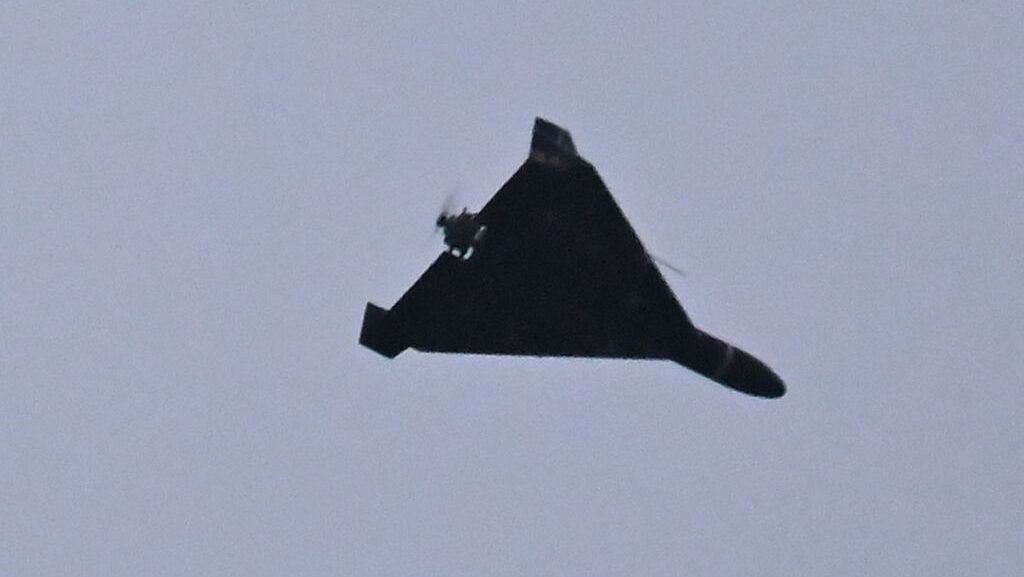
File photo: A Shahed-type attack drone in flight, not actual footage from Dnipro.
This is not a typical case of "infrastructure damage." The platform compresses train sets, waiting crowds, schedules, and evacuation routes into an extremely small space; a penetrating munition strike would simultaneously impact personnel, train availability, transfer order, and the perceived risk of subsequent transport. Ukrzaliznytsia stated that a heightened threat alert had been issued before the attack, yet people remained on the platform. This reveals not just a single department's negligence, but a systemic gap in late-stage warnings, platform diversion, available shelter capacity, and passenger execution. For winter military transport, casualty evacuation, and civilian evacuation, the value of railways is shifting from "rear infrastructure" to a high-frequency, visible, and densely populated operational node.
The Russian side describes such strikes as targeting railway infrastructure that can be used to transport soldiers and equipment; however, the location struck and the known casualties indicate that the so-called dual-use logic cannot eliminate the immediate risks to civilians. Reuters recorded the deaths of two 15-year-old girls in Chernihiv that day, and three deaths in the residential area of Kremenchuk; combined with Dnipro, at least 19 people died. This total of 19 is an aggregation of local reports from three locations and cannot replace the ongoing casualty counts that may still be revised at each site. BBC and UN News cited data from the railway operator stating that as of October 29, 2026, railway facilities had been attacked approximately 1,700 times, compared to 1,206 times in 2025; this supports the notion of "increased risk," but is insufficient to prove that the Russian military has completely shifted from energy targets to railways. A more accurate assessment is that railway hubs and bridges are being included in a target set parallel to energy facilities.
The "Jet Shahed-type" Must Retain Evidence Boundaries
Public reports consistently relay Ukrzaliznytsia's description of a "jet drone," but as of the time of writing, no independently verifiable wreckage, serial numbers, or Russian model declarations have been seen. Therefore, this article will refer to it as the reported jet Shahed-type threat, rather than a specific model that has undergone technical identification. An increase in speed compresses the time from detection, identification to interception, but a single drone causing numerous casualties cannot retroactively indicate the precise speed, warhead, or guidance capabilities of that type of drone; it primarily indicates that once a gathering point fails to clear within the warning window, any successful penetration could be amplified into mass casualties.
Interception numbers must also be viewed separately. The Russian Ministry of Defense claimed on October 29 that its air defense forces intercepted and destroyed 1,214 Ukrainian drones "at night" across multiple locations within Russia; this is a unilateral claim from the Russian side, with Al Jazeera/CBS providing attribution, and it does not represent the Russian military's launch or interception numbers against Ukrainian attacking groups, and cannot be used to measure the success or failure of air defense at Dnipro station. The Ukrainian Air Force and local publicly available materials verified by this article do not provide corresponding data for the number of incoming drones or interceptions that could be directly linked to the single strike on the station, hence no calculations are made.
From South Bridge to Platform: Pressure Negotiation or Destructive Negotiation
Placing the October 27 attack on the South Bridge in Kyiv, the October 26 UN characterization of crimes against humanity, and the potential trilateral negotiation window involving the U.S., Russia, and Ukraine in mid-November on the same timeline, the significance of Dnipro lies not in repeating discussions about ceasefires for bridges or energy, but in observing how pressure sinks into the very act of daily movement. The limited humanitarian arrangements facilitated by Melania Trump for a local ceasefire in Oleshky are still operational, indicating that limited humanitarian arrangements can exist; French President Macron's assertion that Russia has chosen to "escalate" sharply contrasts with the civilian costs resulting from the platform attack.
"Using strikes to promote talks" requires the other side to believe that the costs of continuing combat will rise; "using strikes to destroy talks" leads the other side's society to believe that no commitments can protect the most basic commuting and evacuation needs. Strikes on railway nodes serve both of these logics, but their political effects are not necessarily determined unilaterally by Moscow. If Ukraine and its partners can make platform protection, mobile air defense, immediate evacuation alerts, and alternative transport capacity visible as resilience, the marginal returns of coercion will decrease; if they cannot achieve this, every delay in winter will become a military and psychological amplifier.
Sources and Citations
- Reuters, English, republished by U.S. News, October 29: 14 dead in Dnipro and casualties in Chernihiv and Kremenchuk. Link
- AP/CBS, English, October 29: 14 dead, local ceasefire, and Russian claim of 1,214 drones. Link
- CNN, BBC, Al Jazeera, English, October 29: platform, jet drone, and updated casualties. CNN|BBC|Al Jazeera
- UN News, English, October 29: early reports of 13 dead, 10 injured, and railway risks. Link
- Kyiv Independent, Ukrzaliznytsia statement as reported by UNN, English, October 29: train, platform, and local updates. Kyiv Independent|UNN
Items Pending Confirmation
- The exact model of the drone that struck, wreckage identification, speed, warhead, and guidance evidence; the "jet Shahed-type" is currently only a description in public reports.
- The final forensic/hospital figures for deaths, serious injuries, and minor injuries in Dnipro, as well as the specific distribution of those injured on the two trains.
- Publicly available, corresponding data from the Ukrainian Air Force regarding the number of incoming drones, warnings, and interceptions during that period; independent verification of the Russian claim of 1,214 interceptions.
- The Russian Ministry of Defense's formal explanation of the target for this strike on the platform; no public comments regarding this incident have been seen as of the time of writing.
A Russian drone strike targeted the Dnipro train station on October 30, 2026, resulting in at least 14 casualties. The attack highlighted vulnerabilities in Ukraine's air defense and railway infrastructure, with additional fatalities reported in Chernihiv and Kremenchuk. Despite prior threat alerts, civilians remained at the station, underscoring the risks associated with military operations in populated areas.
- A Russian drone strike hit the Dnipro train station on October 30, 2026.
- Casualties increased from 13 to at least 14, with reports of additional deaths in Chernihiv and Kremenchuk.
- The strike exposed vulnerabilities in Ukraine's air defense and railway infrastructure.
- Ukrzaliznytsia had issued a threat alert prior to the attack, but people remained at the station.
- The incident reflects a shift in targeting railway infrastructure alongside energy facilities.