
After two F-16 crashes, Air Force revamps how crews inspect a ‘blind spot’
Source: Task & Purpose
Loading...Strong SignalCredibility: 81%
Report Content
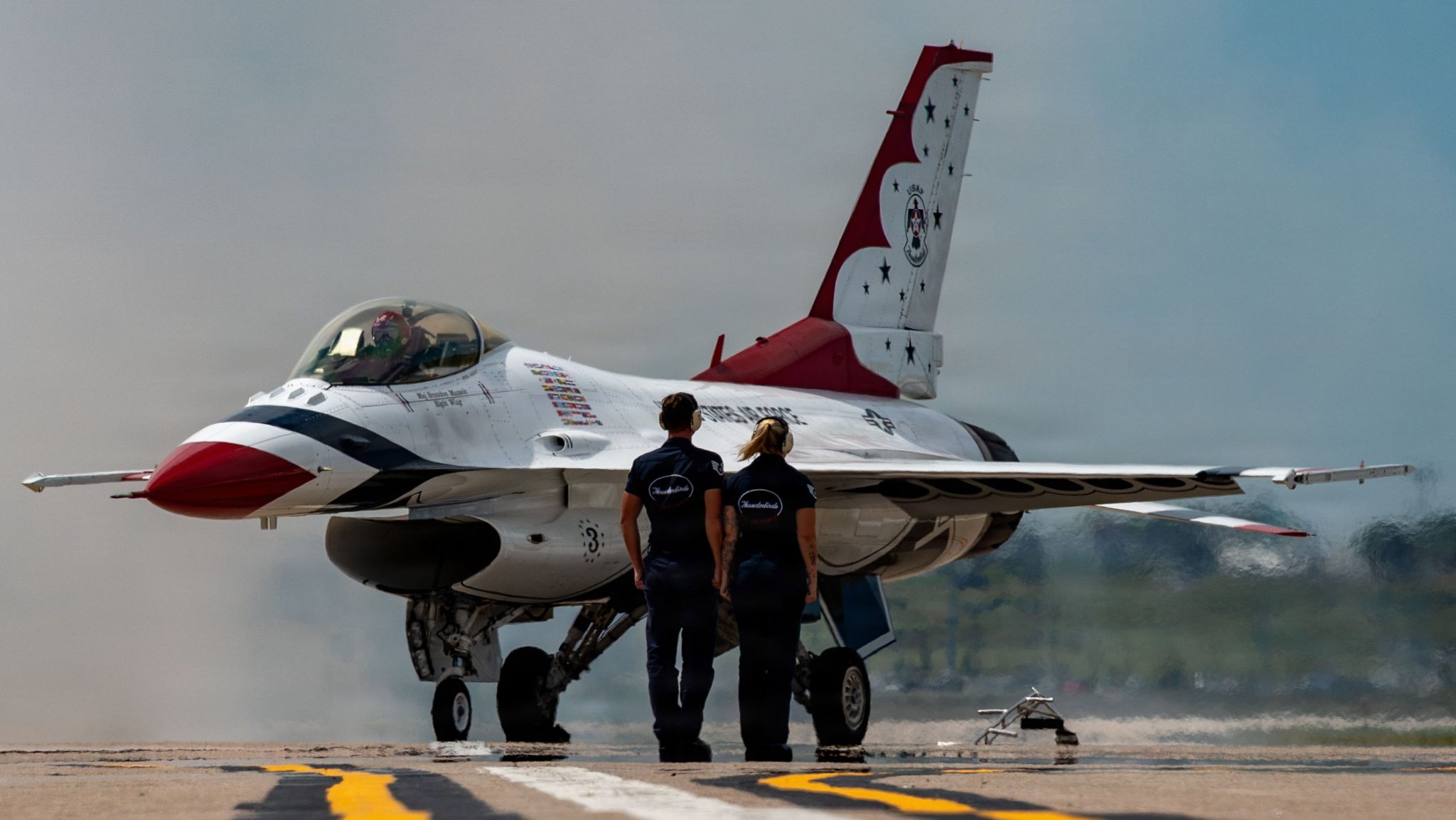
The Air Force is revamping how F-16 crews inspect a “blind spot” in the plane’s engine that has been at the root of at least two crashes in the last two years, including one that destroyed an Air Force Thunderbird demonstration jet in late 2025.
Both pilots of the two F-16s bailed out safely after their engines partially blew apart during routine flights in 2025 and 2024. In both cases, Air Force investigators traced the failure that doomed the planes to unrepaired damage within a “blind spot” inside the Pratt & Whitney F100 engine. Inside both planes, misaligned blades on a specific fan deep inside the engine — which the Air Force calls a ‘stage’ — broke free and caused “catastrophic damage” in the rest of the engine, leaving each plane unflyable.
Now, officials with the Air Force Life Cycle Management Center, which oversees maintenance rules and engineering issues on all Air Force planes, said a new inspection process will be rolled out to F-16 units with a new method to inspect that blind spot.
“The Air Force Life Cycle Management Center’s Propulsion Program Office has developed a way for maintainers to inspect the fourth and fifth stage section of the F-16’s engine,” a spokesman with the center told Task & Purpose. “This issue is applicable only to the F100 engine variant. The Propulsion Program Office has implemented a new borescope inspection procedure for the 4th and 5th stage vane arms for the F100 engine variant.”
The F100 engine is made up of 13 stages, each of which heats and pushes air along the engine. Air Force maintenance rules have long told mechanics to inspect the first four stages from the front of the plane, and stages 7-13 from the rear, or by using special cameras inserted in inspection holes along the length of the engine.
But under those rules, the 4th stage is difficult to reach, and the 5th stage is invisible to the Air Force mechanics who maintain the planes on a daily basis, even during heavy overhauls. The fan blades of the stage are too far back for mechanics to view it from the front, and there is no accessible port for a camera to be inserted.
The only way to inspect the 5th stage, Air Force officials have said, is to pull the engine from the plane entirely and essentially rebuild it, a major overhaul that is generally only done a few times in a plane’s lifespan at major depot facilities, not in the maintenance shops on most Air Force bases.
The F100 is common engine in the Air Force’s F-16 fleet, though many use different powerplants made by either Pratt & Whitney or GE. Those engines are not subject to the new rules.
In both the Thunderbird crash and a 2025 crash at Holloman Air Force Base, New Mexico, crews recorded each plane had previously ingested foreign object debris, also known as FOD, into its engine. Incidents of FOD, which are often rocks, broken concrete from runways, or bird strikes, are carefully reported and tracked by pilots and crew, and maintenance rules for all Air Force planes require inspections after FOD incidents.
However, those inspections for the F100 do not generally require the full removal of the engine to check the 5th stage.
The new inspection process, officials said, can be done by mechanics on the flight line after a FOD event.
“The inspection can be done on-wing and is required after a FOD event occurs,” the AFLCMC spokesperson said. “If a turned vane is found during the borescope inspection, the F100 technical data requires the engine to be sent to depot for follow-on inspections and maintenance. Additionally, the program office has worked with Pratt & Whitney to redesign the vane arm to be more impact-resistant.”
The post After two F-16 crashes, Air Force revamps how crews inspect a ‘blind spot’ appeared first on Task & Purpose.
Classification
Region
North America
Analytical Domain
Operational
Primary Category / Secondary Categories
Weapons & Equipment / Logistics
Subcategory
New Weapon System
SALUTE Report
Size
Not specified
Activity
Revamping inspection procedures for F-16 engines due to safety concerns
Location
Holloman Air Force Base · New Mexico
Unit
U.S. Air Force
Time
2025, 2024
Equipment
F-16Pratt & Whitney F100 engine
Summary
The U.S. Air Force is revamping inspection procedures for F-16 engines following two crashes linked to unrepaired damage in the Pratt & Whitney F100 engine. The new inspection process will allow mechanics to check the 4th and 5th stages of the engine on-wing after foreign object debris incidents, improving safety and maintenance efficiency. This change is part of a broader effort to address safety concerns and enhance the reliability of the F-16 fleet.
Key Facts
- Two F-16 crashes occurred due to engine failures linked to a blind spot in the Pratt & Whitney F100 engine.
- The Air Force is implementing a new inspection process for the 4th and 5th stages of the F100 engine.
- The new inspection can be performed on-wing after foreign object debris (FOD) incidents.
- The F100 engine is common in the Air Force's F-16 fleet, but other engine variants are not affected by these new rules.
- The redesign of the vane arm aims to enhance impact resistance.