
Air Force to create new career field to defend bases from drones and missiles
Source: Task & Purpose
Loading...Strong SignalCredibility: 81%
Report Content
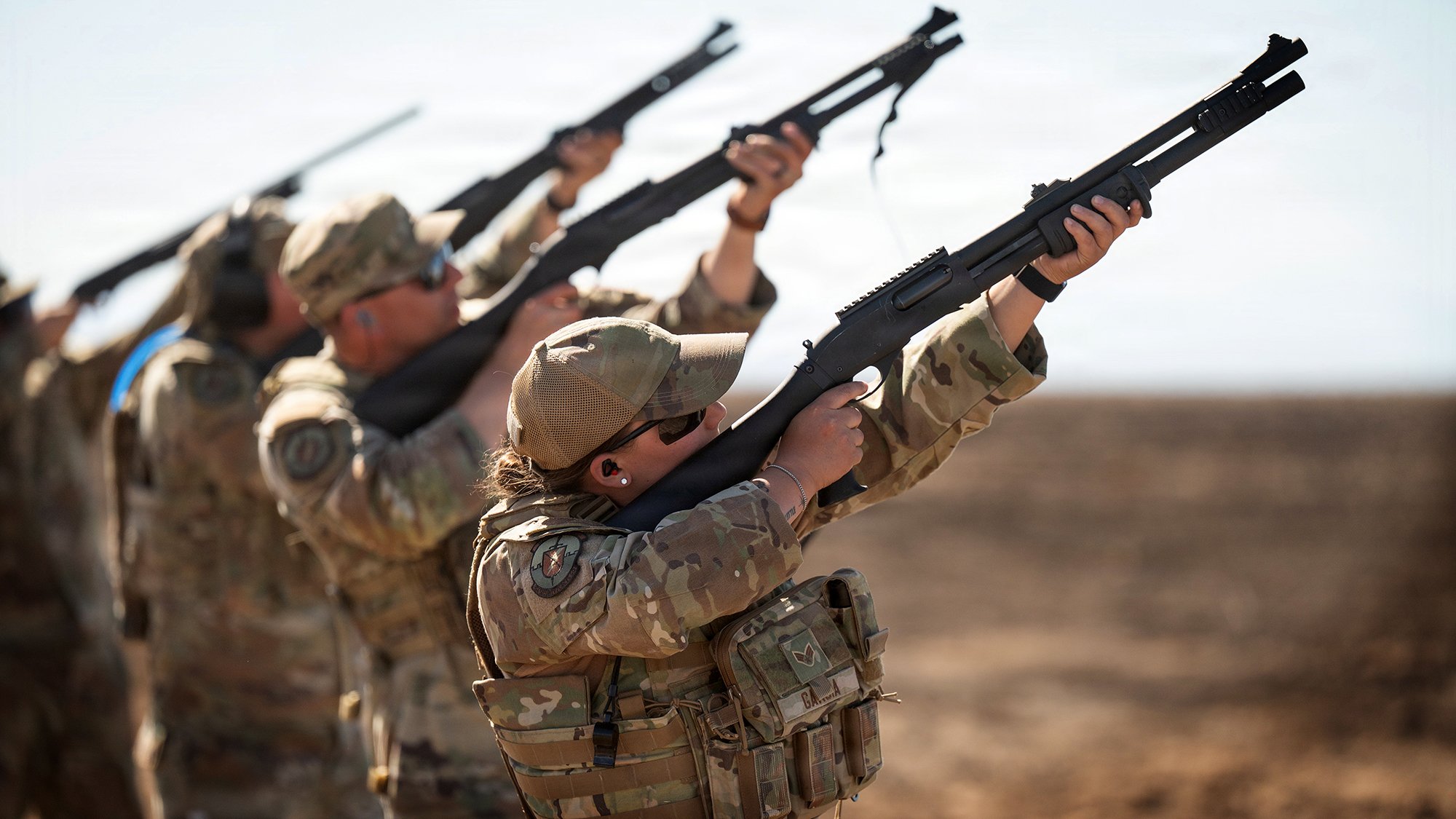
The Air Force has spent the last year building up a new system to defend bases from drones and missiles, testing everything from artificial intelligence-powered detection systems to electronic warfare and kinetic weapons designed to physically knock drones out of the sky.
Now the service intends to dedicate airmen whose primary responsibility will be defending bases against aerial attacks.
Air Force Chief of Staff Gen. Ken Wilsbach announced Monday that a new point-defense career field will be operational within two years, part of an effort to turn installation defense from what he called a “side hustle” into a core Air Force mission.
Point defense refers to protecting a specific location, such as an air base, from incoming threats rather than defending a larger region or airspace.
The announcement follows more than a year of Air Force experimentation with new counter-drone units, weapons and tactics.
The Air Force told Task & Purpose that it is still working to formalize the career path for the new point-defense airmen and had no additional details about the specialty. The service did not say whether it will include enlisted airmen, officers, or both, whether current airmen will be eligible to retrain into it, or which weapons and systems they will operate.
Though the branch hasn’t entirely described what kinetic weapons may mean in the new specialty code, the 325th Security Forces Squadron used an M870 shotgun against simulated sUAS — small unmanned aircraft system — and planned future training to qualify approximately 210 airmen to use the weapon and the SMASH 2000 fire control system, a computerized, rail-mounted firearm sight that tracks moving drones and helps the shooter aim.
The Air Force had already begun experimenting with dedicated point-defense units before Wilsbach announced the new career field. In July, Air Force officials described roughly 20-person point-defense flights made up of enlisted airmen drawn from aviation and battle-management backgrounds. Those airmen were undergoing about three weeks of training at the Joint Counter-Unmanned Aircraft Systems University at Fort Sill, Oklahoma, while the Air Force worked with the school to develop a training syllabus for the eventual career field.
Top Stories This Week
In early August, the 31st Air Task Force held a weeklong training event at Hurlburt Field, Florida, that expanded on efforts to defend against small drones.
The training included AI-powered systems that detected and tracked aerial objects, electronic warfare, and physical interception of hostile drones. The Air Force described the final layer as “final denial.”
“We trained our personnel on counter-small unmanned aircraft systems architecture and employed unique solutions for airmen to track, jam and kinetically defeat sUAS threats,” said Col. Brad Dvorak, 31st Air Task Force commander.
The new career field is emerging alongside a series of Air Force investments in counter-drone technology.
In July, the Air Force awarded Tandem Defense an “indefinite-delivery, indefinite-quantity” contract worth up to $90 million for aerial-denial unmanned aircraft systems, essentially a drone meant to counter other drones.
The contract includes support equipment, operator training and field service support and runs through July 2028. The Air Force obligated $98,000 when the contract was awarded.
The service is also fielding the Small Unmanned Air Defense System, which received $51.8 million in fiscal 2026 procurement funding. Air Force officials previously said the system’s mobile variant could deploy with point-defense flights to protect expeditionary airfields.
Wilsbach also announced a new Point Defense Weapon System that will bring together kinetic and nonkinetic capabilities for air base defense, though he provided few details about what weapons will fall under it.
The push took on greater urgency after Iranian drones and missiles repeatedly targeted U.S. installations during Operation Epic Fury, with drone attacks accounting for the majority of U.S. service member deaths and casualties during the conflict. In his Monday address, Wilsbach described two senior airmen who tracked a swarm of Iranian drones approaching their base and shot down 10.
“For decades, American air and space power has often operated from a position of sanctuary. Those days are over,” Wilsbach said.
The post Air Force to create new career field to defend bases from drones and missiles appeared first on Task & Purpose.
Classification
Region
North America
Analytical Domain
Operational
Primary Category / Secondary Categories
Weapons & Equipment / Military Operations
Subcategory
New Weapon System
SALUTE Report
Size
Approximately 20 airmen in point-defense flights
Activity
Establishment of a new point-defense career field to defend bases from drones and missiles
Location
Hurlburt Field · Fort Sill · Florida · Oklahoma
Unit
U.S. Air Force
Time
Within two years from the announcement on Monday
Equipment
M870 shotgunSMASH 2000 fire control systemSmall Unmanned Air Defense Systemaerial-denial unmanned aircraft systems
Summary
The U.S. Air Force announced the creation of a new point-defense career field to protect bases from drones and missiles, with operations expected to begin within two years. Training for approximately 20 airmen is currently underway at the Joint Counter-Unmanned Aircraft Systems University. The initiative includes investments in new weapon systems and technology to enhance base defense capabilities against aerial threats.
Key Facts
- The Air Force is creating a new point-defense career field to protect bases from aerial threats.
- Training for point-defense airmen is being conducted at the Joint Counter-Unmanned Aircraft Systems University.
- The Air Force has invested in counter-drone technology, including contracts for aerial-denial systems.
- The new career field aims to formalize the defense of air bases against drones and missiles.
- Recent training events have included AI-powered detection systems and electronic warfare tactics.
Previous2 US Army Delta Force Snipers Circling a Crashed Black Hawk Over Mogadishu on October 3, 1993, Asked to Be Put on the Ground to Defend the Wounded Crew, Were Refused Twice, Were Granted the Request on the Third Attempt, and Were Both Killed Holding a Position They Already Knew They Could Not Hold
NextSPACECOM needs more capabilities to target space adversaries: Whiting