
Algeria authorizes troops in Niger in 2026 — Africa Corps loses its security monopoly
 Marie Dubois
Algeria authorizes troops in Niger in 2026 — Africa Corps loses its security monopoly
In Algiers, on November 1, the Parliament's vote transformed a neighborhood crisis into a military decision. Both chambers approved the deployment of Algerian forces to Niger, without publicly specifying either their number or the date of their arrival. The stated objective is the protection of Algerian strategic interests and energy facilities, but the message goes far beyond Sonatrach's sites.
A constitutional break, not a classic expedition
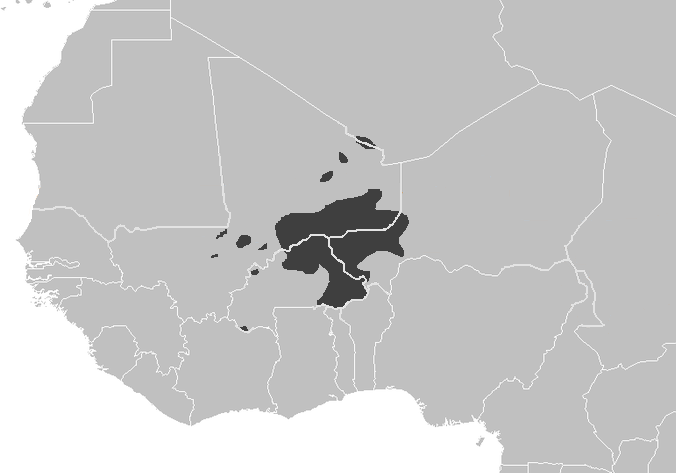
Since independence, the People's National Army has avoided external operations. The constitutional reform of 2020 now allows the president to authorize them, provided a two-thirds majority is obtained in each chamber. This mechanism has just been used. The closest precedent remains Algeria's participation in the 1973 Arab-Israeli war, but it belongs to another theater and another time.
Details matter. At this stage, it is not an expeditionary force intended to reclaim an area controlled by an armed group. The authorities speak of protecting infrastructure and economic interests. This limitation reduces the risk of a quagmire while giving Algiers a direct presence in a country where security has so far been managed by Niamey, its Russian partners, and fragile bilateral arrangements.
Why Niger, why now
The southern Algerian border is not just a line on a map. It stretches for thousands of kilometers across areas where patrols, trafficking, and jihadist groups ignore administrative boundaries. Niger is the key between the Algerian Sahara, northern Nigeria, and the routes connecting Libya to central Sahel.
Algeria already crossed a first threshold at the end of summer by sending four Russian-made Su-30 fighter jets, a transport aircraft, and a refueling plane to Niamey after what Algerian authorities described as an attempt to destabilize the Nigerien military regime. The parliamentary vote now provides a political basis for this posture. It is no longer just about monitoring from the north of the border, but ensuring security depth to the south.
However, the relationship is not automatic. The 2023 Nigerien coup irritated Algiers, which was then advocating for a return to constitutional order. Algeria's destruction of a Malian drone in April further provoked a crisis with Mali, Niger, and Burkina Faso. The current rapprochement is therefore less an ideological conversion than a neighborhood calculation: when the threat shifts, diplomacy follows, even with partners deemed politically unreliable.
The void left by France opens a new theater
France left Mali in 2022, Burkina Faso in 2023, and Niger in December 2023. The United States then withdrew about a thousand troops from their drone base near Agadez. In this space, Africa Corps — the Russian apparatus stemming from the former Wagner group — has provided training, advice, and support to Nigerien forces. Moscow has gained access and influence, but it has not eliminated armed groups.
For Algiers, this observation is central. A visible Russian presence in Niger does not guarantee the security of the Algerian border. It does not resolve the attacks from networks affiliated with Al-Qaeda, including the Support Group for Islam and Muslims (JNIM), nor the movement of fighters and weapons between the Sahel and the Lake Chad basin. Algeria is likely not seeking to replace Russia throughout the country. It seeks to prevent an external partner from becoming the sole arbiter of security just a few hundred kilometers from its own facilities.
The protection of Sonatrach is the operational pretext
Algerian officials have highlighted Sonatrach's oil facilities and the country's economic interests. This is a concrete, measurable, and defensible objective before Parliament. An escort, aerial surveillance, and securing logistical points are compatible with a limited mission. A counter-insurgency campaign in rural Nigerien areas is not.
On the ground, maintaining this distinction will be difficult. An energy facility is a fixed target. Its access roads, convoys, and technical teams create a predictable map for a patient adversary. If an attack strikes an Algerian convoy, Algiers will have to choose between escalation and withdrawal. In the first case, the economic mission will become a combat operation; in the second, the doctrine of non-intervention will be weakened without lasting benefit.
The risk for Niamey and its neighbors
The government of General Abdourahamane Tchiani gains additional support but also a new chain of command to coordinate. Algerian forces will not be able to operate as a simple component of Nigerien units or Africa Corps. Rules of engagement, intelligence, and airspace control will need to be clarified before the first deployment.
The reaction from Bamako and Ouagadougou will be equally important. The three juntas of the Sahel States Alliance already view any foreign presence outside their control with suspicion. A limited Algerian mission may be accepted because it protects common interests; it may also be denounced as a new intrusion if it extends towards the axes of Kidal, Ménaka, or Tillabéri.
The available information remains incomplete: no official personnel, no detailed timeline, and no deployment area have yet been published. But the essential is already visible. Algeria is no longer content to condemn Sahelian instability from Algiers. It is beginning to move its resources towards the theater of operations.
The next test will not be a major confrontation. It will be the first incident involving a facility, a convoy, or an aircraft. If it occurs in the strip between Niamey and the Algerian border, it will immediately indicate whether this deployment is a limited armed guard or the beginning of a deep war against JNIM and its rivals.
Sources
- Al Jazeera, October 26, 2026, Algeria’s military deployment to Niger.
- Reuters, October 26, 2026, Algeria to deploy army units to Niger to protect energy and economic interests.
- The Conversation, November 1, 2026, Algeria is sending troops to Niger for the first time in decades.
On November 1, 2026, the Algerian parliament approved the deployment of troops to Niger to protect strategic interests and energy facilities. This decision follows Algeria's earlier military support to Niger, including the dispatch of Su-30 fighter jets. The move reflects Algeria's shift in military policy and aims to establish a direct security presence in Niger amid regional instability.
- Algerian parliament approved troop deployment to Niger on November 1, 2026.
- The deployment aims to protect Algerian strategic interests and energy facilities.
- Algeria has sent military aircraft to Niger prior to this decision.
- The deployment marks a shift in Algeria's military policy regarding external operations.
- The situation in Niger is influenced by the withdrawal of French and U.S. forces.