
Algeria Joins Niger in 2026 — A New Front for the AES Against Jihadism
 Marie Dubois
Algeria Joins Niger in 2026 — A New Front for the AES Against Jihadism
Agadez, Niger — On October 31, a fuel convoy escorted by Algerian forces reached northern Niger. This is not just a simple logistical delivery. On October 25, the Algerian Parliament authorized the first deployment of troops abroad since 1973. Four days later, Niamey signed a cooperation agreement with Khalifa Haftar, the strongman of eastern Libya. In one week, the Saharan flank of Niger has changed its geometry.
The available information does not yet allow for knowing the exact size of the Algerian contingent or its rules of engagement. Therefore, it is necessary to avoid speaking of a combat intervention. However, on the ground, protecting fuel trucks on the Algerian route to Agadez amounts to securing a strategic artery and accepting the risk of direct contact with groups that thrive on controlling the roads.
An Algerian Decision Driven by Saharan Depth
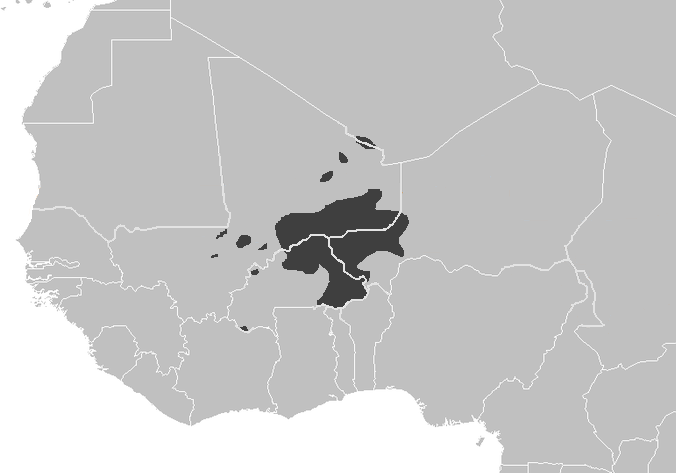
Algeria has long defended a doctrine of non-intervention beyond its borders. The parliamentary passage on October 25 thus marks a political break more significant than the vocabulary of cooperation suggests. Algeria does not necessarily want to take over the war against jihadist groups in place of Niamey. It wants to prevent the security collapse of Niger from directly reaching its own southern wilayas and the routes that connect the Maghreb to the Sahel.
Between Tamanrasset and Agadez, there is neither a continuous front nor a reliable demarcation line. Columns move by water points, secondary tracks, and commercial relays. An attack on a fuel truck can be prepared hundreds of kilometers from its target and then executed in a matter of minutes. For an army, the problem is not just holding a city. It is monitoring a theater of operations larger than the available means.
Fuel here is a dual-use weapon. It supports Nigerien garrisons, markets, and civilian transport, but it also allows Niamey’s forces to maintain patrols in the north. Since 2025, JNIM has already been using pressure on imports and convoys to strangle the Malian state. The lesson is clear for Niamey and Algeria: whoever controls the tankers sets the operational tempo.
Niger Seeks a Route, Not a New Tutelage
For the junta of General Abdourahamane Tchiani, the Algerian agreement responds to an immediate constraint. Western partnerships have been reduced, French and American forces have left, and reliance on the Russian Africa Corps is insufficient to simultaneously monitor Tillabéri, the Lake Chad basin, and the Sahara. An Algerian escort offers a very concrete capability: to circulate fuel and protect crossing points without announcing a permanent foreign base.
However, Niamey does not seek to abandon its freedom of maneuver. The agreement concluded on November 4 with Khalifa Haftar's camp opens another depth, towards Fezzan and eastern Libya. This relationship does not yet constitute a coherent military arrangement. However, it can facilitate the circulation of intelligence, spare parts, and personnel along the Agadez–Sebha axis. This is precisely what worries armed actors thriving in gray areas.
The paradox is brutal. The Alliance of Sahel States, or AES, was built on the refusal of external guarantees and the promise of strategic autonomy. It must now accept help from a neighbor that is not a member of the alliance, while maintaining a Russian partnership and a Libyan channel. This multiplication of patrons does not automatically create a coalition. It can even produce competing chains of command.
The Main Risk Lies on the Roads
JNIM and the Islamic State's Sahel Province do not control the Sahara as an army controls a border. They tax, intimidate, recruit, and close corridors for a few hours or days. Their advantage is choosing the location of contact. An Algerian escort too concentrated around the convoys would leave villages and side tracks exposed. A more offensive presence, on the contrary, could turn logistical support into open confrontation, with a risk of spillover into the Algerian border.
The report published by World Monitor for October lists 104 violent events in Mali, 19 in Burkina Faso, and 18 in Niger. ACLED reminds us that jihadist groups, community militias, state forces, and Russian auxiliaries are competing for the same space. An Algerian patrol can encounter a jihadist group, a Nigerien unit, a trafficker, or a local militia without the legal border clearly indicating who is responsible for the area.
The rivalry between JNIM and ISSP further complicates the calculation. The two organizations fight each other, but they also strike at the bases and convoys of the state. An Algerian operation can temporarily reduce a group's freedom of movement and push the other to open a secondary axis, through Tillabéri, Dosso, or northeastern Libya. The map of sanctuaries matters less than the ability to shift violence.
A Test for Algeria and the AES
The success of this deployment will not be measured by the number of soldiers announced. It will be measured by the regularity of the convoys, the security of the populations along the axis, and Niamey’s ability to share intelligence without losing political control of the operation. If Algeria only protects the main road, the problem will shift to the tracks. If Niamey turns the Algerian presence into a symbol of regained sovereignty, it risks promising more than this mission can deliver.
There is also a diplomatic risk. A strike, a blunder, or the death of an Algerian soldier could shift the mission from protection to national engagement. Algeria's southern border would then become a theater of operations, rather than a buffer zone. Sahelian experience shows that a small force can secure a convoy, but it cannot hold alone the kilometers that separate the convoys.
For now, Algeria is testing a limited formula: protecting flows, consolidating Niamey, and preventing the vacuum created in northern Niger from being filled by jihadists or a rival power. This is reasonable. But the next attack on a tanker will determine whether this formula remains an escort mission or becomes the first act of an Algerian war in the Sahel.
Sources
- Council on Foreign Relations, Violent Extremism in the Sahel, updated November 4, 2026.
- Africanews, first Algerian convoy of troops and tankers reaches northern Niger, November 2, 2026.
- Reuters, Algerian parliamentary authorization for deployment in Niger, October 25, 2026.
- ACLED, Conflict in the Sahel.
- World Monitor, Sahel insurgency tracker, data published November 2, 2026.
Algerian forces escorted a fuel convoy to northern Niger on October 31, 2026, marking the first troop deployment abroad since 1973. This action follows a parliamentary authorization and a cooperation agreement with Khalifa Haftar's camp. The deployment aims to secure strategic routes and prevent jihadist threats from affecting Algeria's southern regions.
- Algerian parliament authorized troop deployment abroad for the first time since 1973.
- Algerian forces escorted a fuel convoy to northern Niger on October 31, 2026.
- An agreement was signed between Niger and Khalifa Haftar's camp on November 4, 2026.
- The deployment aims to secure strategic routes and prevent jihadist expansion into Algeria.
- The situation reflects a shift in Algeria's non-intervention policy.