
Almost 500 Drones and 40 Missiles — Russia Transitions Air War Against Ukraine to an Industrial Rhythm
 Dmitri Volkov
Almost 500 drones and 40 missiles — Russia shifts its air war against Ukraine to an industrial rhythm
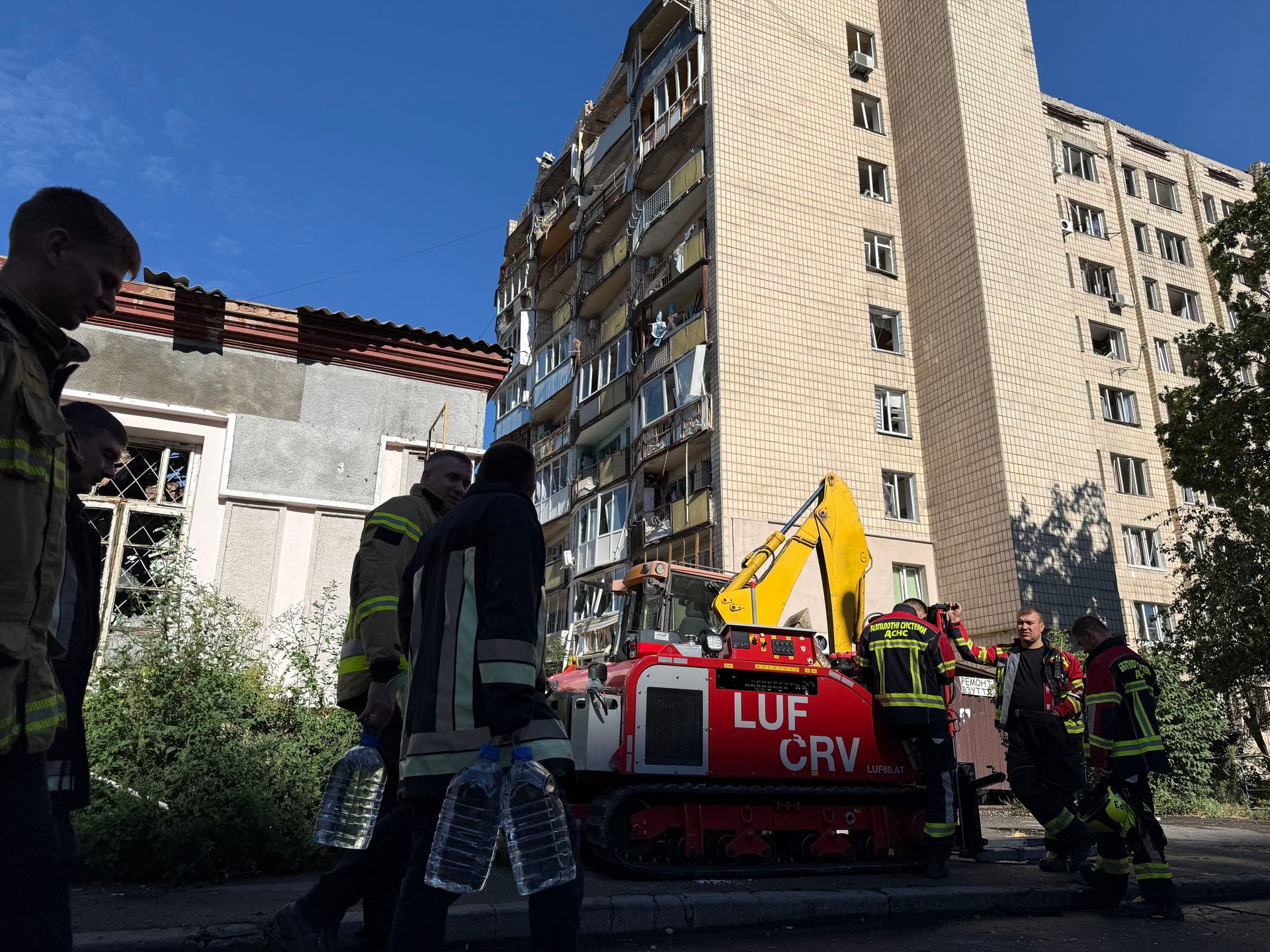
Almost 500 strike drones and more than 40 missiles in one night — this is no longer just another mass attack. It is an indicator that the Russian air campaign against Ukraine has transitioned to a mode of industrial production and regular depletion. According to Ukrainian President Volodymyr Zelensky, the strike on September 28 lasted over 12 hours; at least four people were killed, and more than 70 were injured. The most severe consequences were recorded in Kyiv and Zaporizhzhia (according to Kyiv Independent, September 28, 2026).
From one-time escalation to serial production
In Russian military logic, a mass raid serves several functions at once. Drones like the "Geran-2" create a prolonged load on air defense units, forcing them to expend ammunition and constantly change positions. Cruise missiles launched from aircraft and ships exploit the created windows. The ballistic threat associated with the use of "Kinzhal" missiles from the MiG-31K forces Kyiv to keep the most expensive systems on standby even when the bulk of the raid consists of relatively cheap drones.
It is the cost ratio that is more important here than the impressive figure in the report. The Russian side can exchange a cheap drone for an expensive interceptor missile, while Ukraine is forced to distribute its limited stock of Patriot systems and other means between the capital, energy facilities, industrial sites, and the front. This does not mean automatic superiority for Russia: most targets are intercepted or diverted by electronic warfare means. But even an undestroyed drone that forces the defense to reveal its operational mode provides the attacking side with operational information.
What the composition of the strike indicates
Observing the preparation for the attack shows that Moscow maintains a complex multi-stage scheme. Five Tu-95MS bombers took off from Olenya airfield, then Ukrainian authorities reported the takeoff of the MiG-31K. At the same time, swarms of "Shahed" drones were entering Ukrainian airspace. Such a combination stretches the alarm over time and complicates the decision-making for air defense commanders: premature use of ammunition creates a shortage for the subsequent wave, while waiting increases the risk of hitting infrastructure.
Russian official explanations usually reduce such strikes to hitting military enterprises. However, the scale of damage to civilian infrastructure in Kyiv and Zaporizhzhia shows a different practical logic — pressure on the resilience of cities and on the ability of the Ukrainian state to maintain normal life. Damage to residential buildings, medical facilities, schools, and energy facilities cannot be explained solely by the pursuit of military targets. In this sense, the Russian campaign resembles the Soviet doctrine of coercion through the destruction of infrastructure, but differs in the greater role of autonomous munitions and commercially available components.
Ukrainian defense and the limits of Western assistance
The problem for Kyiv is not only the number of air defense systems. Three bottlenecks are important: the stock of interceptor missiles, the time for reloading, and the coverage of territory. Even a well-layered defense of the capital cannot protect every object in the country. Russian aviation exploits this geographical asymmetry, forcing Ukraine to choose between protecting the population and preserving resources for military targets.
This dependence is particularly noticeable against the backdrop of American restrictions on Patriot supplies. BBC noted that the U.S. has expended significant stocks of interceptors during its own military campaign against Iran and is not ready to transfer them to Ukraine without limits. At the same time, Kyiv is developing its own long-range drones and ballistic projects. An unpleasant paradox for Moscow arises: the more intensively Russia strikes Ukrainian territory, the more it stimulates Ukraine to transition to independent deep strikes against Russian military and logistical infrastructure.
Strategic effect for Russian military doctrine
For the Kremlin, mass raids provide an opportunity to demonstrate the ability to continue the war regardless of diplomatic signals and political discussions about negotiations. However, demonstrating strength does not equate to achieving a strategic goal. If strikes do not lead to the destruction of the Ukrainian command system, industrial production, and frontline logistics, they turn into an expensive campaign of punishment. The death of civilians may strengthen the mobilization of Ukrainian society rather than sway it towards concessions.
From a military perspective, Russia is trying to compensate for limited successes on the ground by expanding the air front. An analysis by Institute for the Study of War on September 20 already recorded a mutual reinforcement of long-range strikes and the growing importance of production and logistical facilities. But air escalation has limits: producing hundreds of drones overnight requires a stable supply chain of engines, electronics, navigation modules, and warheads. Sanctions have not halted Russian assembly, but have made it dependent on circumvention channels and imported substitutes, making it vulnerable to prolonged supply chain control.
Cold forecast
Russia is likely to continue combining mass cheap drones with limited stocks of expensive missiles, especially during periods of political pressure or before important diplomatic contacts. Ukraine will respond by expanding its own strike systems and seeking cheaper interception means. Therefore, the main race of 2026 will not be the number of individual missiles, but the cost of the entire cycle of air combat — from production and launch to detection and destruction of the target.
Moscow has achieved an industrial rhythm, but has not yet proven that this rhythm can break Ukrainian defense. If Western supplies of interceptors decrease faster than Ukraine can ramp up its own production, the advantage will gradually shift to Russia. However, if Kyiv manages to scale up cheap anti-drone defenses and long-range strikes, the current mass campaign will remain not a sign of victory, but an expensive way to sustain the war without a decisive result.
Sources
- Kyiv Independent, “Ukraine war latest,” September 28, 2026.
- BBC, “Russia says at least seven killed in largest Ukrainian attack of 2026,” August 16, 2026.
- Institute for the Study of War, Russian Offensive Campaign Assessment, September 20, 2026.
Russia conducted a mass airstrike against Ukraine on September 28, 2026, deploying nearly 500 drones and over 40 missiles, resulting in significant civilian casualties and damage in Kyiv and Zaporizhzhia. The prolonged attack lasted more than 12 hours, highlighting the shift to an industrial-scale air campaign. Ukrainian defenses are strained as they attempt to manage limited resources against this intensified assault.
- Russia launched nearly 500 drones and over 40 missiles in a single night attack on Ukraine.
- The attack lasted more than 12 hours, resulting in at least four deaths and over 70 injuries.
- Significant damage was reported in Kyiv and Zaporizhzhia, affecting civilian infrastructure.
- The attack is part of a strategy to exhaust Ukrainian air defenses and disrupt civilian life.
- Ukraine is facing challenges in intercepting these attacks due to limited air defense resources.