

Summary and Key Points: Northrop’s YF-23 first flew on August 27, 1990, and nearly every line of it was designed for stealth. Its diamond wing, V-tail, and blended fuselage were shaped to deflect radar; S-duct intakes hid its engine fan blades, and its exhaust ran through shielded troughs on the upper fuselage to blunt infrared sensors. Less than a year later, it lost the Advanced Tactical Fighter competition to Lockheed’s YF-22, which became the F-22 Raptor, and fans have argued over the choice ever since.
The YF-23: Better Than the F-22?
On August 27, 1990, the YF-23 took its first flight. The aircraft was designed to compete in the Air Force’s Advanced Tactical Fighter program to become the service’s first fifth-generation stealth fighter.
As many are undoubtedly aware, the aircraft ultimately lost to Lockheed’s YF-22, which was later developed into the F-22 Raptor. Since then, the ATF competition has been the subject of heated debates among aviation experts and enthusiasts alike, many of whom claim that the YF-23 was unfairly snubbed by the USAF.
We won’t get into that today; let’s look at the aircraft itself and why it remains so beloved.
Lower Radar Signature for YF-23
Most people, including the Air Force, generally agree that the YF-23 was a better design in terms of stealth.
The aircraft sported a highly unusual design with a diamond-wing configuration and a raised cockpit, both of which contributed to its low radar cross-section (RCS).
The YF-23 used S-duct intakes, which kept the engine’s compressor fan blades hidden from radar waves, while the airframe used serrated patterns to absorb radar energy.
The nose shape and blended fuselage also contributed to its lower RCS, with minimal panel gaps or awkward protrusions that could cause radar spikes.
While there is no hard data on the YF-23’s RCS, Lockheed Martin says the production F-22 has an RCS of 0.0001 square meters (its actual RCS is highly classified).
With additional refinements and the application of radar-absorbent materials (RAM), the production F-23 likely would have had a similar, if not lower, RCS.
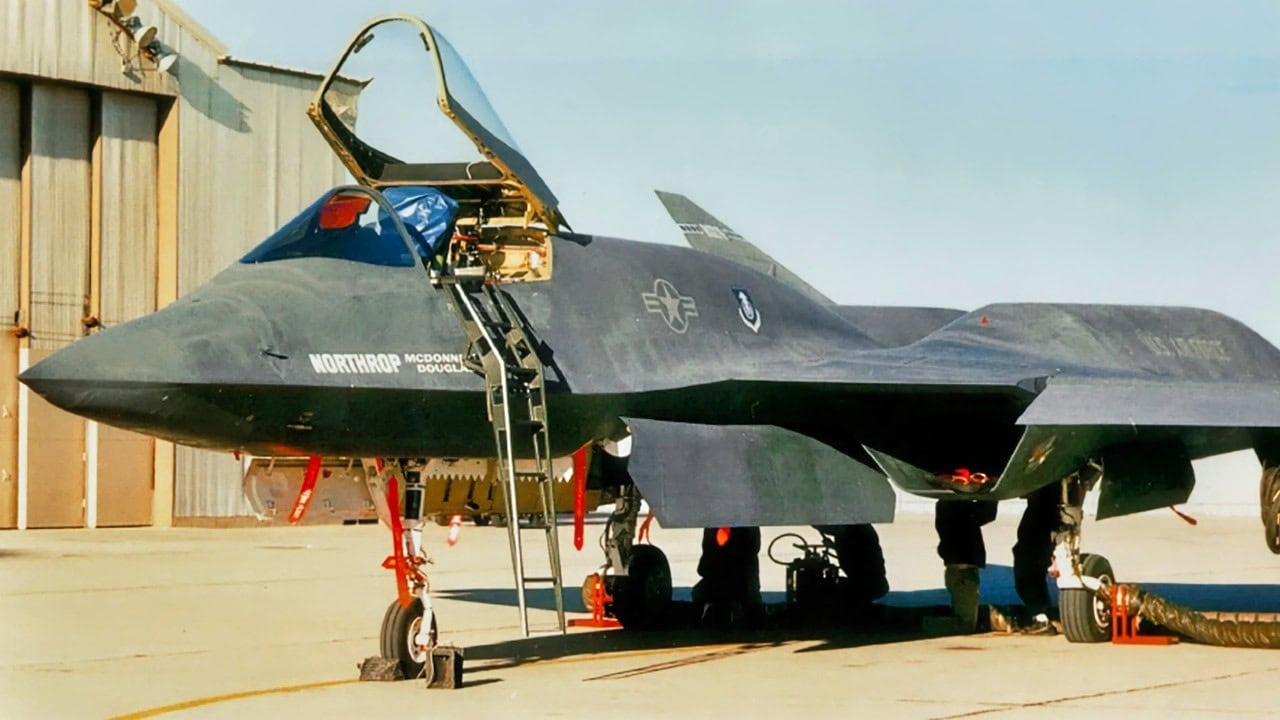
YF-23 Fighter. Image Credit: USAF.
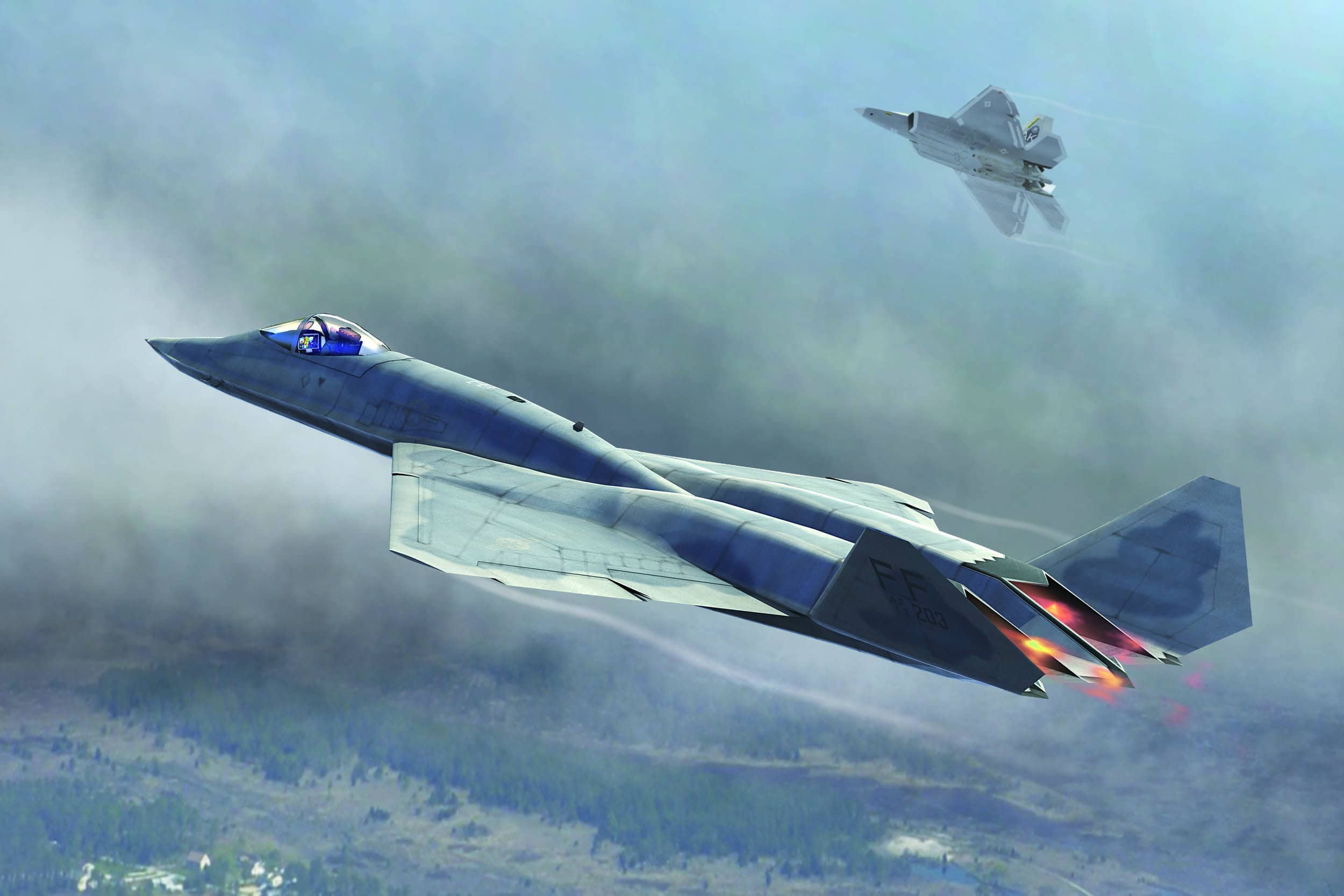
YF-23 Fighter. Image Credit: Creative Commons.
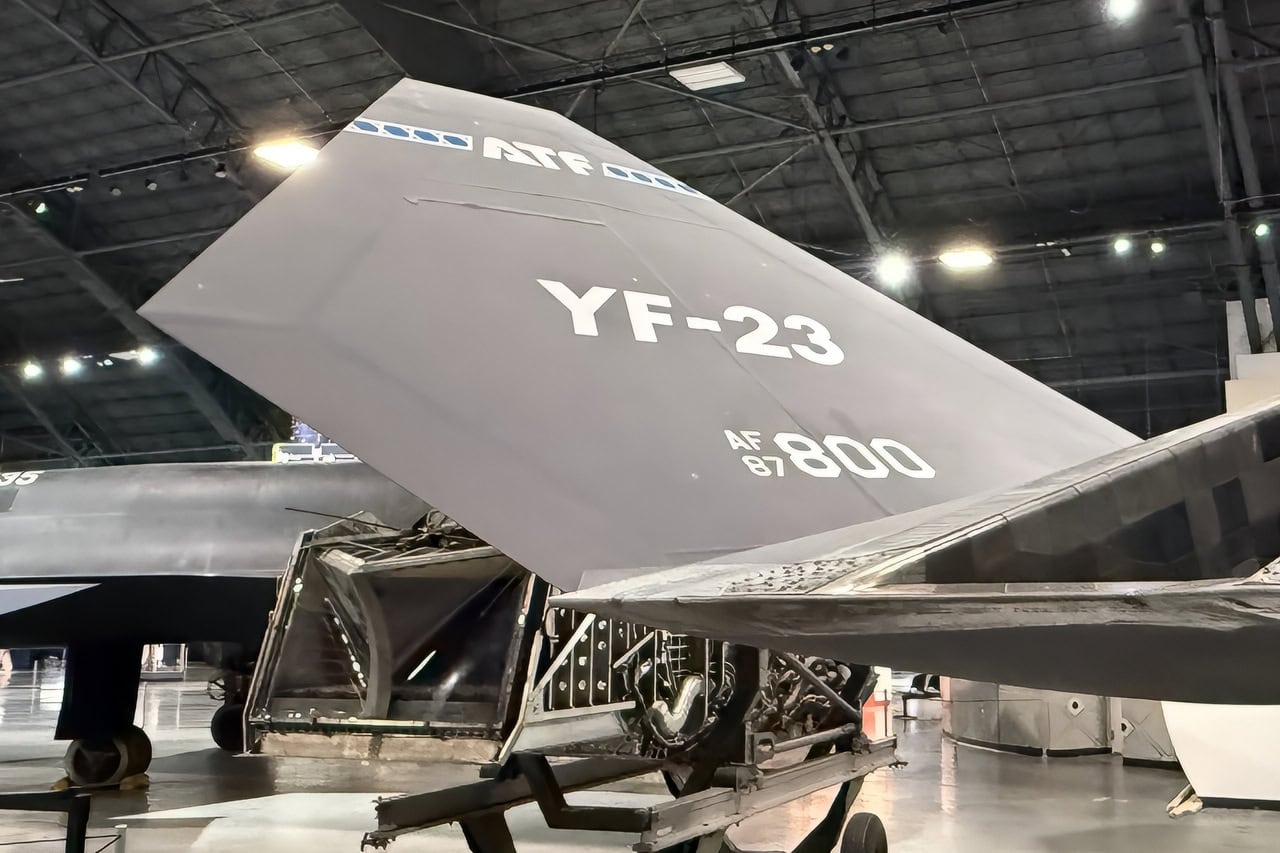
YF-23 Back End. 19FortyFive.com image.
Lower IR Signature
Complementing its low RCS, the YF-23 took steps to reduce its infrared signature.
Instead of more conventional round nozzles, the aircraft used wide, shielded troughs along the upper fuselage.
As a result, the YF-23’s engine exhaust produced less heat than conventional designs.
On paper, this offered better protection against IR missiles and aircraft equipped with infrared search and track (IRST) capabilities, although it is admittedly difficult to say how much this would have helped in real combat conditions.
While the YF-22’s engines were also designed to reduce its IR signature, Lockheed’s choice to pursue a more maneuverable design forced it to accept a higher IR signature.
Evidently, the USAF did not see this as a deal breaker.
Higher Speed
Speed was a core requirement of the ATF program. Both Northrop and Lockheed’s submissions had to supercruise (i.e., reach supersonic speeds without engaging afterburners).
The YF-23 was designed to operate at supersonic speeds without compromising its stealth profile.
Powered by two Pratt & Whitney YF119-PW-100N engines (the other prototype used two General Electric YF120-GE-100N engines), the YF-23 had a maximum speed of Mach 2.2 and could supercruise at Mach 1.72.
During the competition, the YF-23 exceeded the USAF’s requirements and outperformed Lockheed’s YF-22 in terms of pure speed.
However, speed came at the cost of maneuverability.
The YF-22, with its thrust-vectoring engines, was more acrobatic than the YF-23. Although maneuverability was not a requirement of the ATF program, Lockheed used the YF-22’s mobility to impress the Air Force.
Better Range
Range was another of the YF-23’s strong points. Because of the aircraft’s larger wingspan, it had greater internal fuel capacity and a combat range of roughly 700-800 nautical miles.
The airframe was purpose-built to reduce drag and increase fuel efficiency, enabling a longer combat range.
By comparison, the production F-22 has a combat range of 460 nautical miles.
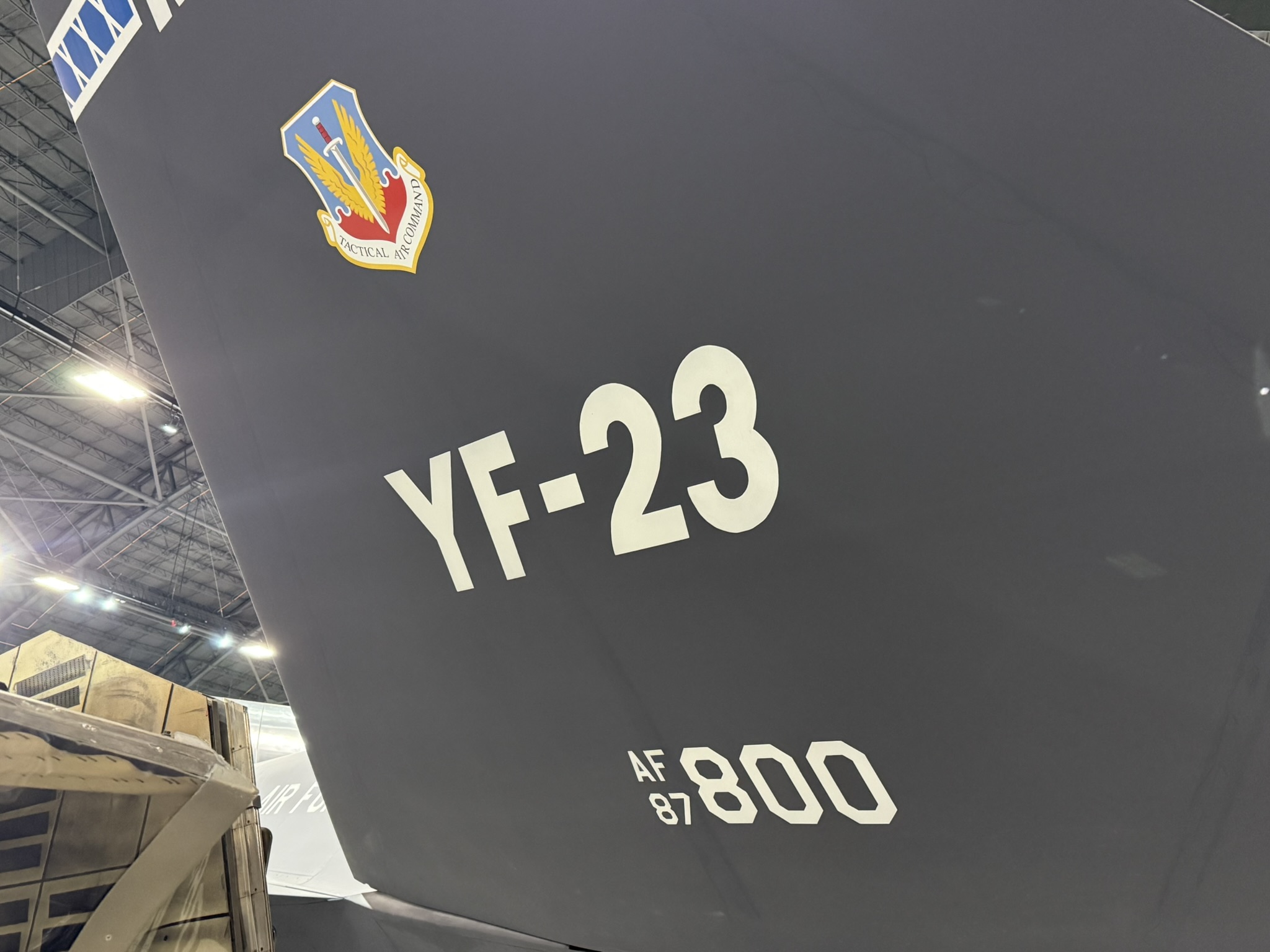
YF-23. 19FortyFive image from the National Museum of the US Air Force.
The proposed production version, the F-23, had an extended fuselage, allowing it to carry even more fuel.
These qualities would have greatly helped the YF-23 as an air superiority fighter, enabling it to undertake long-distance missions.
With external fuel tanks, the F-23 would likely have had a total combat range of around 1,000 nautical miles, though this is purely speculative.
Solid Aerodynamic Profile
Despite the constant emphasis on stealth, the YF-23 retained an excellent aerodynamic profile, enabling it to reach high speeds.
This was achieved through the diamond wing layout and a V-tail configuration optimized for high speeds.
Its blended wings and fuselage also helped refine its aerodynamic profile without compromising stealth.
While the YF-22 was better suited for close-in maneuvers, the YF-23 excelled in BVR engagements, though both fighters performed excellently in BVR scenarios.
Too Risky for the USAF
Despite the YF-22 outperforming it in several areas, the Air Force still chose Lockheed’s design.
The decision had less to do with the aircraft’s performance and more with perceived risks and Lockheed’s stronger marketing.
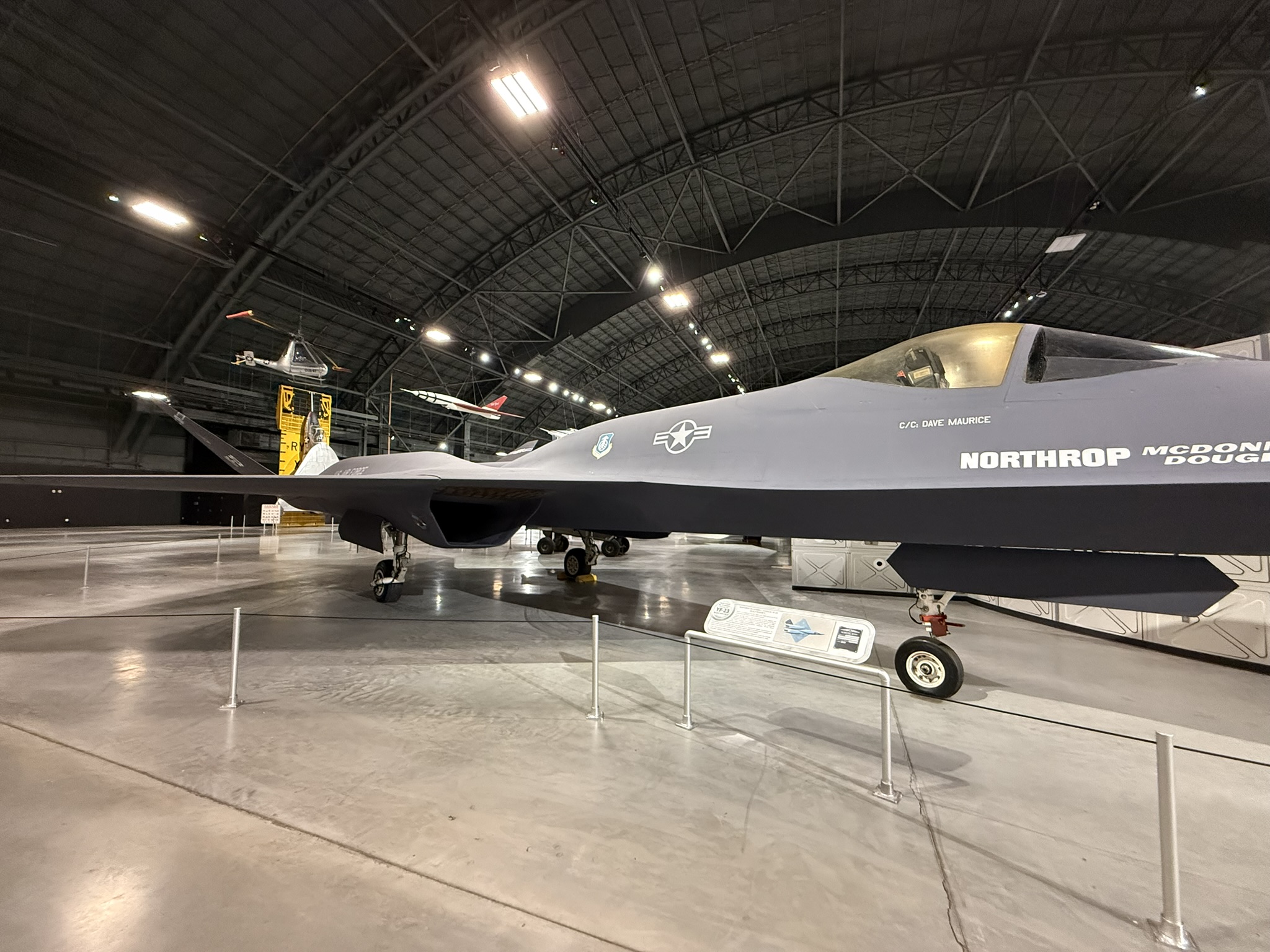
YF-23. 19FortyFive image from the National Museum of the US Air Force.
At the time, Northrop was in troubled waters. After the less-than-stellar B-2 Spirit program, the company faced financial trouble and had little chance of survival.
By comparison, Lockheed was a generally reliable contractor and was not working on any major projects. Through a combination of politics and risk management, the YF-23 was, perhaps unfairly, canned.
About the Author: Isaac Seitz
Isaac Seitz, a Defense Columnist, graduated from Patrick Henry College’s Strategic Intelligence and National Security program. He has also studied Russian at Middlebury Language Schools and has worked as an intelligence Analyst in the private sector.