
America Just Cut 50 NATO Jets From Europe’s War Plan
 Alexandra Reeves
America Just Cut 50 NATO Jets From Europe’s War Plan
Europe did not need another reminder that American protection is now conditional. It got one anyway.
According to reporting first carried by the New York Times and repeated by Al Jazeera, Defense News and Euronews on June 12, the United States plans to reduce the air and naval assets it makes available for NATO operations in Europe. The headline number is easy to grasp: roughly 50 fewer American fighter jets in NATO’s European war plan. The practical meaning is uglier. NATO is losing part of the U.S. package that makes European deterrence more than a map exercise.
The reported plan would cut U.S. F-16 and F-15E fighter aircraft assigned to NATO from about 150 to about 100. Maritime reconnaissance aircraft would fall from 26 to 15. Eight aerial refuelling tankers previously available to Europe would be removed altogether. One bomber task force group, a missile-capable submarine, an aircraft carrier and several accompanying warships would also be shifted elsewhere, according to the same reporting.
Washington calls this burden sharing. Europeans will hear something else: the bill is due, and the United States is no longer willing to cover the overdraft.
The Capabilities Being Removed Are Not Cosmetic
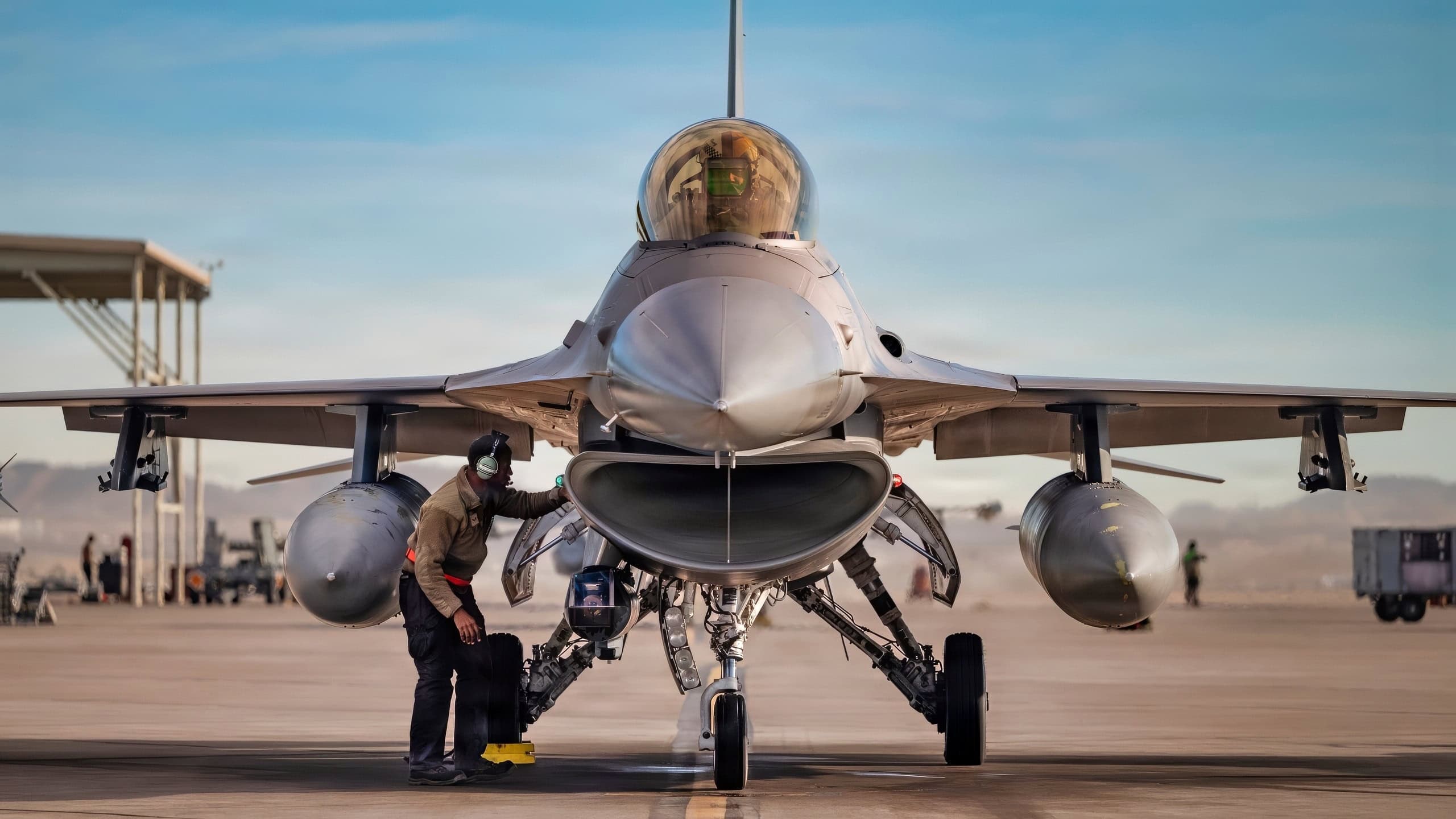
F-16s and F-15Es are not interchangeable political symbols. They are workhorse aircraft for defensive counter-air, strike missions and rapid reinforcement. The F-16 Fighting Falcon brings multirole capacity: air policing, suppression support, precision weapons delivery and quick dispersal across European bases. The F-15E Strike Eagle is heavier and longer-legged, designed for deep strike with a large weapons load, two-person crew and the sensor suite to operate at night or in bad weather.
Tankers matter even more than the fighters, because they turn tactical aircraft into theatre assets. Without aerial refuelling, NATO aircraft are tied more tightly to vulnerable runways, shorter patrol windows and more predictable mission profiles. Pull all eight U.S. tanker aircraft from the pool and Europe has to choose between fewer sorties, shorter reach or a frantic scramble to backfill with aircraft it does not have in sufficient numbers.
The maritime reconnaissance cut is the same problem at sea. Russia’s Northern Fleet and Baltic activity do not become easier to track because Washington has decided Europe should mature faster. Fewer patrol aircraft mean thinner coverage of submarine routes, maritime choke points and reinforcement corridors across the Atlantic. That is not a press-release problem. It is a physics problem.
NATO’s Force Model Was Built Around Assumptions
The reported reductions sit inside the NATO Force Model, the framework the alliance uses to identify national forces available for deterrence, crisis response and collective defence. NATO describes the model as a way to give political and military leaders a systematic view of forces that can be made available to the alliance. It replaced the old NATO Response Force and is built around readiness tiers, including forces available within 0-10 days, 10-30 days and 30-180 days.
That sounds tidy. It is only tidy if the pledged forces are real, available and supported by the enablers that make them usable.
U.S. European Command had already signalled the direction of travel last week, saying Washington would “rightsize” its NATO Force Model contributions. The official explanation was that Europe and Canada must assume more responsibility for conventional defence on the continent, and that simultaneous crises in multiple theatres demand a different U.S. allocation of forces. That is a rational strategic argument. It is also a brutal one for allies who spent years treating American depth as a permanent feature of the landscape.
Here is the thing many European capitals still prefer not to say out loud: the United States is not just another NATO member. It is the alliance’s spare engine, logistics hub, long-range strike reserve, tanker fleet and political shock absorber. When Washington removes assets, Europe does not merely lose numbers in a spreadsheet. It loses slack.
The Timing Is the Message
This is happening while Russia is still fighting in Ukraine, while European governments are arguing over defence budgets, and while the Trump administration is pulling U.S. attention toward the Middle East, Asia and the Americas. Al Jazeera reported that NATO officials tried to frame the move as a shift toward long-term sustainability. That is the alliance’s public line, and there is truth in it. Overdependence on one ally is unhealthy.
But the timing makes the statement sharper. If Europe had already rebuilt its airpower, tanker fleet, magazine depth and command resilience, this would be a manageable adjustment. It has not. Britain is wrestling with defence spending gaps. Germany is still converting money into usable combat power at a painful pace. France has capable forces but limited mass. Eastern European allies have urgency, but not enough high-end aircraft, tankers or naval reconnaissance capacity to replace American withdrawals by themselves.
The usual counterargument is that forcing Europe to carry more of the burden is necessary. I agree with that, up to a point. The uncomfortable part is that deterrence does not pause while Europe learns procurement discipline. Moscow does not have to defeat NATO in a general war to profit from this. It only has to believe the alliance’s first weeks of response are less coherent, less mobile and less politically certain than NATO claims.
Europe Needs Enablers, Not Just More Brigades
The most common European response to American pressure is to announce more troops, more spending targets and more industrial plans. Some of that is useful. Much of it misses the weak point.
If the U.S. removes fighters, tankers, reconnaissance aircraft and naval assets from NATO’s immediate planning pool, Europe’s priority cannot only be more battalions on the eastern flank. It needs the unglamorous systems that let those battalions survive and move: aerial refuelling, integrated air and missile defence, long-range fires, electronic warfare, ISR aircraft, hardened bases, spare parts, munitions stocks and secure command networks.
General Alex Grynkewich, NATO’s supreme allied commander, reportedly pointed in that direction at a Berlin airshow, arguing that allies need systems they can acquire, field, scale and sustain quickly, including long-range fires and drones. That is the right instinct. Europe should not try to build a miniature version of the U.S. military. It should build enough European capacity to make American absence less paralysing.
That means buying boring things in bulk. It means fewer prestige projects that arrive in the 2040s and more deployable capacity before 2030. It means treating tankers and surveillance aircraft as strategic assets rather than support equipment. It also means accepting that “European strategic autonomy” is not a slogan. It is a bill.
The Next Test Comes Before Europe Is Ready
The July NATO summit in Turkiye will now carry more weight than another burden-sharing quarrel. Allies will need to know whether the U.S. reductions are a first tranche, a negotiating tactic or the new baseline. Those are three very different futures.
The key finding is simple: the United States is not abandoning NATO, but it is shrinking the American cushion inside NATO’s war plan. That distinction matters. It gives Europe room to adapt, but not much room to pretend.
Watch three things next: whether European allies announce concrete tanker and ISR purchases, whether NATO rewrites regional defence assumptions around lower U.S. availability, and whether Russia tests the alliance’s confidence through air, maritime or hybrid pressure on the eastern flank.
The real danger is not that 50 aircraft disappear overnight. It is that Europe keeps acting as if the old guarantee is still sitting on the runway.
The United States plans to cut approximately 50 fighter jets and several naval assets from NATO's European war plan, significantly impacting European defense capabilities. This reduction includes F-16 and F-15E fighter jets, maritime reconnaissance aircraft, and aerial refueling tankers. The decision reflects a shift in U.S. military strategy, emphasizing European responsibility for defense amid ongoing tensions with Russia. The changes were reported on June 12.
- The U.S. is cutting approximately 50 fighter jets from NATO's European war plan.
- Maritime reconnaissance aircraft will be reduced from 26 to 15.
- Eight aerial refueling tankers will be removed from NATO's planning pool.
- The U.S. is reallocating significant military assets away from Europe.
- This reduction is framed as a shift towards European self-reliance in defense.