
America's One-Third NATO Jet Cut Leaves Europe Exposed
 Alexandra Reeves
America's One-Third NATO Jet Cut Leaves Europe Exposed
Europe has been asking for strategic autonomy for years. Washington may be about to hand it over in the least convenient form possible.
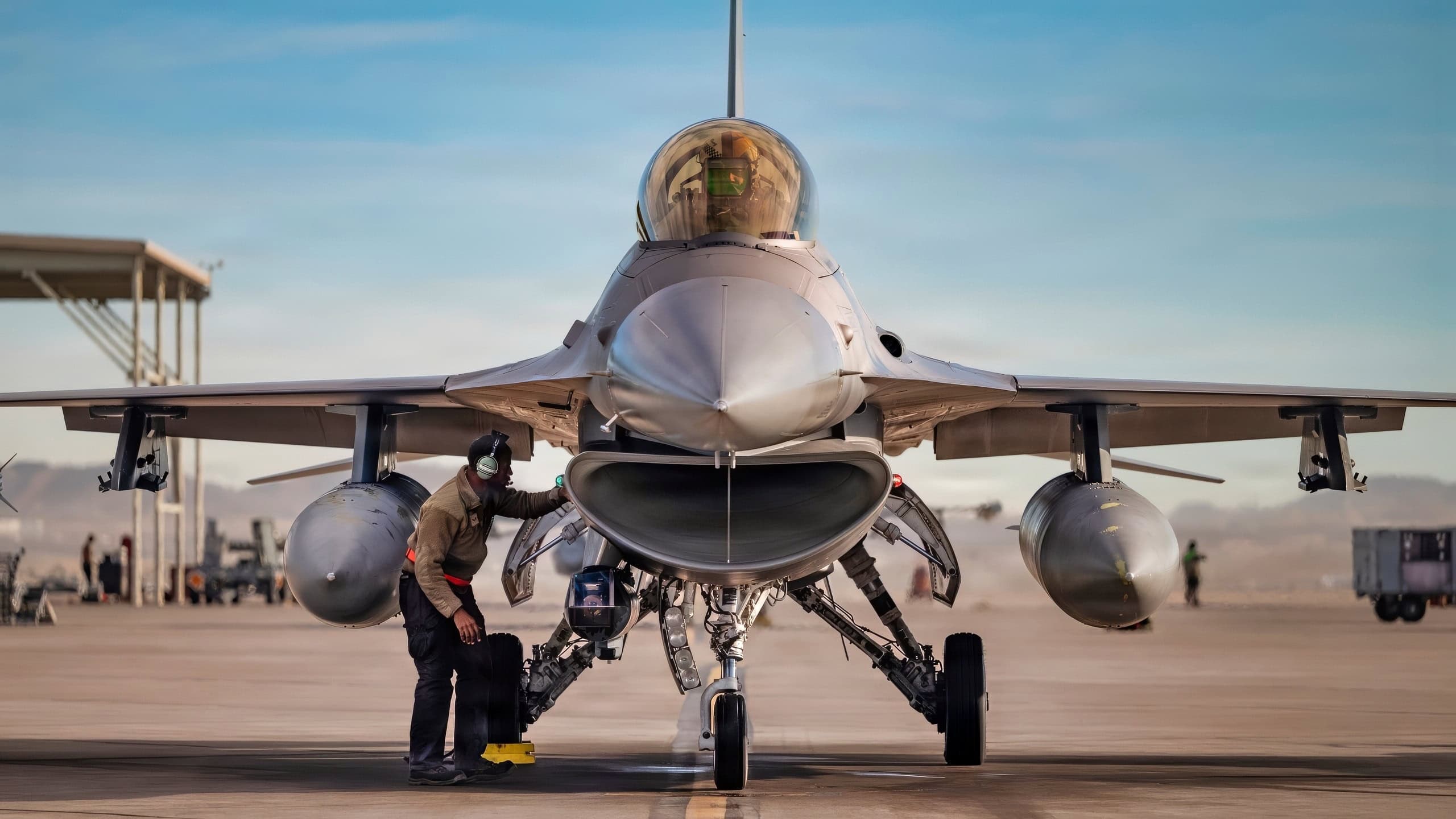
According to Reuters, citing a New York Times report based on two senior European officials, the United States plans a sharp reduction in the aircraft and warships it makes available for NATO operations in Europe. This is not another vague burden-sharing speech. The reported numbers are specific enough to hurt: F-16 and F-15E fighter jets would fall from roughly 150 to 100, maritime reconnaissance aircraft from 26 to 15, and all eight aerial refuelling tankers previously assigned for European availability would disappear from the package.
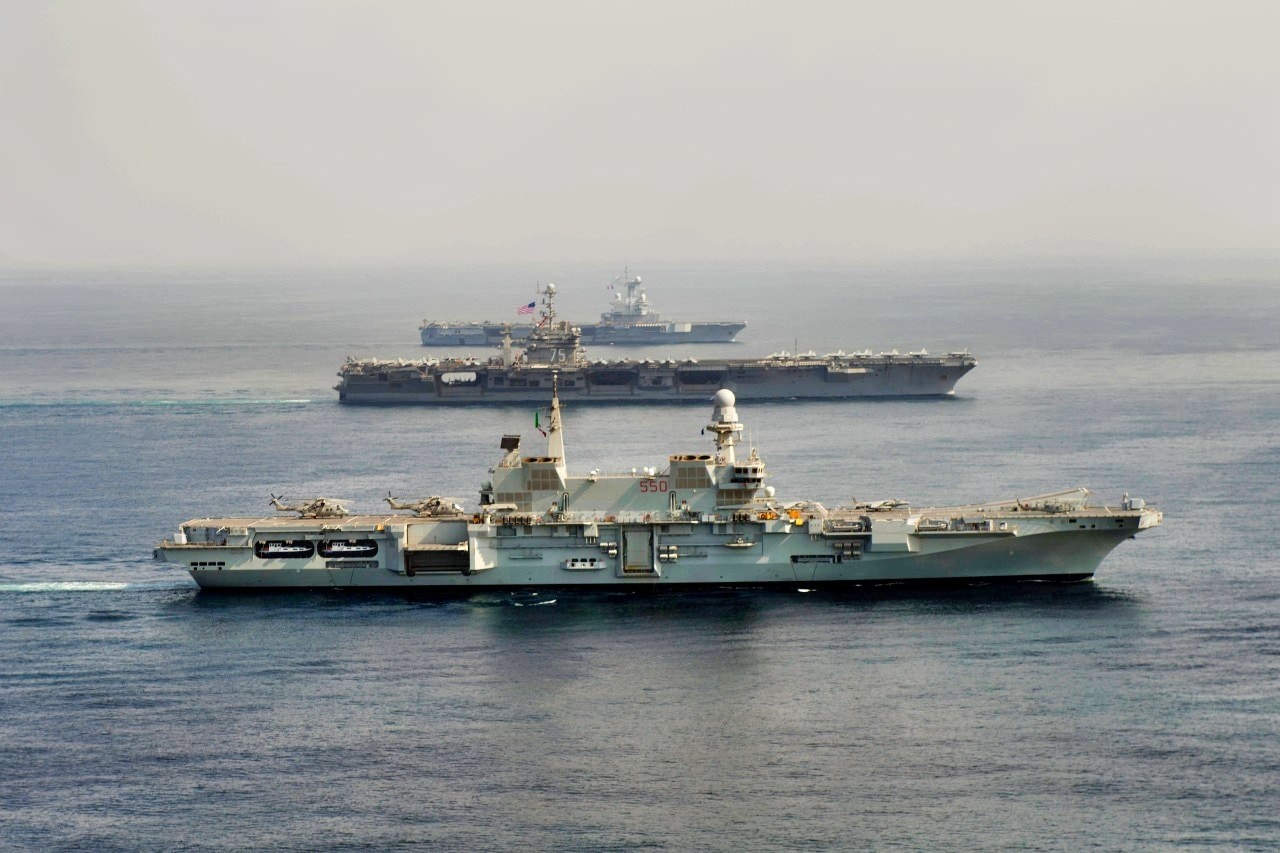
The same report says Washington also aims to redeploy a missile-launching submarine, an aircraft carrier, several warships, the jets attached to that carrier group, and possibly one of two bomber groups assigned to Europe’s defence. The Pentagon did not immediately comment. U.S. European Command had already said it would “rightsize” its NATO Force Model contributions. That word is doing a lot of work.
The Capability Gap Is Not About Flags
The easy European response is to complain that America is retreating. That is emotionally satisfying and analytically incomplete. The harder truth is that the assets being reduced are precisely the ones Europe has been slowest to replace.
F-16s and F-15Es are not just symbols of American airpower. In a NATO crisis they contribute to combat air patrols, suppression of enemy air defences, long-range strike packages and the constant rotation of aircraft needed to keep pressure on a front that could stretch from the High North to the Black Sea. Maritime reconnaissance aircraft are even less glamorous but arguably more important. They look for submarines, track surface groups, monitor choke points and feed the targeting picture that commanders pretend will be seamless until it suddenly is not.
The tanker cut is the most revealing. Eight aerial refuelling aircraft do not sound dramatic in a political debate. In a real European air campaign, they are what turns fighter sorties into useful range, endurance and persistence. Without tankers, Europe’s aircraft still exist, but their practical reach shrinks. That matters in the Baltic, the Norwegian Sea, the eastern Mediterranean and any long-range strike plan that assumes NATO can move airpower quickly across a continent.
Here is the thing: NATO’s weakest link has rarely been the number of national flags in the room. It has been the shortage of shared enablers: refuelling, surveillance, command and control, munitions stockpiles, air defence depth and logistics. A smaller U.S. contribution goes straight at those connective tissues.
NATO Built A Faster Machine Around American Parts
NATO’s own Force Model is designed to make the alliance faster and more predictable. The model replaced the old NATO Response Force and, according to NATO, more than tripled the high-readiness forces potentially available to the alliance. It uses a three-tier readiness structure: forces ready within 0-10 days, 10-30 days and 30-180 days.
That looks solid on paper. But readiness is not the same as usable combat power. A brigade can be declared ready and still depend on someone else’s surveillance aircraft, tanker fleet, strategic lift or naval screen to reach the fight and stay there. The United States has provided a disproportionate share of those assets for decades. Everyone in Brussels knows this. The problem is that acknowledging it in a communique is easier than buying your way out of it.
NATO spokesperson Allison Hart told Reuters that there has historically been an over-reliance on U.S. forces and capabilities, and that a shift in responsibility could strengthen the alliance as Europe and Canada invest more. In principle, she is right. In timing, this is brutal.
At the 2025 Hague summit, allies committed to invest 5 percent of GDP annually on core defence requirements and defence-related spending by 2035, including at least 3.5 percent for NATO-defined defence expenditure. NATO says European allies and Canada reached more than $574 billion in combined defence spending in 2025, adjusted to 2021 prices. That is real money. But money committed in summit language does not become P-8 patrol aircraft, tanker crews or missile defence batteries by next Tuesday.
Russia Is Watching The Calendar
The timing is what makes this more than a Washington budget story. European and Nordic officials are warning that Russia is rebuilding its military posture near NATO’s northern and Baltic borders. The Defense Post, citing a DR investigation based on satellite imagery and interviews with Nordic military and intelligence officials, reported this week that Russia could eventually station up to 115,000 personnel near Nordic and Baltic NATO members after the war in Ukraine.
There is no public evidence that Moscow has decided to attack NATO. That caveat matters. But deterrence is not built around waiting for evidence of intent; it is built around denying opportunity. If Russia is expanding bases, restructuring units from brigades toward larger formations and adapting lessons from Ukraine, then NATO’s answer cannot be a decade-long promise to spend more while the United States removes scarce enablers now.
This is where the politics get uncomfortable. Many European governments wanted a less American NATO when the argument was about dignity. Fewer wanted it when the bill arrived as tanker aircraft, maritime patrol squadrons and carrier strike capacity. The United States may be forcing the alliance to become more balanced. It may also be exposing that Europe’s rearmament debate has been too focused on headline spending and not enough on the boring equipment that decides whether armies can actually fight.
The Eurosatory Warning Fits Too Well
At the Eurosatory defence show in Paris, retired French general Charles Beaudouin, who heads the event organiser, told Defense News that this year may be Europe’s last chance to buy off-the-shelf weapons that can be delivered in time for a possible conflict with Russia. He said systems still in development would arrive too late if Europe faces war in the next few years.
That warning is a little theatrical. Defence shows are built to sell urgency. But he is not wrong about the calendar. If the threat window is measured in two to four years, then Europe cannot solve the U.S. drawdown with future sixth-generation fighters, perfect multinational procurement schemes or industrial policy slogans. It needs tankers, patrol aircraft, air defence interceptors, drones, ammunition, command networks and repair capacity that can be fielded before 2030.
There is also a lesson from Ukraine that NATO still struggles to absorb. Expensive platforms matter, but they are becoming more vulnerable, more maintenance-heavy and more dependent on distributed sensors and cheap attritable systems. A European answer built only around replacing American high-end assets one-for-one would be too slow and too expensive. A credible answer has to mix high-end enablers with Ukrainian-style mass, redundancy and speed.
What To Watch Next
The first thing to watch is whether the reported U.S. reductions become formal NATO planning assumptions or remain a negotiation tactic ahead of spending talks. The second is whether European governments respond by buying the missing enablers, not just more politically attractive tanks and fighters. The third is whether NATO’s regional defence plans are adjusted honestly around fewer U.S. aircraft, fewer U.S. warships and less American refuelling capacity.
The key finding is simple: a smaller U.S. contribution may be strategically logical, but it is operationally dangerous if Europe treats it as a political grievance rather than a force-planning emergency. The alliance can survive a more balanced division of labour. It cannot survive pretending that a 2035 spending target fills a 2026 tanker gap.
The uncomfortable question is no longer whether Europe should depend less on America. Washington is already answering that. The question is whether Europe can move fast enough to make independence look like strength rather than exposure.
The United States plans to reduce its military assets in Europe, cutting F-16 and F-15E fighter jets from 150 to 100 and eliminating all aerial refueling tankers. This reduction is part of a broader strategy that may leave NATO exposed as Russia rebuilds its military posture near its borders. The changes are expected to impact NATO's operational capabilities significantly, particularly in logistics and air support.
- The U.S. plans to reduce F-16 and F-15E fighter jets from 150 to 100.
- Maritime reconnaissance aircraft will decrease from 26 to 15.
- All eight aerial refueling tankers will be removed from European availability.
- The U.S. aims to redeploy a missile-launching submarine and an aircraft carrier.
- Russia is reportedly rebuilding its military posture near NATO's northern and Baltic borders.