
America's Patriot and THAAD Shortages Open a 2026 Pacific Window for China
 Marcus Chen
America's Patriot and THAAD Shortages Open a 2026 Pacific Window for China
Three years. That is the replacement timeline now hanging over some of the most important U.S. munitions in a Taiwan scenario. On Friday, the Associated Press reported that American and NATO Patriot stocks in Europe have fallen to “beyond critical” levels after months of missile defense demands tied to the Iran war. A separate CSIS analysis released this week reaches the harder conclusion for the Pacific: Patriot interceptors, THAAD interceptors, and Tomahawk land-attack missiles will all take three years or more to return to prewar inventory levels. For an Indo-Pacific command that talks constantly about 2027, that is not an accounting problem. It is an operational one.
Marcus Chen's question is simple: if a crisis started tomorrow, how much defensive fire could Washington actually sustain across the Gulf, Europe, and the Western Pacific at the same time? Right now the answer is less reassuring than the speeches suggest. The United States is still the only military that can move serious combat power between theaters. But magazine depth is now the weak point, and Beijing does not need to beat the U.S. globally. It only needs to notice when American inventories are stretched thin enough to force a choice.
The inventory math is now the story
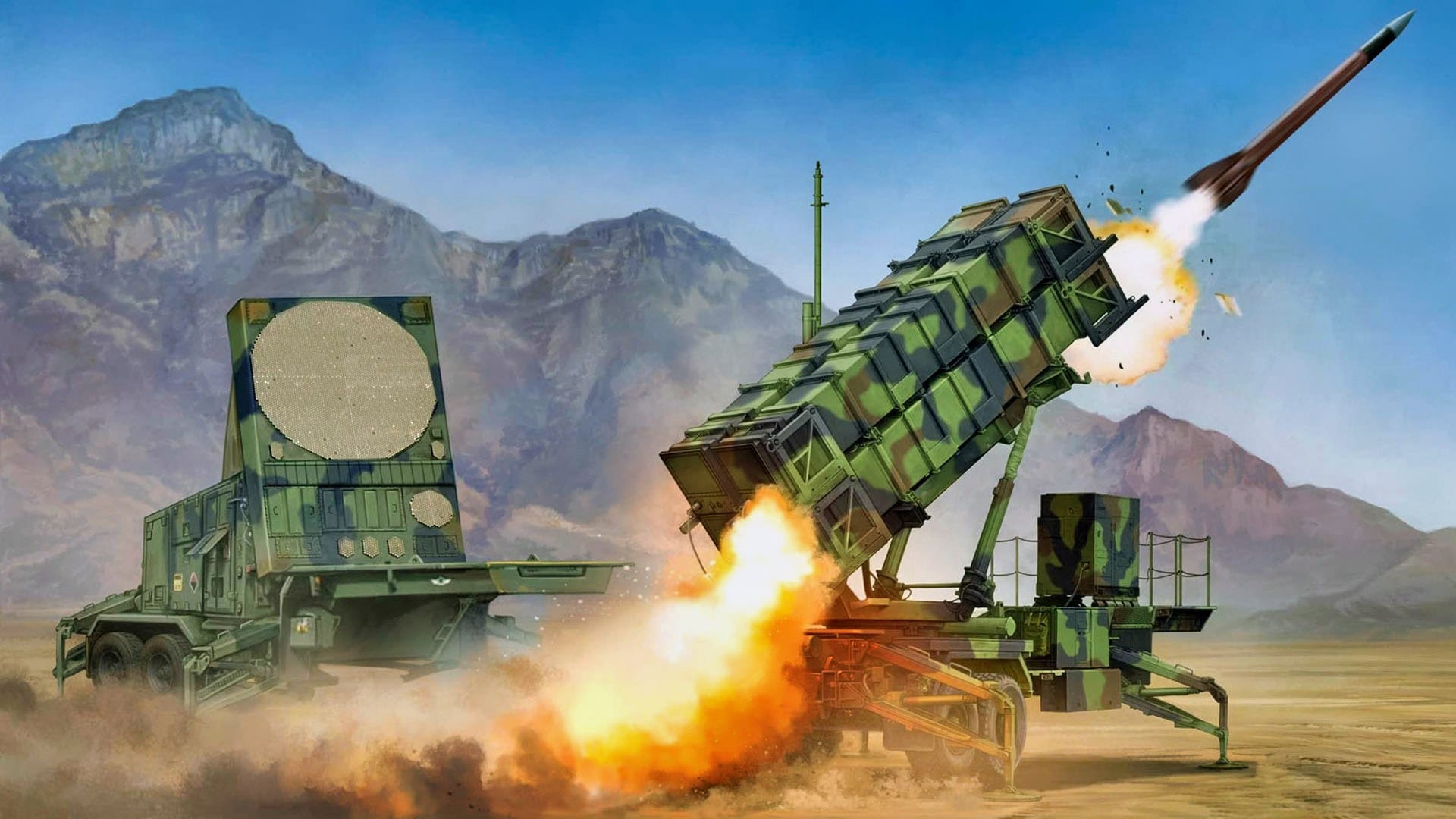
The useful numbers are not vague warnings about strain. They are delivery dates. According to the new CSIS study, the Army's FY2027 request includes 3,203 Patriot PAC-3 MSE interceptors, but those deliveries are projected to begin only in May 2029. The same report says 857 THAAD interceptors requested in FY2027 are projected to start arriving in mid-2029. The Navy's 785 Tomahawks in the FY2027 budget would begin arriving in March 2030 after roughly 34 months of lead time. In other words, Washington can spend money fast, but it cannot manufacture time.
- Patriot PAC-3 MSE current output is about 650 interceptors a year, with roughly half going to the United States and half to allies and partners.
- THAAD is running at an annual surge rate of 96 interceptors, far below what a prolonged multi-theater demand signal would require.
- Tomahawk procurement averaged 86 missiles a year over the last decade, which is nowhere near enough for quick replenishment after heavy wartime use.
That is the gap. Anyone who has served around fleet air defense or theater missile defense knows the first question is not whether a system works. Patriot, THAAD, and Tomahawk all work. The question is whether you have enough rounds after day five, day ten, and day twenty. A Western Pacific fight would burn through interceptors protecting air bases, ports, logistics hubs, command nodes, and carrier support infrastructure before the political system could digest what was happening.
Europe is where the shortage became visible
The AP's Friday report matters because it shows the shortage is no longer theoretical. One U.S. defense official in Europe said American forces there have “very limited” capacity even against a single ballistic missile strike and not enough Patriots to stop a sustained attack. Earlier AP reporting documented how two Patriot systems were sent from Germany to Turkey and interceptors were shifted from various points in Europe toward the Middle East as the Iran war intensified. That was a rational immediate decision. Turkey sits near the fight, and missile defense assets exist to be used. But every emergency redeployment reveals the same thing: the U.S. does not have enough slack in the system to reinforce one theater without thinning another.
For Indo-Pacific planners, Europe is functioning as a warning light on the dashboard. If Patriot availability can fall to “beyond critical” in a theater where Washington has spent decades building posture, stockpiles, and alliance infrastructure, then no one should assume the Pacific queue will be painless. The Pacific is bigger, farther, and more dependent on maritime resupply. Sea control and sea denial are fought partly with ships and submarines, but they are sustained by missile inventories that keep bases and ports alive under attack.
The Pacific problem is not just Taiwan
Taiwan is the obvious reference point because U.S. officials still talk about 2027 as the year by which China wants the capability to compel unification by force. But the real issue is the whole defensive architecture behind Taiwan. Kadena, Guam, Japanese ports, ammunition sites, and logistics airfields all sit inside the problem set. If those nodes cannot absorb missile salvos, then reinforcements arrive slower, sortie generation drops, and every beautiful war plan starts to come apart.
Allies will also read this through their own procurement pipelines. CSIS notes that Japan's order for 400 Tomahawks may already face delay pressures as the Pentagon prioritizes U.S. inventories. Australia bought more than 200 Tomahawks and is trying to deepen long-range strike capacity precisely because Canberra assumes U.S. support will be timely in a regional emergency. Patriot is worse because there are 17 other international users competing for the same production base while Ukraine still needs interceptors and the Middle East is consuming them. When Washington says alliance capacity is growing, allies will increasingly ask a less polite question: growing when, exactly?
What Beijing is likely to see
Beijing does not need to believe the United States is weak. It only needs to believe the United States is overbooked. A Chinese staff planner looking at the same open-source data would see an America still capable of brutal initial strikes but facing a slower refill cycle for the missiles that matter most in a protracted campaign. That affects deterrence. Deterrence is not just the promise to fight; it is the credibility of staying power after the opening exchange.
The uncomfortable conclusion is that the United States has entered a period where one regional war can reduce confidence in another theater before any shots are fired there. That is exactly the kind of signal China looks for. Unless Washington can accelerate production much faster than current budget-delivery timelines suggest, the 2026 lesson of the Iran war will not be about the Gulf. It will be that America's missile shield has become a queue, and the Indo-Pacific cannot assume it will always be first in line.
U.S. munitions shortages, particularly in Patriot and THAAD systems, threaten military readiness in the Pacific by 2026. The U.S. Armed Forces face critical inventory levels, with deliveries of new interceptors projected to begin in 2029. This situation raises concerns about the ability to sustain defensive operations across multiple theaters, particularly in light of ongoing conflicts in Europe and the Middle East.
- U.S. Patriot and THAAD stocks in Europe are at critical levels.
- Patriot interceptors and THAAD interceptors will take three years to replenish.
- The U.S. military faces challenges in sustaining defensive fire across multiple theaters.
- The shortage of missile inventories affects U.S. deterrence capabilities in the Indo-Pacific.
- Allies are concerned about delays in U.S. military support due to inventory shortages.