

Summary and Key Points: Fifty years on, pilots say the F-16 Viper beats almost anything in a dogfight except the F-22 and F-35. Lt. Col. Philippe “Rico” Malebranche told Aviation Geek Club the F-16C Block 30 “Big Mouth,” with its General Electric F110 engine, is among the world’s best; it out-climbs the Super Hornet by 3,000 feet, outlasts the Mirage 2000’s first turn, and exploits the F-15’s size up close; the F-22’s thrust vectoring is decisive.
The F-16 Fighter Is An Amazing Dogfighter
The F-16 Fighting Falcon is likely the most iconic fourth-generation warplane ever made. It came from the United States Air Force’s Lightweight Fighter program in the early 1970s.
That program was the result of hard lessons learned fighting in the Vietnam War, when US pilots were faced with Soviet-made MiG fighters.
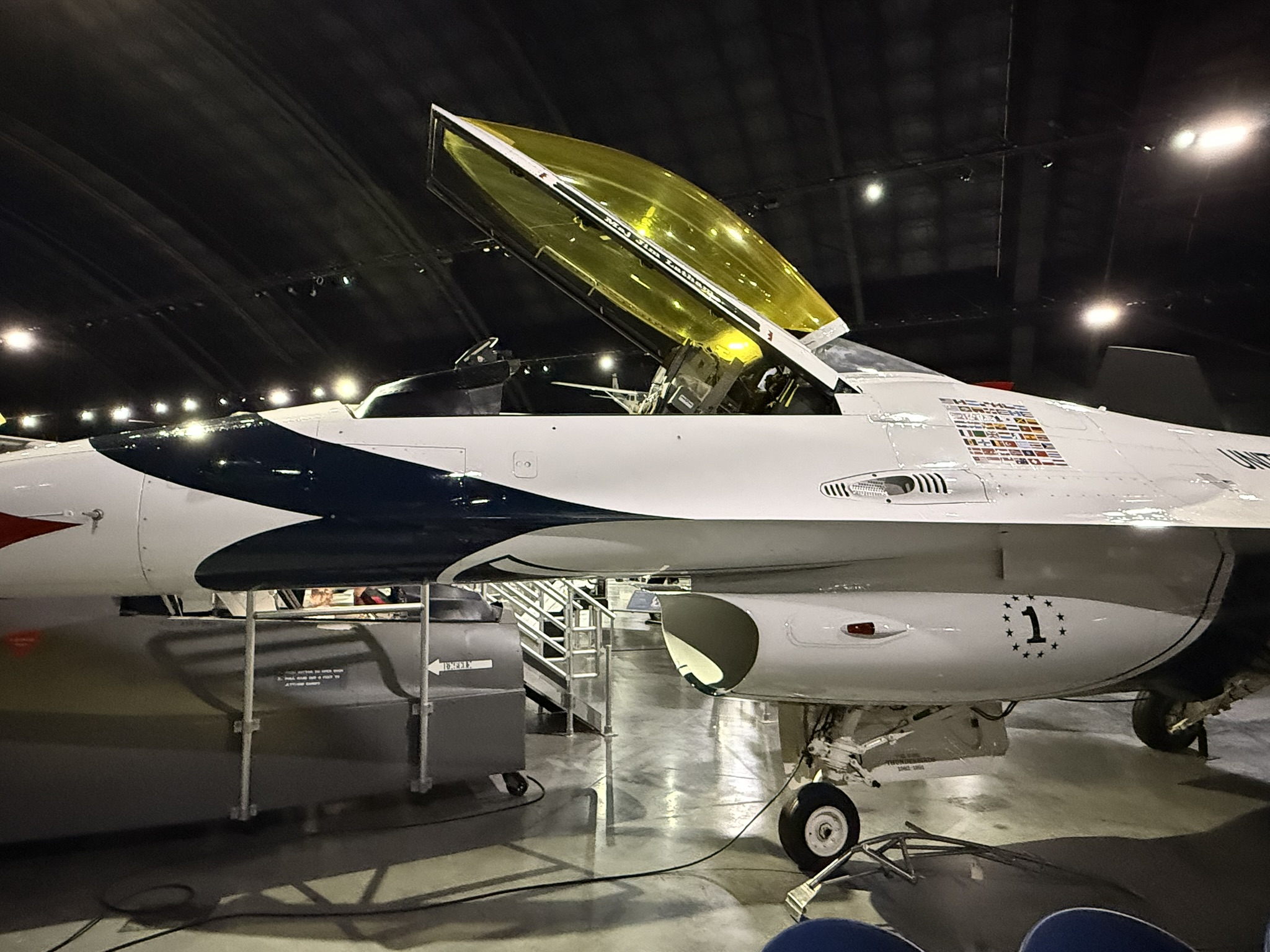
F-16 at the National Museum of the US Air Force. 19FortyFive.
The Lightweight Fighter Program produced one of the most capable fighter planes ever made. That plane has also flown the world’s unfriendly skies for 50 years.
Even though so much time has passed since the F-16 first flew (pilots nicknamed it the “Viper”), most American pilots familiar with the plane insist the F-16 can defeat almost any other warplane in dogfighting (except the fifth-generation F-22 Raptor and F-35 Lightning II).
Pilots, however, disagree on whether the F-35 can dogfight as well as the F-16.
An Impressive Plane
General Dynamics backed the YF-16 design, and it competed for the Air Force contract in 1975 against Northrop’s YF-17 prototype.
On January 13, 1975, the Air Force chose the YF-16 over the YF-17. That aircraft eventually entered operational service in 1980.
This relatively small, nimble plane emphasized maneuverability, acceleration, and affordability (which is why it has become such a popular export).
The blended-wing fuselage was a key design choice.
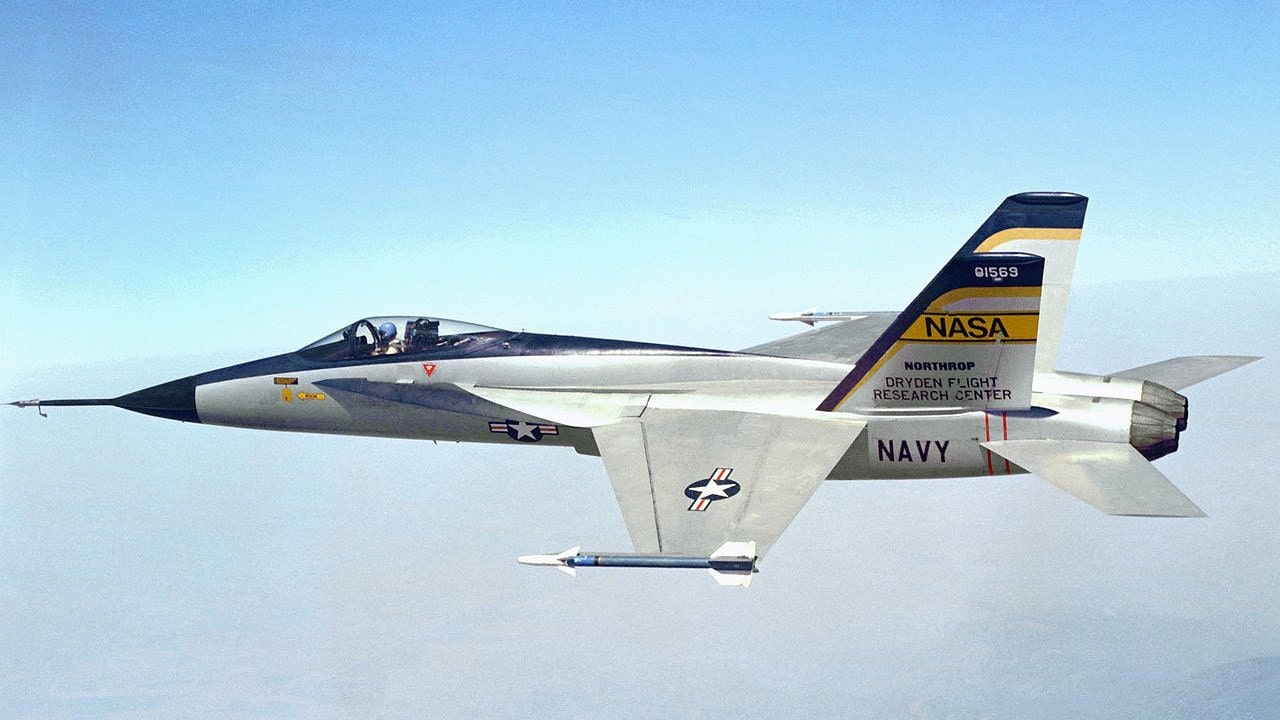
The Northrop Aviation YF-17 technology demonstrator aircraft in flight during a 1976 flight research program at NASA’s Dryden Flight Research Center, Edwards, California.
This bird incorporated computerized fly-by-wire controls that let pilots execute demanding maneuvers while maintaining control.
F-16s can reach Mach 2 at altitude and withstand up to nine times the force of gravity while maneuvering, which is why pilots love them for dogfighting.
The F-16 has a single engine that can generate up to 29,000 pounds of thrust (with afterburner). It is extremely efficient at conserving energy and performing dynamic combat maneuvers.
The plane has undergone multiple iterations over the last 50 years. Most pilots consider the F-16C Block 30 variant, equipped with the General Electric F110 engine and an enlarged intake, one of the best dogfighting warplanes in the world.
Indeed, pilots and technicians have nicknamed the larger intake on this plane “Big Mouth.” With that unique configuration, the F-16C Block 30 can improve airflow into the engine, which in turn supports substantial thrust output.
Aviation Geek Club, a widely respected online trade publication, interviewed Lt. Col. Philippe “Rico” Malebranche, who flew many F-16 variants, and he confirmed the Block 30 is among the world’s best combat aircraft.
He even compared flying that plane to his experience piloting the US Navy’s F/A-18C Hornet.
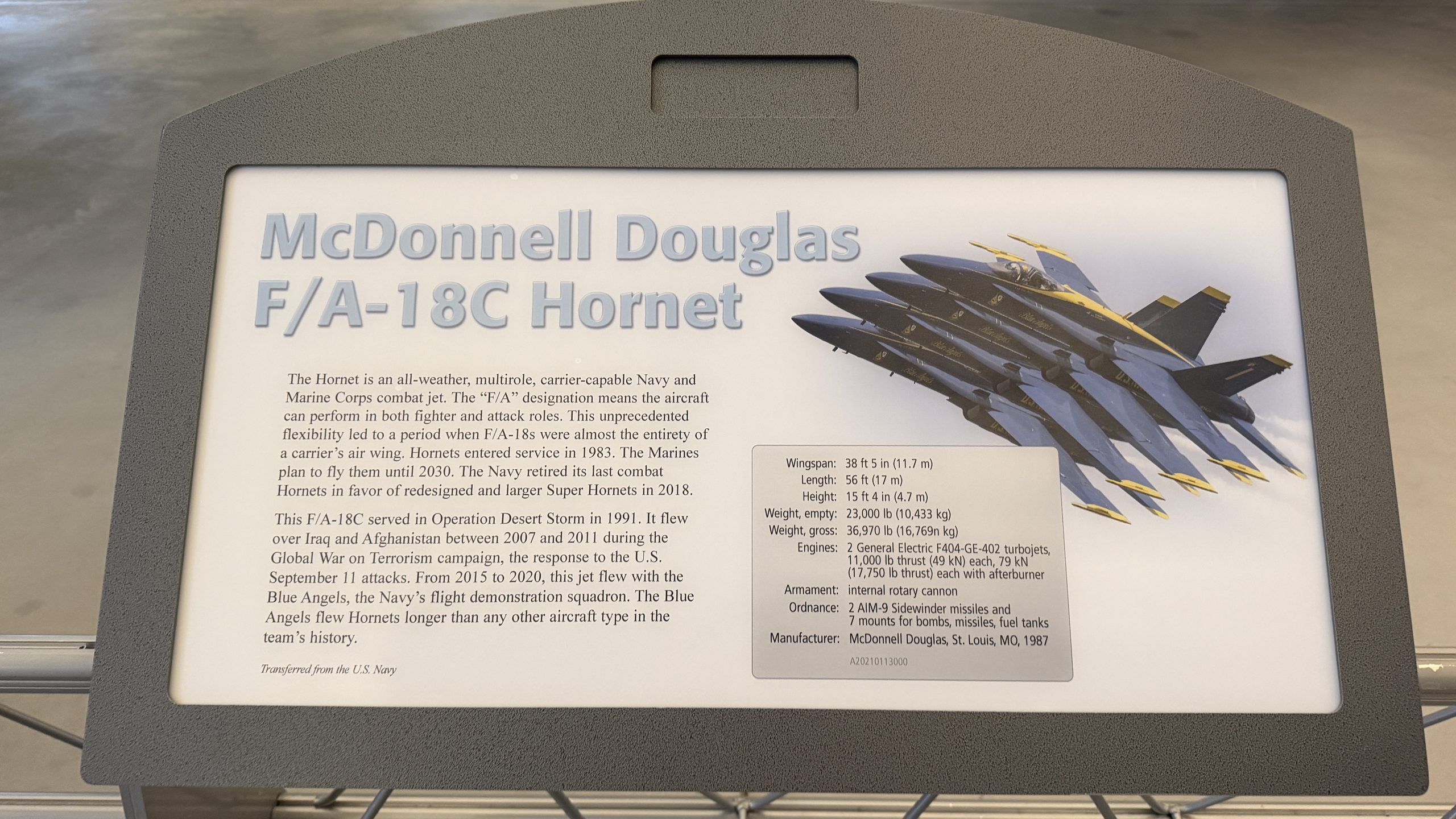
F/A-18 Hornet from the Blue Angels. 19FortyFive Photo from Staff Photo Shoot.
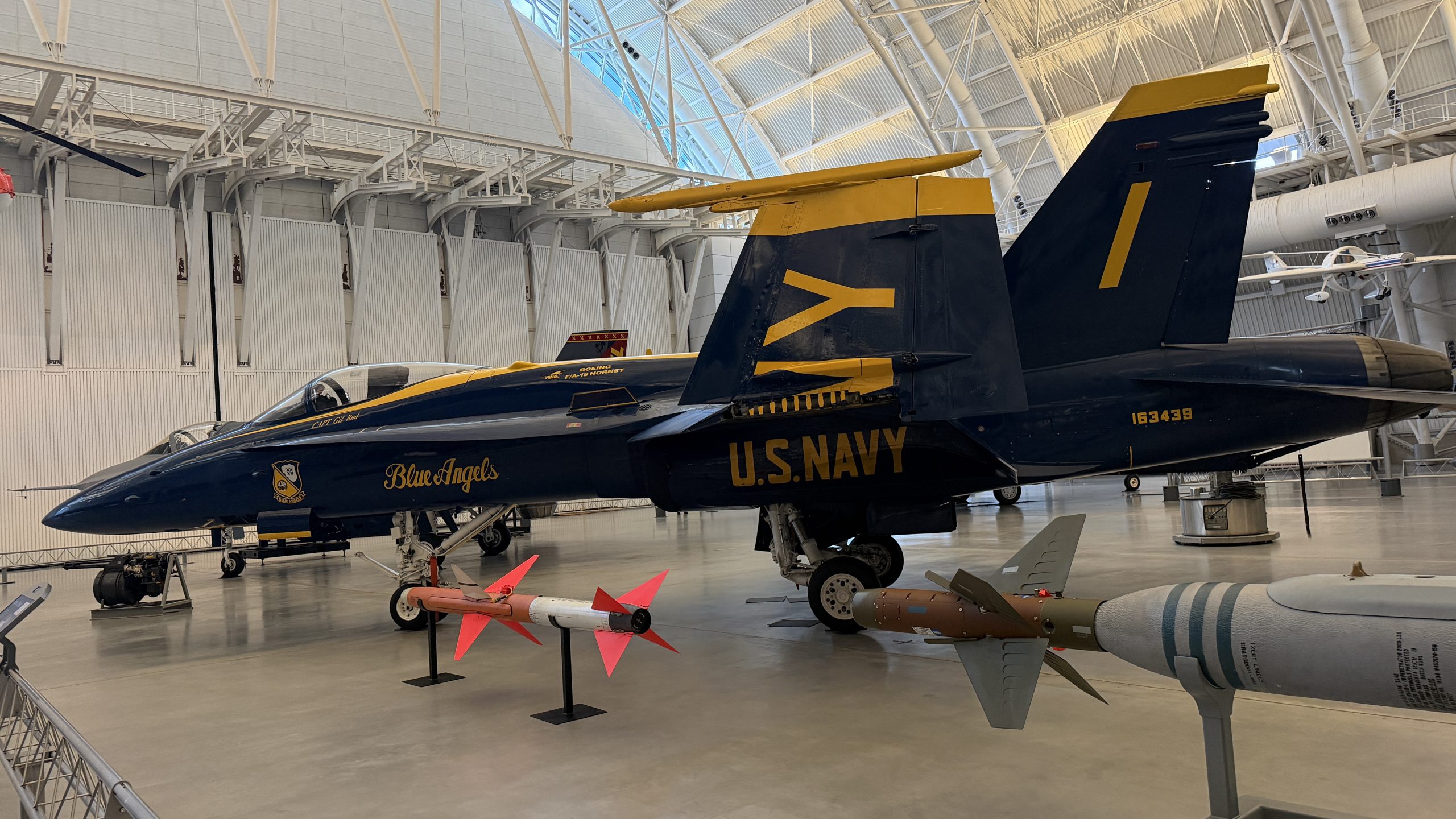
F/A-18 Hornet from the Blue Angels. 19FortyFive Photo from Staff Photo Shoot.
According to Malebranche, the F-16C Block 30’s lightweight nose and less extensive avionics made it much easier to maneuver quickly in dogfight scenarios.
Over the years, many comparisons have pitted the Air Force’s F-16 against the Navy’s F/A-18.
The Hornet excels at high angles of attack and relatively slow speeds, while the F-16 performs better in sustained high-energy engagements.
The F-16’s higher thrust-to-weight ratio allows the pilot to climb 3,000 feet above a Super Hornet before descending into a potential firing position against an F/A-18.
An Amazing Dogfighter
Malebranche also compared simulated aerial combat to a French Mirage 2000.
That French plane, with its delta-wing configuration, can make better initial turns in combat, but it loses energy quickly after the initial turn.
The Air Force’s F-15 Eagle, however, poses another headache for F-16 pilots during simulated combat exercises.
With considerable engine power and excellent high-altitude performance, the F-15 can be a problem.
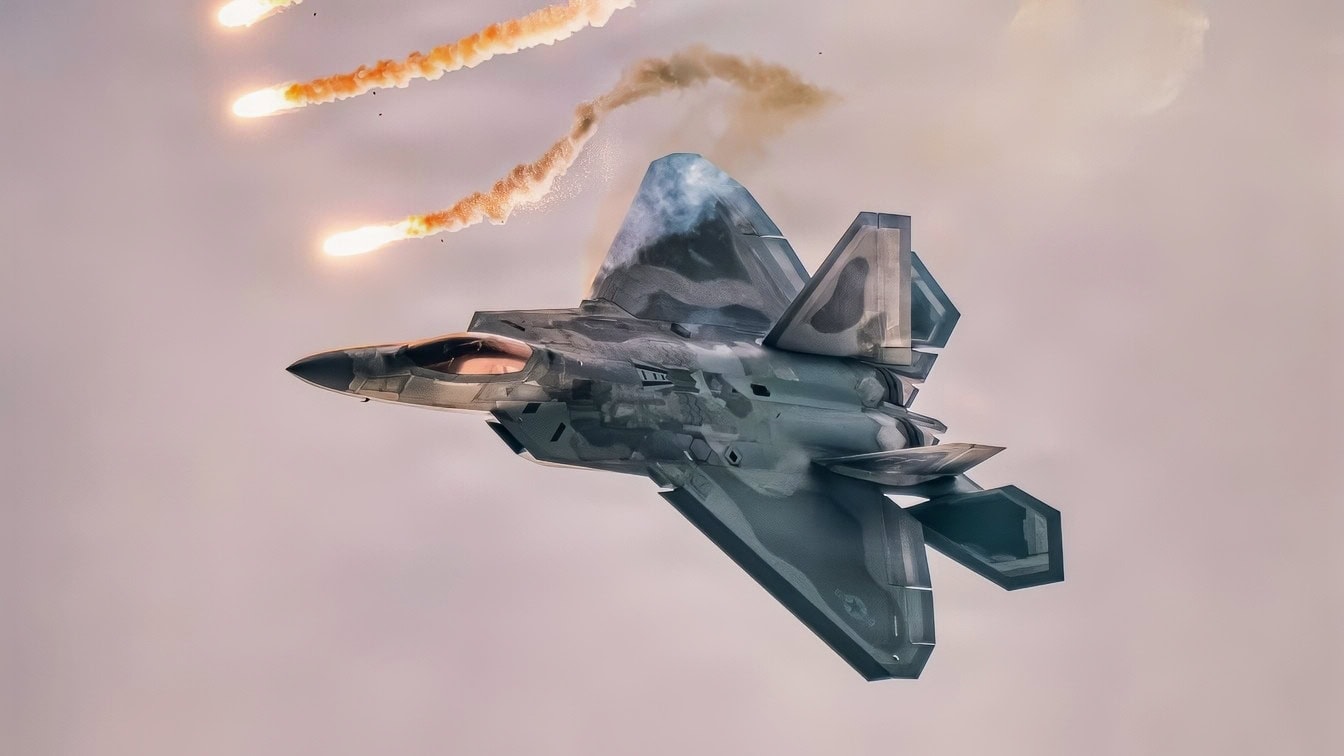
U.S. Air Force Capt. Nick “Laz” Le Tourneau, pilot and commander of the F-22 Raptor Aerial Demonstration Team, performs an aerial demonstration for the Chicago Air and Water Show in Chicago, Illinois, August 16, 2026. Le Tourneau showcased the aircraft’s performance capabilities through a series of planned maneuvers designed to highlight its speed, agility and operational employment. (U.S. Air Force photo by Staff Sgt. Mary Bowers)
But the F-15 Eagle’s larger size and heavier weight become major weaknesses at close range against an F-16.
Aviation Geek Club also interviewed former US Navy pilot Dan Greene, who claimed his unit won at least half of its simulated dogfights against the F-16s, showing the F-16 isn’t unbeatable.
As the fifth-generation warplane era progresses, though, multiple experts say the F-16 is losing much of its edge. Compare it to the F-22 Raptor, a fifth-generation air superiority stealth fighter.
Unlike the single-engine F-16, the F-22 is a twin-engine system with remarkable thrust-to-weight performance, augmented by essential thrust-vectoring nozzles.
Some Air Force pilots, though, say the Block 50 F-16s can sustain the same kind of demanding nine-g maneuvers (under stable conditions).
The Raptor’s substantial engine power and thrust vectoring, though, are decisive advantages in simulated combat with the F-16.
Indeed, Malebranche believes the F-22 is the F-22’s most serious close-range opponent.
Then there’s the F-35 Lightning II, a fifth-generation multirole warplane and the primary aircraft of the US Air Force, Navy, and Marine Corps (as well as several of America’s closest allies).
The F-35 has stealth, advanced radar, distributed sensors, and an uncanny ability to identify and attack targets before they detect it.
That means any hypothetical conflict between the two planes would depend entirely on the specific circumstances of that engagement.
Evolving Mission Set
The F-16 evolved from a lightweight daytime fighter into a multirole combat plane capable of precision strikes, suppression of enemy air defenses (SEAD) missions, and air superiority missions.
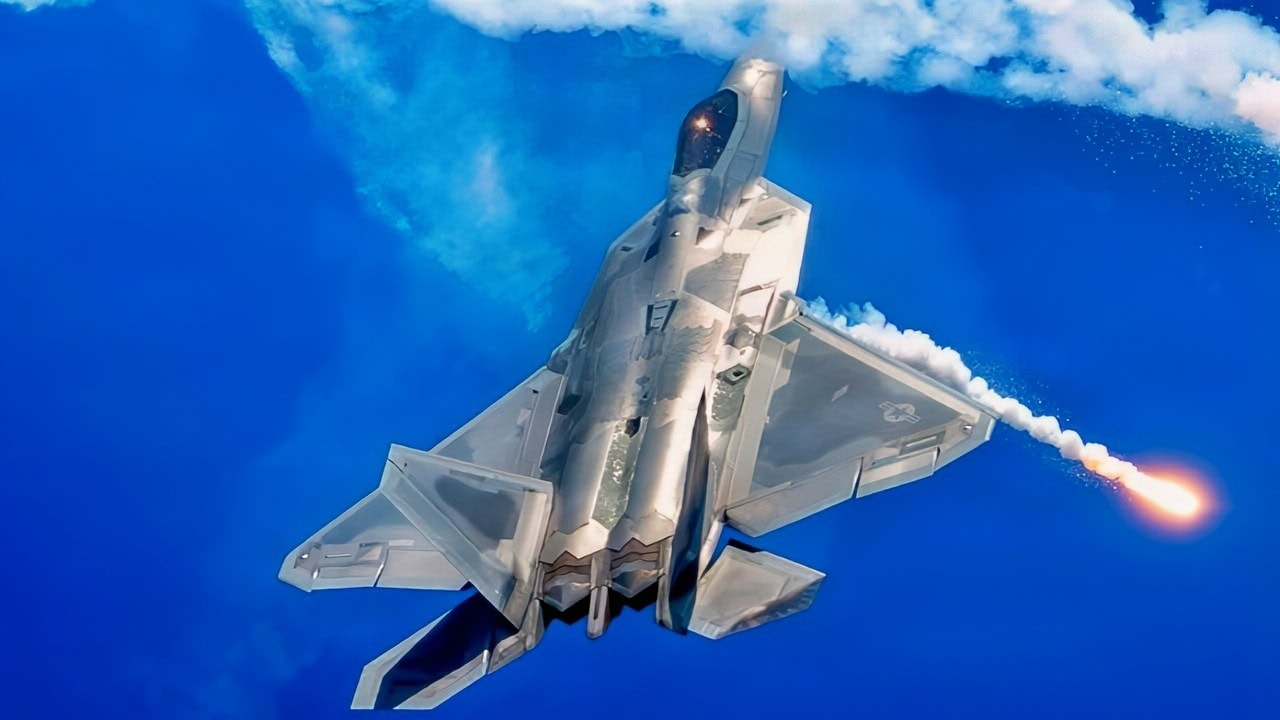
U.S. Air Force Capt. Nick “Laz” Le Tourneau, pilot and commander of the F-22 Raptor Aerial Demonstration Team, performs for the 2026 Cleveland National Air Show in Cleveland, Ohio, Sept. 6, 2026. Le Tourneau showcased the aircraft’s performance capabilities through a series of planned maneuvers designed to highlight its speed, agility and operational employment. (U.S. Air Force photo by Staff Sgt. Lauren Diaz)
The Air Force is slowly transitioning away from the F-16 to the F-35.
At Luke Air Force Base, many former F-16 pilots are retraining on the F-35 to stay combat-relevant.
Yet replacing this plane will be difficult.
Because of its ubiquity, unbroken combat record, and constantly evolving mission set over those decades, the F-16 remains America’s most important warplane.
We’ll miss it when it is finally retired.
About the Author: Brandon J. Weichert
Brandon J. Weichert is the Senior National Security Editor at 19FortyFive.com. He also manages The Weichert Brief on Substack. Weichert is the co-host for The Mario Nawfal Show on Twitter/X. He is the author of four bestselling national security books, most recently A Disaster of Our Own Making: How the West Lost Ukraine (Encounter Books). His next book, Fortress Americas: A New Monroe Doctrine (Tucker Carlson Books), is due out December 8. Follow him via Twitter/X @WeTheBrandon.