

Summary and Key Points: Brandon J. Weichert argues France’s nuclear-powered France Libre (PANG), the aircraft carrier replacing Charles de Gaulle, buys a binary navy: with one hull instead of the three the one-in-three rule requires, the French Navy has full carrier airpower when the ship is available and none during maintenance cycles that already run up to 19 months.
France’s New Nuclear-Powered Aircraft Carrier Mistake?
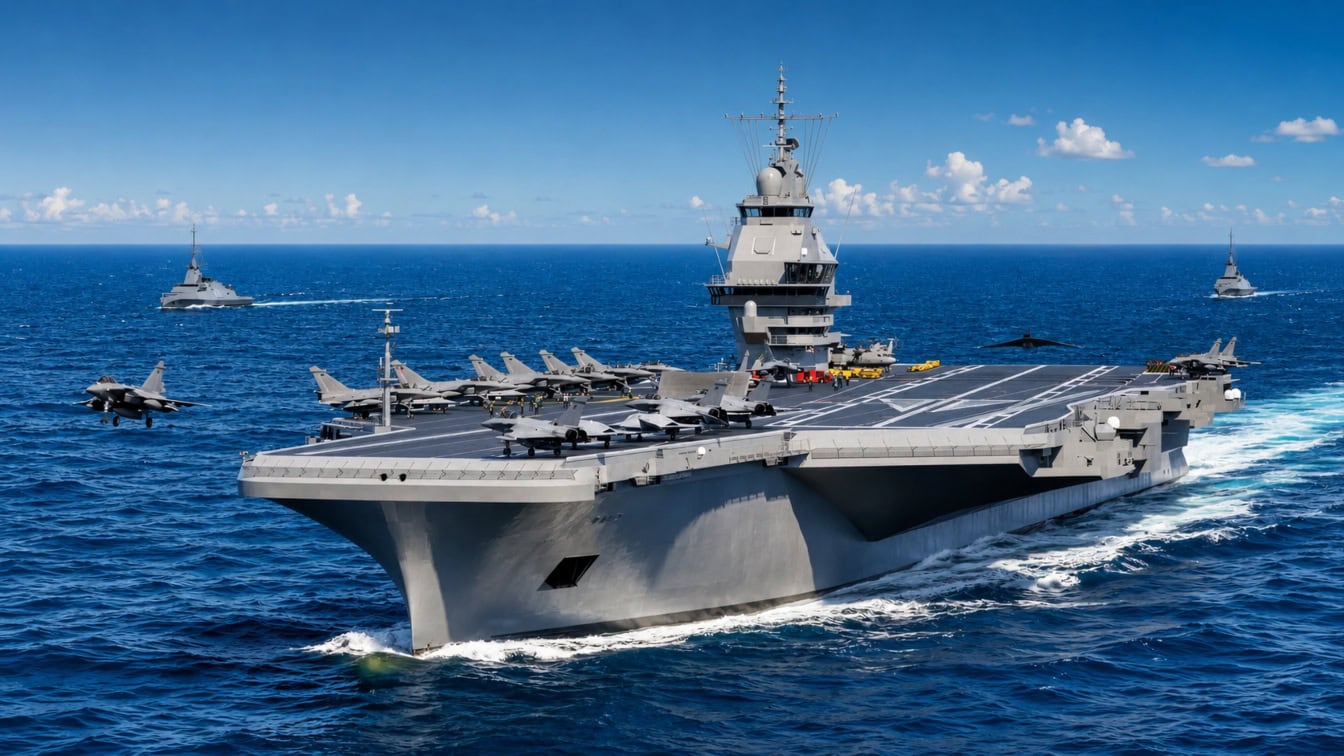
France Libre Aircraft Carrier Mock Up. Image Credit: Banana Nano.
France believes it is one of the world’s greatest powers.
Within Europe, given its military expenditure and the presence of nuclear weapons in the country’s arsenal, there is no doubt that France is one of the more powerful nations there.
Beyond Europe, and even compared with Russia, France is a middle power experiencing a protracted decline.
Nevertheless, the French government remains committed to projecting an image of France as a dominant global military power.
That is why Paris has committed so many of France’s precious resources to building a new nuclear-powered aircraft carrier.
Known as France Libre (PANG), the new aircraft carrier for the French Navy has become controversial, especially as the French economy declines and society grapples with domestic upheaval.
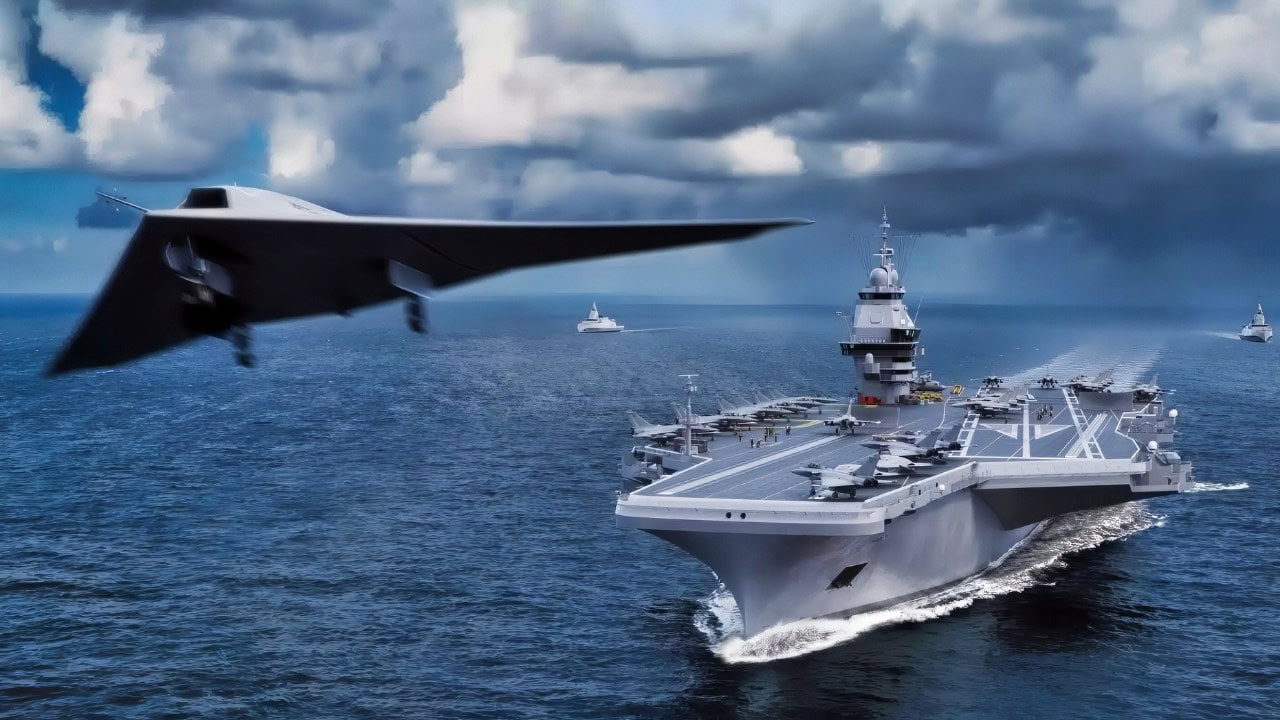
PANG France Nuclear Aircraft Carrier. Image Credit: French Government.
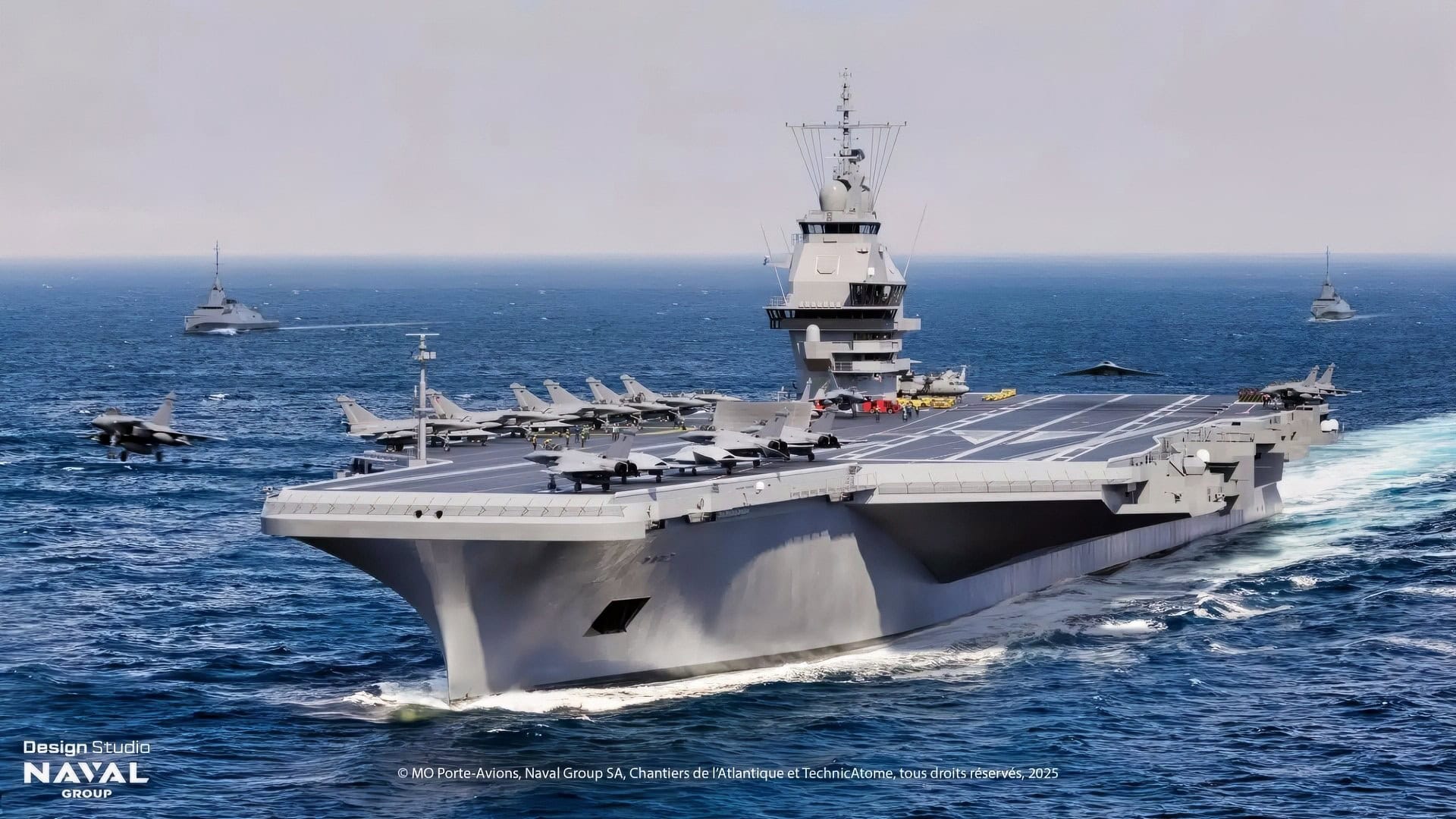
PANG Aircraft Carrier French Navy Photo.
On the military side, many experts worry that France has overcommitted to what some call a “binary state of readiness.”
Not Sustainable
Because the French can barely afford one new aircraft carrier, and the French Navy’s older Charles de Gaulle carrier is set to be decommissioned and replaced by the France Libre, the French Navy will have a readiness problem.
That’s because the gold standard for navies operating an aircraft carrier force effectively is the one-in-three rule.
Essentially, modern naval theory holds that any carrier-capable navy must maintain at least three aircraft carriers in its fleet to provide an effective year-round global presence.
Under this principle, the French would need one aircraft carrier deployed, one ready to deploy if ordered, and a third in long-term maintenance.
Having just one aircraft carrier effectively creates a strategic dilemma which amounts to schizophrenia.
On the one hand, if the French Navy’s single new carrier is ready for deployment, then the country has a top-tier naval strike force brimming with next-level airpower.
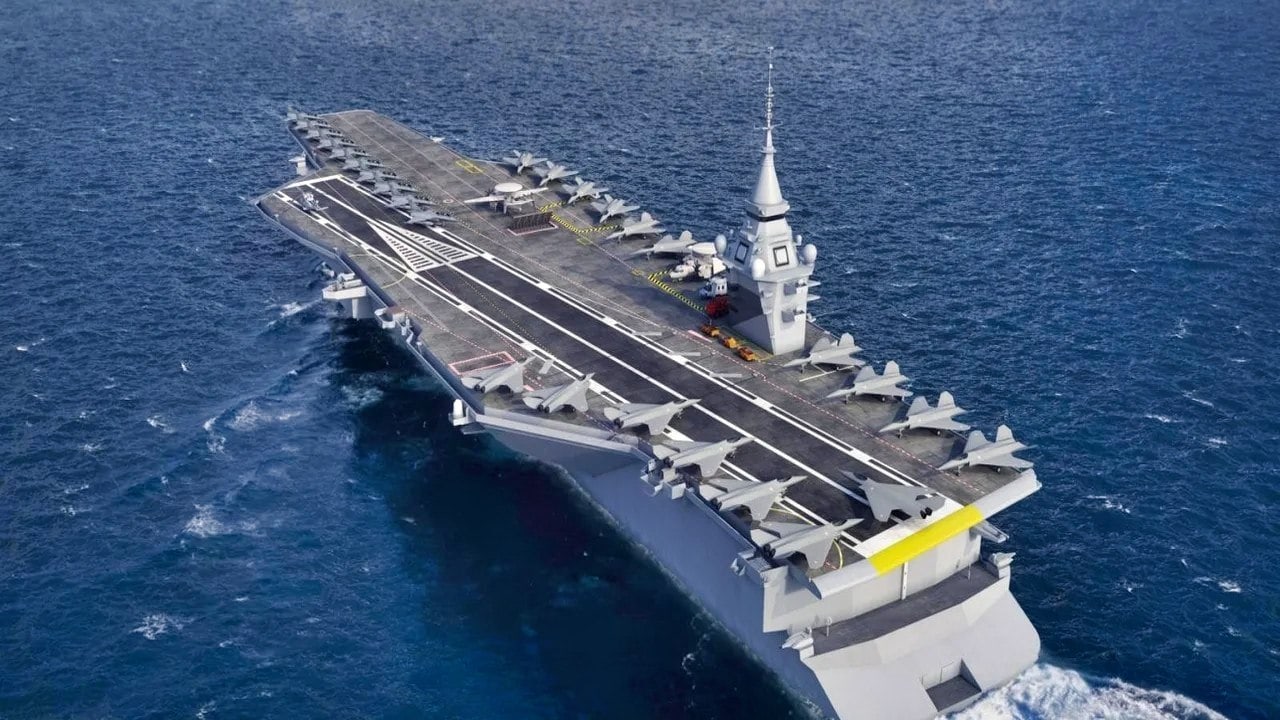
PANG Aircraft Carrier from France. Image Credit: French Navy.
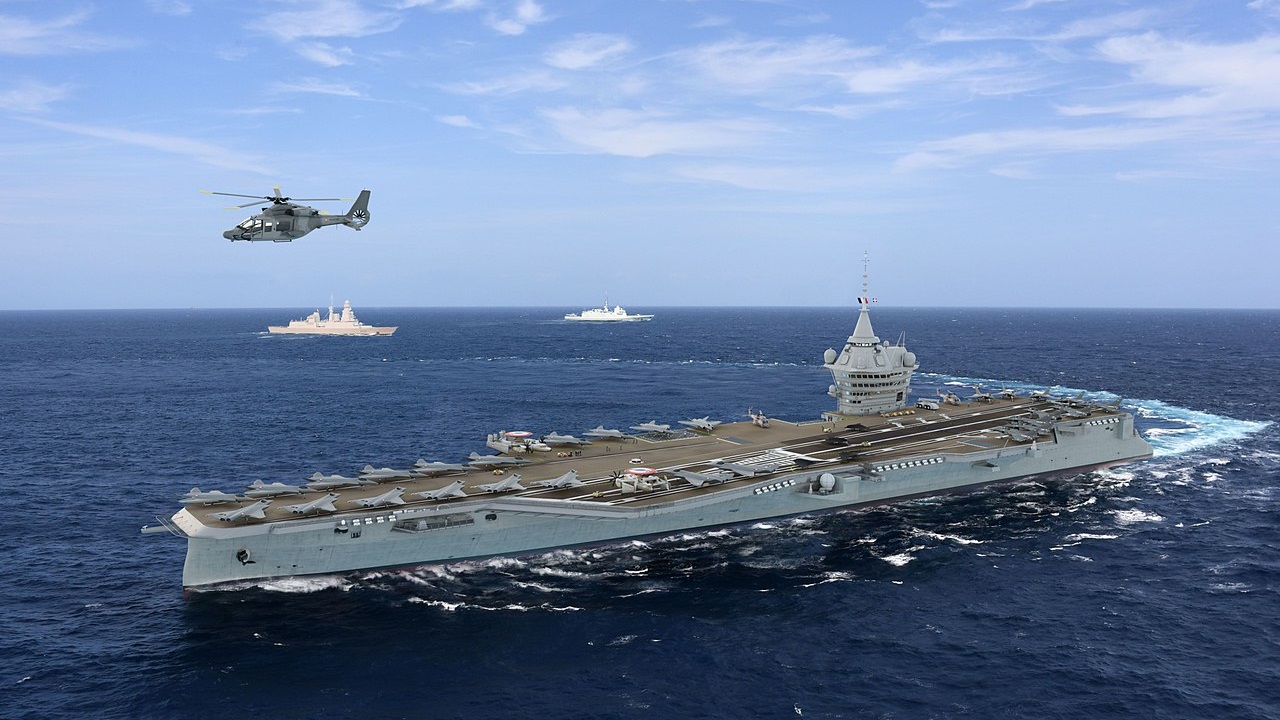
PANG Aircraft Carrier. Image Credit: Creative Commons.
If, however, the single carrier requires maintenance, as these systems invariably do, the French Navy suddenly loses its entire carrier-based airpower capability for the duration of the ship’s next maintenance cycle.
Currently, the Charles de Gaulle spends up to 19 months in the shipyards for major maintenance.
That pattern has basically left the French Navy without any viable sea-based airpower.
Even though the Charles de Gaulle is old and must be retired soon, a nuclear-powered aircraft carrier like the developing France Libre will require extensive maintenance cycles.
That’s especially true if Paris runs this ship in global operations constantly.
After all, the more wear and tear a ship takes, the longer its maintenance cycles will take to complete, meaning the French Navy could be without a carrier for 19 months (or longer).
One reason the French government wanted the new carrier was to sustain its carrier capability into the next half century.
Not a Real Aircraft Carrier Power
But France will never be a real aircraft carrier power with only one of these systems because its capabilities will be drastically diminished.
Despite their faults, the British Royal Navy has built two relatively new Queen Elizabeth-class conventionally powered aircraft carriers to ensure it can conduct missions at any time.
While this hasn’t always worked out for the Royal Navy, in theory, this is why the British built two carriers.
That’s not the case for France.
They will be stuck in the same schizophrenic pattern the French Navy is currently trapped in: when the carrier is available, the French Navy can operate as the French leaders want.
Without it, the French Navy’s capabilities are diminished (all while paying the costs to build and maintain this complex ship).
Plus, with only a single carrier in the fleet, deck-certified pilots face a training bottleneck (unless they can practice takeoffs and landings from an ally’s carrier).
The human factor, therefore, is a key vulnerability to possessing only a single carrier.
To better preserve and enhance their naval aviators’ skills, the French Navy wants to extend the life cycle of the aging Charles de Gaulle so that the older carrier and the France Libre overlap.
That overlap period might occur between 2036 and 2038.
Even if the French extended the Charles de Gaulle’s lifespan to overlap with the introduction of the France Libre, the French budget would not fund two active aircraft carriers simultaneously.
Then add the costs of maintaining a sufficient carrier escort.
The Americans have demonstrated the right methods to ensure an aircraft carrier can carry out its missions.
They require multiple surface warships and submarines to form a protective envelope around the carrier.
That all costs lots of money.
Summed Up in 1 Word: Mistake?
Critics argue that the same money for a single nuclear-powered carrier could have bought ten FDI-class frigates to restore the dwindling French Navy’s surface-warfare capability.
The fact is, the French Navy is not truly an aircraft carrier force.
France has an impressive array of submarines and surface warships that could maintain its surface-warfare capabilities far more effectively than a single, expensive nuclear-powered aircraft carrier that might be unavailable for long stretches.
But the French government is addicted to maintaining its image as a true global military power.
These are delusions, and these delusions are costing both the French Armed Forces and the French taxpayer dearly.
About the Author: Brandon J. Weichert
Brandon J. Weichert is the Senior National Security Editor at 19FortyFive.com. He also manages The Weichert Brief on Substack. Weichert is the co-host for The Mario Nawfal Show on Twitter/X. He is the author of four bestselling national security books, most recently A Disaster of Our Own Making: How the West Lost Ukraine (Encounter Books). His next book, Fortress Americas: A New Monroe Doctrine (Tucker Carlson Books), is due out December 8. Follow him via Twitter/X @WeTheBrandon.