

Summary and Key Points – Steve Balestrieri previews the Dassault Rafale F5, or Super Rafale, due in French service around 2030 under the 2024-2030 military programming law: Safran’s M88 T-REX engine with 20 percent more thrust (nine metric tons), an upgraded RBE2 radar and electronic warfare suite, the ASN4G hypersonic nuclear missile, Future Cruise and Future Anti-Ship Missiles replacing SCALP and Exocet, and nEUROn loyal wingman drones, with a 2027 prototype, a 2028 drone flight, UAE partnership, and F-35 rivalry.
Dassault Rafale F5 Is Coming (Sorry, Lockheed Martin F-35)
The Dassault Super Rafale, also known as the Rafale F5, is the next evolution of the Rafale fighter jet, currently under development and slated for French military service around 2030.
It will feature more powerful engines, advanced sensors, improved data links, and a reduced radar cross-section.
The F5 will also carry the ASN4G hypersonic missile and is designed to work with a newly developed Unmanned Combat Aerial System (UCAS).
The goal is to compete head-to-head in export sales with the American-made F-35, as Dassault Aviation and the French defense industry push to claim global air-combat dominance.
The move follows the dissolution of the Franco-German Future Combat Air System (FCAS) program, which was intended to produce a next-generation European fighter.
France plans to fly a prototype by 2027.
It has partnered with the UAE on this program.
Meet The F5 Super Rafale
Safran is developing an upgraded M88 engine for the Dassault Rafale F5, the M88 T-REX.
This enhanced engine will deliver a 20 percent thrust increase over the current M88, reaching nine metric tons (88.2 kilonewtons/19,841 pounds) with afterburners.
The M88 T-REX will improve the Rafale’s performance and capabilities without requiring airframe changes, and it is slated for integration with the Rafale F5. However, the F5’s performance remains unknown.
The F-5’s upgraded RBE2 radar and electronic warfare suite provide unprecedented situational awareness, enabling earlier detection and tracking of multiple targets and the ability to use several radar modes at once.
The F-5’s next-generation electronic warfare capabilities defeat enemy radar and jam hostile defenses, and an impenetrable “self-defense bubble,” a cutting-edge active protection system, shields the jet and allied assets from enemy threats.
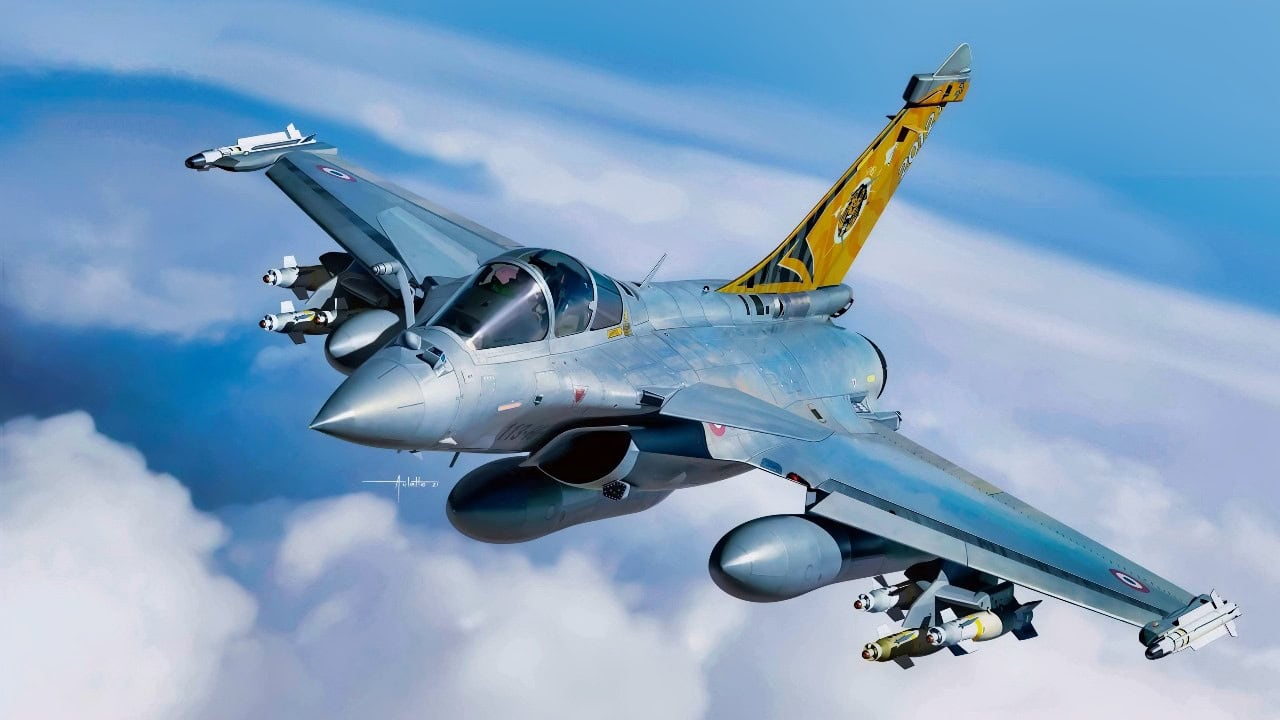
Dassault Rafale. Image Credit: Creative Commons.
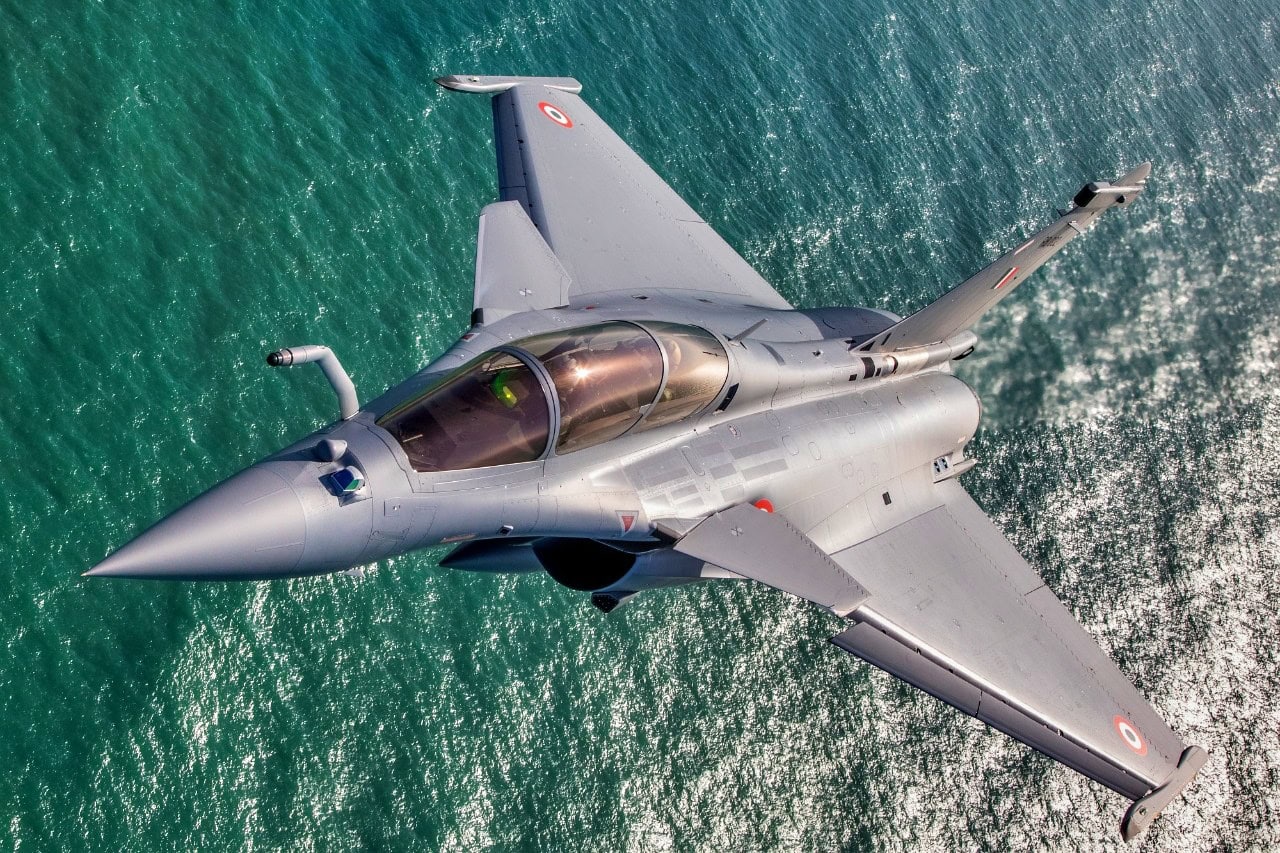
Dassault Rafale. Image Credit: Creative Commons.
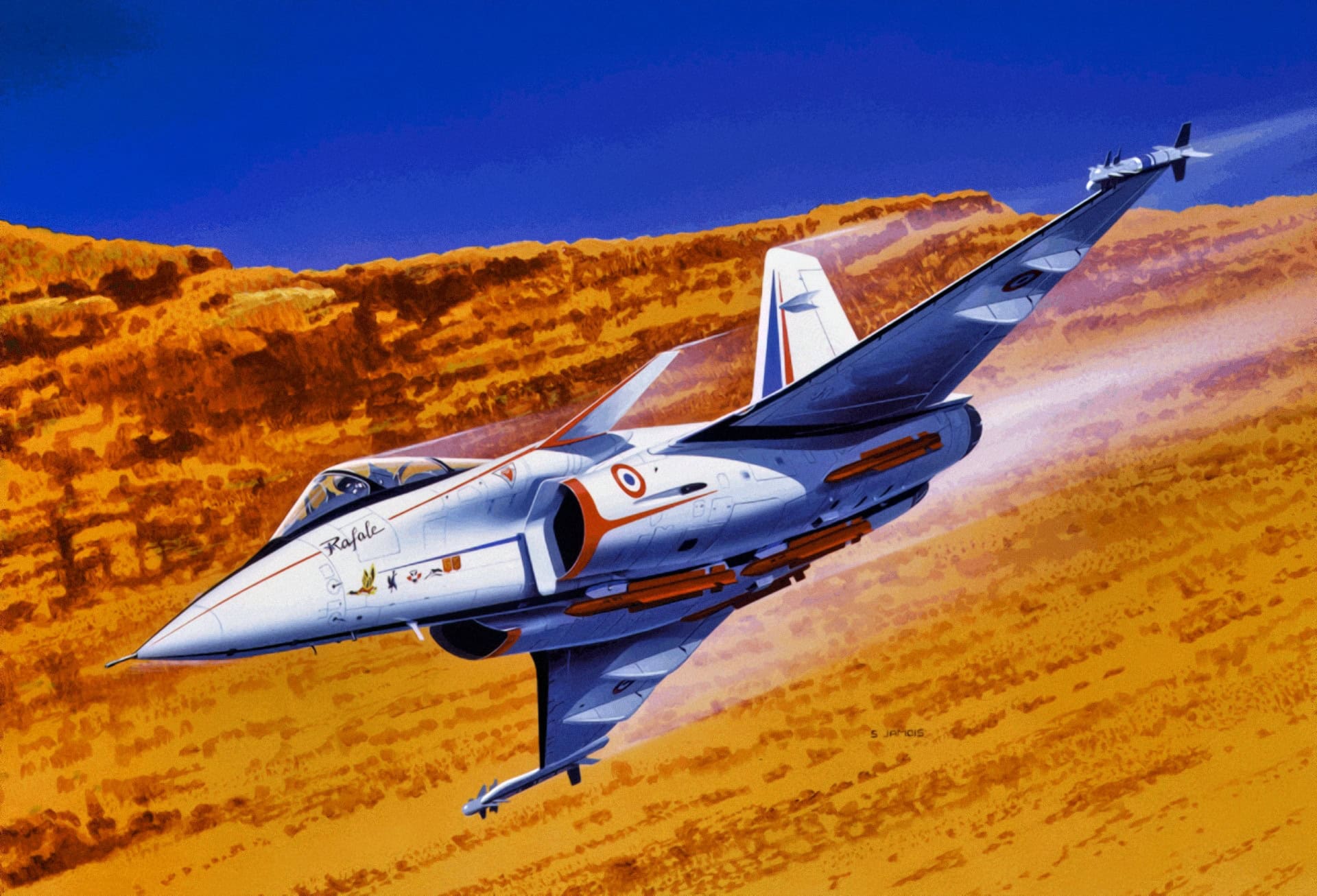
Dassault Rafale Artist Image. Image Credit: Creative Commons.
Dassault is arming the F5 with the ASN4G hypersonic missile, a nuclear-armed missile, which is a key component of the F5’s offensive capabilities.
The F5 will also incorporate new advanced missile systems, the Future Cruise Missile (FCM) and Future Anti-Ship Missile (FASM), replacing the aging SCALP/Storm Shadow and AM39 Exocet, delivering a devastating long-range strike capability against enemy warships.
Integration with UCAS, A Force Multiplier
The Rafale F5 will be designed to work with a new UCAS, enhancing its collaborative combat capabilities according to Dassault Aviation.
France plans to conduct its first coordinated flight involving a Rafale and an accompanying drone in 2028.
The “Super Rafale” variant will operate with several loyal wingman drones called “nEUROn,” autonomously controlled by the F-5 pilots.
The F-5 pilots will command their drone wingmen in real time, unleashing precision coordinated strikes, while the nEUROn retains its autonomy, making the Super Rafale a true combat force multiplier.
This “loyal wingman” concept is also in development in efforts by the U.S., which is pairing its F-35, F-22, and the new F-47 with collaborative combat aircraft.
However, France aims to take it a step further by ensuring the Super Rafale stands as a self-sufficient system, with the pilot coordinating both the jet and its drone companion.
Development and Timeline
The Rafale F5 is part of the 2024-2030 French military programming law.
Preliminary research began last year, with full-scale development scheduled for 2026-27.
France plans to increase its fighter inventory by 35 percent by 2035, from 170 aircraft to at least 230.
Various aviation news sources say the Rafale F5 is expected to enter service by 2030, keeping the Rafale relevant until at least 2060.
Competing With the US F-35 In Export Sales
Dassault has made it clear that it is gunning for the F-35’s export market.
France lost most of Europe’s major contracts to the F-35, while carving out its own niche in the Middle East and Asia.
Dassault hopes this latest variant of its flagship fighter jet will reclaim export markets where it has often been outperformed, especially by Lockheed Martin’s F-35.
The F-35 is widely considered the world’s most advanced, lethal, survivable, and connected fighter jet.
The F-35 gives pilots a critical advantage against any adversary, enabling them to complete their mission and return home safely.
However, while the Rafale F5 promises to be a significant advancement of the F-4, Lockheed Martin isn’t standing pat.
The F-35 is slated for major upgrades as well.
There are techniques and capabilities … that were developed for [our NGAD bid] that we can now apply here,” Lockheed CEO Jim Taiclet said. “We’re basically going to take the [F-35′s] chassis and turn it into a Ferrari.”
Taiclet said souping up fifth-generation fighters like this would allow Lockheed to deliver “80 percent of the capability, potentially, at 50 percent of the cost per unit aircraft.”
The Super Rafale (F5) promises a comprehensive combat system designed to maintain French aerospace superiority for decades.
The integration with UCAS and the focus on network-centric warfare highlight the evolving nature of modern air combat and Dassault Aviation’s commitment to innovation and independence.
France’s upgraded F5 Rafale comes as many European nations adapt to drone and missile threats, highlighted by Russia’s invasion of Ukraine.
About the Author: Steve Balestrieri
Steve Balestrieri is a National Security Columnist. He served as a US Army Special Forces NCO and Warrant Officer. In addition to writing on defense, he covers the NFL for PatsFans.com and is a member of the Pro Football Writers of America (PFWA). His work was regularly featured in many military publications.