

The SR-71 Blackbird Could Hit Mach 3, But Accidents Did Happen
The Lockheed SR-71 Blackbird spy plane—also referred to as the “Habu” in honor of a highly venomous pit viper native to Okinawa—remains the fastest air-breathing, crewed aircraft ever built. Yes, the X-15 was twice as fast, but it was rocket-powered, not air-breathing.
It holds that record even though it has officially been retired for 27 years.
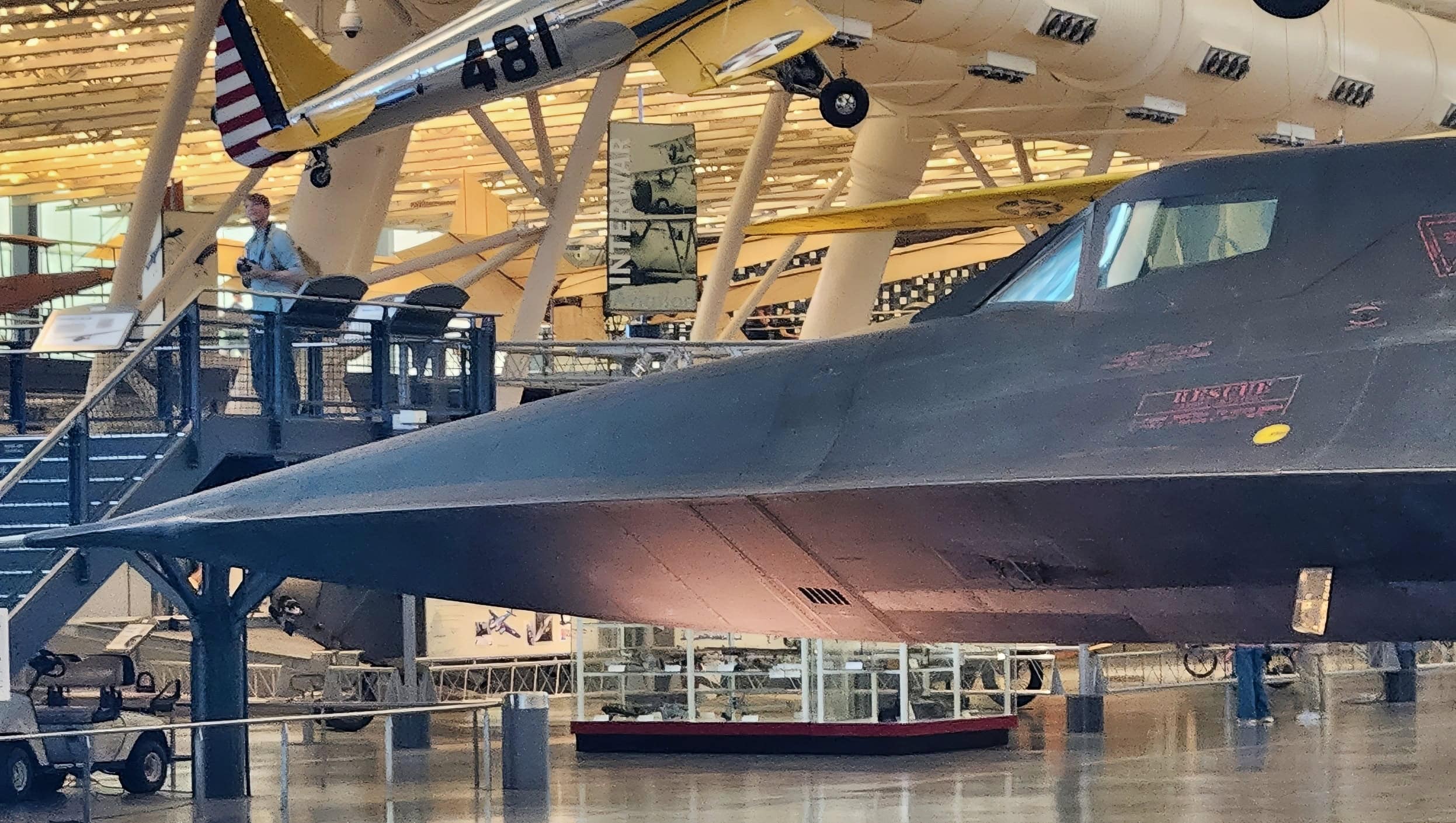
SR-71 Blackbird at Smithsonian. Image Credit: 19FortyFive.com
The SR-71 is one of aviation history’s great success stories, and a major point of pride for Lockheed’s “Skunk Works” division.
However, even the best machines built by human hands can and do fail, and the Blackbird was quite fallible.
There were a total of 12 SR-71s lost to crashes (one resulting in a fatality) out of 32 airframes built. The last crash took place during the twilight of that warbird’s storied career, on April 21, 1989.
The Backdrop
This would turn out to be the only SR-71 crash of the 1980s. The first 11 losses transpired between 1966 and 1972, back when the Blackbird was a proverbial spring chicken.
By April 1989, the Cold War was thawing, with U.S. President George H.W. Bush in the White House and Soviet head of state Mikhail Sergeyevich Gorbachev’s glasnost (“openness”) and perestroika (“restructuring”) in full effect. (Nevertheless, Soviet collapse loomed, and would occur in December 1991.)
In what could be viewed as a sign of those changing times, the SR-71 was being prepped for its initial “retirement.”
On the fateful day, an SR-71A bearing Air Force Serial No. 61-7974 and the affectionate nickname of “Ichiban” (Japanese for “Number One”) departed from Kadena Air Base on Okinawa, with U.S. Air Force pilot Lieutenant Colonel Dan House and reconnaissance systems officer (RSO) Blair Bozek at the controls.
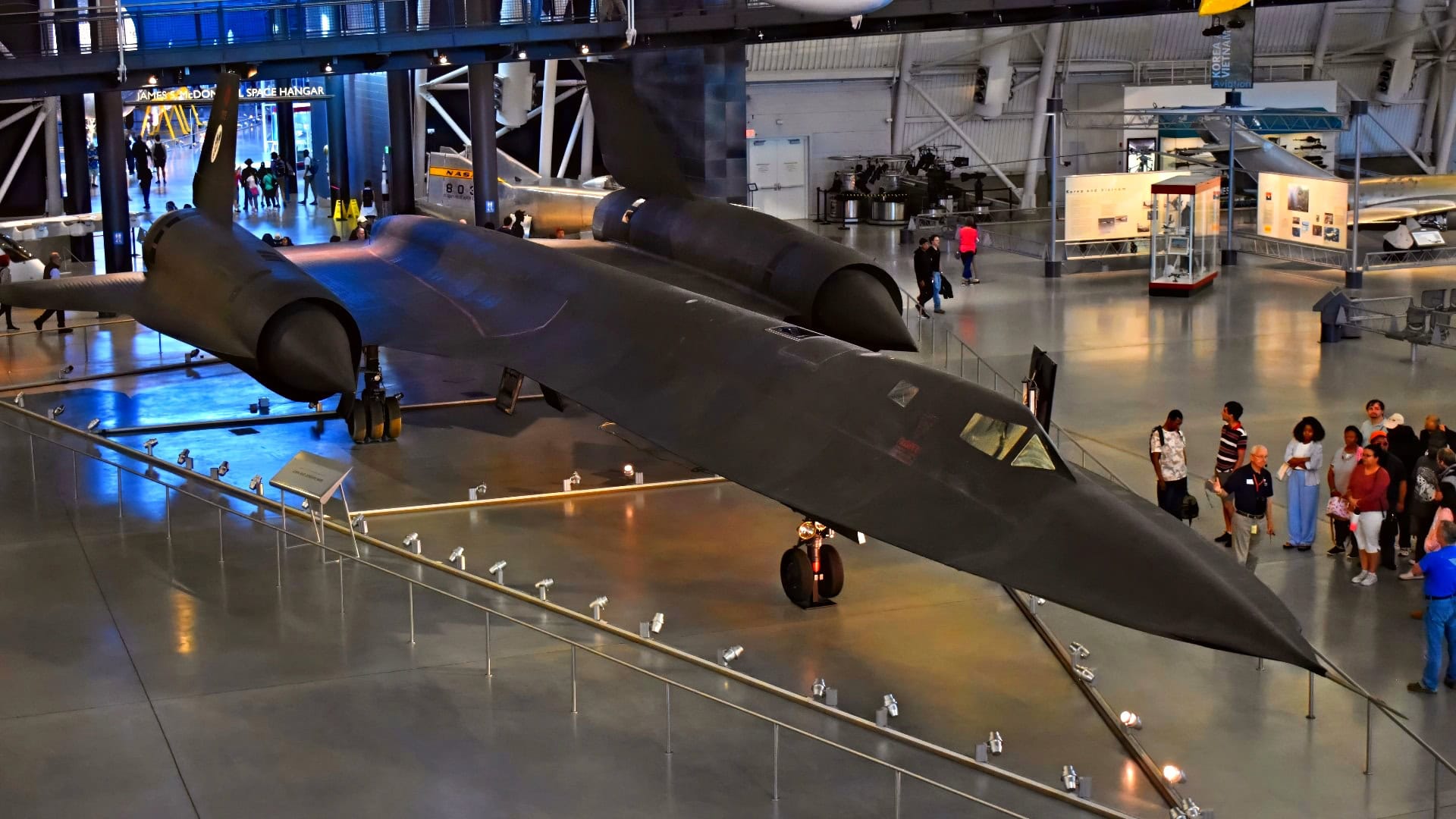
SR-71 Blackbird at the Smithsonian 19FortyFive.com Photo
The Star-Crossed Flight
As Ichiban and her crew accelerated past Mach 3 speed, the left compressor bearing suddenly froze, causing the immediate disintegration of the port engine and a catastrophic explosion that sent metallic fragments through critical hydraulic lines.
As a testament to House’s flying skills, he managed to slow his stricken Blackbird and descend below 10,000 feet.
Thankfully, both he and Bozek ejected safely and were quickly rescued by local fishermen in the waters below.
Aftermath
Speaking of the local fishermen, one of them approached an Air Force recovery team that was searching for the remains of the downed plane and asked them in perfect English, “Do you want to know where the airplane went down?”
The ever-helpful fisherman put three sticks in the sand to mark the spot; the plane lay at a depth of just 120 feet, well within the practical range of scuba equipment.
The U.S. Navy went to work, helping to recover the downed aircraft.
Former Blackbird RSO Colonel Don Emmons recalled, as cited in Richard H. Graham’s book SR-71 Blackbird Stories, Tales and Legends, that “SR-71 #61-7974 wreckage was placed back in the same hangar [sic] it departed on its ill-fated flight months earlier.”
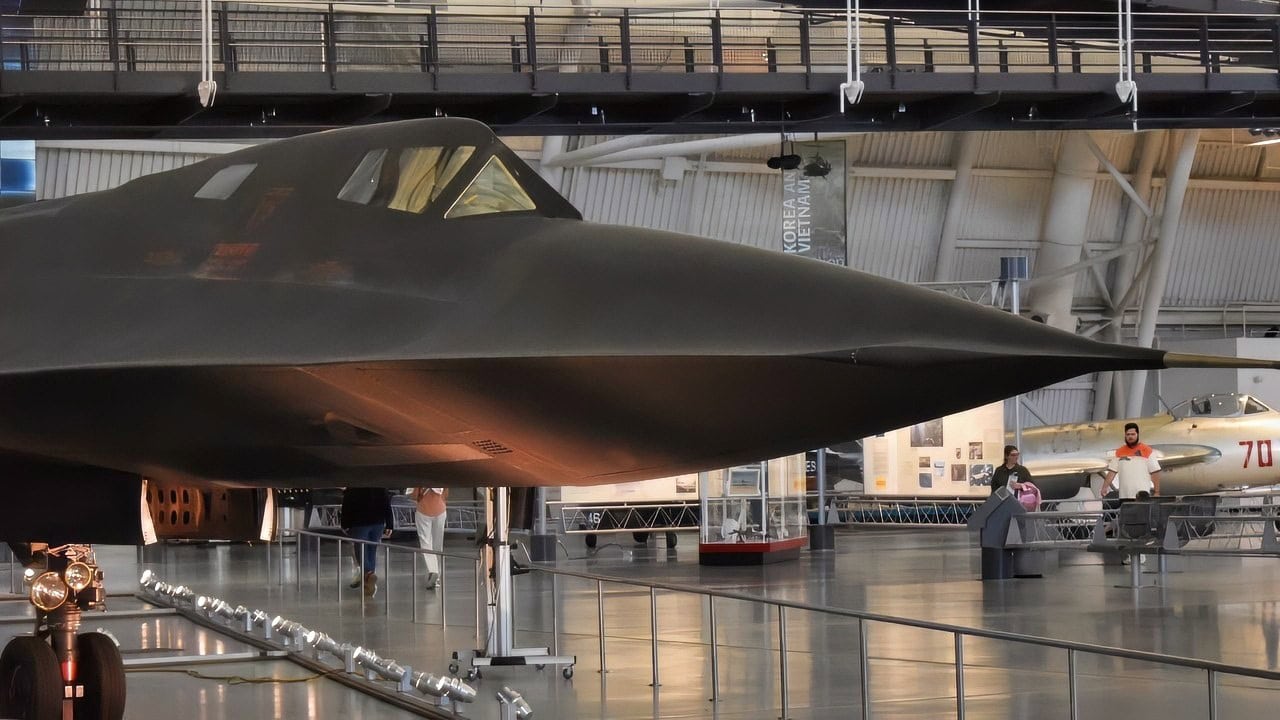
SR-71 Blackbird Photo by Dr. Brent Eastwood of 19FortyFive.
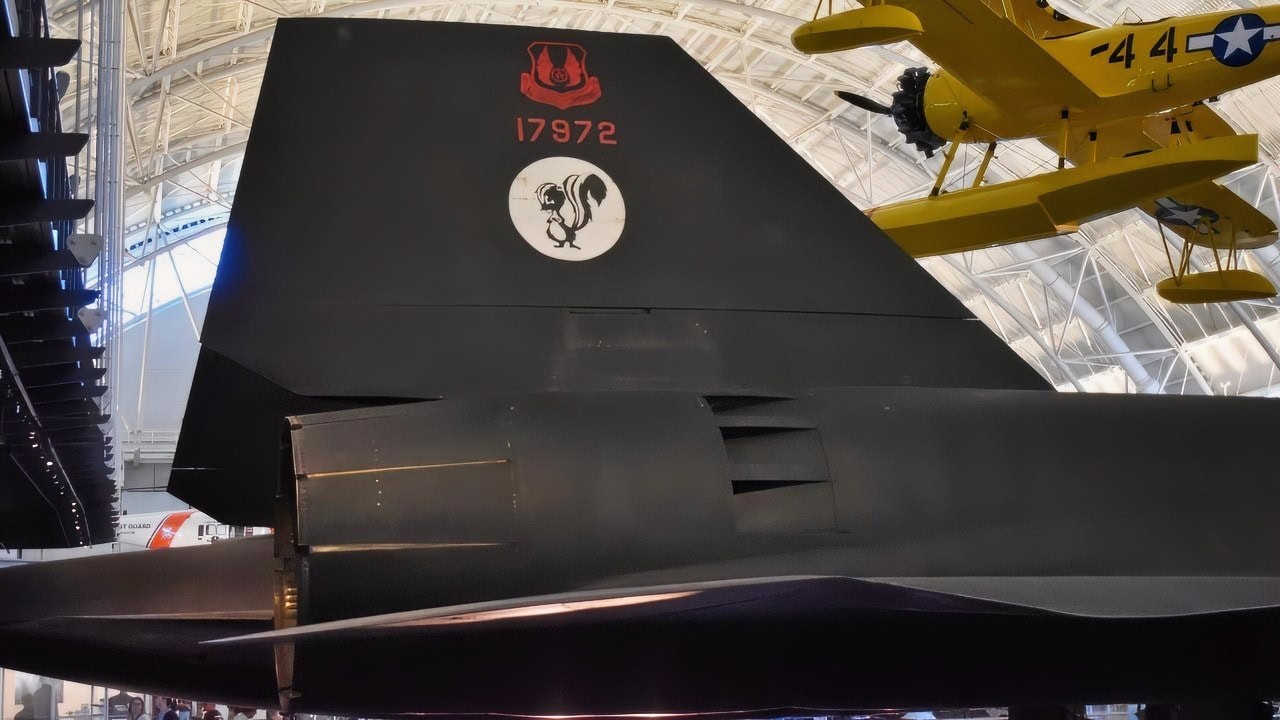
SR-71 Blackbird Photo from Dr. Brent Eastwood at the Smithsonian. 19FortyFive.com Original Image.
Crews worked to recover classified equipment from the wreckage.
The inspection revealed that the plane had impacted the water surface while inverted, sending all heavy components through their upper support structure; the landing gear was sticking out from the top of the wing.
Both of the Pratt & Whitney J58 turbojet engines broke all mounts and broke through their nacelles’ upper structure.
With the investigation of the crash completed, there was no sense in leaving the carcass lying around in plane—er, plain sight. So, as Colonel Emmons said, “the wreckage needed to be removed ASAP. Burial at sea seemed the best option.”
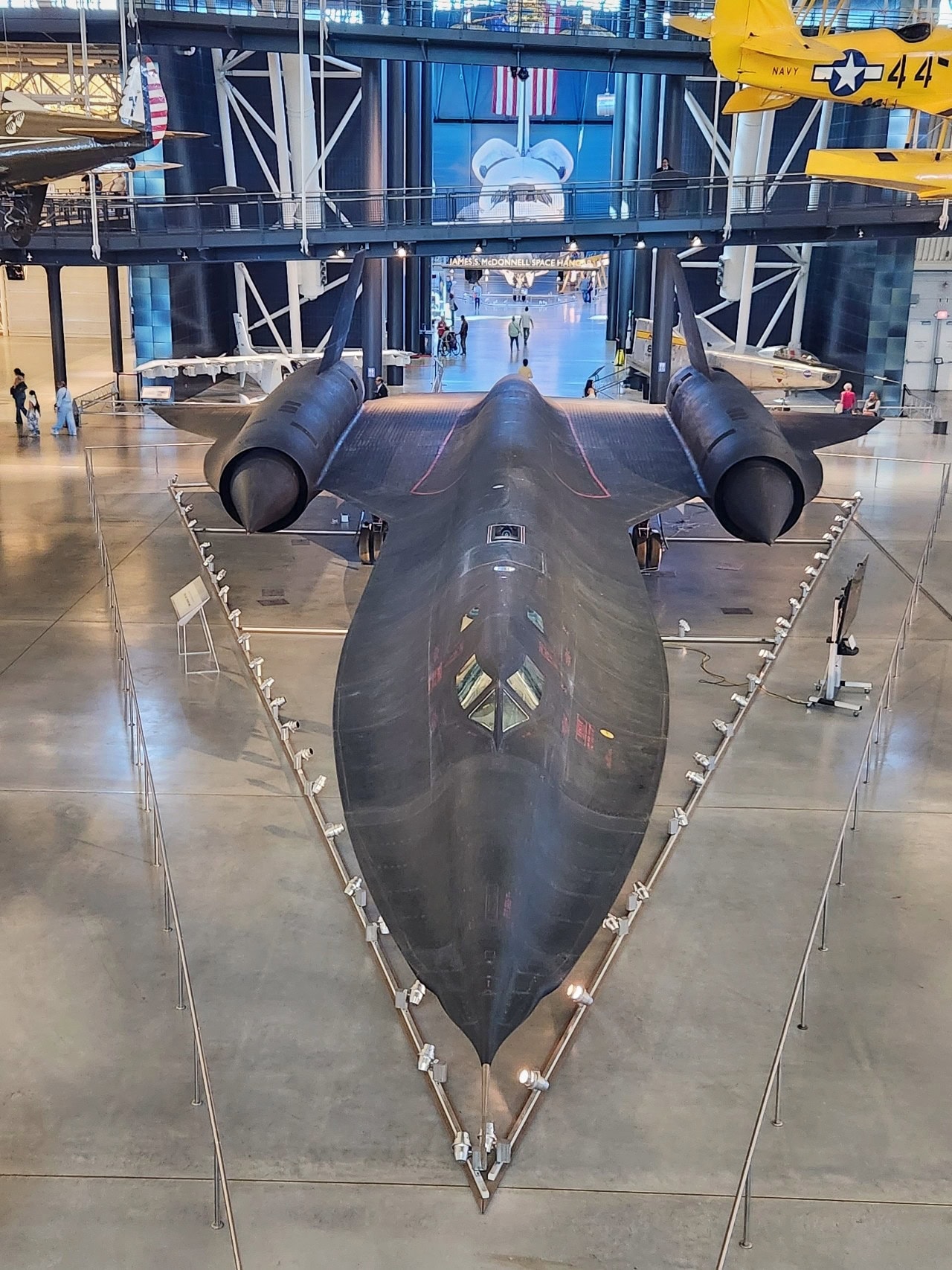
Long shot of SR-71 Blackbird. Image Credit: 19FortyFive.com
That sounded like another job for the Navy, which fulfilled the task at 1157 hours local time—“with full military honors,” per Colonel Emmons—this time in a much deeper final resting place, at 25,597 feet below the surface.
The burial occurred in the Mariana Trench, which is the deepest part of the ocean.
As noted above, the Air Force retired the SR-71 that same year, only to bring it back out from retirement for nine more years before putting it to pasture for good in 1998.
The last government entity to officially retire the Blackbird was NASA, which did so on October 9, 1999.
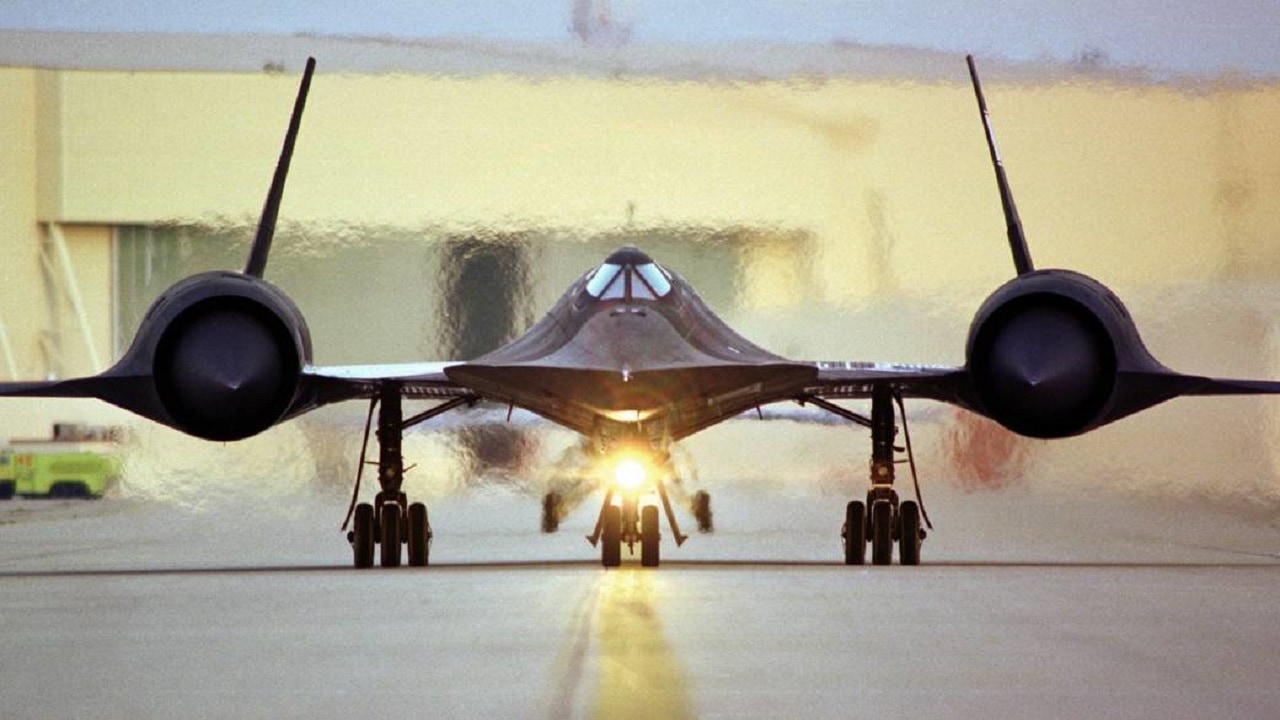
SR-71 Blackbird. Image Credit: Creative Commons.
An Amusing Postscript
Rumor has it that not all of #7974 was buried.
The Mayor of the town near the crash site picked up the downed crew in his boat and took them to a party—he was very excited about his new guests.
The mayor reportedly was given the pilot seat as a gesture of gratitude for his hospitality. It sits in his home to this day.
About the Author: Christian D. Orr
Christian D. Orr is a Senior Defense Editor. He is a former Air Force Security Forces officer, Federal law enforcement officer, and private military contractor (with assignments worked in Iraq, the United Arab Emirates, Kosovo, Japan, Germany, and the Pentagon). Chris holds a B.A. in International Relations from the University of Southern California (USC) and an M.A. in Intelligence Studies (with a concentration in Terrorism Studies) from American Military University (AMU). He is also the author of the book “Five Decades of a Fabulous Firearm: Celebrating the 50th Anniversary of the Beretta 92 Pistol Series, the second edition of which was recently published.