

Summary and Key Points: In the summer of 1984, SR-71 Blackbird 61-7974 suffered a double engine unstart at 83,000 feet off Murmansk while Soviet SA-5 radars tracked it, and fell 65,000 feet in under two minutes toward the Barents Sea. Pilot Maj. Joseph Matthews relit both J58 engines by hand at 18,000 feet; a KC-135Q tanker met them with less than 10 minutes of fuel. The Soviets never fired because the jet was in international airspace.
The SR-71 Blackbird Was a Survivor
The SR-71 Blackbird is a fantastic aircraft. Clarence “Kelly” Johnson’s Lockheed “Skunk Works” in Burbank, California, designed and built it. It was intended to be a long-range, high-altitude, Mach 3+ strategic reconnaissance aircraft.
Speed was the SR-71’s armor.
For about two minutes, however, in the summer of 1984, it had none.
As The Aviation Geek Club’s Dario Leone recounted, pilot Major Joseph E. Matthews and Reconnaissance Systems Officer (RSO) Major Curt Osterheld survived a double-engine unstart at 83,000 feet, just as Soviet SA-5 radars were painting their Blackbird off Murmansk.
No missile was ever fired. It didn’t need to be.
The jet’s own engines nearly finished the job, and getting home came down to a pilot’s hands and a tanker crew that showed up on time.
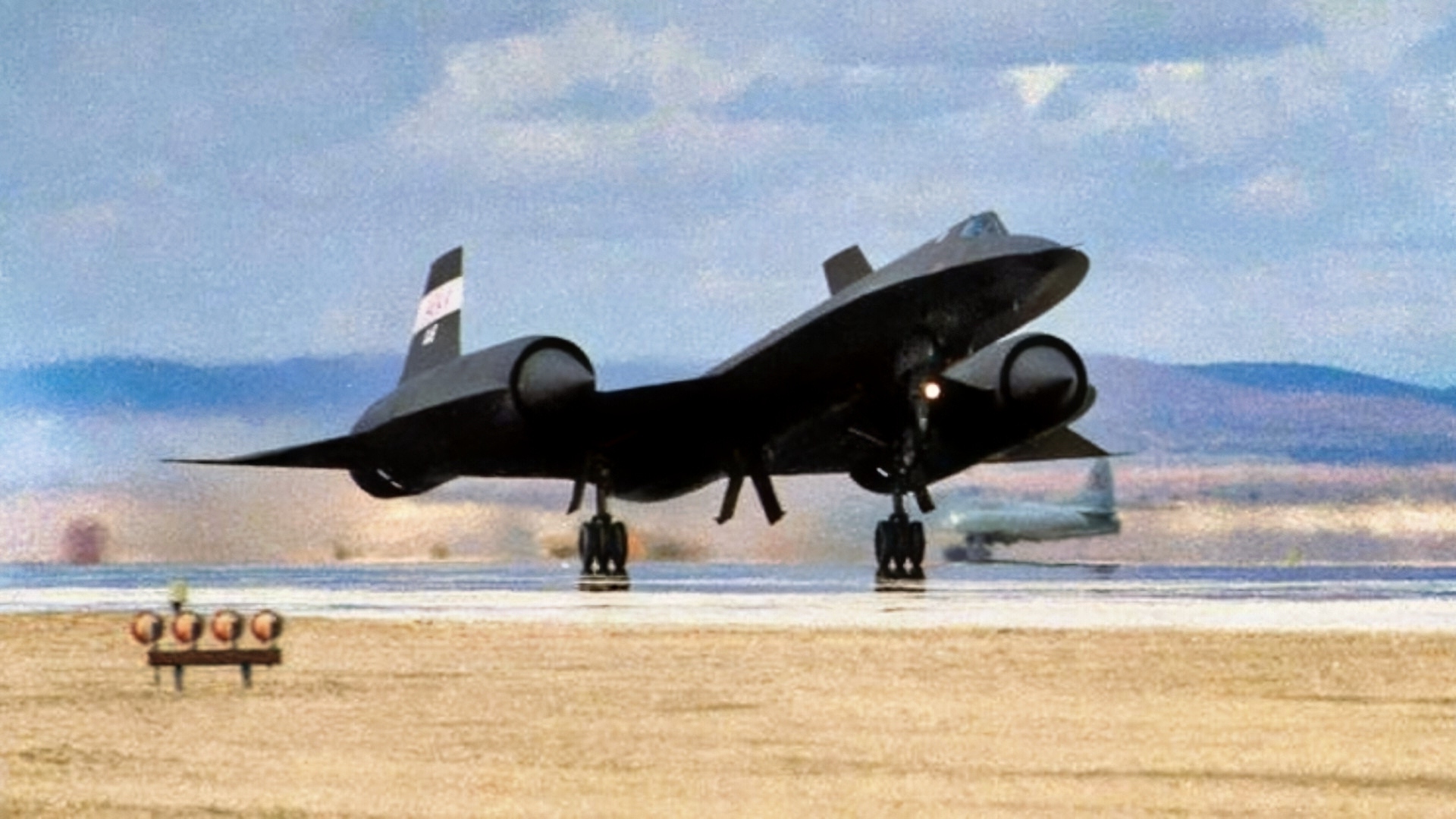
SR-71 Blackbird NASA Photo Handout
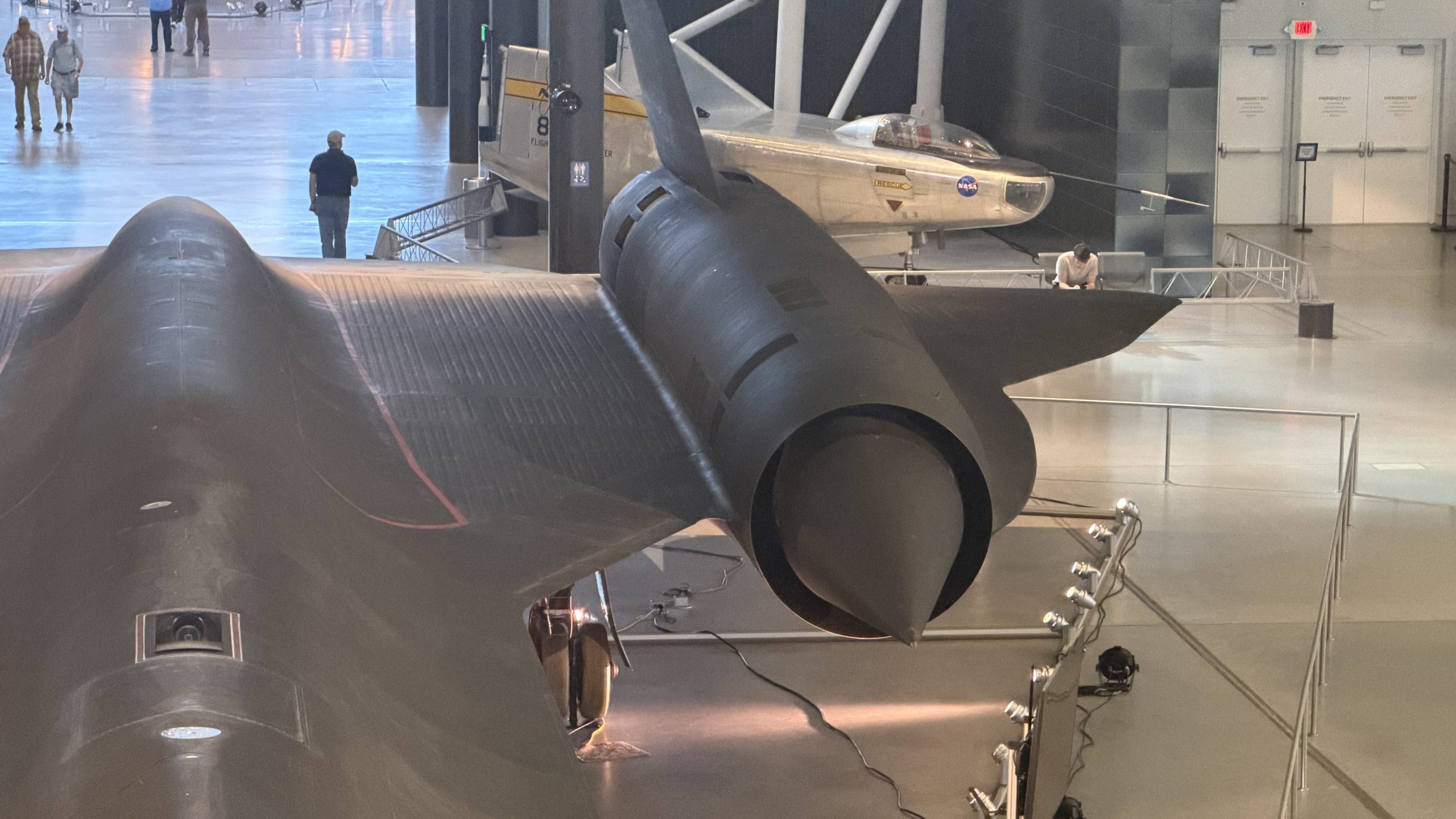
SR-71 Blackbird at the Smithsonian. Photo taken by 19FortyFive.com Staff.
The Mission Off The Kola Peninsula Was Supposed To Be Routine
Tail number 61-7974 was flying at 83,000 feet off northern Norway after its final refueling, according to Osterheld’s firsthand account in Aviation History.
In the back seat, Osterheld ran the ASARS-1 imaging radar as the Kola Peninsula came into view.
Atlantic Command wanted eyes on the Soviet Navy’s Typhoon-class ballistic missile submarines at Murmansk.
His radar-warning receiver was also telling him the SA-5 sites around Murmansk had them on their scopes.
That was normal.
The flight was in international airspace under Peacetime Aerial Reconnaissance Program (PARPRO) rules, which required the same altitude every time.
For those keeping score at home, that means the Soviets knew exactly where the Blackbird would be.
The S-200, known to NATO as the SA-5 Gammon, was built to kill high-altitude targets, and it had the range to reach an SR-71.
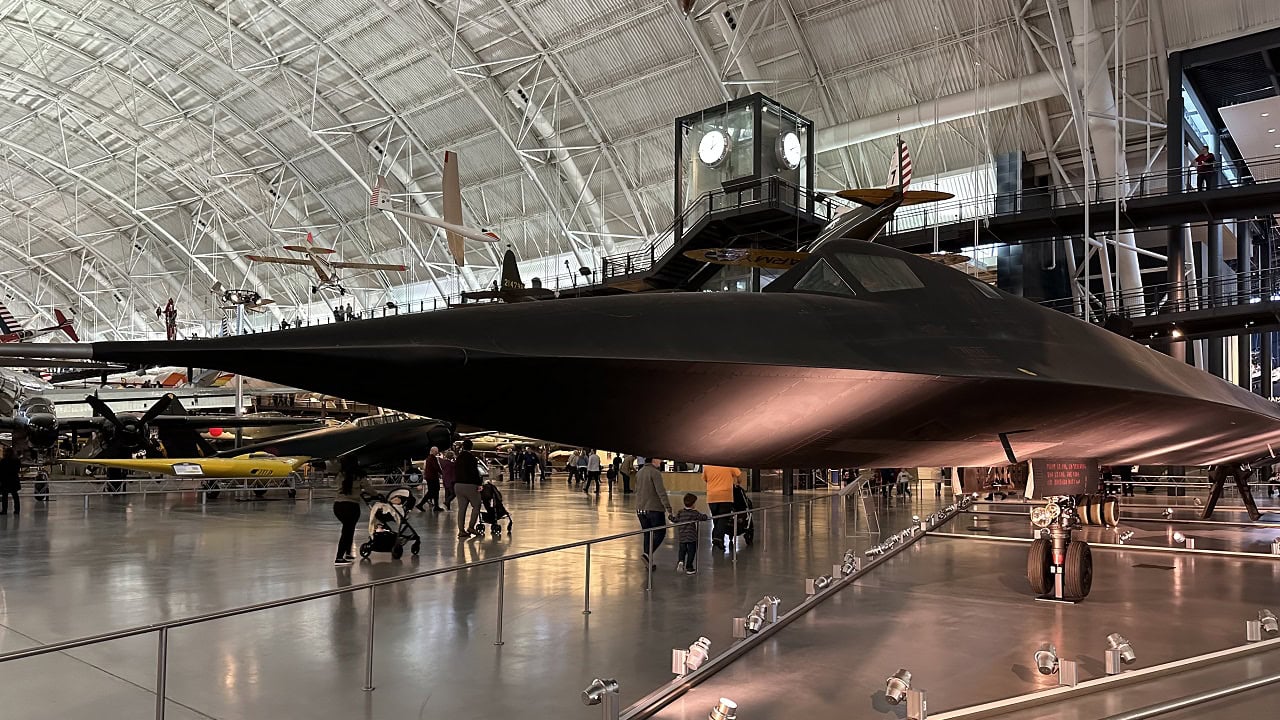
SR-71. SR-71 photo taken at the National Air and Space Museum. Taken by 19FortyFive on 10/1/2022.

Flight suit. Image Credit: 19FortyFive Original Image.
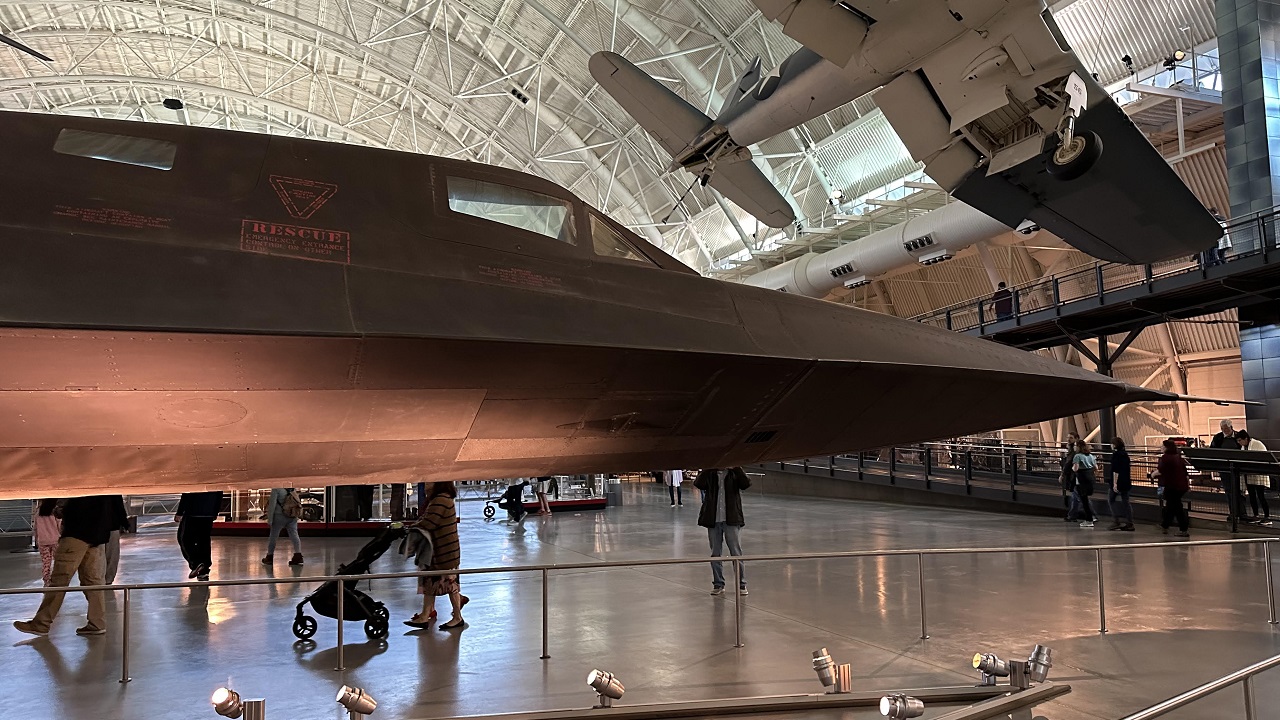
SR-71. SR-71 photo taken at the National Air and Space Museum. Taken by 19FortyFive on 10/1/2022.
However, the Soviets generally treated the Blackbird as a training target for their radar crews. Ostheld logged a second Soviet lock-on when the right engine unstarted.
An Unstart At Mach 3.2 Is Violent
The J58 engines relied on movable inlet spikes to position a supersonic shock wave and slow incoming air before it reached the compressor.
At speeds of Mach 3+, air bypassed into the afterburner, making the J58 behave essentially like a ramjet and supplying up to 70 percent of the jet’s thrust.
If inlet pressure got too high, the shock wave blew out the front.
The spike shot forward, airflow stopped, thrust collapsed, and exhaust gas temperature climbed.
On one side only. At Mach 3.2, that asymmetry is violent. Osterheld said the jet yawed so hard to the right it felt like it was going sideways.
The Glide Ratio Of A Brick
Matthews knew the only way out was to unstart the left engine himself, kill the yaw, and try a manual restart on both. That’s the double unstart, and the second one was deliberate.
Osterheld described the deceleration as hitting a wall.
Now the SR-71 was a 60-ton titanium dart with no thrust, pointed almost straight down at the Barents Sea.
Alarms sounded at Soviet air-defense headquarters and NATO radar sites in Norway tracking the flight.
Matthews hit the auto-restart switch three times.
Nothing.
The crew was close to ejecting when he manually relit the engines.
They finally leveled off at 18,000 feet, pinned in their seats by the pullout.
They dropped 65,000 feet in under two minutes, nearly 12.5 miles.
That’s the part people miss when they talk about the Blackbird.
The legend is speed.
The reality is that many crews came home because the guy in the front seat stayed calm with seconds left on the clock.
Linda Sheffield Miller has written many such outstanding stories about the Blackbirds and their crews for the AGC.
Ten Minutes Of Fuel
Surviving the fall only traded one problem for another.
Down low and subsonic, the SR-71 burned roughly as much fuel per mile as it did cruising at Mach 3 in the upper stratosphere.
The flight crew eyed Norwegian diversion fields at Banak and Bodø but didn’t have enough fuel to reach either with a landing pass to spare.
Osterheld admitted he started thinking about how long he’d last in that freezing water.
Then Matthews spotted the KC-135Q.
They hooked up with less than 10 minutes of fuel remaining, and the tanker stayed with them all the way back to RAF Mildenhall, refueling so many times that they were nearly dry by the time they landed.
So Why Didn’t The Soviets Take The Shot?
The honest answer is that they didn’t want to. A Blackbird limping along subsonic at 18,000 feet was the easiest target the Kola Peninsula SAM crews would ever see.
However, it was still in international airspace, and shooting down an American reconnaissance jet there would have been an act of war.
That didn’t make the next trip any easier.
Six months later, in a different SR-71, Matthews and Osterheld were briefed that the Soviets might try a launch.
The paint lasted longer this time, more like a fire-control track than a drill.
Right as Osterheld calculated where a missile would be if one had been fired, the Velcro on his sunscreen let go and a flash of sunlight hit him.
Matthews later told Leone’s site that their survival depended on precise navigation to stay out of Soviet waters and on speed and altitude if anyone launched.
Earlier Habu crews, like Major Tom Alison, had flown into areas where the Soviets were test-firing the then-new SA-5, so nobody took those radars lightly.
The Anomaly Not Even Skunk Works Engineers Could Fix
Lockheed contractors spent four days tearing into 974’s systems at Mildenhall and settled on a heat-related “anomaly,” a word no maintainer likes.
On the next sortie, a Baltic run, the right spike failed again, and they scrubbed the mission.
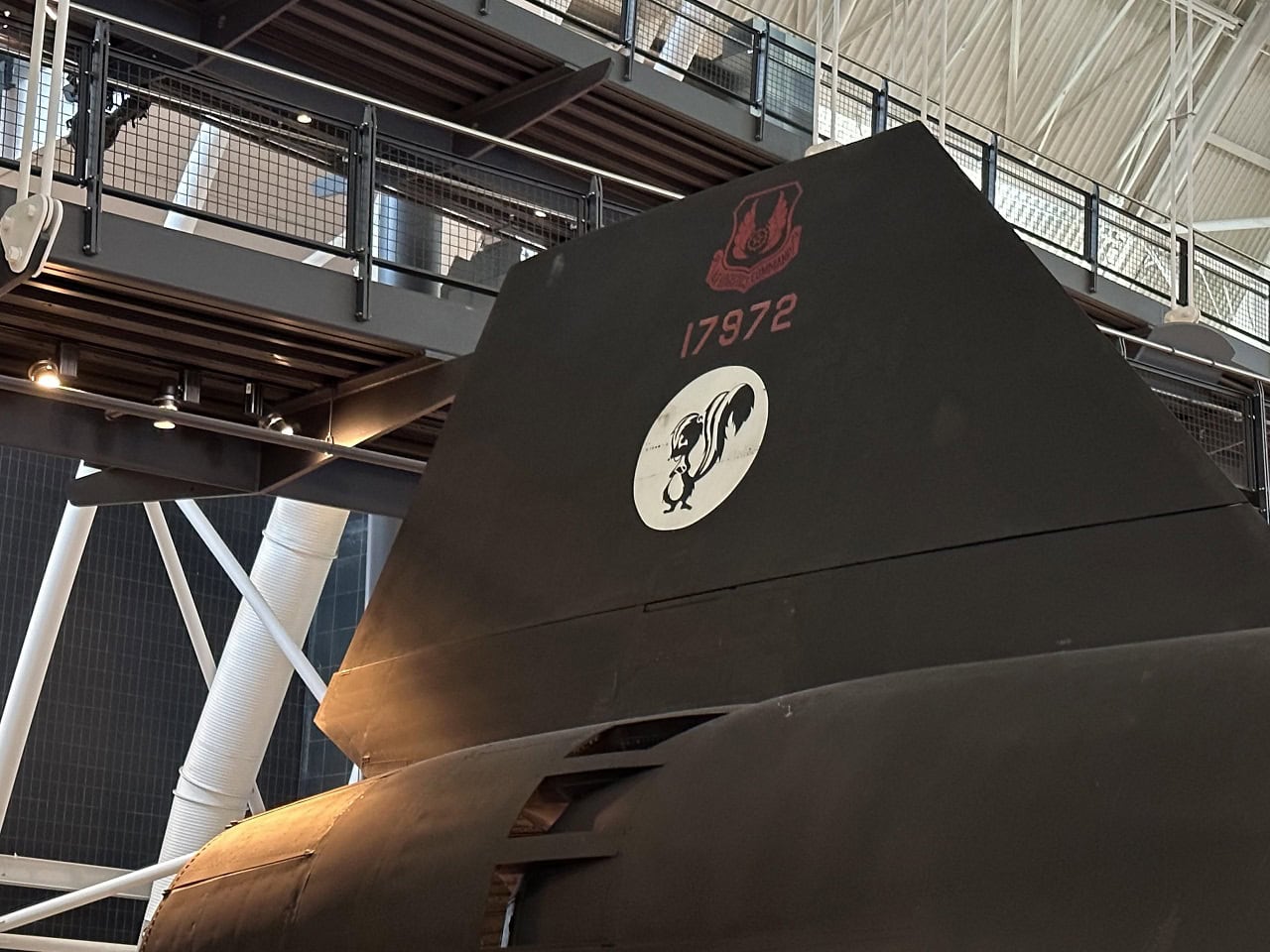
SR-71. SR-71 photo taken at the National Air and Space Museum. Taken by 19FortyFive on 10/1/2022.
None of that saved 974. An engine exploded on April 21, 1989, and it went into the South China Sea.
Lt. Col. Dan House and Lt. Col. Blair Bozek ejected and were rescued.
No SR-71 was ever shot down, although not for lack of trying. More than 4,000 missiles were fired at it. But on that summer day off Murmansk, it didn’t need to. An “anomaly” nearly did the job itself.
About the Author: Steve Balestrieri
Steve Balestrieri is a National Security Columnist. He served as a US Army Special Forces NCO and Warrant Officer. In addition to writing on defense, he covers the NFL for PatsFans.com and is a member of the Pro Football Writers of America (PFWA). His work was regularly featured in many military publications.