
Anefis 2026 in Mali — over 50 soldiers trapped by the FLA-JNIM alliance
 Marie Dubois
Anefis 2026 in Mali — over 50 soldiers trapped by the FLA-JNIM alliance
On July 18, on the dusty axis connecting Gao to Anefis, a convoy of the Malian Armed Forces and their Russian partners from Africa Corps fell into an ambush. The area is not a detail on the map: Anefis commands the approach to Kidal, a symbolic and logistical lock of northern Mali, and the road from Gao remains one of the most exposed arteries of the theater.
According to Reuters, a source close to the rebels mentioned over 50 soldiers and fighters linked to Russia killed. Al Jazeera reports that the attack was jointly claimed by the Front for the Liberation of Azawad (FLA), a Tuareg separatist coalition, and Jama’at Nusrat al-Islam wal-Muslimin (JNIM), affiliated with Al-Qaeda. The Malian army confirmed the assault and announced counter-operations. The figures remain incomplete, but the operational scope is already clear.
An ambush that exceeds the toll
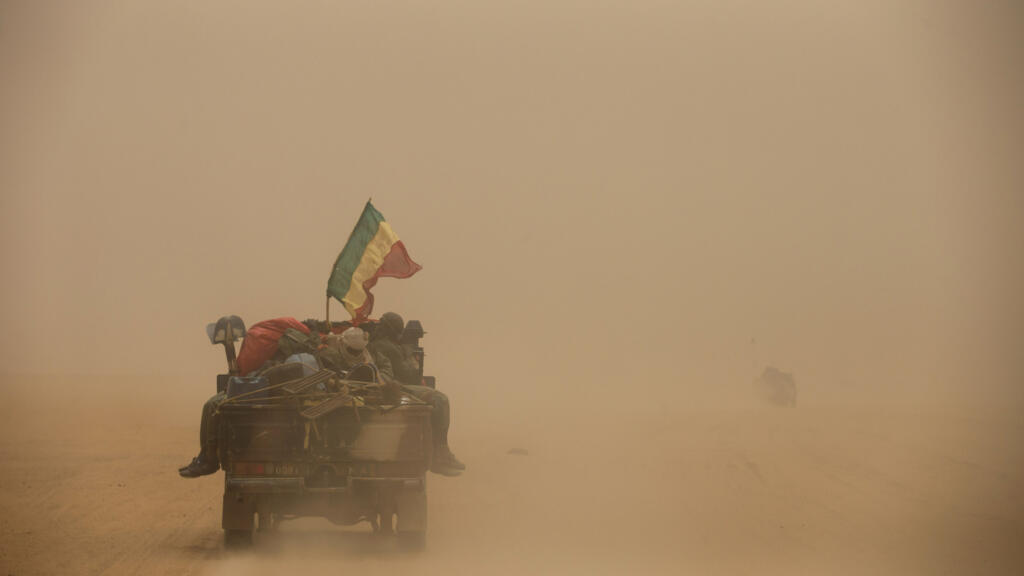
A convoy attack in northern Mali is not new. What changes here is the signature. The FLA and the JNIM do not seek the same final state. The former speaks of autonomy, sometimes independence for Azawad. The latter pursues a regional jihadist project. But on the ground, these differences weigh less than the common enemy: Bamako and the Russians.
From experience, a column engaged on this type of axis has little margin. The dust breaks visibility, vehicles space out, communication means become fragile, and the enemy chooses the breaking point. If the adversary has both local guides, seasoned shooters, and knowledge of supply routes, the real balance of power is no longer that of the numbers announced in Bamako.
The FLA-JNIM cooperation then acts as a force multiplier. The separatists provide territorial anchoring, family networks, and secondary tracks. The JNIM brings the experience of coordinated attacks, clandestine discipline, and propaganda. This is not an ideological fusion. It is a combat agreement.
The political shock of the video
On July 23, the United Nations High Commissioner for Human Rights condemned the acts of torture and the alleged murders of dozens of Malian soldiers who had surrendered to the FLA and JNIM in the Gao region. The statement mentions footage circulating online where fighters allegedly shoot soldiers after their surrender, hands behind their heads. If these facts are confirmed, they constitute war crimes.
The important point is not only legal. In a convoy war, killing prisoners destroys future surrenders. The next surrounded soldier will hesitate more to lay down arms; the next isolated unit will fight until exhaustion. This increases the lethality of engagements and closes the few doors for de-escalation on the ground.
Bamako will also find a convenient political justification: harden the campaign, present the north as a hostile block, and delegitimize any mediation with armed groups. This is precisely the trap. The more the conflict is reduced to a punitive logic, the more local actors who might still have an interest in negotiating retreat behind those who know how to wield a weapon and control a track.
Africa Corps strengthens fire, not control
Since Africa Corps replaced Wagner as the official showcase of Russian military presence, Moscow has gained institutional visibility, not necessarily strategic effectiveness. Drones, airstrikes, and Russian combat teams improve immediate response. After Anefis, Africa Corps released images presented as strikes against the assailants.
But a strike after an ambush does not secure a road. It punishes, sometimes it disorganizes, rarely does it administer. The Malian problem remains one of permanence: who holds the villages between two operations, who protects the markets, who guarantees that the fuel truck will pass the following week? An army can retake Kidal and lose the axis leading to it. This may seem contradictory from a staff perspective; on the ground, it is commonplace.
The end of MINUSMA has also left a less spectacular but essential void than helicopters: logistics, observation, local mediation, alert escalation. The Russians have brought fire. They have not replaced the network of human sensors that constituted, with all its flaws, the dispersed international presence in the north.
The AES facing its mirror
The Alliance of Sahel States (AES) was supposed to offer Mali, Niger, and Burkina Faso sovereign security, free from Western tutelage and the slowness of ECOWAS. The discourse carries political weight. Militarily, Anefis shows something else: armed groups also know how to build tactical alliances.
- The FLA and JNIM coordinate their efforts in northern Mali despite divergent objectives.
- The JNIM retains regional depth towards central Mali, Burkina Faso, and western Niger.
- Partially blocked roads and attacks on power lines weaken Bamako without requiring a lasting capture of the regional capital.
- The coastal states of the Gulf of Guinea observe a threat that descends through commercial corridors as well as through official borders.
The UN representative for West Africa and the Sahel, Leonardo Santos Simão, warned this week that terrorist groups are no longer content with just attacking: they administer, control roads, exploit technologies, and lean on criminal economies. Anefis corresponds exactly to this evolution. The ambush is not an isolated raid; it is an attack on the circulation of the state.
What to watch for now
The immediate question is not whether the FLA and JNIM will become permanent allies. Probably not. Alliances of this type crack as soon as the sharing of loot, prestige, or local control becomes too costly. The real question is shorter: how long will this cooperation remain strong enough to make the Gao-Anefis-Kidal and Gao-Ménaka axes impassable for Malian columns?
If Bamako responds with large sweeping operations without re-establishing local relays, the next vulnerability will be logistical. Fuel, ammunition, food, rotation of the wounded: this is where armed groups will test Africa Corps and the FAMa. In northern Mali, one does not always lose a city by seeing its flag fall. Sometimes, one loses it when the road ceases to exist.
Main sources
- Al Jazeera, July 22, 2026, on the FLA-JNIM alliance and the ambush near Anefis.
- United Nations High Commissioner for Human Rights, July 23, 2026, on the alleged murders of Malian soldiers out of combat.
- UN Info, July 2026, briefing on the evolution of the terrorist threat in West Africa and the Sahel.
- Reuters, July 20 and 23, 2026, on the reported toll of the ambush and the UN call for an investigation.
On July 18, 2026, a convoy of Malian Armed Forces and their Russian partners was ambushed by the Front for the Liberation of Azawad (FLA) and Jama’at Nusrat al-Islam wal-Muslimin (JNIM) near Anefis, resulting in over 50 casualties. The Malian army confirmed the attack and is conducting counter-operations. The UN reported on alleged war crimes involving the execution of captured soldiers.
- Over 50 soldiers and Russian-linked fighters killed in the ambush.
- The ambush was conducted by the FLA and JNIM alliance.
- The attack occurred on the road connecting Gao to Anefis.
- The Malian army confirmed the assault and announced counter-operations.
- The UN reported on torture and murders of captured Malian soldiers.