
Ukraine's Drones Hit 180 Sea Targets Around Crimea
 Alexandra Reeves
Ukraine's Drones Hit 180 Sea Targets Around Crimea
Crimea is becoming expensive for Russia in exactly the place Moscow used to treat as safe: the water around it.
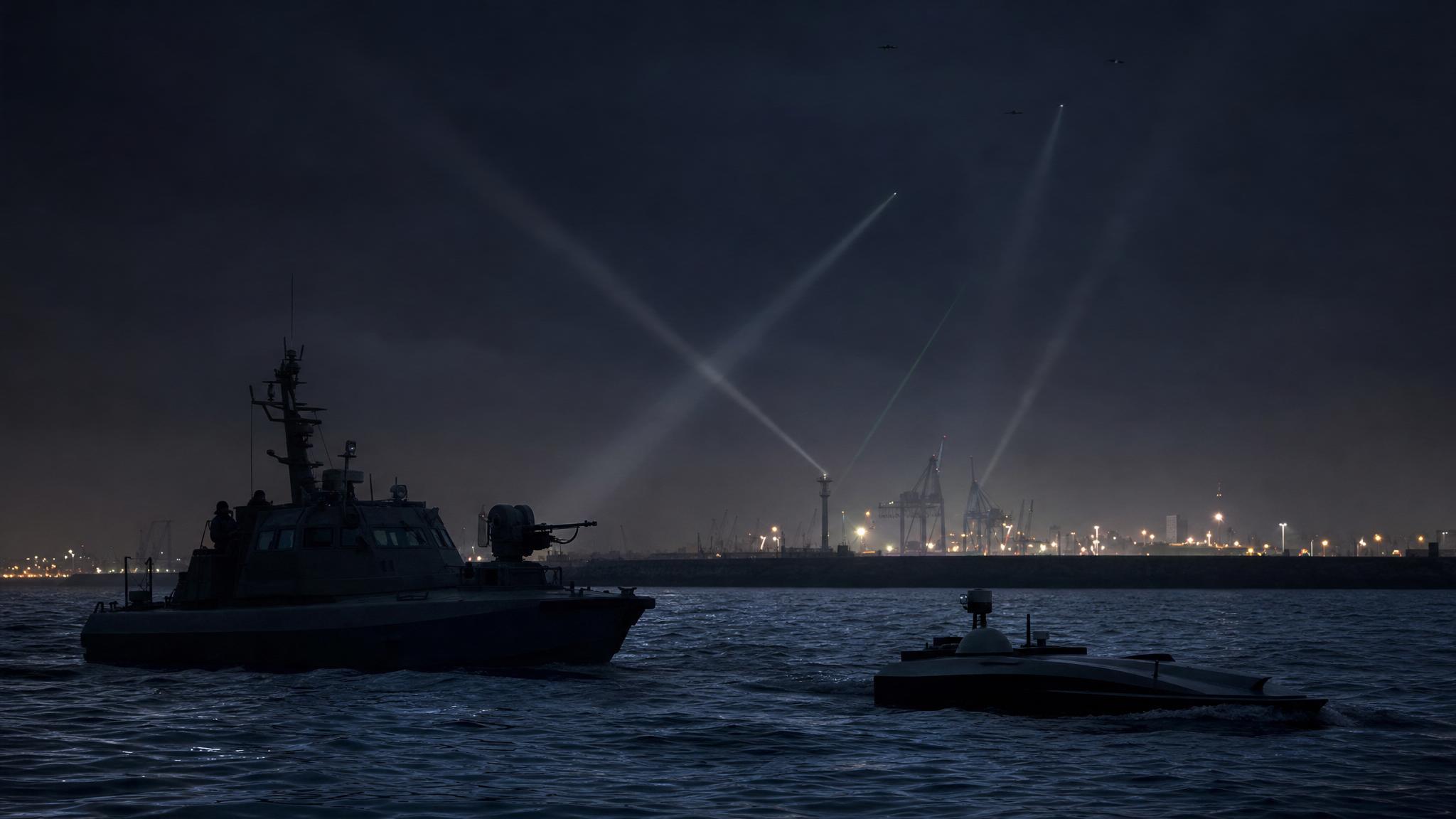
According to Defense News, reporting from southern Ukraine with Reuters material, Ukrainian drone units operating far behind the front line say they have struck more than 180 vessels and other sea-borne targets around Crimea over the past three weeks. The campaign began in the Sea of Azov and has widened into the Black Sea, where Russia has been trying to keep Crimea supplied while also attacking Ukrainian ports and commercial shipping.
That number needs some discipline. Reuters could not independently verify every claimed strike, and Kyiv has obvious reasons to publicize the campaign. But the broader pattern is now hard to dismiss. Ukrainian commanders, Austrian military analyst Markus Reisner, ISW's July 24 assessment, and Russian reactions all point in the same direction: Ukraine is trying to isolate Crimea by drone because it could not isolate Crimea by ground manoeuvre in 2023.
The Campaign Is About Logistics, Not Spectacle
The easy read is that Ukraine has found another clever drone story. That is too small. The harder read is that Kyiv is trying to make Crimea function less like a fortress and more like a liability.
Defense News reported that units linked to Robert "Magyar" Brovdi's Unmanned Systems Forces have hit roughly six vessels per day since the new phase began in July. Ukrinform, citing Brovdi's own reporting, put the claimed total at 119 Russian shadow-fleet vessels in the Sea of Azov and 64 in the Black Sea since July 1 as part of Operation "MoLoChKa." Those figures may include repeat attacks or damaged rather than sunk ships. Even so, sustained harassment at that scale changes behaviour. Shipowners reroute, commanders add escorts, air defences get pulled away from other priorities, and port operators start wondering whether the next drone is aimed at them.
The platforms matter because they are cheap enough to make persistence possible. Ukrainian FP-1 and FP-2 deep-strike drones reportedly fly autonomously toward the operational area before operators take over for the final attack run. Launch teams can fire from more than 100 kilometres behind the front line, then pack up and move. That does not make them invulnerable. It does make them annoying in the way modern war rewards: distributed, mobile, replaceable, and hard to fully suppress.
Why Crimea Is the Right Target
Crimea is not just symbolic territory. It is a transit hub, naval platform, air-defence zone, logistics warehouse, and political trophy wrapped into one peninsula. Russia took it in 2014 because it anchored Moscow's Black Sea position. Ukraine is now trying to make that anchorage bleed resources.
Reisner told Ukrinform that Ukraine is attempting to create the same "logistical nightmare" it wanted from the 2023 counteroffensive: cut the land corridor toward the Sea of Azov, pressure the Kerch Bridge, and make Russian supply routes to Crimea unreliable. The difference is that Kyiv is now using unmanned systems and long-range strikes instead of armoured brigades pushing through layered minefields under Russian artillery and helicopter fire.
That distinction matters. In 2023, the theory was geographic: reach the coast and sever the corridor. In 2026, the theory is functional: make the corridor, the bridge, the ferry system, the ports, and the coastal shipping network too dangerous to rely on. One approach required a breakthrough. The other requires attrition, patience, intelligence, and enough drones to keep forcing Russian adjustments.
ISW's July 24 assessment fits the same picture. It noted that Ukraine is expanding strike campaigns against Russian rear areas, military logistics, and occupied Crimea, imposing additional manpower and materiel requirements on already stretched Russian air defences. ISW also highlighted Ukrainian strikes on logistics facilities and a continuing effort to hit Russian energy and transport nodes. This is not one campaign; it is a pressure system.
Russia Is Answering With Its Own Maritime Pressure
None of this means Kyiv has solved the Black Sea war. Russia is not passively absorbing punishment. Defense News reported that Moscow has intensified attacks on Odesa, Mykolaiv, Ukrainian ports, and international cargo vessels. Kyiv's seaports authority said Russia struck Ukrainian ports 23 times and civilian vessels 17 times in the first two weeks of July alone. Ukraine's agriculture minister said shipowners temporarily suspended vessel arrivals at Black Sea ports for grain exports after the recent surge in attacks.
That is the grim symmetry of this phase. Ukraine is trying to choke Russian movement around Crimea. Russia is trying to raise the insurance, security, and political costs of Ukraine's maritime corridor. Grain, fuel, ferries, cranes, tankers, ports, substations, and warehouses are all becoming pieces of the same contest.
The NATO angle is uncomfortable. Romania has already had drones and explosions appear uncomfortably close to its airspace and exclusive economic zone, including a July 24 incident in which Romanian aircraft shot down an unidentified drone and an explosion damaged a cargo vessel bound for Ukraine off the Romanian coast, according to ISW's summary of Romanian official statements. The Black Sea is no longer a tidy Ukraine-Russia battlespace. It is brushing against NATO territory often enough that alliance planners should stop treating each incident as an isolated spillover.
The Real Test Is Sustainment
Ukraine's problem is not imagination. It is sustainment. A campaign that hits dozens or hundreds of maritime targets needs drones, launch crews, targeting data, secure communications, repair capacity, and a steady intelligence picture of moving vessels. It also needs political tolerance from partners who may like attacks on Russian military logistics but grow nervous when the economic geography of the Black Sea becomes more chaotic.
Russia's problem is that defending everything is not a strategy. If Moscow must protect the Kerch Bridge, ferry crossings, tankers, dry cargo ships, ports, refineries, depots, rail links, air bases, and logistics warehouses at the same time, then Ukraine does not need every drone to get through. It needs enough of them to force Russia to spread protection thinly and live with recurring disruption.
Here is the thing Washington and Brussels should understand: this is not a substitute for air defence, artillery ammunition, or battlefield manpower. It is a way for Ukraine to create operational leverage while those shortages remain unresolved. The campaign around Crimea does not end the war. It does, however, make Russia pay a daily fee for holding ground it once assumed was safely behind the front.
The next indicators are straightforward. Watch whether Russian shipping through the Sea of Azov resumes normal patterns, whether Kerch ferry capacity recovers, whether insurers and shipowners keep pausing Ukrainian port calls, and whether Russia reallocates more short-range air defence to southern logistics sites. If those indicators move in Kyiv's favour, Crimea will still be occupied, but it will be less useful to Russia.
That is the quiet strategic point. Ukraine may not be able to storm Crimea. It may not need to. Turning the peninsula into a trap for Russian logistics is slower, messier, and less cinematic than a breakthrough to the coast. It may also be the more realistic way to make Moscow feel the cost of keeping it.
Ukrainian drone units have struck over 180 maritime targets around Crimea in the past three weeks, focusing on disrupting Russian supply routes. The campaign, which began in the Sea of Azov and expanded into the Black Sea, aims to create logistical challenges for Russia. Ukrainian forces are employing FP-1 and FP-2 drones to conduct these operations, indicating a shift in tactics to weaken Russian control over the region.
- Ukrainian drones have hit over 180 sea targets around Crimea in the past three weeks.
- The campaign began in the Sea of Azov and expanded into the Black Sea.
- Ukrainian drone units are targeting Russian supply routes to Crimea.
- The operation is part of a broader strategy to disrupt Russian logistics.
- Ukraine is using FP-1 and FP-2 drones for these strikes.