
Anefis and Niamey reveal the urban push of JNIM against Mali and Niger in 2026
 Marie Dubois
Anefis and Niamey Reveal the Urban Push of JNIM Against Mali and Niger in 2026
On July 18, near Anefis, along the axis that runs from Gao to Kidal, at least 50 Malian soldiers were killed in an ambush against a convoy of the Malian Armed Forces and the Russian Africa Corps. Six weeks earlier, on June 18, armed men had struck Niamey International Airport, killing 11 Nigerien military personnel and two civilians according to authorities. These two attacks are not on the same front. However, they tell the same story of evolution.
The Support Group for Islam and Muslims, better known by its Arabic acronym JNIM, is no longer content to wear down remote garrisons. It is now working the urban thresholds, logistical routes, and infrastructures that allow a state to breathe. This is new in intensity, not in intention.
From the Track of Anefis to the Tarmac of Niamey
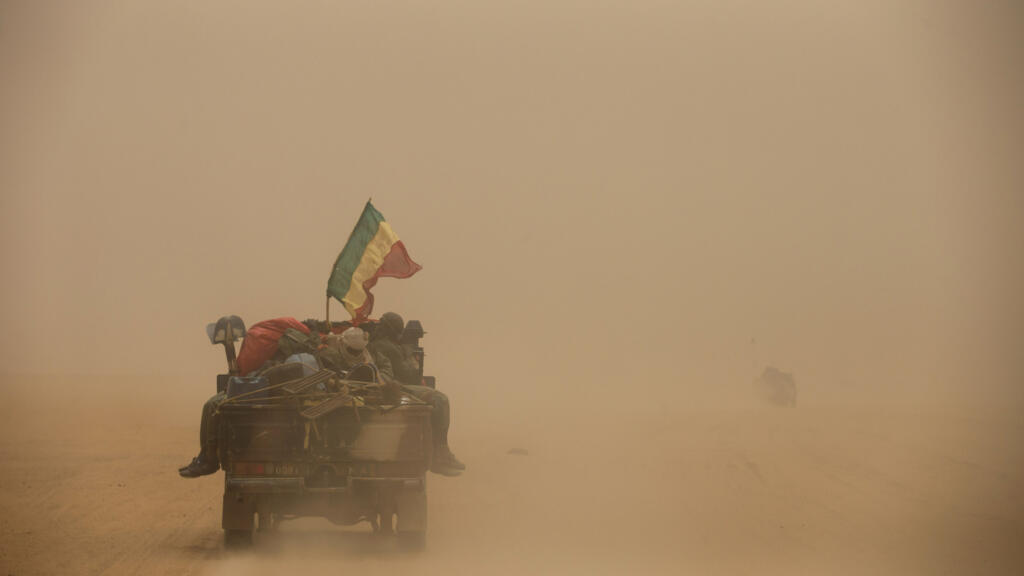
Anefis is not a large city. But its position matters more than its size. The locality is located at a hinge between Gao and Kidal, in a space where the road is less a line on a map than a succession of vulnerabilities. A convoy moves slowly there, depending on its scouts, drones, fuel, and tow trucks. When a successful ambush occurs there, it does not just destroy vehicles. It forces Bamako to ask how much each held kilometer costs.
Al Jazeera reports that the attack on July 18 was jointly claimed by the Azawad Liberation Front (FLA) and JNIM. This tactical cooperation deserves to be taken seriously. The Tuareg separatists and jihadists do not pursue the same political project. But on the ground, they today share an immediate adversary: the Malian army and its Russian partners. Even when ideology diverges, knowledge of the tracks, family ties, and military interest can be enough to produce an ad hoc coalition.
In Niamey, the logic is different but the effect is comparable. The international airport is not just a civilian infrastructure. It also serves as a military hub, with facilities linked to the Sahel States Alliance (AES), according to the monthly report from the Security Council Report. The June attack, claimed by JNIM, came after a similar attack in January attributed to the Islamic State in the Sahel. Thus, two competing organizations tested the same type of target: an air entry point, political and symbolic, just a few months apart.
The City Becomes an Operational Target
One must be cautious with casualty figures. Sahelian armies communicate little, armed groups often exaggerate, and independent sources rarely access combat zones in the early hours. But the trend is quite clear. The coordinated attacks in April against Bamako, Kati, Gao, Mopti, and Sévaré, followed by the operations in July, demonstrate a capacity to stretch government forces across multiple fronts.
This is not urban conquest in the classical sense. JNIM does not necessarily seek to hold Bamako or Niamey with permanent columns. It seeks to bring the war into the useful periphery of the capitals: fuel, depots, road axes, air bases, prisons, command quarters. For an insurgent group, hitting a fuel route can produce more effect than occupying a village for three days.
The Africa Center, reported by AllAfrica, estimates that nearly 9,800 deaths linked to militant Islamist groups have been recorded in the Sahel over the past year, accounting for 41% of the total in Africa. The same work highlights that violence is about seven times higher than in 2019. These figures do not tell the whole story, but they contradict the narrative of the juntas that military centralization has already restored the initiative.
The Africa Corps Increases Firepower, Not Control
Since the gradual replacement of Wagner by the Africa Corps, Moscow has streamlined its presence in Mali. Drones, air support, and combat assistance give the Malian Armed Forces firepower superior to what they had ten years ago. From experience, this changes a lot in contact. A group that approaches a spotted position for too long pays more dearly than before.
But firepower does not solve the problem of distances. Between Gao, Anefis, Kidal, and Ménaka, the terrain imposes its law. A force can strike quickly without necessarily securing secondary tracks, wells, weekly markets, and local intelligence relays for the long term. This is where the break with the old international setup weighs heavily. The departure of MINUSMA removed an imperfect presence, sometimes slow, but which provided logistics, observation, and human sensors in areas where the Malian state already had poor visibility.
The withdrawal from Kidal by the Africa Corps after the April offensives, reported by several media outlets and echoed by the Security Council Report, was interpreted in Bamako as a maneuver. On the ground, it mainly confirmed one thing: even with a more robust Russian partner, northern Mali remains too vast to be held by columns coming from a few bases.
The AES Faces Insurgent Coordination
The Sahel States Alliance had to respond to a real weakness: armed groups move between Mali, Niger, and Burkina Faso more easily than national armies cooperate. The coordinated airstrikes announced by the three capitals after the deterioration of the situation in Mali show that the AES is not empty. It can produce a military response.
The problem is that the insurgents are also learning coordination. The FLA and JNIM are locally pooling their advantages in Mali. JNIM is already operating over a theater of about 1,200 kilometers, from central Mali to the borders of Burkina Faso and Niger. The Islamic State in the Sahel, on the other hand, is testing the vulnerabilities of eastern Niger and the Lake Chad basin. Governments are building an alliance; their enemies are building operational habits.
There is also a political fault. In Mali, Burkina Faso, and Niger, the juntas have often responded to military setbacks by tightening civil space: arrests, restrictions on parties, pressures on journalists and magistrates. This may reduce noise in Bamako or Ouagadougou. It also reduces weak signals. In a rural intelligence war, silencing those who see and speak is rarely a good deal.
The Next Weak Point
The immediate risk is not the entry of JNIM into a Sahelian capital as in 2012 in Timbuktu or Gao. The risk is more discreet: a capital that continues to function, but at an increasing cost, with uncertain roads, rationed fuel, militarized airports, and convoys forced to wait for a favorable drone or dust window.
Three areas need to be monitored: the Gao-Anefis-Kidal axis, the routes that supply Bamako from the south and west, and the airport perimeter of Niamey. If JNIM manages to maintain pressure on these three sets simultaneously, the AES will have to choose between protecting urban symbols and holding rural peripheries. On the ground, this choice always comes faster than what is announced in the statements.
On July 18, 2026, at least 50 Malian soldiers were killed in an ambush near Anefis, while on June 18, 11 Nigerien soldiers and 2 civilians were killed in an attack on Niamey. JNIM is intensifying its urban operations against Mali and Niger, targeting military and logistical infrastructures. The cooperation between JNIM and FLA highlights a tactical alliance against the Malian Armed Forces and their Russian partners, despite differing political goals.
- At least 50 Malian soldiers were killed in an ambush near Anefis on July 18, 2026.
- 11 Nigerien soldiers and 2 civilians were killed in an attack on Niamey on June 18, 2026.
- JNIM is expanding its operations into urban areas, targeting logistical routes and military infrastructure.
- The Africa Corps has increased the firepower of the Malian Armed Forces but struggles with territorial control.
- Cooperation between JNIM and FLA indicates a tactical alliance against Malian and Russian forces.