
Another 8,500 North Koreans for Russia show how Moscow is buying not only people but also military skills 2026
 Dmitri Volkov
Another 8,500 North Koreans for Russia Show How Moscow is Buying Not Only People but Also Military Skills 2026
The most important figure in the new story about North Korean assistance to Russia is not 8,500. More significant is another: about 400 drone operators within this contingent. If Ukrainian intelligence data is correct, this is no longer the usual procurement of artillery shells from a poor but disciplined ally. This is the beginning of an exchange in which Pyongyang gains access to a real laboratory of modern warfare, while Russia gains manpower to maintain its own front and rear (CNN, August 21, 2026; ISW, August 21, 2026).
At first glance, the South Korean Ministry of Defense's message that the DPRK continues preparations for a new troop deployment to Russia, but there are no signs of immediate deployment, sounds almost reassuring (Reuters, August 24, 2026). In reality, it is, on the contrary, a troubling signal. Preparation without immediate transfer means that there is already a well-established mechanism for coordination, selection, training, and transportation of personnel between Moscow and Pyongyang. Such schemes do not arise for a one-time political demonstration. They emerge when military cooperation becomes routine.
This is No Longer Labor Recruitment, but Military Internship
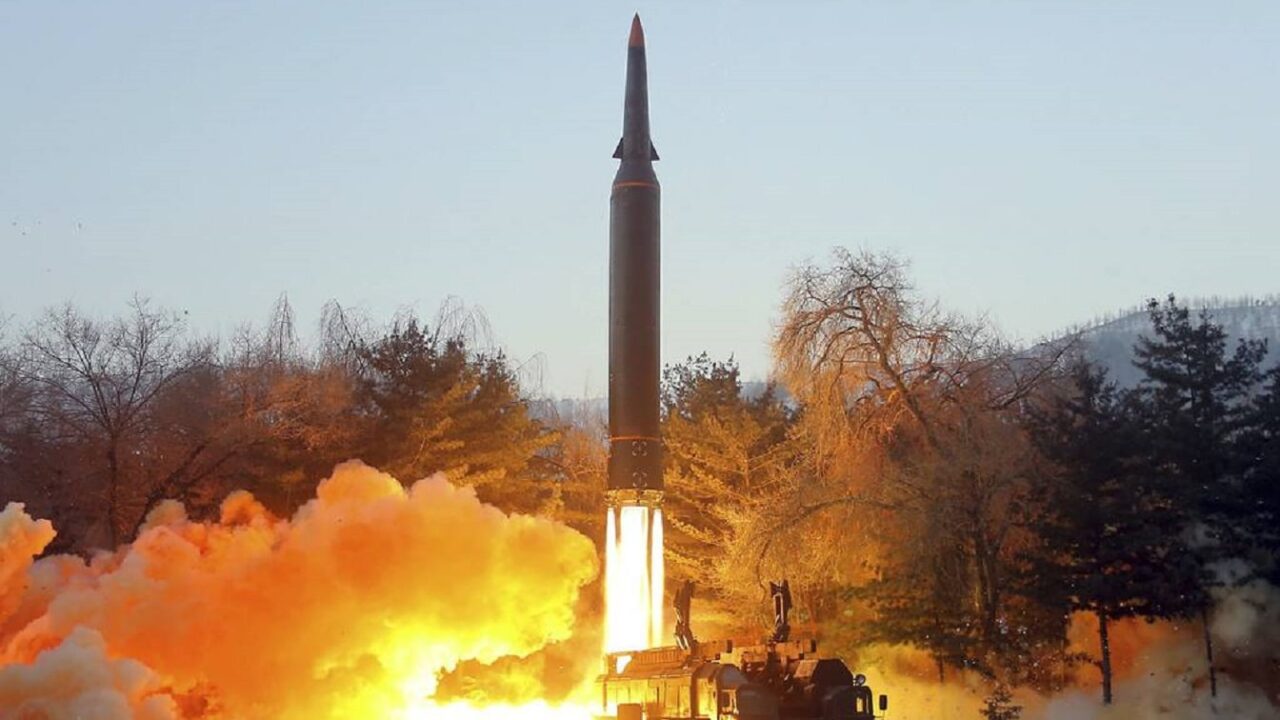
Moscow has long tried to present North Korean assistance as auxiliary: first ammunition, then missiles, then calculations, and then separate units for Russian territory. But the presence of drone operators changes the very nature of the deal. A drone operator in the 2026 war is not a second-echelon infantryman. He is a carrier of tactical competence: skills in reconnaissance, fire adjustment, target engagement in conjunction with electronic warfare, relays, digital mapping, and resilient logistics of batteries, antennas, and terminals. In other words, Pyongyang is gaining not just combat experience, but access to the most rapidly evolving military craft of our time.
In this sense, the Ukrainian war for the Korean People's Army is becoming what Spain and later the Middle East were for the Soviet Army: a testing ground for accelerated training through foreign blood. I am not inclined to trust all assessments from Ukrainian intelligence unconditionally; in wartime, any side is interested in exaggerating or dramatizing the opponent's involvement. But even if the number of operators is lower than stated, the principle itself has already been confirmed by several sources and is supported by the overall logic of Russian-North Korean exchange (ISW, August 21, 2026; Google News aggregation, August 21-24, 2026).
Why This is Beneficial for the Kremlin Right Now
For Russia, this scheme is valuable not only due to a shortage of personnel. It allows for the offloading of its own units where the personnel crisis has already become chronic. North Koreans can be kept in the Kursk region, on guard duty, in engineering work, in auxiliary roles, in logistics, while released Russian units can be redeployed to where more prepared assault and specialized personnel are needed. This is a typical Russian solution to an institutional problem: not fixing the staffing system, but temporarily filling it with external resources.
But even more important is another aspect. Moscow is essentially exporting part of its frontline know-how to an ally that is not a formal member of the CSTO and is therefore not bound by any common standards or limitations. If North Korean units are indeed working alongside Russian drone structures, including advanced drone technology centers, then Pyongyang gains access to what is normally learned over years: how the drone framework integrates with artillery, how launch positions are concealed, how to compensate for communication channel losses, and how a cheap FPV drone can become a means of operational attrition against the enemy.
The Cost of This Deal for North Korea Itself
In Pyongyang, they likely understand the risk. There will be losses. Some of the deployed contingent will not return. But for Kim Jong-un's regime, the benefits outweigh the risks. It gains currency, oil, food, technological services, and, most importantly, accelerated military training in a high-intensity war. The North Korean army has lived for decades in a mode of parades, exercises, and mobilization mythology. Ukraine gives it the opportunity to test how its officers and sergeants can operate in an environment of total surveillance, drone hunting, and continuous fire adjustment. For a regime obsessed with survival, this is a gift of rare value.
That is why Reuters' report that Seoul does not yet see signs of immediate transfer should not lull us into complacency. South Korean caution reflects only the absence of movement at the moment, not a lack of intention. Preparations continue, which means the infrastructure for the solution already exists. In military matters, this is more important than public denials. We have already seen how initially the supply of shells was denied, then missile supplies were minimized, and later it turned out that the volume of cooperation was significantly higher than initially acknowledged.
Strategic Significance for the 2026 War
If in September Moscow indeed requests an even larger contingent from Pyongyang, up to tens of thousands of people, it will mean three unpleasant things for the Kremlin at once. First, its own system for replenishing losses remains insufficient even after increasing payments, pressuring regions, and administrative coercion. Second, Russia considers the war long enough for investments in training foreign contingents to pay off. Third, the Kremlin is already thinking of the war not just as a campaign against Ukraine, but as a space for redistributing military services within the anti-Western coalition.
From a military standpoint, this resembles the late Soviet habit of compensating for structural weakness by quantitatively expanding the perimeter. But there is a significant difference. The USSR trained allies to strengthen the bloc. Russia in 2026 is effectively training an ally because it itself lacks personnel, time, and resilience. This is no longer the position of a hegemon. This is the position of a state that is forced to monetize its own front, turning it into a school for external clients.
My conclusion is simple. North Korean participation in the Russian war has ceased to be an exotic addition to Moscow's artillery crisis. It is becoming a separate contour of military modernization for Pyongyang and a separate crutch for the exhausted Russian army. Such an exchange can provide both sides with short-term benefits, but it also creates a new problem for all of East Asia: after Ukraine, the DPRK will return not only with money but also with officers who will have a better understanding of drone warfare, reconnaissance, and digital fire. And such knowledge does not disappear in a month or a year.
North Korea is preparing to send 8500 personnel, including 400 drone operators, to Russia in August 2026. This military exchange signifies a strategic partnership, allowing North Korea to gain modern warfare skills while providing Russia with needed manpower. The presence of drone operators indicates a shift in the nature of military cooperation, moving beyond mere supply of artillery to a more integrated military training and operational collaboration.
- North Korea is sending 8500 personnel to Russia, including 400 drone operators.
- This exchange allows North Korea to gain military experience and access to modern warfare techniques.
- Russia is using North Korean personnel to alleviate its manpower shortages.
- The cooperation indicates a deepening military relationship between North Korea and Russia.