
Australia's Land 6504 Air Defense Gamble Starts a 2026 Race Against Missiles
 Marcus Chen
Australia's Land 6504 Air Defense Gamble Starts a 2026 Race Against Missiles
Australia has one regiment's worth of NASAMS short-range air defense for a continent-sized country. On October 13, Canberra opened Project Land 6504, a formal competition for a medium-range ground-based air and missile defense system. The requirement is not a cosmetic upgrade. It is an admission that Australia's current shield is too thin to protect air bases, ports, fuel farms, and the command network that makes the Australian Defence Force useful in a Pacific war.
The Requirement Is Bigger Than a Launcher
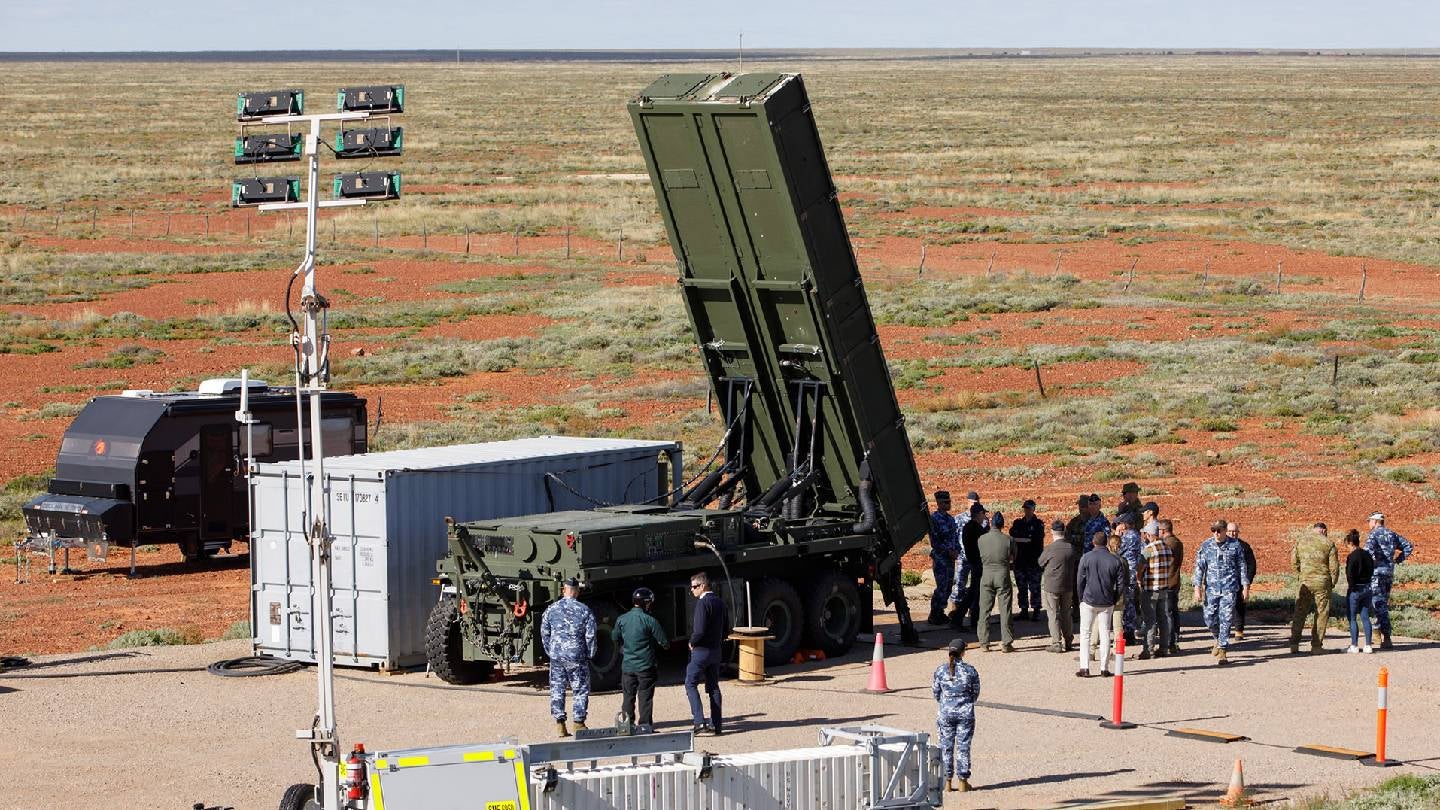
AusTender describes Land 6504 as a multi-stage procurement for medium-range ground-based air and missile defense. Defense News reports that the system must defeat terminal-phase ballistic missiles as well as subsonic air-breathing threats. That combination matters. Canberra is not merely shopping for a larger point-defense battery; it wants a layer that can complicate attacks by cruise missiles, aircraft, and ballistic weapons across a dispersed national network.
The schedule is aggressive. The vendor is expected to be selected by the end of 2027, live firing is planned for Exercise Talisman Sabre in mid-2029, and initial operational capability is targeted for the early 2030s. In acquisition terms, that is fast. In missile-defense terms, it is barely enough time to choose a radar architecture, train crews, establish stocks, and discover the integration problems that only appear when a real interceptor is fired.
Canberra Is Buying an Architecture
Australia's 2026 National Defence Strategy and Integrated Investment Program place the project inside a broader effort to build a more self-reliant force. The government says the IIP will invest around A$425 billion over the decade, including air defense, long-range strike, cyber, space, and a larger Navy. The number sounds large until it is divided among all of those priorities and then confronted with the cost of AUKUS nuclear-powered submarines.
Land 6504 is therefore an integration problem before it becomes a missile problem. The solicitation is expected to connect the new system with radars from CEA Technologies and the Joint Air Battle Management System being developed by Lockheed Martin Australia. A launcher that cannot receive, identify, and distribute tracks across that network is an expensive target, not an air-defense capability.
Potential solutions illustrate the trade-offs. South Korea's L-SAM is designed for the ballistic-missile mission but would bring a new supplier, training pipeline, and support ecosystem. NASAMS with AMRAAM-ER would offer a more familiar architecture and a path from Australia's existing short-range fleet, but Canberra would still need to prove that the extended-range system provides the coverage and terminal defense the requirement demands. Lockheed Martin Australia's recent demonstration of an SM-2 fired from a trailer launcher showed another route: combine an Aegis-derived combat system, CEA radar, and a mobile launcher. That may ease integration, but it would not make the missile inventory problem disappear.
The Magazine Problem Is the Strategic Problem
Defense News notes that the United States is simultaneously struggling with depleted missile magazines after heavy expenditure in its conflict with Iran. A Congressional Research Service warning cited in the report is blunt: finite U.S. industrial capacity forces trade-offs between replenishing American stocks and filling foreign military orders. Australia can buy an American system and still wait years for the interceptors.
That is the part of the debate often missed by capability charts. A battery with six launchers is not six times more useful than one launcher if the force has only a few days of missiles. Air defense is a sustained logistics mission. It requires reloads, spare radar components, mobile generators, secure communications, decoys, repair teams, and enough interceptors to survive the opening salvo and remain relevant afterward.
Australia's geography makes the arithmetic harsher. The country can disperse aircraft and headquarters across a large landmass, but every additional operating location creates another demand for sensors, reloads, and defended logistics. A medium-range system designed only to defend one base will leave the next base exposed. A small number of batteries spread everywhere will defend nothing adequately.
What This Means for the Indo-Pacific
China's naval task group circumnavigation of Australia in 2025 and its July 2026 intercontinental ballistic missile test into the South Pacific sharpened the political case for the procurement. But Land 6504 is not an answer to China's missile force. It is a down payment on keeping Australian forces alive long enough to contribute to a coalition.
That distinction matters for Washington and London. AUKUS has been discussed mainly as a submarine and industrial-base project. Australia now needs a credible air-defense layer before its submarines arrive, not after. If Canberra has to choose between buying interceptors, building local sustainment, funding long-range strike, and paying the AUKUS bill, the competition will expose which promises are funded priorities and which are slogans.
The likely winner will not be the system with the best brochure range. It will be the one Australia can field, reload, network, and maintain by 2029. The tender is a necessary move, but the deadline is unforgiving. Canberra has finally recognized the gap; it has not yet demonstrated that its industrial base, budget, or magazine depth can close it.
The missile threat is moving at combat speed. Australia's procurement calendar is moving at government speed. That is the gap Land 6504 must close.
Sources
- Australian Government AusTender, LAND 6504 MRGBAD notice, published October 13, 2026
- Australian Department of Defence, 2026 National Defence Strategy and Integrated Investment Program
- Defense News, Australia gets the ball rolling on medium-range air defense, October 19, 2026
- Janes, Australia prepares medium-range air-defense competition under Land 6504
Australia initiated Project Land 6504 on October 13, 2026, to procure a medium-range ground-based air and missile defense system. This project aims to address the inadequacies of current air defense capabilities against missile threats. The vendor selection is expected by late 2027, with initial operational capability targeted for the early 2030s, amidst a broader strategy for a self-reliant defense force.
- Australia's Land 6504 project aims to enhance air defense capabilities by 2026.
- The project is a response to the inadequacy of current defense systems against missile threats.
- The procurement process is aggressive, with vendor selection expected by the end of 2027.
- Australia's defense strategy emphasizes self-reliance and integration of new systems with existing technologies.
- The competition will reveal which defense priorities are funded amidst budget constraints.