
British Typhoon Fighters Protect Saudi Arabia in 2026 and Reveal the Limits of Gulf Air Independence
 Ahmed Al-Rashid
British Typhoon Fighters Protect Saudi Arabia in 2026 and Reveal the Limits of Gulf Air Independence
On October 20, 2026, Britain announced its readiness to carry out air missions using RAF Typhoon fighters to defend Saudi cities and infrastructure against Houthi attacks. This news is not just about adding aircraft to a crowded sky of fighters; it is a practical acknowledgment that Riyadh, despite its massive spending on aircraft, missiles, and radars, still needs an external partner to maintain a continuous air defense rhythm.
What Has Changed in Saudi Skies
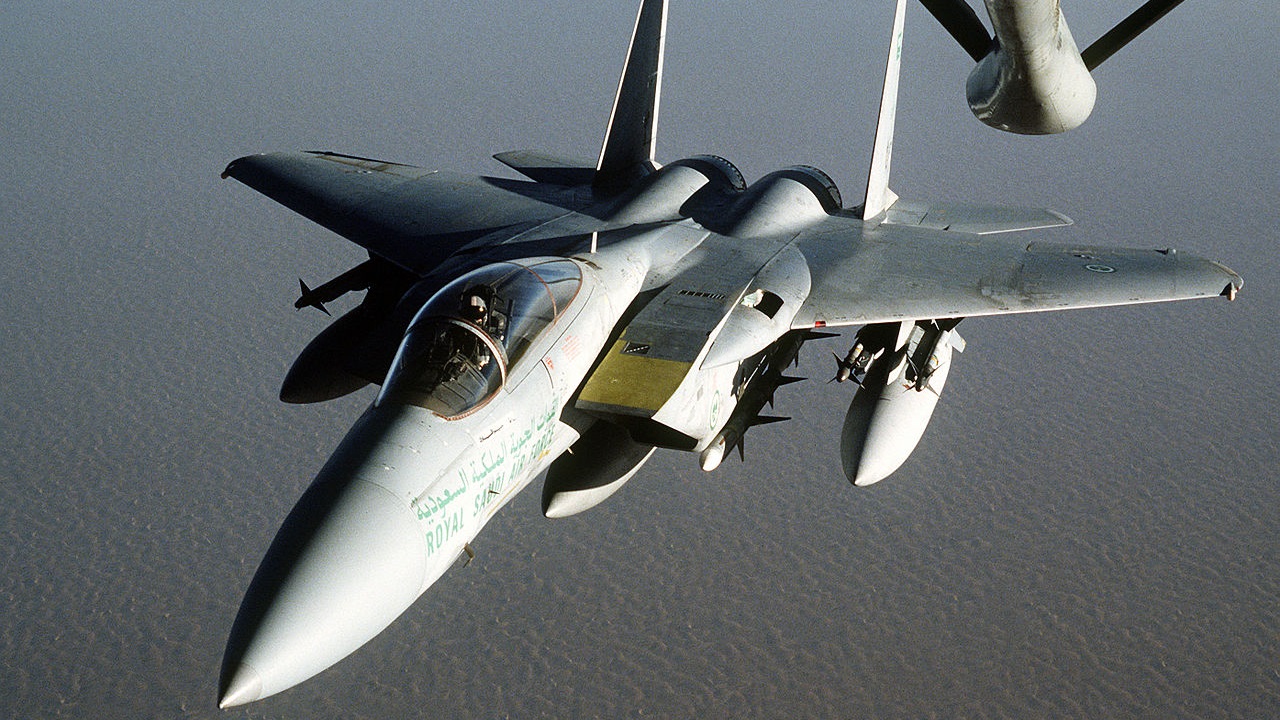
According to The National newspaper, British Typhoon fighters will help protect Saudi cities and facilities from aerial attacks, at a time when Riyadh announced the interception of a ballistic missile launched by the Houthis towards the capital. The same source reported attacks targeting airports and energy infrastructure, and a Saudi request for more British military assistance. London also sent a Voyager aircraft for aerial refueling, which is an important logistical step because the value of the fighter is not just in the number of aircraft but in its ability to stay airborne, receive fuel, and exchange data with the local defense network.
This does not mean that the Typhoon will replace the Patriot or THAAD, nor that the European aircraft can alone secure Saudi airspace. Its more realistic role is to provide air patrols, intercept some targets, and free up Saudi aircraft for other missions. Ballistic missiles and low-flying drones require different layers of detection and interception, and a command and control system that operates without delay.
The Real Test is the Command Network, Not the Fighter's Name
Any military personnel who have served in the region know that purchasing the platform is the easiest part of the equation. True capability consists of three sides: equipment, training, and organization. Saudi Arabia has advanced equipment and professional pilots, but it faces sustainability issues and the distribution of responsibility among the air force, air defense, and American and British bases in the long war.
The Typhoon fighter is fast and multi-role, but it is not a complete air defense system. To succeed in protecting Riyadh or oil facilities, it must receive a unified aerial picture from radars, satellites, and early warning centers, and the rules of engagement must be clear, with British and Saudi pilots operating under a single communication protocol. If the decision passes through bureaucratic layers or multiple allied channels, a cheap Houthi missile could impose costly and continuous flight operations on the defenders.
This is the paradox that defense industry statements overlook. An advanced aircraft does not compensate for maintenance shortages, does not address weak joint training, and does not grant the state independence if software, spare parts, and updates remain abroad. In my view, the British Typhoon mission will immediately raise readiness, but it will simultaneously reveal how much Saudi air security depends on Western powers.
The UAE's Return to Yemen Addresses One Problem and Creates Another
In the background, the battle is not just about intercepting missiles. The Guardian reported that the UAE has agreed to resume funding southern forces, particularly the Giants Brigades, in exchange for Saudi Arabia providing air cover for anti-Houthi forces. Abu Dhabi had halted its operations inside Yemen in January and cut off funding, while the Giants Brigades remained one of the most effective formations within the anti-Houthi camp.
This arrangement brings back what could be called the old Gulf division of labor: the UAE funds and trains a local force, while Saudi Arabia secures air support and political depth. However, it does not build a unified Yemeni army. The Giants Brigades are tied to southern calculations, and the Southern Transitional Council has not abandoned its demand for separation, while Riyadh wants to prevent the Houthis from seizing more territory. Combining these objectives with air power may achieve quick gains, but it does not eliminate the contradiction between Yemen's unity and a separate southern project.
Moreover, the call for British air support does not eliminate this political imbalance. The aircraft can strike a target or protect a facility, but it cannot determine who holds the decision after the strike is completed. With over 200,000 displaced persons recorded since August, according to The Guardian's report from the United Nations, the expansion of the air campaign will carry humanitarian and legal costs, even if Riyadh asserts that it is acting in self-defense.
What Does This Mean for the Gulf
London's announcement sends a deterrent message to the Houthis and Iran, but it also sends a message to Gulf capitals. Relying on alliances is not a flaw in itself; no Gulf state is capable of managing a long air war against missiles, drones, and smuggling networks alone. The flaw lies in purchasing independence on paper while the combat system remains tied to an external operator.
What is needed after the crisis is not a new contract to purchase additional fighters, but a rigorous institutional test: Can Saudi Arabia operate its air defense for months without foreign crews? Can the Typhoon integrate with the F-15, Patriot, and THAAD in a single operations room? And can Riyadh and Abu Dhabi turn the Yemeni agreement into a unified political command rather than a temporary deal to fund a militia?
The current answer is uncomfortable. Britain can fill an immediate gap, the UAE can reactivate a local force, and Saudi Arabia can pay for both. But these three solutions do not create military independence; they manage dependence in a more elegant way. As those in the field say, having many swords does not mean that the hand knows how to use them.
Sources
British Typhoon fighters are set to conduct air missions to defend Saudi Arabia against Houthi attacks starting October 20, 2026. This deployment underscores Saudi Arabia's ongoing reliance on external military support despite significant investments in its own defense capabilities. The UK also provided a Voyager aircraft for aerial refueling, enhancing operational sustainability. Additionally, the UAE is resuming financial support for southern Yemeni forces, indicating a complex regional military dynamic.
- UK to deploy RAF Typhoon fighters to protect Saudi Arabia from Houthi attacks.
- Saudi Arabia intercepted a ballistic missile launched by Houthis.
- UK sent a Voyager aircraft for aerial refueling support.
- Saudi Arabia's reliance on external partners for air defense is highlighted.
- The UAE is resuming funding for southern Yemeni forces against Houthis.