
BAE taps Leonardo DRS for next-gen THAAD seeker sensor
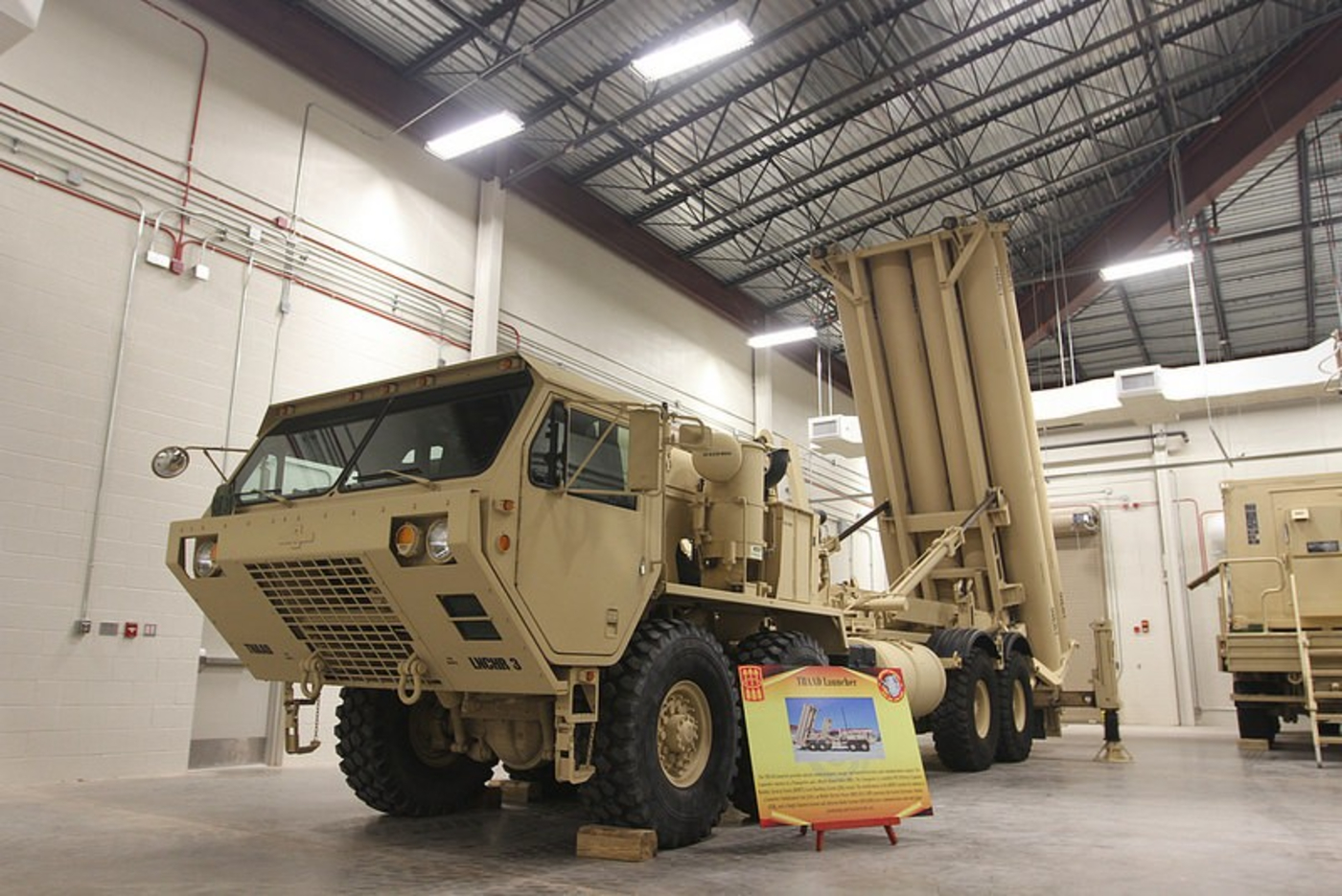
Leonardo DRS will develop a next-generation infrared sensor for the THAAD missile defense interceptor under a contract from BAE Systems, the company said in a release on Thursday.
The part is a “next-generation infrared focal plane array,” the heat-sensing chip at the core of the interceptor’s seeker, which guides the missile to its target. Leonardo DRS didn’t disclose the value of the contract, how long the development work will take, or when the new sensor would go into production.
Work is already underway at the company’s “200,000-square-foot foundry in Dallas,” per the release. Leonardo DRS said it is also adding capacity there to meet the program’s goal of raising seeker production to “about four times historical levels.”
“THAAD is an important strategic program for our company, and we are proud to support this vital missile defense mission,” said Jerry Hathaway, senior vice president and general manager of DRS Electro-Optical and Infrared Systems.
Hathaway said the company has been winning more seeker work for munitions, using “both cooled and uncooled solutions at the detector, sensor and subsystem levels.” He added that Leonardo DRS can pair high-end performance with “scalable, cost-effective production.”
The new sensor is meant to improve the interceptor’s ability to deal with “evolving and increasingly complex threats,” the company said. It didn’t say how the next-generation array differs from the one flying today.
THAAD, short for Terminal High Altitude Area Defense, is operated by the U.S. Army and shoots down ballistic missiles in the final phase of flight. BAE Systems builds the infrared seeker, and it delivered its 1,000th to prime contractor Lockheed Martin last year.
The fourfold target matches the wider push to build more interceptors. In June, the Missile Defense Agency gave Lockheed Martin a $35 billion, seven-year contract to quadruple THAAD production. That takes annual output from about 96 interceptors to 400, under a framework signed in January.
BAE agreed in July to quadruple its THAAD seeker output under its own seven-year deal.
Content preview only. Full article available at source. View Full Article
Leonardo DRS is developing a next-generation infrared sensor for the THAAD missile defense interceptor in Dallas. This initiative aims to enhance the interceptor's capabilities against evolving threats and increase production capacity to four times historical levels. BAE Systems, which builds the infrared seeker, has already delivered its 1,000th unit to Lockheed Martin, supporting a broader push to expand THAAD production under a recent $35 billion contract from the Missile Defense Agency.
- Leonardo DRS is developing a next-generation infrared sensor for THAAD under a contract from BAE Systems.
- The new sensor aims to improve the interceptor's ability against complex threats.
- Production capacity for THAAD seekers is set to increase to four times historical levels.
- BAE Systems delivered its 1,000th infrared seeker to Lockheed Martin last year.
- The Missile Defense Agency awarded Lockheed Martin a $35 billion contract to quadruple THAAD production.