
NATO, Patriot and Ukraine 2026 — Why Europe's Security Guarantees Remain Institutionally Empty
 Dr. Klaus Weber
NATO, Patriot, and Ukraine 2026 — Why Europe's Security Guarantees Remain Institutionally Empty
Emmanuel Macron called on allies on November 19, 2026, to reopen the question of Ukraine's NATO membership. At the same time, the Wall Street Journal and several European media reported that Washington had mentioned Ukraine's NATO membership at least as an option in recent discussions. On the same day, Moscow rejected any agreement that would allow Kyiv to join. This sounds like a diplomatic breakthrough. Institutionally, it is initially just a new formula for an old problem.
The crucial question is not whether Europe politically supports Ukraine. It does. The question is what military commitment lies behind the term security guarantee. As long as there is no precise answer to that, the NATO discourse remains an instrument of political communication and not a defense plan.
Membership is No Substitute for Capabilities
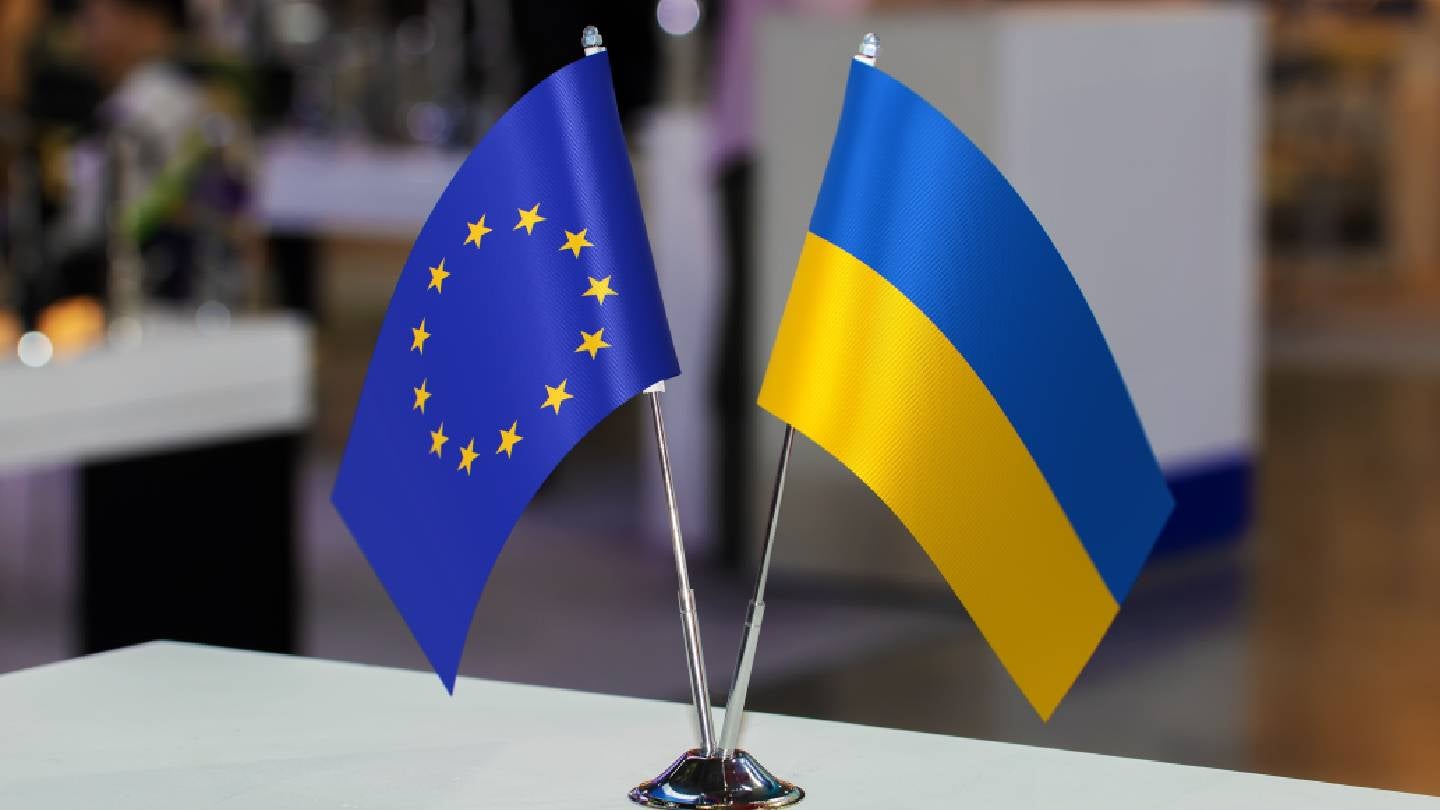
Article 5 of the NATO treaty is a political commitment to mutual assistance, but it is not an automatically deployable military operation plan. Its credibility relies on capabilities, readiness, and pre-established command structures. This is precisely where Europe falls short. The European NATO states can promise additional troops, but they still do not possess sufficient strategic reconnaissance, integrated air defense, precision munitions, airlift capabilities, and robust command networks.
The Patriot system illustrates the contradiction. Europe can finance or organize Patriot interceptors for Ukraine through American procurement mechanisms. However, it cannot quickly create a European production and spare parts chain that meets the needs of a protracted war. A promise of assistance without such capabilities would be politically impressive but militarily a calculation without a delivery date.
Recent statements from Washington exacerbate this ambivalence. When a possible NATO membership emerges as a negotiating element while Russia categorically rejects it, a dangerous interim status arises. Kyiv gains hope, Moscow a pretext for escalation rhetoric, and European governments must explain whether they would actually fight in a crisis. Diplomatic openness is not yet a deterrent.
Europe's Unity Ends at Burden Sharing
According to Deutsche Welle, European heads of state and government presented a united front on November 19 in their efforts for peace for Ukraine. This is politically necessary. However, unity over a goal does not replace unity over means and risk. France speaks of strategic autonomy and later European responsibility. Germany talks about support but simultaneously points to national budgetary and parliamentary reservations. Poland and the Baltic states demand maximum deterrence, while southern and western European governments want to avoid direct conflict with Russia.
This difference is not trivial. A credible security mechanism would need to clarify at least five points:
- Which states provide land forces, air defense, and maritime forces?
- Who leads the mission, and which headquarters has operational authority?
- What munitions, spare parts, and transport capacities are available over several years?
- What response occurs to a Russian attack below the threshold of open war?
- How is the financing secured legally and parliamentary?
So far, there is no reliable European plan for this. The discussion about NATO membership skips these uncomfortable questions. It shifts the debate from capability to declaration of intent. As a former observer of German defense planning, I consider this the typical mistake of Europe: We negotiate about the architecture of the roof while the load-bearing walls are not yet standing.
The German Touchstone
For Berlin, the debate is particularly uncomfortable. Germany could politically agree to a Ukrainian NATO perspective while simultaneously being militarily unable to meet the derived expectations. That would not be responsible leadership but strategic borrowing. The Bundeswehr still needs time, personnel, munitions, and functioning procurement processes. More money helps, but money alone does not produce trained crews or operational Patriot batteries.
The alternative would be a tiered European model: long-term security guarantees for Ukraine, linked to concrete commitments for stationing, training, and production. This could initially be organized outside the NATO treaty framework but would need to be binding enough that an attack triggers measurable consequences. Such a solution would be less symbolic than the immediate membership rhetoric but strategically more honest.
A Promise Needs a Supply Chain
Macron's initiative and the signals from Washington have opened an important political space. However, they should not be confused with a ready-made solution. Russia can reject a Ukrainian NATO membership; it has no veto power over the European security order. But Europe must also not pretend that a political promise automatically translates into military power.
The real decision, therefore, is not NATO or non-NATO. It is whether Europe is ready to turn the guarantee into a capability. This means more than summit declarations: joint commands, sufficient Patriot stocks, industrial production contracts, and a pre-agreed response logic. More rhetoric may temporarily reassure Ukraine. However, without munitions, leadership, and political willingness to take risks, it remains a security guarantee on credit — and credits have not built any defense.
Sources
- Reuters, November 20, 2026, Russia pushes back against US idea of NATO-like security guarantees for Ukraine.
- France 24, November 19, 2026, Macron urges Ukraine's allies to reopen the question of NATO membership.
- Deutsche Welle, November 19, 2026, European leaders present united front in push for peace in Ukraine.
- Wall Street Journal, November 20, 2026, U.S. Has Floated NATO Membership for Ukraine in Recent Meetings.
Emmanuel Macron urged NATO allies to reconsider Ukraine's membership on November 19, 2026, amid discussions of military support. Washington has indicated NATO membership for Ukraine as a potential option, while Moscow firmly rejected this notion. European NATO states face challenges in providing adequate military capabilities, raising concerns about the effectiveness of security guarantees. A comprehensive European security plan remains absent, complicating the situation further.
- Emmanuel Macron urged allies to reconsider Ukraine's NATO membership on November 19, 2026.
- Washington mentioned NATO membership for Ukraine as an option in recent talks.
- Moscow rejected any agreements allowing Ukraine's NATO membership.
- European NATO states lack sufficient military capabilities despite promises of support.
- A credible security mechanism for Europe remains unestablished.