
Ballistic Missiles Over Kyiv After Abu Dhabi Change the Negotiation Price in 2026
 Dmitri Volkov
Ballistic Missiles Over Kyiv After Abu Dhabi Change the Negotiation Price in 2026
Several hours after the end of the second day of trilateral negotiations in Abu Dhabi proved to be more informative than many diplomatic formulas. On the evening of November 12, as of 21:00 UTC, reports of the meeting's conclusion without a substantive breakthrough were almost immediately replaced by reports of a Russian combined attack on Kyiv and the region using ballistic missiles and drones. This does not prove that the strike was planned specifically as a reaction to a particular remark at the table. But it shows something else. The Russian command sees no need to separate the negotiation calendar from combat: diplomacy and firepower are used as two synchronized tools.
Chronology of Pressure Instead of a Diplomatic Pause
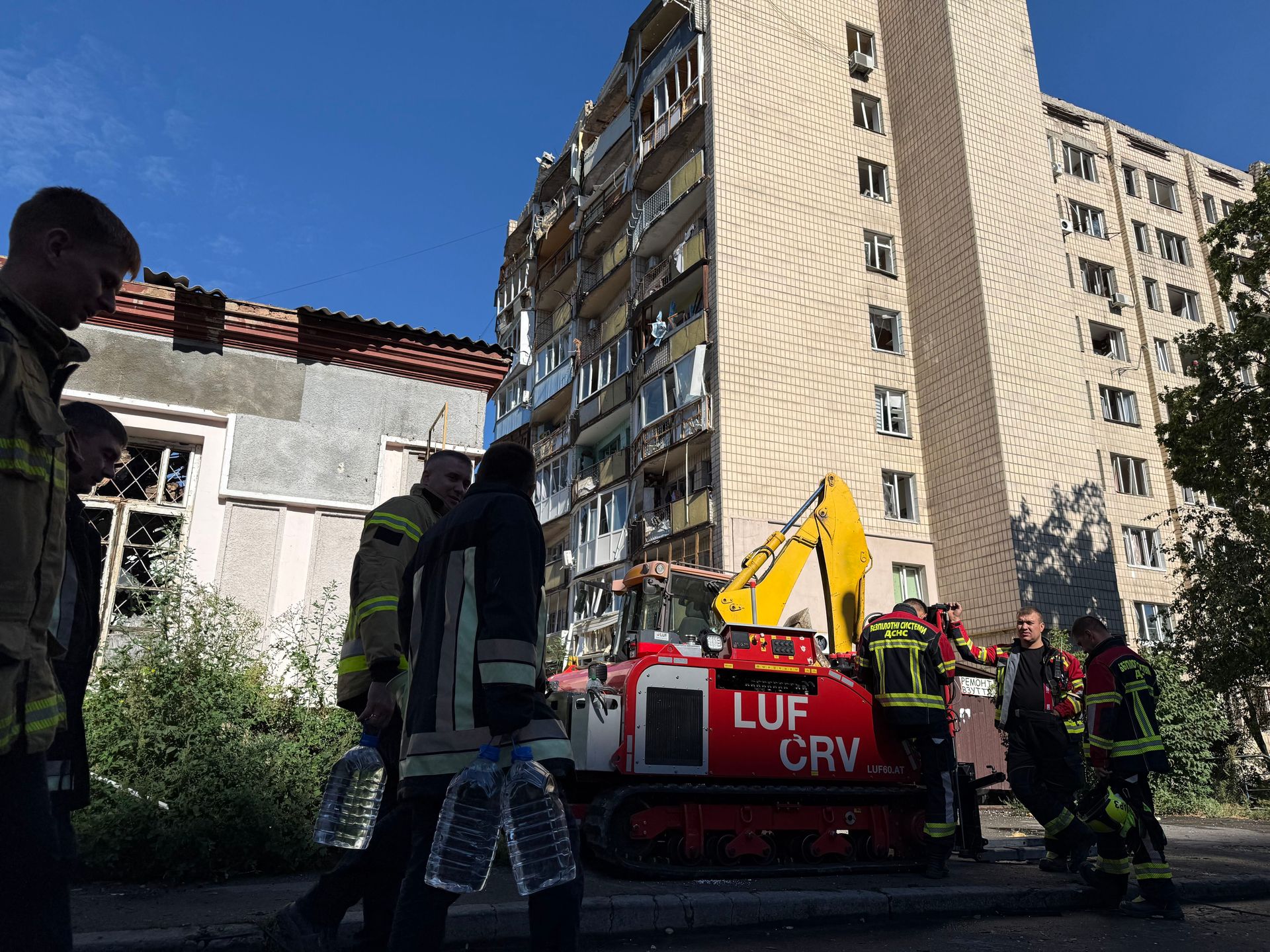
The temporal sequence is more important than loud words. Before the first day of the meeting on November 9-10, Russia launched 317 UAVs, including 105 jet-powered ones — an attempt to accumulate negotiation weight through strikes on the Ukrainian rear. The second day ended without a breakthrough; hours later, a mixed missile-drone raid followed on the capital. Kyiv Mayor Vitali Klitschko reported one dead and eight injured as a result of the night and daytime attacks. In the Solomianskyi district, a drone hit a nine-story residential building, causing a fire on the floors from the third to the sixth. During the day, another UAV fell onto the roadway in the Shevchenkivskyi district, igniting a car and damaging a bus; the regional military administration reported a burn injury to the upper limb of a 32-year-old man. The National Police classified the episodes as yet another documentable war crime. In the Odesa region, according to Governor Oleg Kiper, a massive UAV attack was carried out around noon, and debris was later discovered.
This resembles a bargaining of force, but it is not limited to that. Planning ballistic launches, preparing drone routes, reconnaissance of targets, and distributing munitions require days, not hours. Therefore, a more accurate assessment is as follows: we are facing a pre-prepared winter campaign, in which negotiation dates are integrated as convenient moments for demonstration. The diplomatic track does not cancel strikes but increases their political yield. The Kremlin demonstrates that the absence of an agreement immediately has a price for the civilian rear of Ukraine.
Why the Ballistic Component Changes Kyiv's Calculations
Drones can be detected, tracked, and sometimes destroyed with relatively inexpensive means. A ballistic missile reduces the warning time to minutes and presents the Ukrainian air defense with a different combat economy. Its interception requires a limited fleet of Patriots or comparable SAMP/T systems and especially scarce anti-missiles. For conventional layered air defense, such a target is practically inaccessible; even for Patriots, success depends on geometry, reaction time, and the availability of munitions. The mixed wave creates a familiar task of saturation for the Soviet school: slow UAVs force the distribution of radars, mobile fire groups, and control channels, while ballistic missiles require maintaining the most expensive reserve for a few seconds of real threat.
From this follows an unpleasant conclusion. The problem is not only in the number of launchers but also in the expenditure of interceptors. If Russia is capable of repeating such combinations in winter, then Kyiv is forced to choose between protecting the population, energy, and control nodes. Claims about the percentage of intercepted targets should remain a Ukrainian operational assessment, not turn into an independent balance of munitions expenditure. According to the General Staff of Ukraine, over the previous day, Russia lost 2,150 servicemen; this is also a Ukrainian unilateral assessment, not confirmed by independent verification.
Omsk Moves the Energy War into the Russian Depth
The Ukrainian strike on Gazprom's Omsk refinery has a different but related meaning. The facility in Siberia processes over 21 million tons of oil per year. Depending on the launch point, the distance to Ukrainian territory is approximately 2,200–2,700 km. This is no longer a border facility that can be targeted with short-range means and expect a quick effect. A strike on Omsk means that the Ukrainian campaign against processing aims to move from peripheral refineries to large deep capacities servicing a broad domestic market and export logistics.
The military significance is determined not by the spectacular image of a fire but by which specific node is affected. Damage to a tank or external infrastructure can be repaired relatively quickly. Hitting a primary processing unit, hydrocracking, catalytic cracking, or power supply can reduce output for weeks and months. The Russian system can mobilize repair brigades, but sanctions complicate the replacement of specialized turbines, automation, catalysts, and compressor equipment. Naming a repair timeline now would be speculation without information about the damaged unit. A correct forecast ranges from several weeks for localized damage to months for damage to a technological unit. The very fact of achieving a target at such a distance forces Russia to expand air defense far beyond the front, thus diluting the resources necessary for covering military facilities.
Putin's Humanitarian Formula as a Tool for Fixing the Front
Against this backdrop, Vladimir Putin's statement about an allegedly controlled settlement by Russia and the proposal to cease fire there for the evacuation of civilians should be read with extreme caution. Kyiv Independent reported his words on November 12, but the very control over the settlement requires independent confirmation. The ceasefire formula has three functions. The first is a humanitarian shell, convenient for the external audience. The second is an attempt to solidify the presumed Russian result on the map and turn a temporary ceasefire into a de facto recognition of the line of control. The third is the transfer of responsibility: the demand for Ukraine to take symmetrical steps, including demining, creates a ready-made explanation for why the evacuation did not take place. Any refusal or delay can then be presented as Ukrainian guilt, even if the safety of the corridor is not guaranteed.
London's Sanctions and the Dispute Over the European Seat
On the same day, the United Kingdom announced a large new package of sanctions against the Russian energy and shipping sectors. Prime Minister Andy Burnham stated that pressure must continue for a complete and immediate ceasefire. This is a practical lever but not an automatic negotiation mandate. The dispute over who represents Europe on security issues shows the limits of European diplomatic mechanics. Kaja Kallas stated that she and António Costa are the representatives of Europe; Emmanuel Macron and Friedrich Merz did not publicly support this combination. For Moscow, such ambiguity is beneficial: the more competing European channels there are, the harder it is to understand who can promise sanctions, guarantees, or subsequent execution of agreements.
British restrictions can increase the price of Russian energy trade and freight. But they do not replace the format of negotiations. As long as Europe has not agreed on who speaks on its behalf and what commitments it has, its influence will manifest mainly through national sanctions and military assistance, rather than through a unified table.
Shenzhen Remains a Statement from the Kremlin
Russian presidential aide Yuri Ushakov announced plans to meet with Donald Trump at the APEC summit in Shenzhen and continue discussions on settlement. This is a unilateral Kremlin message, not a confirmed agreement between the parties. Nevertheless, it explains the rush to demonstrate strength. If Moscow is counting on a separate channel with Washington, it is advantageous to approach it with a thesis of military tempo, territorial advantage, and the ability to withstand sanctions.
The main mistake is to interpret a strike after negotiations as a diplomatic breakdown. Rather, it is a diplomatic method, reinforced by rockets.
In the coming weeks, Russia is likely to continue combining long-range strikes with proposals for local humanitarian pauses and statements of readiness for dialogue. This will not be a sign of a ready compromise but an attempt to simultaneously exhaust Ukraine's air defense, protect its own processing, and form a starting position for possible contacts with the USA. A breakthrough is only possible if Ukraine manages to maintain a stock of anti-missiles, and its strikes on deep energy infrastructure systematically reduce Russia's ability to wage war. Without these two conditions, the diplomatic calendar will remain for the Kremlin not a brake but a schedule for the next wave.
Sources and Data Status
- Kyiv Independent, November 12, 2026 — conclusion of the second day of negotiations, Putin's statements.
- Vitali Klitschko, Kyiv City Administration and National Police of Ukraine, November 12 — consequences of the attacks in Kyiv.
- Oleg Kiper, Odesa Regional Military Administration, November 12 — massive UAV attack.
- General Staff of the Armed Forces of Ukraine — reported Russian losses and information about the strike on the Omsk refinery; data from the warring side.
- Government of the United Kingdom, November 12 — sanctions against the Russian energy and shipping sectors.
- Yuri Ushakov — statement about a possible meeting in Shenzhen; not confirmed by the American side.
On November 12, 2026, Russian forces conducted a combined attack on Kyiv using ballistic missiles and drones, resulting in one death and eight injuries. This attack followed the conclusion of three-party negotiations in Abu Dhabi, indicating a synchronization of military actions with diplomatic efforts. Additionally, a mass drone attack was reported in Odessa Oblast, contributing to the ongoing military pressure on Ukraine.
- Russian forces launched a combined attack on Kyiv using ballistic missiles and drones.
- The attack resulted in one death and eight injuries in Kyiv.
- 317 drones were launched prior to the negotiations in Abu Dhabi.
- The Ukrainian General Staff reported 2150 Russian personnel losses in one day.
- A mass drone attack occurred in Odessa Oblast.