
In 2026, Xi Jinping Reiterates Unification: The Eastern Theater Command of the People's Liberation Army Must Focus on Two Lines: Caliber and Combat Readiness
 Li Minghui
In 2026, Xi Jinping Reiterates Unification: The Eastern Theater Command Must Focus on Two Lines: Caliber and Combat Readiness
On November 12, Xi Jinping spoke about Taiwan at the commemoration of the 160th anniversary of Sun Yat-sen's birth held at the Great Hall of the People in Beijing. Reading this statement as a single combat readiness signal easily conflates the propaganda narrative with combat preparedness. The overall message is quite clear: unification is positioned within the historical mission of the Communist Party of China and the narrative of national rejuvenation, while reiterating "peaceful unification, one country, two systems," the prerequisites for dialogue, and opposition to "Taiwan independence." This is a high-level political declaration aimed at the political audience on the mainland, cross-strait society, and external observers, not a combat order from the Eastern Theater Command.
Three Layers of Signals Should Not Be Confused
The first layer is a political declaration. "The complete unification of the motherland must be achieved, and it certainly can be achieved," along with "the historical trend is unstoppable," are definitive statements that serve to compress the interpretative space both internally in Beijing and externally; they do not provide a timeline, campaign objectives, or troop assignments. The second layer consists of legal and policy tools. The "Anti-Secession Law," the one-China principle, and "one country, two systems" still constitute Beijing's policy framework. The response from Taiwan's Mainland Affairs Council should also be placed back into this layer: its spokesperson, Liang Wenjie, stated that Beijing's remarks "are not much different from the past," and said that the Taiwan government and people cannot accept "one country, two systems." This is a reiteration of a consistent stance, and the wording does not indicate a significant escalation.
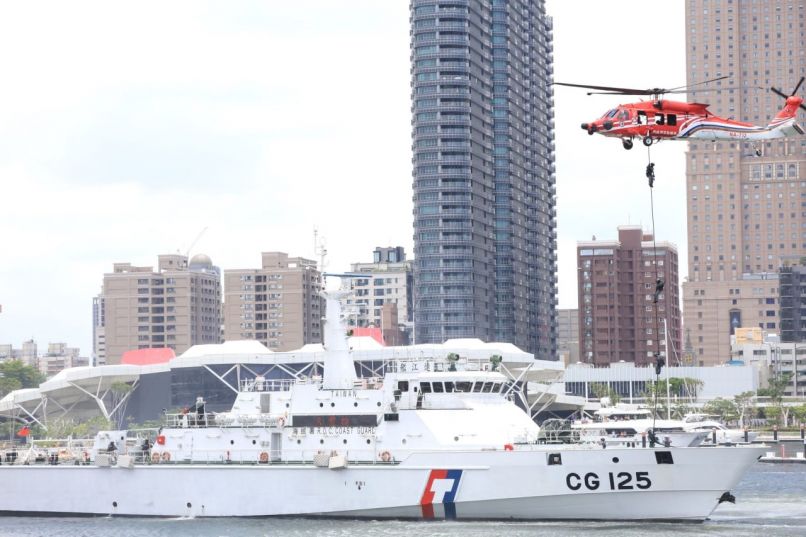
The third layer is military preparedness. Announcements of exercises, law enforcement by the Coast Guard, normalized gray zone activities, and the deployment of ships and aircraft will alter short-term risk assessments. On November 4, Taiwan disclosed a maritime mobilization involving over 100 vessels in the Pacific direction, as well as the detection of 22 military aircraft and 12 warships in a single day, indicating that platform availability and long-range organizational capabilities need to be continuously monitored; however, this is not an ancillary action related to this speech. More accurately, one cannot equate political speeches with military escalation, nor can one overlook the existing rhythm of combat readiness. No report was obtained on the day, therefore this article does not fabricate the number of aircraft and ships detected by Taiwan on November 12.
Where Will the Next Change Appear First?
Timing has its conveniences as well as constraints. The reorganization of administrative attention following the U.S. midterm elections, the resource and agenda pull of the Iran war, disputes over arms sales to Taiwan, and the need to emphasize political reliability after the purging of the PLA command chain together create a window for Beijing to test the boundaries of its narrative. However, delays in arms deliveries may also prompt Washington to prioritize the Taiwan issue again; high-level purges may similarly weaken short-term certainty in joint military command. I believe this is more suitable for low-cost political pressure rather than inferring that an action window has opened based solely on a single statement.
- Will the Eastern Theater Command issue new exercise announcements that cross military branches, directions, or have clearly defined restricted zones?
- Will the number of aircraft and ships detected daily by Taiwan's defense department remain consistently above normal for multiple days, and will there be formations in the open sea?
- Will the Chinese Coast Guard conduct law enforcement declarations and vessel coordination in the direction of Kinmen, Dongsha, and Taiwan?
- Will the U.S. issue new reports on arms sales to Taiwan, and will the delivery timelines for existing projects be adjusted?
If these verifiable indicators do not change simultaneously, "inevitable unification" remains primarily political language; if two or three of these items are linked in the short term, then a reassessment of their military implications is necessary. The real question is not what Beijing has said again, but which preparedness indicator will first turn this narrative into action.
Source: Full text of Xi Jinping's speech reprinted by the State Council's Hong Kong and Macao Affairs Office; Al Jazeera report on November 12; Taiwan's public detection and U.S. arms sale information should be verified against subsequent official reports.
Xi Jinping reaffirmed the goal of unification with Taiwan during a speech in Beijing on November 12, 2026, emphasizing peaceful methods and opposing Taiwan independence. The People's Liberation Army Eastern Theater Command is assessed for military readiness, with Taiwan reporting significant naval mobilization. However, no new military exercises were announced, indicating that the political declaration does not equate to immediate military action.
- Xi Jinping reiterated the goal of unification with Taiwan during a speech in Beijing.
- The speech emphasized peaceful unification and opposition to Taiwan independence.
- Military readiness activities were mentioned but not detailed in the speech.
- Taiwan reported over 100 ships mobilized in the Pacific and detected military aircraft and naval vessels.
- No new military exercises or operations were announced alongside the speech.