
Russia's Finland Demand Turns NATO's 2026 Security Talks Into a Test
 Alexandra Reeves
Russia's Finland Demand Turns NATO's 2026 Security Talks Into a Test
Russia is not asking Finland to leave NATO because Moscow expects Helsinki to comply. It is asking because the demand exposes what the Kremlin believes negotiations are really for: not merely ending the war in Ukraine, but rewriting the security map around it.
Reports from Anadolu Agency and Yeni Şafak say Russian negotiators raised Finland's withdrawal from NATO during the latest U.S.-backed talks in Abu Dhabi. The claim has not been independently confirmed by every participant, and that matters. But the demand fits a broader pattern now visible in public Russian messaging. Moscow is trying to turn a negotiation over Ukraine into a conversation about the membership, posture, and sovereignty of NATO states far beyond the battlefield.
A Demand Aimed at the Alliance, Not Helsinki
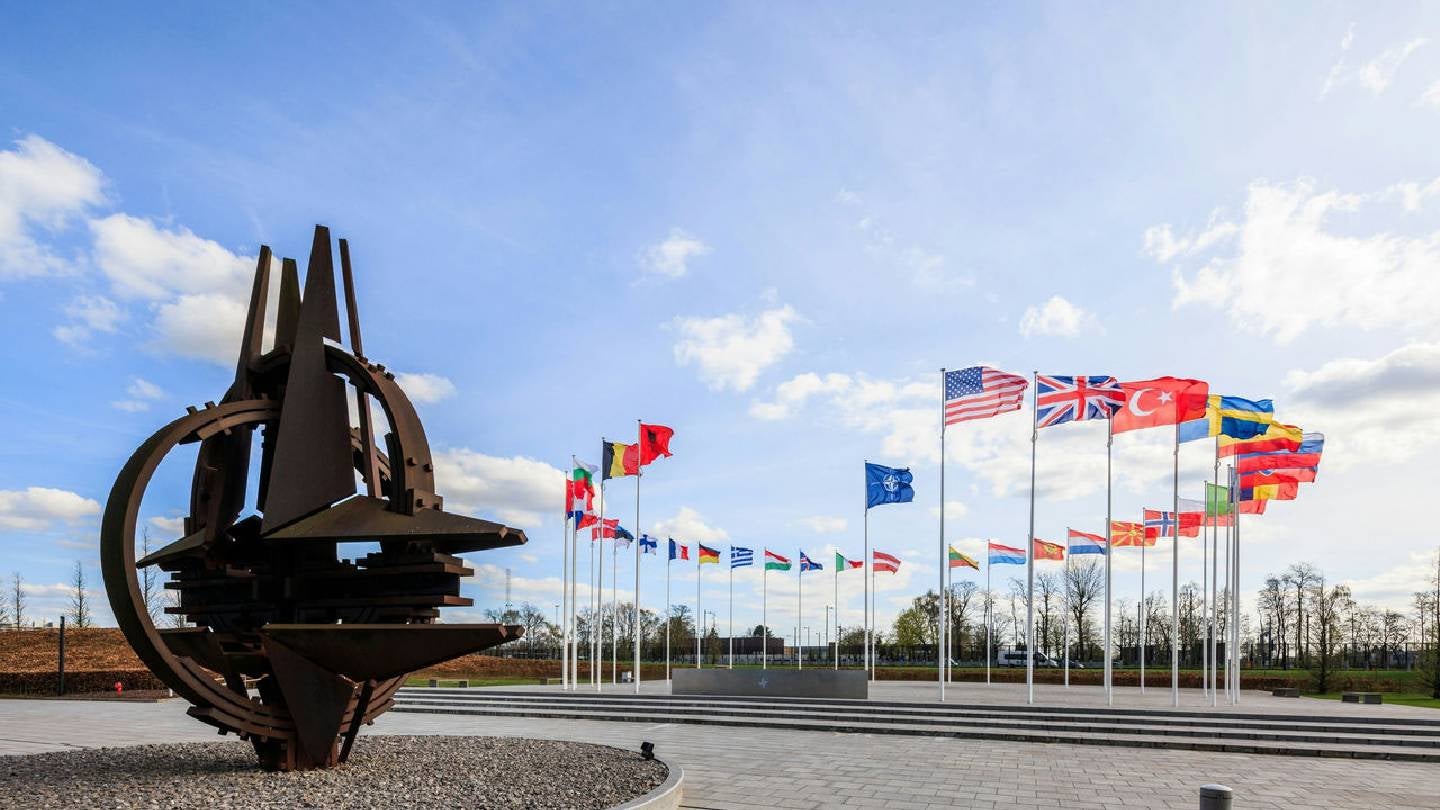
Finland joined NATO in April 2023 after abandoning decades of military non-alignment. Its accession changed the geometry of northern Europe overnight. The alliance gained a country with a 1,340-kilometre border with Russia, a large trained reserve, modern artillery, and a defence culture built around the assumption that a major war is possible.
That is precisely why Finland is useful to Moscow as a negotiating target. The Kremlin does not need to remove Finnish forces from NATO to gain value from the proposal. It only needs to make Finnish membership sound negotiable. If alliance membership can be placed on a bargaining table in Abu Dhabi, then the principle that states choose their own security arrangements has already been weakened.
Here is the uncomfortable part for NATO: Russia's demand is strategically absurd and politically useful at the same time. Finland is unlikely to leave. The request therefore functions less as a realistic concession and more as a test of whether Washington and European capitals will treat NATO enlargement as a settled fact or as a prize to be traded for a ceasefire.
The Bigger Russian Bargain
The Finland report arrives alongside several related messages. Reuters reported that a Russian diplomat said Moscow could conclude non-aggression pacts with individual NATO member states. Other reporting from the Abu Dhabi talks says Russia wants written guarantees against further NATO expansion eastward. The proposals differ in form, but they share an objective: deal with alliance members separately.
That is classic divide-and-rule diplomacy. A treaty with NATO as a whole would force Moscow to confront the alliance's collective political weight. Separate arrangements with Finland, Germany, Poland, or other capitals would create different obligations, different anxieties, and eventually different definitions of what security means. The military effect could be subtle. The political effect would not be.
Russia has used this logic before. Its December 2021 security proposals demanded limits on NATO activity and enlargement, even as Russian forces prepared for the full-scale invasion of Ukraine. The lesson is not that every proposal is a prelude to war. The lesson is that Moscow often treats negotiations as an opportunity to establish claims that can later be described as existing rights.
That is why the wording matters. “Finland should leave NATO” is not a technical confidence-building measure. It is a demand that a sovereign country reverse a decision made after Russia's own invasion demonstrated why Finnish leaders no longer trusted neutrality.
Why Abu Dhabi Matters
The talks themselves appear to have produced limited movement. PBS, the BBC, and the Guardian reported progress on prisoner exchanges but no major breakthrough on the central peace questions. NATO Secretary General Mark Rutte told AFP that it was very difficult to say whether peace was any closer. The diplomatic process is alive, but the distance between a humanitarian deal and a political settlement remains enormous.
That gap gives Russia room to widen the agenda. When the immediate question—ceasefire terms, territory, or monitoring—stalls, Moscow can push the discussion toward a post-war security order. That sounds grander and more constructive than a list of vetoes. In practice, it risks making Ukraine's future dependent on concessions extracted from countries that are not even formally parties to the war.
The United States has reportedly urged Russia to include Europe in the broader security conversation. That is an important correction to the early diplomatic pattern, in which European governments feared being left outside a U.S.-Russia negotiation about the continent's future. But inclusion is not the same as influence. European governments can be invited into a room and still discover that the central decisions were made before they arrived.
Finland's Military Position Changes the Calculation
Finland is not a symbolic flag on a map. Its wartime model is built around national mobilisation, dispersed infrastructure, territorial defence, and a reserve force measured in the hundreds of thousands. It operates F-35A fighters under a programme that will eventually deliver 64 aircraft, and it has expanded cooperation with Sweden and other Nordic allies since joining NATO.
Those capabilities make Finland valuable to the alliance even before NATO reinforcement plans are counted. Finnish territory helps connect the Baltic and Arctic theatres. Finnish surveillance and logistics complicate Russian planning around the Kola Peninsula and the Gulf of Finland. Finland's presence also makes the Baltic region less dependent on a narrow set of reinforcement routes.
None of this means NATO should assume Finland is automatically safe. A demand to leave the alliance could be followed by pressure campaigns, cyber operations, political influence efforts, or border incidents designed to make membership costly. The point of coercion is often not to win a referendum. It is to make every government calculate whether resistance is worth the price.
The Test NATO Cannot Fail
The correct response is not theatrical escalation. NATO should avoid turning an unverified negotiating report into a self-fulfilling crisis. It should, however, state plainly that Finland's membership is not a bargaining chip and that security arrangements are decided by the member state and the alliance, not by Moscow.
That message needs material backing. NATO should keep strengthening the Baltic and Arctic reinforcement network, integrate Finnish and Swedish capabilities into regional plans, and make clear what support would follow any coercive pressure against a member. Strategic ambiguity may be useful in some crises. On alliance membership, excessive ambiguity invites more demands.
Russia's Finland proposal may never become a formal negotiating position. It may be a trial balloon, a leak, or an attempt to shape headlines before the next round of talks. But the strategic signal is already clear. Moscow is testing whether the West sees peace as the restoration of sovereignty or as a transaction in which smaller states absorb the cost of agreement.
The real question is not whether Finland will leave NATO. It will not. The real question is whether Washington and Europe will let Russia define the price of Finnish membership—and, by extension, the price of every other country's security.
Sources and Reporting Notes
- Anadolu Agency, “Russia demands Finland leave NATO in Abu Dhabi talks,” November 13, 2026.
- Yeni Şafak English, “Russia demands Finland leave NATO in Abu Dhabi talks,” November 13, 2026.
- Reuters, reporting on possible Russian non-aggression pacts with individual NATO member states, November 11, 2026.
- BBC, PBS, and The Guardian reporting on the Abu Dhabi talks, prisoner exchanges, and the lack of a broader peace breakthrough, November 2026.
- AFP interview with NATO Secretary General Mark Rutte, cited by France 24, November 12, 2026.
Russia demanded Finland leave NATO during negotiations in Abu Dhabi in November 2026, aiming to reshape security discussions around Ukraine. This demand reflects Moscow's strategy to test NATO's commitment to its enlargement and the sovereignty of member states. Finland's NATO membership, established in April 2023, complicates Russia's military calculations in the region.
- Russia raised the demand for Finland to leave NATO during talks in Abu Dhabi.
- Finland joined NATO in April 2023, changing the security dynamics in northern Europe.
- Russia's demand is seen as a test of NATO's response to its enlargement.
- The talks produced limited movement on peace negotiations regarding Ukraine.
- Russia's strategy includes separate negotiations with individual NATO member states.