
China's Liaoning Carrier Is Practicing a Taiwan Blockade in 2026
 Marcus Chen
China's Liaoning Carrier Is Practicing a Taiwan Blockade in 2026
The Liaoning aircraft carrier group did not need to fire a missile to make its point. In the latest unannounced Pacific drills, reported by Reuters on November 13, Taiwan officials said Chinese forces were rehearsing operations that could restrict access to the waters east of the island. That is the useful way to read this episode: not as a rehearsal for an amphibious landing, but as a test of how the People's Liberation Army Navy (PLAN) would keep outside forces away from a Taiwan contingency.
The Carrier Is a Moving Airfield, Not a Magic Weapon
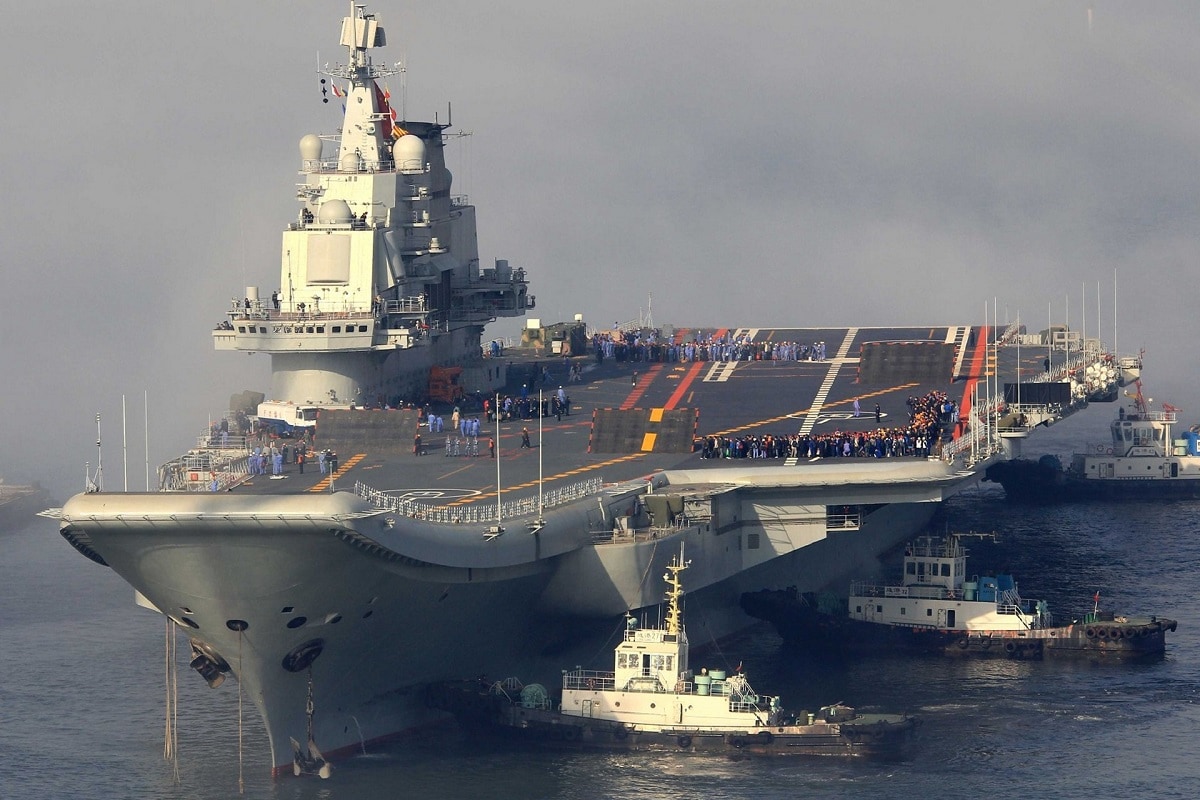
Liaoning is a roughly 60,000-ton ski-jump carrier with a conventional power plant and a Short Take-Off but Arrested Recovery (STOBAR) air wing. Its principal combat aircraft is the J-15, supported by helicopters and, increasingly, by newer command-and-control and unmanned systems operating elsewhere in the fleet. The ski-jump deck saves weight and complexity, but it also limits launch weight. A J-15 taking off with a full fuel load and a heavy weapons load is not the same aircraft as a land-based fighter launching from Fujian or Hainan.
That limitation matters in a blockade scenario. Liaoning can extend the PLAN's fighter coverage beyond the mainland and complicate American and Japanese planning. It cannot, by itself, generate continuous air superiority over the entire Philippine Sea. The carrier needs escorts, tankers, airborne early warning, submarines, shore-based missiles, and a logistics chain that can keep the group at sea. The carrier is one node in a sea-denial network, not the network itself.
What the Drill Is Actually Testing
The operational problem is distance. A carrier group east of Taiwan is operating hundreds of nautical miles from the mainland while trying to watch the approaches that an American carrier strike group, Japanese forces, or submarines could use. The PLAN must detect those forces, classify them, hold them at risk, and do it without exposing Liaoning to a concentrated counterattack.
That is why the reported exercise matters more than another sortie count around Taiwan. A blockade is an endurance mission. It requires repeated patrol cycles, replenishment, communications under attack, and rules for escalation when merchant shipping or foreign warships refuse to comply. A single dramatic deployment demonstrates presence. A week of controlled access denial demonstrates a usable military option.
Public reporting on the same activity has described Chinese naval aviation and surface forces practicing the restriction of access in the Western Pacific. The distinction between “presence” and “control” is critical. China can make the eastern approaches dangerous without being able to seal them. The latter requires a much larger sensor and missile architecture, plus the political willingness to attack ships from Japan, the United States, or another coalition member.
The Purge Problem Behind the Hardware
There is a second variable that cannot be measured in deck length or missile range. War on the Rocks reported this week that Xi Jinping's military purges have removed at least 100 senior officials since 2022, citing a February Center for Strategic and International Studies assessment. The turnover has strengthened political control, but it has also disrupted the officer corps and command relationships.
That creates a paradox for every PLA exercise. Beijing can order more ambitious drills and put more platforms to sea, but a blockade depends on distributed decisions under pressure. A commander must know when to shadow, when to warn, when to jam, and when to fire. If officers are rewarded primarily for political reliability, they may be less willing to report bad information or challenge a dangerous order. Hardware modernization does not solve that problem.
It would be a mistake to conclude that purges make the PLA harmless. The fleet can still impose serious costs, and China has more land-based combat power near Taiwan than any outside force can match locally. But the gap between a scripted exercise and a contested war is command-and-control, logistics, and judgment. Those are precisely the functions most vulnerable to fear and organizational instability.
Washington Should Count Days at Sea
The United States and its allies should stop treating each carrier appearance as a referendum on Chinese naval power. The useful questions are narrower. How many days can Liaoning sustain an air-defense patrol? How quickly can it regenerate sorties? How many escorts can the PLAN keep with it after submarines begin taking shots? Can Chinese commanders maintain a common operating picture when satellites, data links, and coastal radars are degraded?
Those numbers will tell us whether China is building a blockade capability or merely staging a political demonstration. Taiwan's defenders should prepare for both. A coercive quarantine could begin below the threshold of war, with Chinese forces claiming to inspect shipping or enforce a temporary security zone. The response time for outside powers would then be measured in hours, while Beijing would already have established the facts at sea.
Liaoning is not the ship that will decide a Taiwan war. It is a signal that China is practicing the harder part of one: keeping help away long enough for political pressure and military risk to do their work. The carrier's weakness is endurance and vulnerability. The danger is that the rest of the PLA is being built to compensate for both. Washington should plan against the full system, not congratulate itself every time it finds the carrier on a map.
Sources
China's Liaoning aircraft carrier group practiced a blockade of Taiwan in November 2026, conducting naval exercises aimed at restricting access to the waters east of the island. The drills involved the use of J-15 fighter jets and other support systems, highlighting the PLAN's operational capabilities. Political purges within the PLA may impact command decisions during such operations.
- China's Liaoning carrier group is practicing a blockade of Taiwan.
- The exercises are intended to restrict access to waters east of Taiwan.
- The Liaoning carrier is supported by J-15 fighters and other systems.
- Political purges in the PLA may affect command and control during operations.
- The exercises demonstrate China's capability to impose a blockade without direct confrontation.