
Base 101 in Niamey hit for the third time — the Tiani regime loses its rear in 2026
 Marie Dubois
Base 101 in Niamey hit for the third time — the Tiani regime loses its rear in 2026
In Niamey, before dawn on August 29, gunfire and explosions once again brought the war to the heart of power. Witnesses cited by Reuters, AFP, and Al Jazeera place the exchanges of fire around the Diori Hamani international airport, Base 101, and the perimeter of the presidency. National television was interrupted for several hours. Soldiers cordoned off the area around the palace. The government claims to have regained control. This is possible. But on the Sahelian theater, the most important fact is not who holds the site at 09:00. The important fact is that it could still be hit.
We must start from this repetition. In January, the Niamey airport had already been targeted in an attack attributed to elements linked to the Islamic State. In June, JNIM had in turn struck the capital and its air infrastructure. That night, the modus operandi seems to again mix symbolic strikes, urban disruption, and the search for maximum psychological effect. The exact perpetrator remains uncertain at the time of writing. This uncertainty must be maintained. But it does not change the main diagnosis: for the third time in eight months, the Nigerien junta has failed to protect what it should have prioritized for sanctification.
The problem is no longer just the airport
Diori Hamani is often referred to as a critical infrastructure, and this is true. The airport concentrates state logistics, diplomatic links, part of military capabilities, and an obvious prestige value. But the most concerning element this time is the repetitive mention of Base 101, that is, a military hub located right in the capital. When a base of this nature is targeted repeatedly, the problem is no longer just a simple gap in perimeter defense. The problem becomes one of security depth. Niamey ceases to be the rear. It becomes a friction zone.
From experience, this shift is crucial. A military regime can endure losses in a remote area if it maintains a stable capital, open routes, and the image of a command that sees what is coming. It copes much less well with a war that moves toward political, media, and aerial support points. Sahelian juntas like to promise the reconquest of territory. However, the first mission of a junta is more modest and tougher: to hold its own nerve centers. In Niamey, this mission is clearly not being fulfilled sustainably.
The myth of security sovereignty is cracking
Since the coup d'état in July 2023, General Abdourahamane Tiani has justified his break with Paris, his alignment with the Sahel States Alliance, and his rapprochement with Moscow with a simple promise: sovereignty would make the state more effective against the insurgency. Three attacks on the capital reduce this promise to what it is on the ground: a slogan that does not replace human intelligence, urban access control, or surveillance of logistical relays between Tillaberi, Dosso, and Niamey.
The Nigerien government can still invoke a tactical success if the assailants have been repelled or neutralized. This does not erase anything. In this type of operation, the assailant does not need to hold the ground for long. It is enough for them to penetrate, film, silence a public channel, force the forces to lock down the palace, and prove to the inhabitants that the capital is no longer impermeable. This is a very Sahelian economy of war: little time on target, but high political yield.
What this night says about the Sahel in 2026
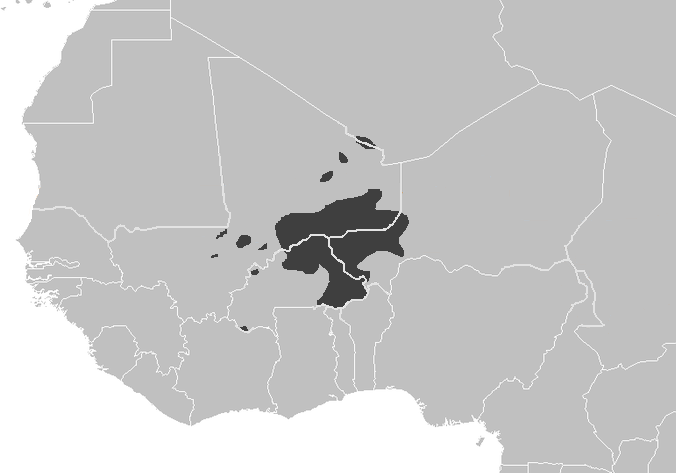
The heaviest lesson is regional. Borders matter less than action corridors. Between the Lake Chad basin, western Niger, northern Mali, and eastern Burkina Faso, armed groups learn, exchange, and observe the weaknesses of their adversaries. Whether it is the Islamic State in the Sahel, ISWAP, or JNIM, all have understood the same thing: striking a capital does not require a classic conquest; it is enough to exploit saturated surveillance, local complicities, or poorly held access at the right moment. It is less spectacular than a column in a big city. It is often more useful.
We must also look at the immediate geography. Niamey is not Bamako, nestled in an older state depth. It is a capital close to unstable areas, open to the west by the Tillaberi region, and dependent on a system of roads, checkpoints, and urban perimeters that wear out quickly when pressure is sustained. If groups can threaten the airport, the base, and the presidency in the same sequence, then they demonstrate less a capacity for siege than a capacity for navigation in urban space. This is exactly what a military state fears the most.
The next test will be discreet and close
The next developments will not primarily play out in the statements from Niamey or in accusations against external enemies. They will play out in down-to-earth matters: who controls the outskirts of the airport at night, who monitors the entrances to Niamey 2000, who identifies preparation relays within twenty kilometers of sensitive sites, and how long the state can maintain a high alert rhythm without exhausting its personnel. The Sahel does not forgive capitals that still believe they are far from the front.
My judgment, at this hour, is therefore simple. The attack on August 29 does not necessarily herald an imminent fall of the Tiani regime. It signals something more operational and more serious: the gradual loss of the sanctuary. And in a Sahelian war, when the sanctuary cracks, the enemy no longer needs to take the city to gain the initiative. It is enough for them to return. Base 101 has just reminded us that this door remains open.
On August 29, 2026, Base 101 in Niamey was attacked for the third time in eight months, with gunfire and explosions reported near Diori Hamani International Airport and the presidential area. The Nigerien military claimed to have regained control, but the repeated attacks raise concerns about the security of critical infrastructure in the capital. This incident reflects a significant shift in the operational environment, indicating that Niamey is becoming a contested area rather than a secure rear base.
- Base 101 in Niamey was attacked for the third time in eight months.
- The attacks occurred near Diori Hamani International Airport and the presidential perimeter.
- The Nigerien military claims to have regained control after the attacks.
- The attacks highlight the failure of the Nigerien military to secure critical infrastructure.
- The situation indicates a shift in security dynamics in Niamey.