

The F-22 Raptor remains America’s premier air superiority fighter, thanks to a combination of advanced features including stealth, supercruise, high altitude, thrust vectoring, and powerful sensors.
But the F-22 does have one glaring weakness, especially in the context of Indo-Pacific conflict: limited range.
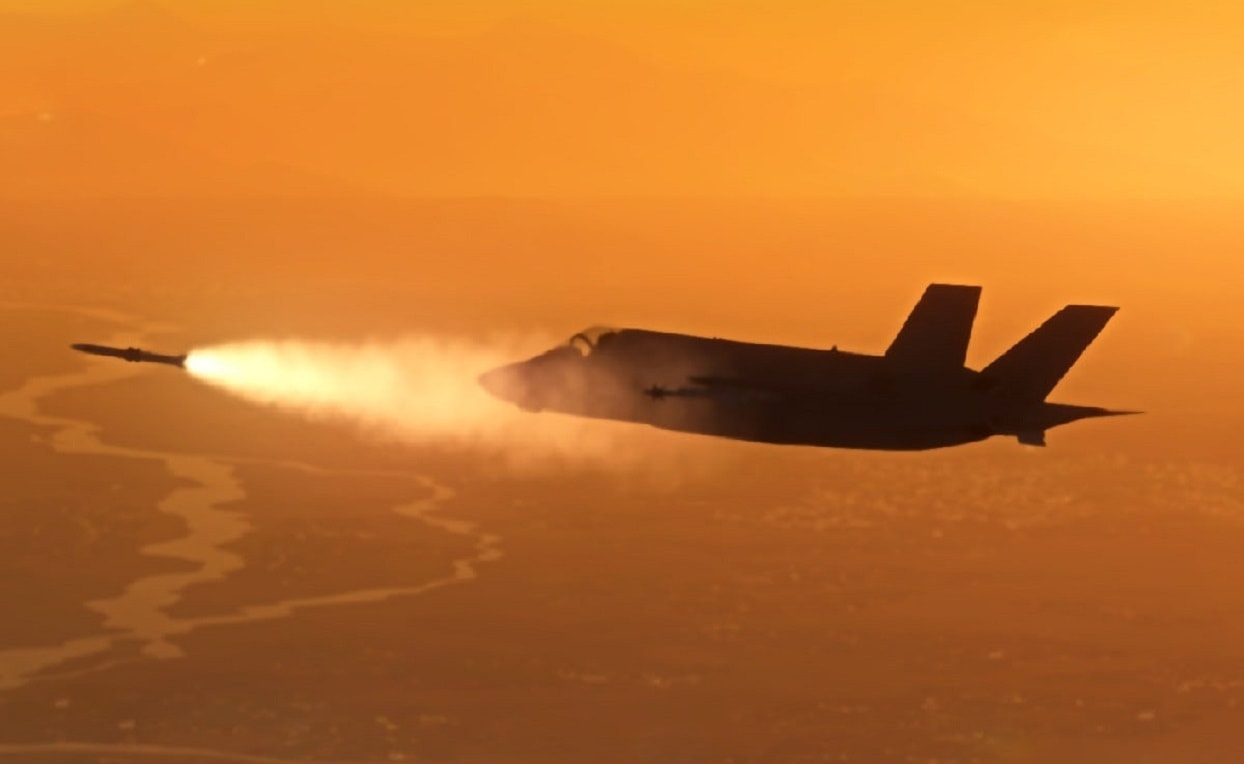
F-22. Image: Creative Commons.
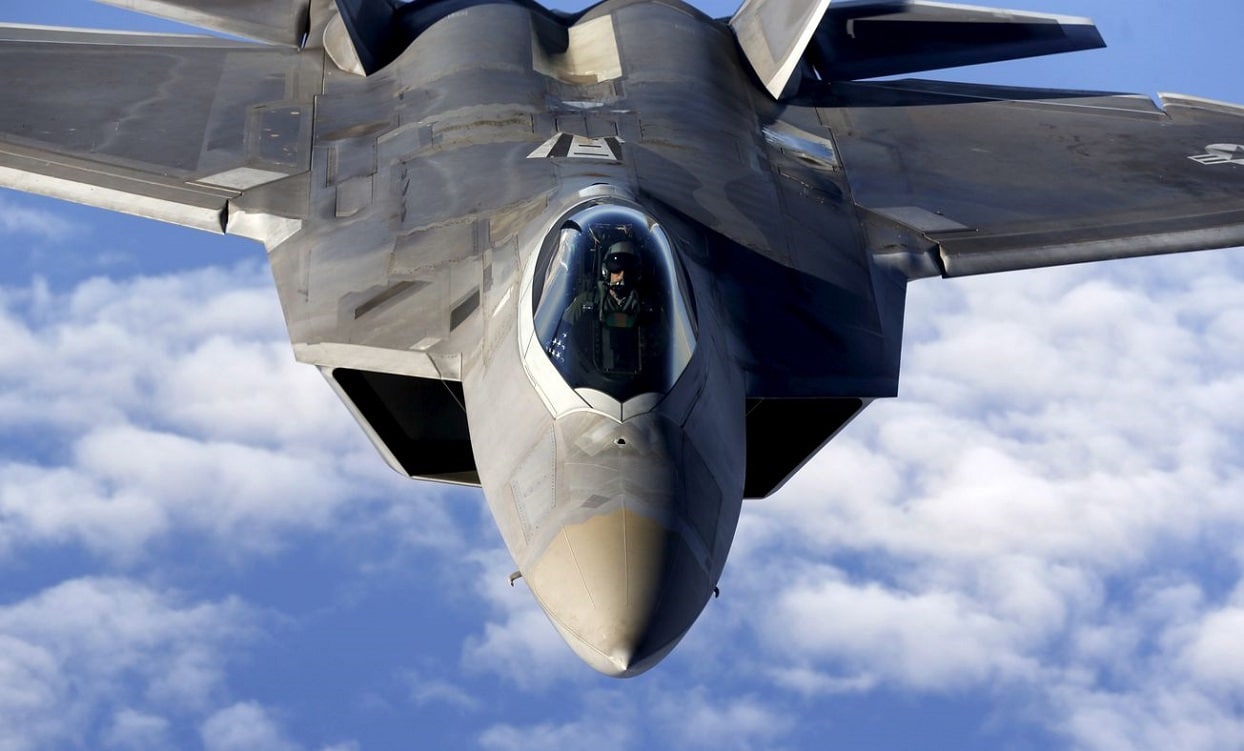
F-22. Image: Creative Commons.
With a combat radius typically cited around 450–500 nautical miles (depending on the mission profile and speed), the F-22 is ill-equipped for the sprawling geography of the Indo-Pacific region.
The limited range wasn’t such a glaring downside when the aircraft was designed, as part of the Advanced Tactical Fighter (ATF) program, to support NATO against the Soviet Union.
But the strategic picture has changed significantly since the ATF program yielded the Raptor, and the geography of the Indo-Pacific is far more demanding than the geography of Eastern Europe.
Bases, tankers, and combat areas can easily be separated by hundreds, even thousands, of miles of ocean.
This is why, now, after decades of service, the Air Force is working to develop 600-gallon Low Drag Tanks and Pylons (LDTP) for the F-22.
The tradeoff, of course, is that the LDTP would degrade the F-22’s stealth performance during transit, in exchange for significantly more fuel.
Limited Range and Strategic Downsides
Designing an aircraft that maintains low observability creates certain engineering problems.
External storage of weaponry creates radar reflections and aerodynamic drag, which is why the F-22 keeps its weaponry stored internally.
This puts internally stored weaponry in direct competition for finite internal volume with jet fuel.
The end result, of course, is that the Raptor can carry less fuel, which means the F-22 has less range.
That’s acceptable in environments where tankers and friendly bases are always nearby, i.e., Eastern Europe.
But this setup becomes harder to sustain in a conflict against China, when operating in the Western Pacific.
For example, Guam is roughly 1,500 nautical miles from Taiwan—about three times the F-22’s combat radius.
This doesn’t mean the Raptor is useless in such an environment, but it does impose hard dependencies on aerial refueling.
This creates a problem, however: current tankers are neither stealthy nor fast. Both the KC-135 and KC-46 are easy targets.
In fact, Chinese doctrine is built around targeting vulnerable enablement aircraft like aerial refuelers to push American forces further offshore.
Because if you kill or push back the tankers, you functionally limit the fighter jet’s combat radius—without even having to engage the fighter jet.
China doesn’t even need to destroy every tanker in the sky; merely forcing them further offshore through the threat of destruction would reduce the applicability of fighters like the F-22. That’s a good arrangement for China.
600-Gallon Add-Ons
The F-22s can be configured with external fuel tanks. But conventional tanks impose substantial drag and signature penalties.
The newer LDTP effort aims to provide the Raptor with external fuel without compromising the aircraft’s performance. Accordingly, the Air Force has described the new 600-gallon tanks as systems rather than just tanks.
The system includes tank-and-pylon combinations, which are described as providing increased range while preserving lethality and survivability.
The LDTP is also jettisonable, meaning the F-22 can use it to cover vast distances and then drop the system upon arrival at a combat area where stealth and kinetic performance matter.
Dragging On
Still, hanging anything from the underside of a Raptor is inherently odd.
The F-22’s stealth comes from a combination of carefully aligned surfaces and edges, internal weapons, radar-absorbent materials, buried engines, and the meticulous management of all gaps and seams on the aircraft. External fuel tanks, whether carefully constructed or not, compromise the F-22’s intentionally designed geometry.
Tanks add surfaces, attachment points, and shapes to the aircraft—all of which can return radar energy.
The exact effect of the LDTP on the F-22’s radar cross section remains classified, however. But we can reasonably estimate it harms the F-22’s RCS.
The point being, there is a trade-off.
The LDTP system does not magically create a long-range Raptor that performs as well as a stock F-22.
But the F-22 doesn’t necessarily need maximum stealth and performance across an entire 1,000-mile transit.
The LDTP can prospectively get the Raptor to the battlespace before being jettisoned, allowing the F-22 to perform as originally envisioned.
About the Author: Harrison Kass
Harrison Kass is a writer and attorney focused on national security, technology, and political culture. His work has appeared in Tablet, City Journal, The Hill, The Spectator, and The Cipher Brief. He holds a JD from the University of Oregon and a master’s in Global & Joint Program Studies from NYU. More at harrisonkass.com.