
BBN develops long-range X-ray imaging system
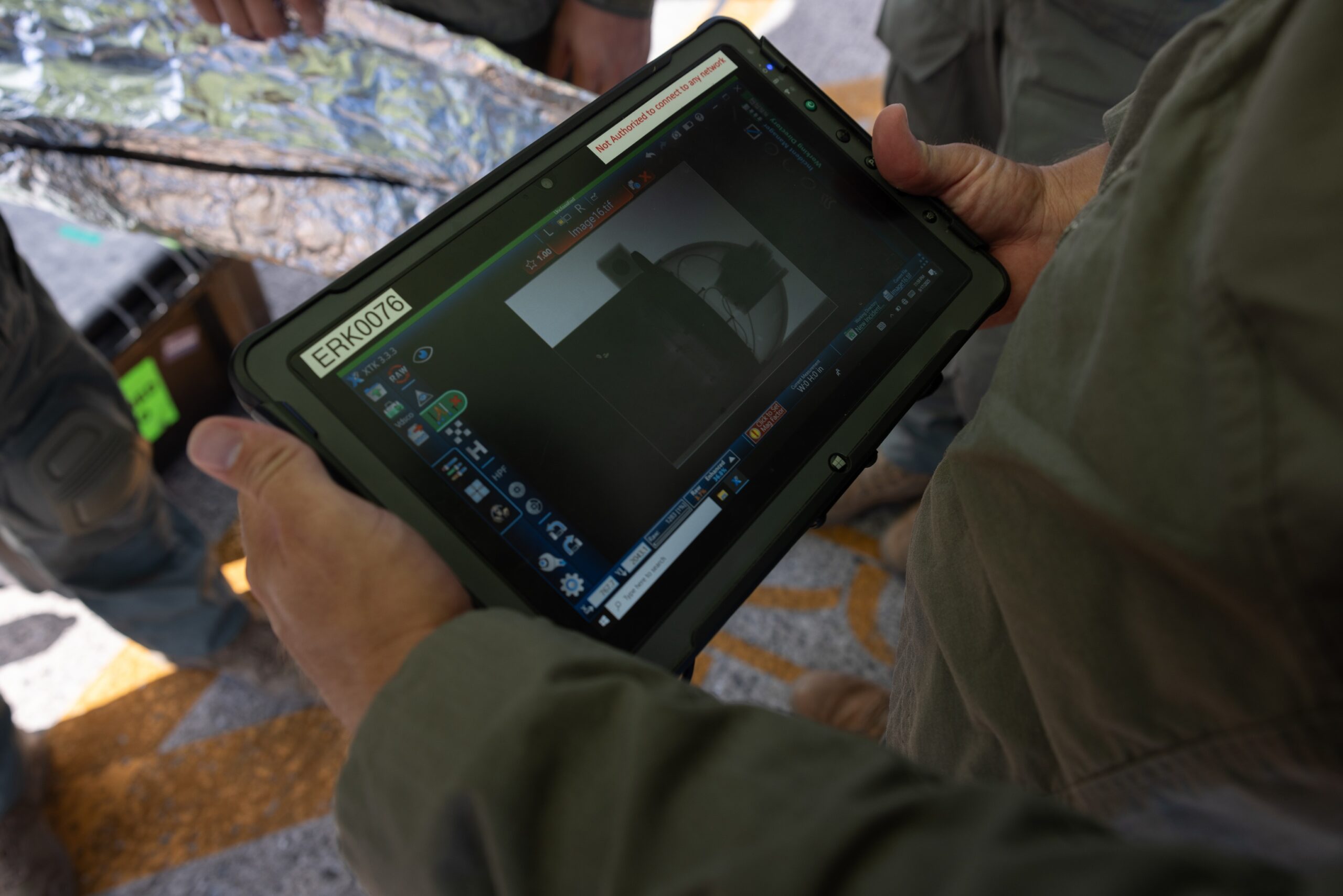
The Defense Advanced Research Projects Agency has awarded RTX’s BBN Technologies a contract under the X-ray Extreme-range Non-imaging Analysis (XENA) program to develop advanced long-range X-ray sensing tools designed to improve battlefield situational awareness, according to program details released alongside the award announcement.
Under the XENA program, BBN Technologies will develop a new class of X-ray analysis systems capable of reconstructing the hidden geometry of man-made objects from distances approaching one kilometer. The system is intended to provide commanders with actionable insights about objects without requiring proximity traditionally needed for X-ray imaging.
According to program materials, the technology will rely on advanced mathematical modeling and image analysis techniques capable of extracting usable information even from incomplete or low-quality data. The project includes simulation development, software creation, and testing phases designed to demonstrate how effectively the system can identify critical internal characteristics of objects.
Joshua Fasching, BBN principal investigator for the program, said in a statement: “Long-range X-ray imaging requires a fundamentally different approach. We are developing algorithms that turn a small number of grainy snapshots into enough detail for decision-makers to act, whether the mission is assessing potential threats or supporting emergency response operations.”
The XENA initiative aims to overcome fundamental limitations of existing portable X-ray scanners, which typically require close-range positioning to produce clear images. At extended distances, conventional X-ray imaging suffers from weak signal strength, motion blur, and restricted viewing angles, making traditional reconstruction techniques ineffective.
BBN’s approach combines a limited number of low-quality X-ray observations and analyzes shared structural patterns across images to infer internal details using far fewer photons than conventional systems require. The method is designed to generate meaningful assessments even when only partial or degraded imaging data is available.
According to DARPA program descriptions, performers will deliver algorithmic toolsets capable of producing useful inferences in terrestrial or aerial imaging scenarios where no prior information exists about the internal composition of the object being examined. The research focuses specifically on man-made objects and imaging methods using hard X-rays at energy levels equal to or greater than 150 keV.
The BBN-led research team includes the Georgia Institute of Technology, with work scheduled to take place in Cambridge, Massachusetts, and Atlanta, Georgia. Program documentation notes that the research was funded in part by the U.S. Government and that findings do not necessarily represent official government policy positions.
DARPA stated that the goal of the XENA program is to develop new methods for image enhancement in long stand-off transmission X-ray environments where motion blur is present and imaging data is limited. If successful, the research could establish a new field focused on exploiting unresolved radiation signals, including X-rays, gamma rays, and muons, to extract structural information.
The program addresses three primary technical challenges identified by DARPA. The first involves data sparsity caused by long-distance imaging, as current transmission X-ray computed tomography systems used in industrial or medical settings operate at distances measured in meters rather than kilometers. XENA aims to extend this capability by at least three orders of magnitude.
The second challenge involves motion blur, which reduces signal-to-noise ratio and complicates image reconstruction. Researchers will develop processing techniques capable of compensating for motion effects in long-range imaging scenarios.
The third challenge concerns the absence of prior knowledge about the interior structure of objects being imaged. Existing X-ray processing algorithms often depend on known object models, while XENA seeks to develop “blind” algorithms capable of producing results without predefined assumptions.
Long-range X-ray sensing could enable military units to assess concealed threats, detect hidden weapons, or evaluate structural vulnerabilities from safe stand-off distances. Such capabilities may support missions ranging from explosive hazard assessment to disaster response operations where entering structures poses elevated risk.
Content preview only. Full article available at source. View Full Article
BBN Technologies is developing a long-range X-ray imaging system under DARPA's XENA program in Cambridge and Atlanta. This system aims to enhance battlefield situational awareness by analyzing objects from distances up to one kilometer, utilizing advanced algorithms to reconstruct hidden geometries. The project addresses challenges such as data sparsity and motion blur, potentially enabling military units to assess concealed threats and structural vulnerabilities from safe distances.
- DARPA awarded a contract to BBN Technologies for the XENA program.
- The new X-ray system can analyze objects from distances up to one kilometer.
- The technology aims to improve battlefield situational awareness without requiring close proximity.
- The system uses advanced algorithms to reconstruct hidden geometries of objects.
- The research includes collaboration with the Georgia Institute of Technology.