
Beaufort Castle Gives Israel a 26 Year Lebanon Problem
 Alexandra Reeves
Beaufort Castle Gives Israel a 26 Year Lebanon Problem
Beaufort Castle is not just another hilltop in southern Lebanon. It is the kind of place armies take when they are no longer pretending that a limited raid is the main idea.
Israel said on Sunday that its troops had seized the 900-year-old Beaufort Castle and the strategic ridge around it near Nabatieh, according to AP and Reuters reporting from May 31. The move is the deepest Israeli incursion into Lebanon in 26 years, and it comes despite a ceasefire announced more than six weeks ago. That is the first point worth sitting with. A ceasefire that still produces ridge seizures, drone attacks, airstrikes, village evacuation orders, and direct military talks in Washington is not a ceasefire in any operational sense. It is a war with diplomatic paperwork attached.
Why Beaufort Matters
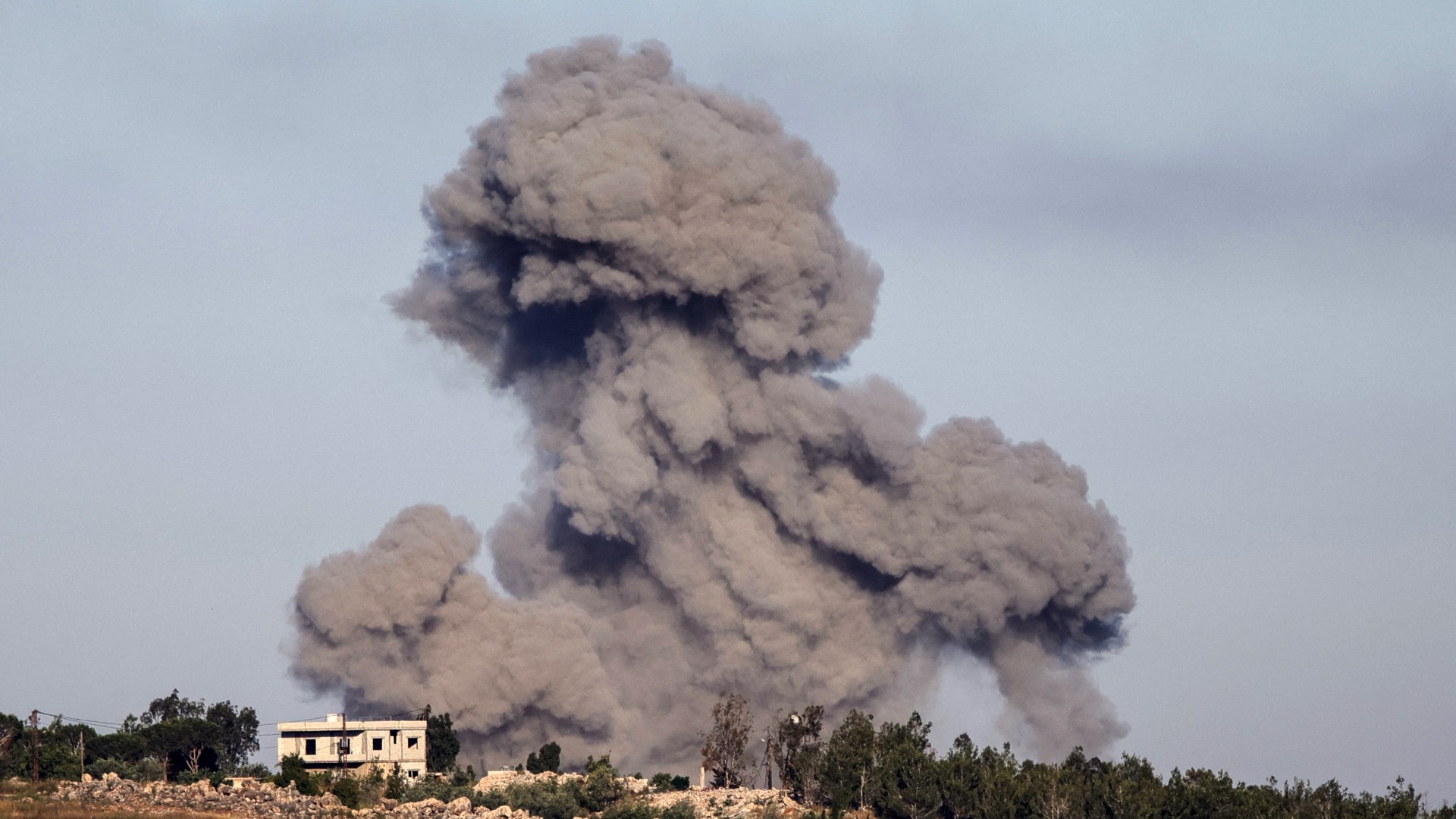
The castle sits on a commanding height above southern Lebanon, with views over terrain that matters to both Israel and Hezbollah. AP noted that Israeli troops held the site for 18 years until the Israeli withdrawal from Lebanon in May 2000. That history is not decorative. Beaufort is a symbol of the exact strategic bargain Israel has spent a generation trying to avoid: hold ground inside Lebanon to secure northern Israel, then discover that holding ground creates its own resistance economy.
Israel can argue that the ridge improves protection for Galilee communities. Defence Minister Israel Katz described the capture as a major tactical achievement, according to Al Jazeera. He is not wrong on the tactical level. A high point that has been used to observe and threaten northern Israel is useful terrain. It allows surveillance, fire control, and a stronger buffer for forces operating along the border belt.
But tactical usefulness is not the same as strategic success. Everyone in Washington and Jerusalem knows this, even if the public language stays cleaner. Southern Lebanon has a way of turning every military buffer into a political trap.
The Ceasefire Is Already Hollow
The latest round of fighting began on March 2, after Hezbollah fired rockets into northern Israel two days after U.S. and Israeli strikes on Iran, according to AP. Since then, the conflict has become part of the wider Iran war rather than a separate border flare-up. That matters because Hezbollah is not fighting in a vacuum. Its choices are tied to Tehran, Israeli pressure on Iran, and the Trump administration approach to a regional settlement.
Al Jazeera reported on Sunday that one Israeli soldier had been killed in a Hezbollah drone attack a day earlier, bringing Israeli military deaths in this round of fighting to 25 since March 2. AP reported that Israel issued evacuation warnings for more than a dozen southern Lebanese villages around the same period. The pattern is clear: Hezbollah uses drones and rockets to raise the cost of Israeli advances; Israel uses airpower, ground pushes, and displacement orders to make the area south of the Litani less usable for Hezbollah.
That sounds like escalation because it is escalation. The odd part is that it is unfolding while Lebanese and Israeli military officials have begun direct talks at the Pentagon, the first such talks in decades, according to AP. Direct talks are important. They also do not change the battlefield math by themselves. If anything, the Beaufort capture tells Beirut and Washington that Israel wants to negotiate from a new line on the map, not from the old one.
The Litani Logic Is Back
In March, Axios reported that Israeli and U.S. officials expected a much larger Israeli ground operation aimed at pushing Hezbollah north and dismantling its military infrastructure south of the Litani River. The Beaufort operation looks less like an isolated opportunistic strike and more like that plan becoming real in pieces.
The attraction is obvious. If Hezbollah cannot operate near the border, northern Israel becomes safer. If Israeli forces hold key ridges and villages, they can disrupt launch cells, observation teams, weapons stores, and drone operators. After years of Hezbollah entrenchment, Israeli commanders have little patience for another deal that leaves the group able to rebuild within sight of Israeli communities.
Here is the problem: Hezbollah does not need to win conventional battles to make this painful. It needs to keep enough fighters, drones, anti-tank teams, and local networks alive to make each Israeli position expensive. Beaufort is a prize, but it is also a fixed point. Fixed points need supply, protection, engineering work, casualty evacuation routes, and political explanation. That is exactly the kind of target set Hezbollah understands.
Washington Now Owns More of the Risk
The United States is not a bystander. Axios reported in March that the Trump administration backed a major Israeli operation to disarm Hezbollah while also pressing Israel to limit damage to the Lebanese state. That is a difficult line to hold. The more Israel moves toward a durable security zone, the more Washington becomes associated with the shape of that zone, the displacement around it, and the terms eventually presented to Lebanon.
This is where the NATO and Ukraine comparison becomes uncomfortable. In Europe, Washington tells allies that borders cannot be changed by force and that occupation hardens conflict. In Lebanon, the United States is trying to manage an ally using force to redraw the practical security boundary because the formal border failed to stop attacks. The situations are not identical. They are still close enough for adversaries to notice the gap between principle and practice.
Iran will notice. Russia will notice. Hezbollah will certainly notice. The message they will push is simple: Western security guarantees are conditional, elastic, and geography dependent. That does not make the Hezbollah narrative honest, but information warfare does not require honesty. It requires usable contradictions.
What To Watch Next
The next test is not whether Israel can hold Beaufort for a week. It can. The test is whether the operation stays limited to tactical heights and nearby villages, or whether it becomes a broader south Lebanon security zone under another name. Watch for three indicators: Israeli engineering activity around captured terrain, expanded evacuation orders north of the current line, and Hezbollah shifting from rocket harassment to sustained drone and anti-armor attacks against Israeli logistics.
Beaufort gives Israel a better view. It also gives Hezbollah a better symbol. That is the old Lebanon problem in one sentence. Israel can take the hill, but the hill does not solve the war unless somebody can explain who governs the ground beneath it when the shooting stops.
Israeli Defense Forces seized Beaufort Castle and the strategic ridge around it near Nabatieh on May 31, marking the deepest incursion into Lebanon in 26 years. This operation occurred despite a ceasefire and has escalated tensions, with one Israeli soldier killed in a Hezbollah drone attack. Evacuation orders were issued for several southern Lebanese villages, and direct military talks between Israeli and Lebanese officials have commenced.
- Israeli troops seized Beaufort Castle on May 31, marking the deepest incursion into Lebanon in 26 years.
- The operation occurred despite a ceasefire announced over six weeks ago.
- One Israeli soldier was killed in a Hezbollah drone attack, bringing Israeli military deaths to 25 since March 2.
- Evacuation warnings were issued for over a dozen southern Lebanese villages.
- Direct military talks between Lebanese and Israeli officials have begun at the Pentagon.