
Belgium's $236 Million JSM Purchase Shows Europe's F-35 Dependence in 2026
 Dr. Klaus Weber
Belgium's 236-Million-Dollar JSM Purchase Highlights Europe's F-35 Dependence in 2026
236 million dollars is not a huge sum for a European defense contract. In the case of Belgium, however, it is revealing. The U.S. State Department has approved the potential sale of AGM-184 Joint Strike Missiles for the Belgian F-35A fleet; Kongsberg would be the prime contractor, while RTX acts as an American intermediary in the Foreign Military Sales process. Almost simultaneously, Germany signed another JSM contract worth around 3.5 billion Norwegian kroner, after Berlin had already ordered for about 6.5 billion kroner in 2025. Two decisions, two small procurement processes? No. They show how Europe's air forces are buying range in 2026, but also ordering institutional dependence.
The Weapon Fits Perfectly with the F-35, and therein Lies the Problem
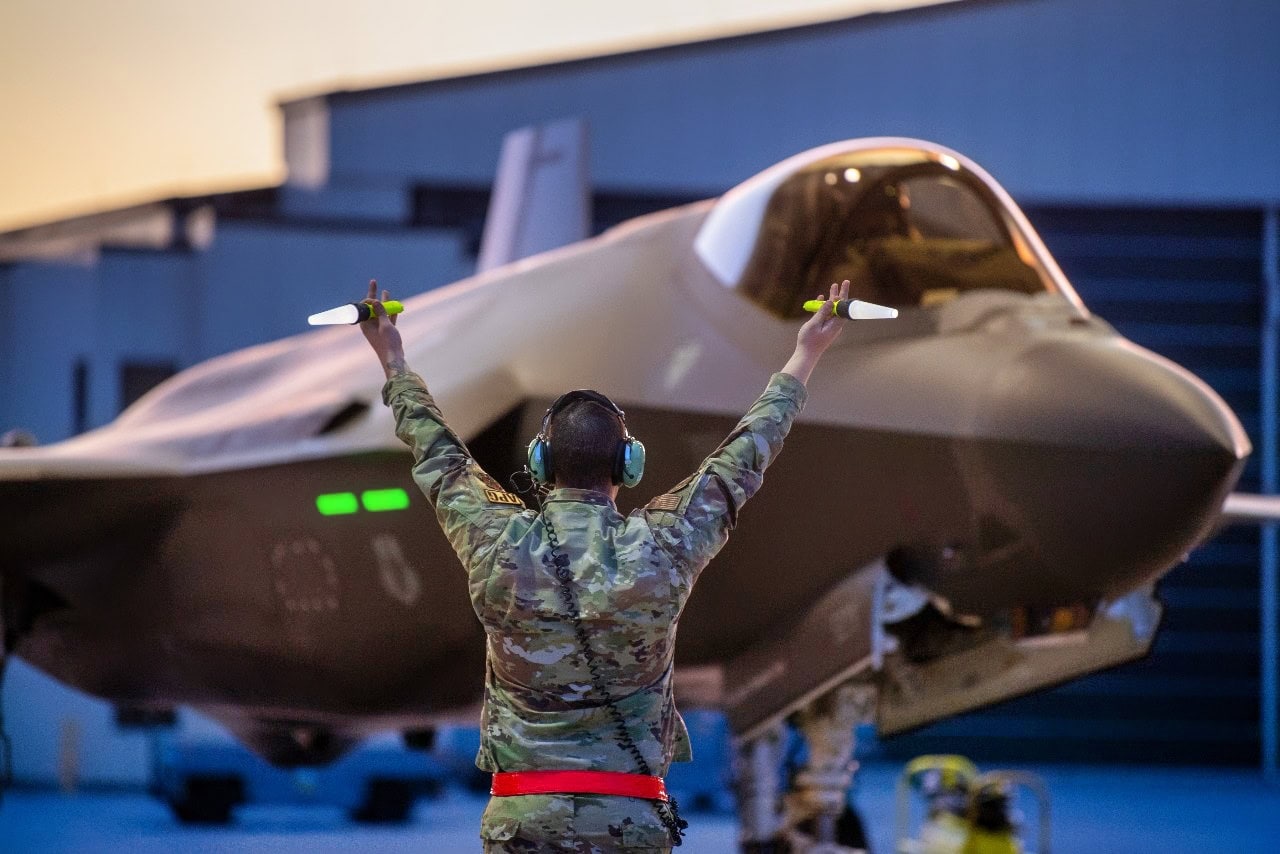
The Joint Strike Missile is not just any missile. It was developed by Kongsberg for the internal weapons bay of the F-35A and F-35C and is intended to be certified with the F-35 Block 4 standard. For Belgium, Germany, Poland, and other European F-35 users, this is operationally attractive: a hard-to-detect cruise missile against sea and land targets, carried by a combat aircraft capable of operating NATO data networks. According to reports, the Belgian procurement includes not only missiles but also equipment, training, logistical support, and technical documentation. It is precisely these accompanying packages that turn a munitions purchase into a dependency relationship.
Belgium is replacing its F-16 fleet with the F-35A. The first Belgian aircraft were trained and prepared in the United States; the arrival of the first F-35 in Belgium was scheduled for 2025. Germany, on the other hand, is purchasing 35 F-35A, primarily to secure nuclear sharing after the Tornado. Both countries are now also buying the appropriate range munitions. This is militarily logical. Politically, it is more uncomfortable because the European debate on strategic autonomy collides here with the hard realities of aircraft software, certification, and export procedures.
Norwegian Industry, American Process, European Users
At first glance, the JSM is not a simple American dependency. Kongsberg is a Norwegian company; Norway is a European NATO partner, not an EU member. The German order is processed as a government-to-government deal between Norway and Germany. Oslo and Berlin refer to their closer defense cooperation, including the Hansa Agreement and joint projects on submarines, weapon systems, and future supersonic missiles. Therefore, one could argue that this is European procurement if one only looks at the manufacturer's flag.
But is that enough? The Belgian case shows the institutional reality. Because the JSM is integrated into the F-35 architecture, the potential Belgian procurement goes through the American FMS system. RTX is not the main developer of the weapon but is part of the approval and processing structure. The operational capability does not arise solely in Norway or Belgium, but in a triangle of Kongsberg, F-35 program management, and U.S. export control. This allows European states to build a credible anti-ship and land target capability more quickly. They gain capability, but not complete control.
The Baltic Sea Forces the Need for Range
For Belgium, the JSM is also relevant because small European air forces no longer only conduct national airspace defense. A Belgian F-35 with JSM is part of a NATO architecture that can threaten sea routes, ports, radar positions, and enemy air defenses in the North Sea and Baltic Sea regions. Germany has the same logic even more clearly: Büchel, nuclear sharing, F-35A, and a precision missile that can be deployed from the internal bay. The Bundeswehr is thus acquiring a capability that fits the defense of NATO's eastern flank, but it is purchasing it as a module of an American-shaped system.
This is not a moral critique of Belgium or Germany. On the contrary: After years of European delays, the purchase of operational munitions is more sensible than another memorandum on future autonomy. Ukraine has shown that aircraft without munitions, spare parts, and software approvals are merely political symbols. Those who buy F-35s in 2026 must also purchase the weapons that make the aircraft meaningful. The real failure lies not in the Belgian decision but in the European prehistory: There is no European stealth fighter, no EU-certified alternative for F-35 integration, and no joint procurement authority that could close such capability gaps quickly enough.
SAFE Does Not Fund Software Approval
The EU can provide loans through SAFE, the European Defense Agency can improve coordination, and national parliaments can approve higher budgets. All of this helps. However, it does not answer the question of who controls integration, certification, and operational approval. The Joint Strike Missile makes visible what is often overlooked in many European debates: Modern air power is less a matter of individual missiles than of system architecture. Whoever controls the weapons bay, mission data, software version, and export approval controls the political utility of the munitions.
Germany is trying to mitigate this contradiction through Norwegian cooperation. Kongsberg is working with German partners such as Diehl Defence and MBDA on a new supersonic missile; there are also industrial connections in 212CD submarines, remotely operated weapon stations, and space capabilities. This is a sensible approach because it does not pit European capacity against NATO interoperability. But it is a long road. Today's JSM orders address an acute capability problem; they do not replace a European combat aircraft and munitions policy.
The Uncomfortable Lesson for Brussels and Berlin
The Belgian JSM request is therefore larger than its 236 million dollars. It shows how Europe's smaller NATO states are becoming militarily more capable within the F-35 community, while the EU as an institution hardly plays a steering role. Germany shows the same pattern on a larger scale: 35 F-35A, billion-dollar orders for JSM, national special paths, along with European rhetoric about sovereignty. The result is not weakness. It is a functioning but dependent strength.
For Weber, the crucial distinction remains the same: capability is not capacity, and procurement is not sovereignty. Belgium and Germany are purchasing a real needed range with the AGM-184 JSM. In doing so, they strengthen NATO deterrence in Northern and Eastern Europe. At the same time, they accept that European air power in the crucial high-tech area continues to be mediated through external program architectures. More money can temporarily cover this contradiction. It will only eliminate it when Europe can not only order weapons but also organize integration, certification, and industrial scaling itself.
European defense policy thus faces a sober paradox: Those who want to act autonomously today must buy American-integrated systems; those who want to be truly autonomous tomorrow must not be satisfied with these purchases.
Sources
- Defence Industry Europe, May 19, 2026: U.S. Department of State approves possible $236 million Joint Strike Missile sale to Belgium for F-35A fleet.
- Defence Industry Europe, May 18, 2026: Germany orders more Kongsberg Joint Strike Missiles for its future F-35A fleet.
- F-35 Global Enterprise: Belgium and Germany programme milestones.
Belgium has received U.S. approval for a $236 million purchase of AGM-184 Joint Strike Missiles for its F-35A fleet in 2026. Concurrently, Germany signed a contract for additional Joint Strike Missiles, emphasizing the strategic military procurement by European nations. This move reflects a growing dependency on U.S. military technology and highlights the operational integration of these systems within NATO's defense architecture.
- Belgium is purchasing AGM-184 Joint Strike Missiles for $236 million.
- Germany has also signed a contract for Joint Strike Missiles worth approximately 3.5 billion Norwegian Kroner.
- The procurement is part of a broader strategy to enhance NATO capabilities in Europe.
- The Joint Strike Missile is specifically designed for the F-35 aircraft.
- The report highlights the dependency of European nations on U.S. military technology.