
Benue counts 20 dead in 2026 — Abuja scatters its troops between bandits and jihadists
 Marie Dubois
Benue counts 20 dead in 2026 — Abuja scatters its troops between bandits and jihadists
On July 14, in Ondo Ugboju, in the Otukpo area in the south of Benue State, two new deaths were added to an already heavy toll. The weekend attacks against Akpachi-Ugboju and Otukpo-Nobi had, according to the Nigerian Senate, killed 18 people. In three closely spaced episodes, at least 20 civilians have thus died in an agricultural corridor located about 230 kilometers southeast of Abuja.
This is not Lake Chad. This is not Sambisa. And that is precisely the problem.
A troop request that says more than the statement
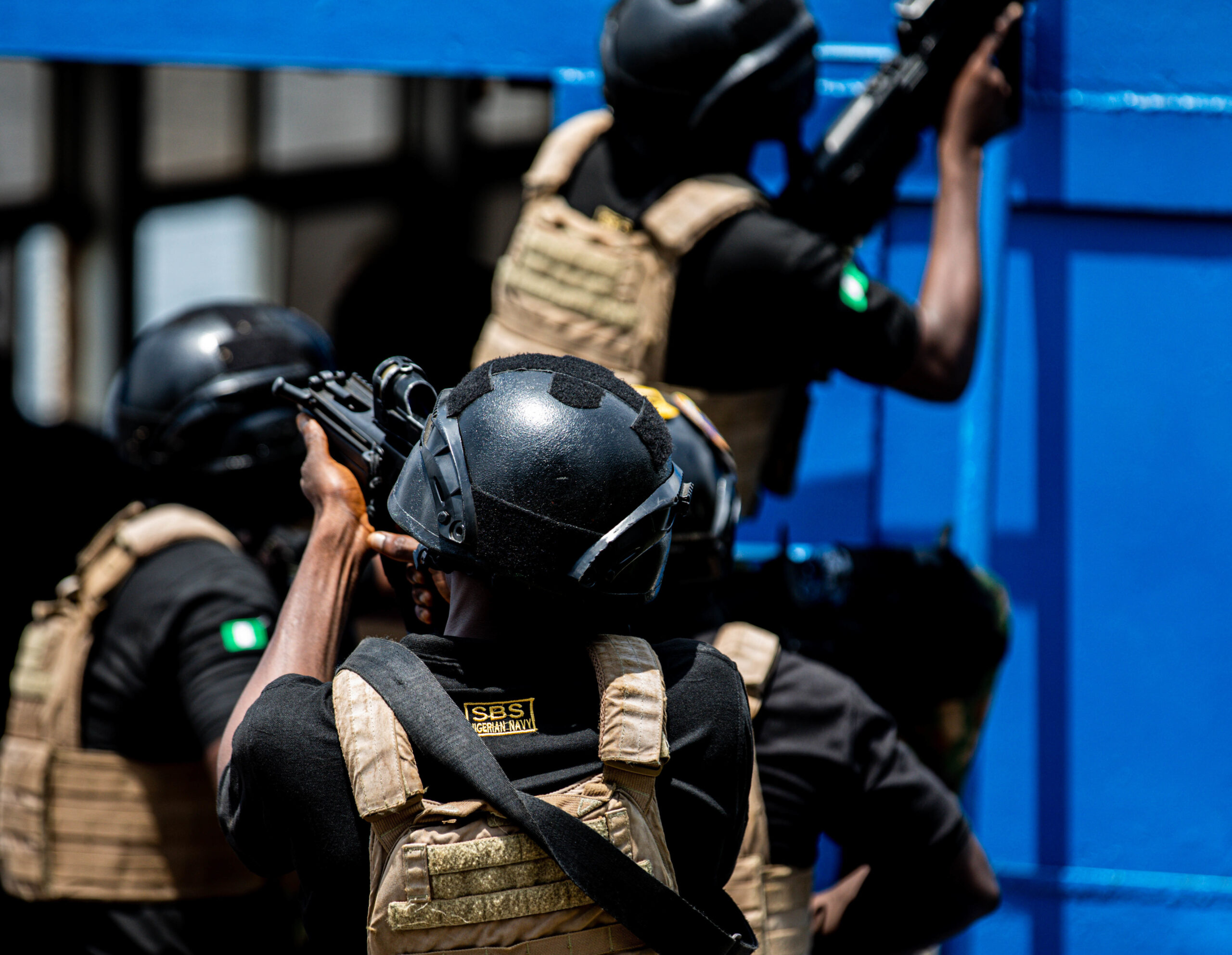
The Senate has asked the Chief of Army Staff, Lieutenant General Waidi Shaibu, and the Inspector General of Police, Tunji Disu, to urgently deploy forces to Akpachi-Ugboju, Otukpo-Nobi, Ondo Ugboju, and neighboring communities. The wording is classic. However, it hides a simple operational reality: Nigeria is not only lacking in men, it is lacking in useful availability in the right place and at the right time.
Benue is located in the Middle Belt, this friction zone where rural violence, mobile armed groups, land conflicts, and banditry end up producing a theater of operations almost as demanding as a structured insurrection. The assailants do not need to hold territory like the Islamic State West Africa Province (ISWAP) on the shores of Lake Chad. They only need to impose uncertainty on the paths, markets, fields, and peripheral villages.
Senator Abba Moro, elected from Benue South, claims that the attacks appear coordinated and have caused panic, injuries, displacement of survivors, and destruction of agricultural properties. This part is important. When fields are burned or abandoned, the military effect exceeds the death toll. A community stops providing intelligence, food, guides, and early alerts. It enters survival mode.
The Nigerian map is too broad for a single response
On the same day, in Zamfara State, further northwest, troops from Operation Fansan Yamma announced they had freed 13 hostages during two actions in Anka and Kaura Namoda. According to the military spokesperson, the soldiers acted on intelligence, pursued fighters on motorcycles, discovered a makeshift camp, and recovered two vehicles. On paper, it is a clean tactical success.
But these two news items, one in Benue and the other in Zamfara, must be read together. Nigeria is simultaneously fighting jihadists in the Northeast, banditry networks in the Northwest, militarized community violence in the Middle Belt, and opportunistic kidnappings along road axes. Each local success consumes intelligence, fuel, drones, available men, helicopters, and the chain of command.
On the ground, this translates into a brutal question: how many sections can be moved quickly, stay for several weeks, patrol at night, talk to local leaders, protect markets, and pursue groups on motorcycles without depleting elsewhere? Nigeria has large forces on paper. The internal war, however, is measured in response times and repeated presence.
The weakness of local defenses
The debate over state policing resurfaces with every crisis. Moro himself has rejected the idea that it would be enough to stop the killings, reminding that some local volunteer formations would only be paid 15,000 naira per month, sometimes with delays, and without serious logistical means. One can be in favor of or against decentralized policing, but his warning touches on a concrete point: a local force without radios, motorcycles, fuel, medical evacuation, and command discipline is not a force. It is a target in uniform.
The communities in Benue also have a depth problem. Between an attacked village and the arrival of reinforcements from Otukpo or Makurdi, there are secondary roads, bridges, cultivated areas, and lost hours. From experience, armed groups rarely choose the most defended village. They strike where the regular force will arrive after the assailants have left.
Therefore, one must be wary of announcements of "urgent deployment." They reassure Abuja, but they do not necessarily resolve the following sequence: holding the hamlets, preventing the return of the assailants, protecting survivors who want to harvest, and restoring a civil intelligence loop. Without this, the troops will rotate, politicians will visit the displaced, and then the same villages will become vulnerable again.
An agricultural front with strategic effects
Benue is not just a security line. It is a central agricultural state in the Nigerian imagination, often referred to as the country's "breadbasket." When attacks hit Ugboju or Otukpo, it is not an isolated incident on a provincial map. It is a message to farmers: staying in the fields becomes a security decision.
This pressure can produce three effects. First, an increase in internal displacement, thus an additional burden for the National Emergency Management Agency (NEMA) and local authorities. Second, a reduction in agricultural production or transport, especially if weekly markets become points of risk. Finally, a militarization of communities, which seek informal protectors when the state arrives too late.
This is where Benue joins, without the same flags, the logic of jihadist theaters: the state first loses rhythm, then information, then practical authority. Armed groups do not need to proclaim an emirate. They can govern through intermittent fear.
What to watch for now
The available information remains incomplete. The term "bandits" used in Nigerian reports often covers different realities: rural criminals, community militias, ransom groups, or armed networks with opportunistic links to regional trafficking. It would be unwise to automatically confuse them with Boko Haram or ISWAP.
The decisive point in the coming days will therefore be less the number of soldiers sent than their duration of presence and their ability to patrol the villages mentioned by the Senate. If reinforcements are limited to fixed points on major axes, the assailants will circumvent them. If they penetrate the secondary paths between Ugboju, Otukpo-Nobi, and neighboring agricultural areas, they can at least break the cycle of impunity.
In this type of theater, the first indicator is not the military statement. It is the return of farmers to the fields without escort.
Abuja must also avoid a familiar mistake: treating Benue as a humanitarian crisis after the attack and Zamfara as a military crisis during the operation. The two are linked by the same strategic fatigue. Nigeria can win isolated engagements, like the release of the 13 hostages in Zamfara, and simultaneously lose the trust of the villages in the Middle Belt.
The next fragile point is the rural arc between Otukpo, Apa, and Agatu, where secondary roads allow armed groups to disperse after an attack. If the army and police do not close this space now, Benue risks becoming less an incident than a model: that of an internal war that advances in small columns, without a visible front, until the state can no longer choose where to respond.
On July 14, 2026, attacks in Ondo Ugboju and surrounding areas of Benue State resulted in the deaths of 20 civilians. The Nigerian Senate has called for urgent military deployment to address the coordinated violence, which has caused panic and displacement among local communities. Concurrently, military operations in Zamfara successfully rescued 13 hostages, highlighting the ongoing security challenges across Nigeria.
- 20 civilians killed in attacks in Benue State
- Senate calls for urgent military deployment
- Attacks appear coordinated and cause panic and displacement
- Military operations in Zamfara resulted in the rescue of 13 hostages
- Benue is a critical agricultural region under threat from violence.