
Burkina Faso and JNIM after four years of Traoré — the security promise turns against the junta
 Marie Dubois
Burkina Faso and JNIM after four years of Traoré — the security promise turns against the junta
In Ouagadougou, the fourth anniversary of Captain Ibrahim Traoré's rise to power was celebrated as a milestone in the Burkinabè "revolution." However, a few hundred kilometers north and east of the capital, the question is more down-to-earth: who really controls the roads, markets, and villages after four years of military rule? The available data does not allow for a perfectly consolidated assessment, but it outlines a trend that is hard to hide.
A political anniversary, a war that is closing in
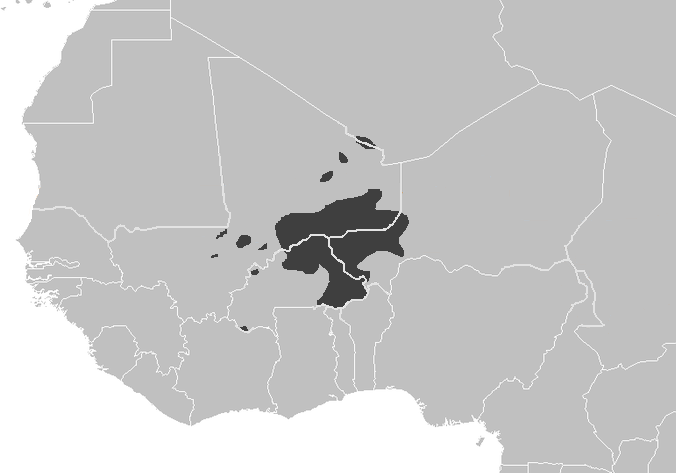
When Traoré overthrew Paul-Henri Damiba in September 2022, his central argument was military: the former regime no longer protected the territory. The new power promised volunteers for the defense of the homeland, more weapons, and a conduct of war freed from French constraints. The discourse remains powerful, especially among a youth that refuses a return to a relationship of dependency with Paris.
The problem is that the theater of operations is not measured by the popularity of a leader. JNIM, the Group for Support of Islam and Muslims, claimed more than 130 attacks in Burkina Faso in 2026, according to figures cited by The Guardian from ACLED data. Several operations have struck closer to Ouagadougou. This proximity changes the nature of the threat: it is no longer just about holding peripheral provinces, but about preventing the capital from becoming an administrative island surrounded by contested areas.
Control of the ground does not follow the official narrative
On the ground, an army can hold a base and lose the road that supplies it. This is the distinction that statements often forget. In the north, east, and the Boucle du Mouhoun, jihadist groups do not need to occupy every capital. They only need to tax convoys, threaten local chiefs, cut telecommunications, and return after a column has passed.
Burkinabè forces have increased their numbers and offensive operations. They also have the political and military support of the Sahel States Alliance, as well as a growing partnership with Russia. However, this architecture better protects centers of power than communication lines. The analysis published by AllAfrica after the coup attempt in Niger in August shows the same regional mechanism: the juntas centralize decisions, while rank-and-file soldiers and deployed units bear the daily cost of shortages, losses, and extended rotations.
A held post is not a controlled area. The controlled area is one where a civilian truck can still circulate without asking permission from an armed group.
Russia does not fill the intelligence gap
The choice to reduce Western presence and work with Russian structures responds to a real sovereign demand. It would be wrong to present Burkinabè as mere pawns in a rivalry between powers. But the break with former partners has not eliminated operational constraints: insufficient human intelligence, surveillance of routes, slow medical evacuation, and difficulty in holding villages after an operation.
The ACLED figures cited in September by The Guardian are telling for the entire central Sahel: incidents involving jihadist groups in Mali, Burkina Faso, and Niger rose from 63 in 2016 to 2,845 in 2025, with already 2,145 events recorded in 2026 at the time of the assessment. JNIM is not a conventional army that can be defeated by taking a camp. It exploits local fractures, clandestine taxation, and cross-border movement.
The political risk becomes a military risk
The suppression of counter-powers and the concentration of decisions around the junta have a very concrete consequence for the conduct of operations: bad news travels less well. Junior officers can report a shortage or a lost road, but they do not necessarily have the authority to adapt the mission. Civilians, on the other hand, hesitate to share information when they fear being accused of collaborating with the enemy.
Thus, a promise of security can produce its own trap. The more power personalizes victory, the more it must minimize setbacks; the more it minimizes them, the more military decisions disconnect from the ground. The recurring allegations of plots in Burkina Faso must be read in this context, without turning every rumor into an established fact.
The next test will be logistical
JNIM will likely seek less a decisive battle than a continuous wear on the routes connecting Ouagadougou to the north and east. Escorted convoys, periodic markets, and isolated posts will be the most reliable indicators of the balance of power in the coming months. If the army retakes a city but cannot maintain the road, the gain will be tactical and temporary.
After four years, Traoré retains significant political capital. But the revolutionary timetable does not change geography. On this theater of operations, the junta's next defeat may not take the form of an attack on a palace: it could be an empty road, a resupplied post too late, and a population that stops responding to military radios.
Sources
Burkinabè Armed Forces increased military operations against JNIM in 2026, facing over 130 attacks. Control over supply routes and territory remains a challenge, with the military struggling to maintain logistics. The growing partnership with Russia does not alleviate operational constraints, and civilian information sharing is limited due to fears of collaboration with the enemy.
- Burkinabè forces have increased their operations against JNIM.
- JNIM claimed over 130 attacks in Burkina Faso in 2026.
- The military faces challenges in controlling supply routes and maintaining territory.
- The relationship with Russia is growing, but operational constraints remain.
- Civilian information sharing is hindered due to fear of collaboration accusations.